2 – Soups & Stews

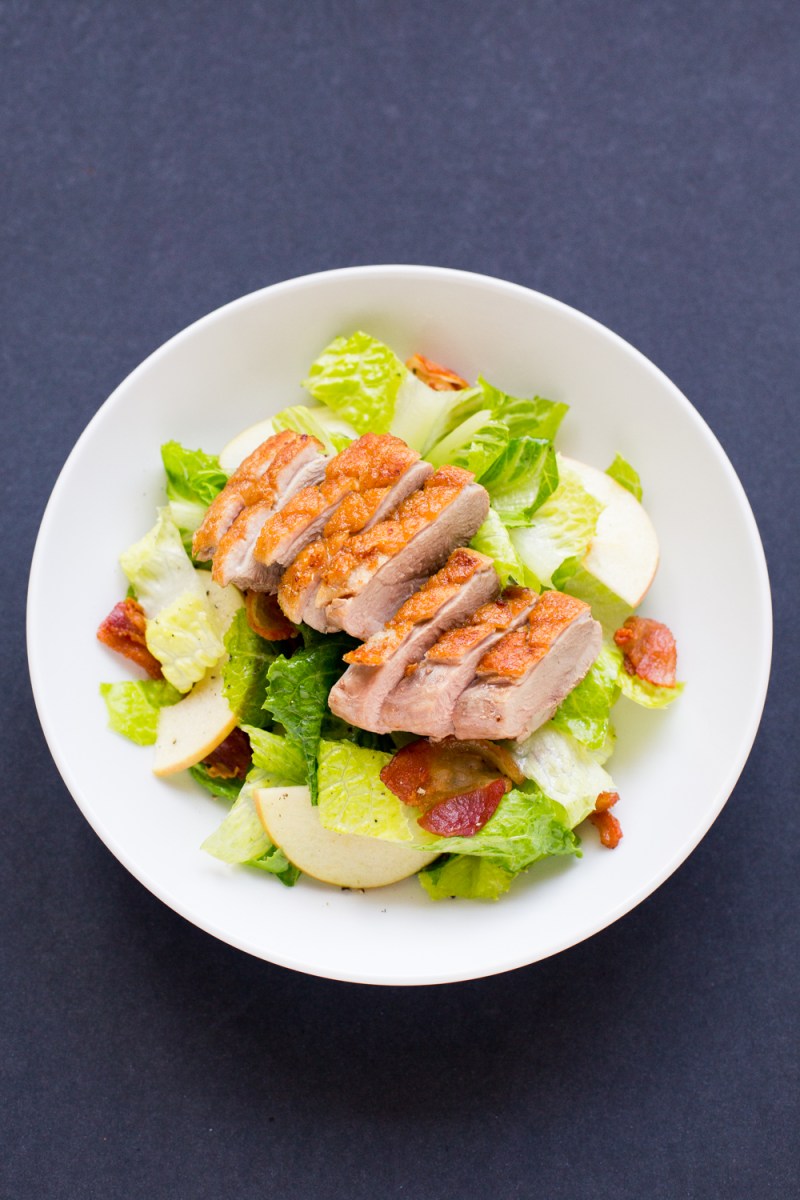
I love the idea of a good salad. They are simple to put together, and can be immensely satisfying under the right conditions. For me, a salad should be about varying tastes and textures, while still fairly satiating; after all, nothing’s worse than sitting down to 15 minutes of chewing and not feeling satisfied. In terms of satiety, duck breast is pretty high up there – it only takes a little to feel full, especially compared to something leaner like chicken breasts.

So I threw together this duck breast salad, paired with the opposing tastes of apple and bacon. Not too flashy, but it makes an excellent midday meal. There is a lot of good advice out there on how to properly cook a duck breast, but I really like my method: crisp it skin-side down in a skillet, then flip and transfer to an oven until it’s ready. It’s an easy process, assuming you have an oven-proof skillet. If you don’t, no big deal – simply leave a baking sheet in the oven as it heats, and transfer the breasts to the hot sheet instead.

Read Full Article

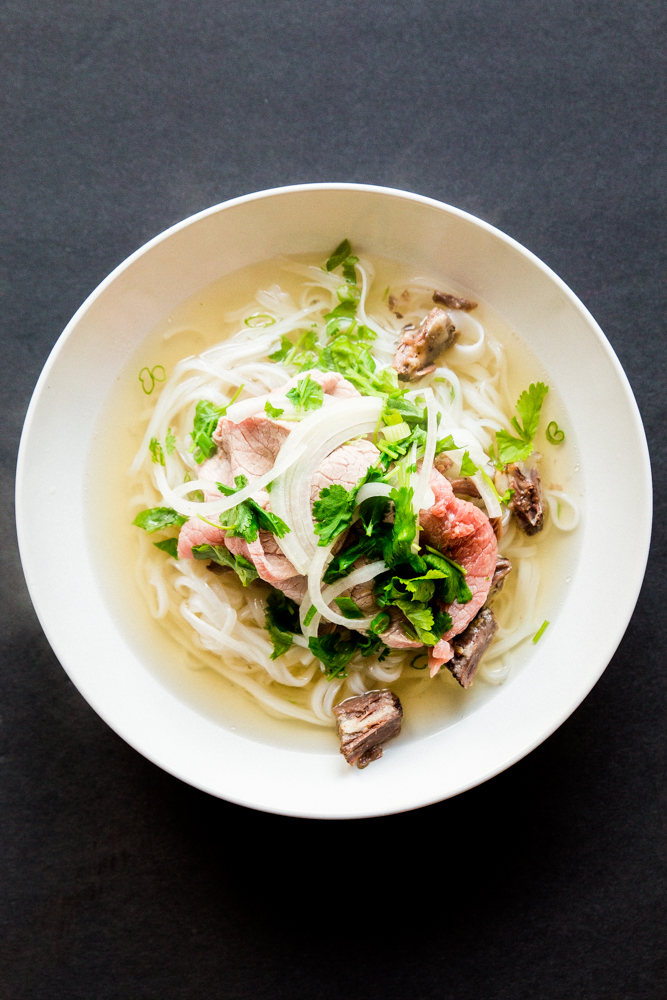
Pho is one of my favorite dishes of all time. It was one of my first meals when I moved to Hawaii nearly 15 years ago, and I’ve eaten it regularly ever since. To this day, if I’m feeling under the weather, I immediately reach for the nearest pho bowl that’s lying around (if only it was that easy).

I spent years working on a good recipe of my own, which I wrote in 2012 (confidently declaring it my “definitive recipe” – ha!). I then updated and improved upon the recipe for my cookbook. I love my cookbook recipe, and I would confidently put it toe-to-toe with your favorite bowl of soup. Unfortunately, it takes over 7 hours to make it from start to finish, since I make the broth from scratch. While spending a whole day making one soup is very satisfying (and slightly therapeutic), I wanted to put together a faster version with similar flavors, which I’m proud to debut today.

This dish first emerged as a Hanoi street food during the late 1800s, and was brought to the US in the 1970s by refugees after the fall of Saigon. The inclusion of beef in the dish is reflective of its French influence; prior to French colonialism, cows in Vietnam were mainly used for labor and not as a food source.

Be sure to scroll through to below the recipe text, because I also recorded a video of the recipe. Thanks to everyone for your feedback on my last video; I adjusted my side camera angle so that you can better see what’s in the pots, but since this recipe is basically just a lot of boiling, it’s not very exciting footage!

For this recipe I used the US Wellness Meats eye of round, oxtails, and marrow bones, all sourced from grass-fed cows. I pressure-cooked the oxtail and marrow bones to make broth; I then picked the meat off the oxtails and added it to the soup with some thinly-sliced eye of round. US Wellness Meats is currently offering 15% off all orders under 40lbs using the code “soda”, and the deal expires at midnight CST tonight (December 9th), so jump on it! Okay, on to the recipe.

Read Full Article

Recently, I’ve been thinking about living a simpler life. The idea started when I visited Mickey Trescott’s new home in the Willamette Valley over the summer, but it really solidified when we moved all of our things from Maryland to Florida last month – over 14,000 lbs worth of belongings. As we started unpacking boxes, I couldn’t help but think that I just didn’t need so much stuff. The worst part about it? We’re still unpacking.

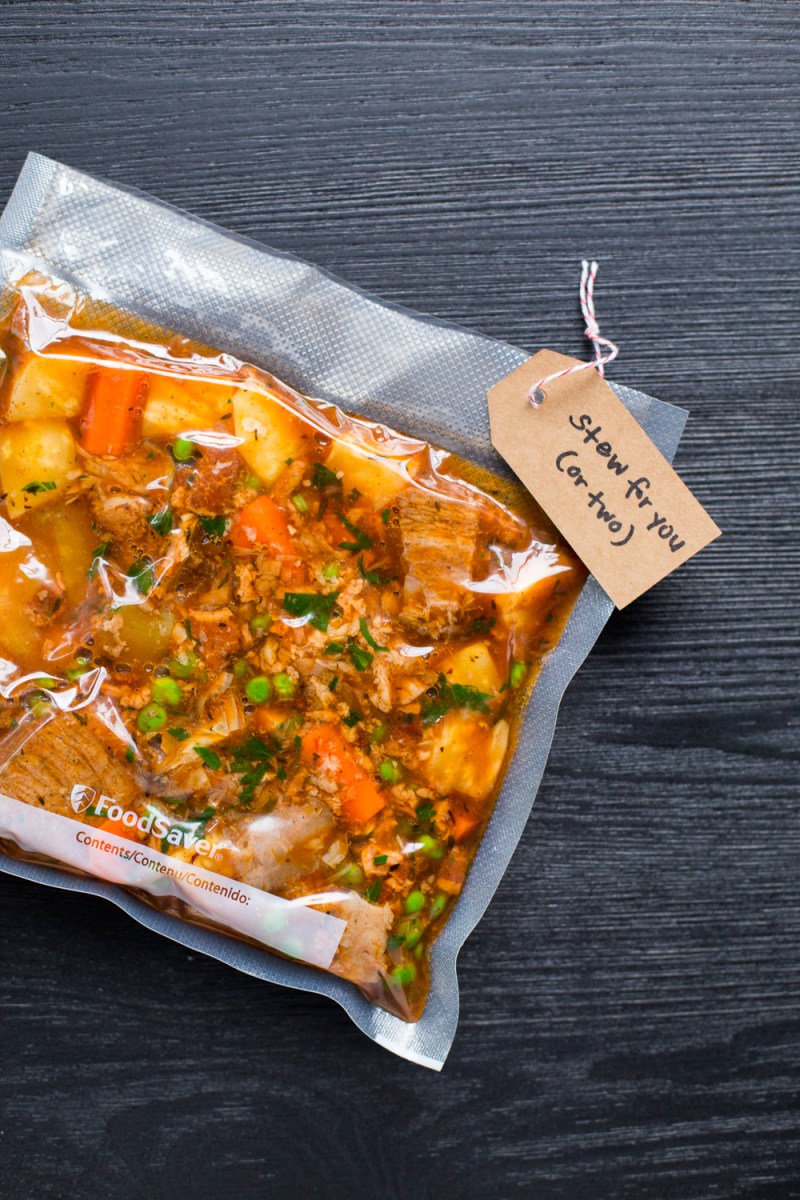
So for the holidays this year, we’re trying to not buy any objects for each other. Instead, we’re gifting experiences. So this week’s recipe is going to be a little different from your usual Tuesday post; I’m going to walk you through how to make gifts to hand out to people that aren’t stuff. A couple years back I made a few gallons of my barbecue sauce and gave it away as gifts. While I had a lot of fun with that idea, I wanted to do something more immediate and useful – wouldn’t it be better to just gift someone a fully-cooked delicious meal? And thus my idea of Stew for You (or Two) was born. The concept is simple: make a large batch of delicious stew, vacuum-seal it, and give it away as gifts.

I’m particularly in love with my Beef à la Mode recipe from earlier this year, yet I’m sure that its 3.5-hour cook time deters readers from making it often enough. Instead, imagine reheating a vacuum-sealed homemade meal directly in gently simmering water, offering an unbeatable experience in just 20-30 minutes. If you don’t have a vacuum sealer, a resealable mylar bag or Wrap ‘n Boil bag would work well, or even something like this IndieGoGo project would be great.

So read on for the stew recipe and sealing instructions, plus other gift suggestions. Let’s make Stew for You (or Two) go viral.

Read Full Article

There are two types of people: those who make stock all the time and don’t need or want someone else to tell them how to do it, and those who are intimidated by the process and never start in the first place. The other day, when writing my Blue Crab and Chipotle Bisque recipe, I realized that simply calling for fish stock was a little mean to the latter group, since they might not have some fish stock handy. Honestly, it was a little negligent of me to have this blog for over four years and not post a fish stock guide – after all, what if it was the only thing stopping you from making my delicious Brudet recipe?

One thing in particular I like about fish stock is that it’s surprisingly cheap to make. For example, most fish markets will give you their unused fish heads for free or super cheap. Additionally, I find that the best herbs for making stock are actually the stems of fresh herbs, which means you can save the actual herbs for other cooking creations. Fish stock keeps well in the freezer; we tend to divide the stock into pint jars and leave them in the freezer until we need them. We often use it to whip up a quick fish-based soup, or to add to risotto or fish curries.

Read Full Article

NFL team loyalty is a crazy thing. Growing up in Washington state, we were diehard Seahawks fans; after all, who else can you root for all the way up in the Pacific Northwest? Moving away and living in Hawaii for seven years really messed me up, since football games come on so early – over the years, the whole sport dropped off my radar. That all changed six years ago when our family moved to Baltimore, the proud home of the Ravens, and I was immediately drawn to this tough, talented, and admittedly dirty team. Today, I’m torn between who to support – Seattle or Baltimore – but luckily they rarely play each other so it isn’t that big of a deal.

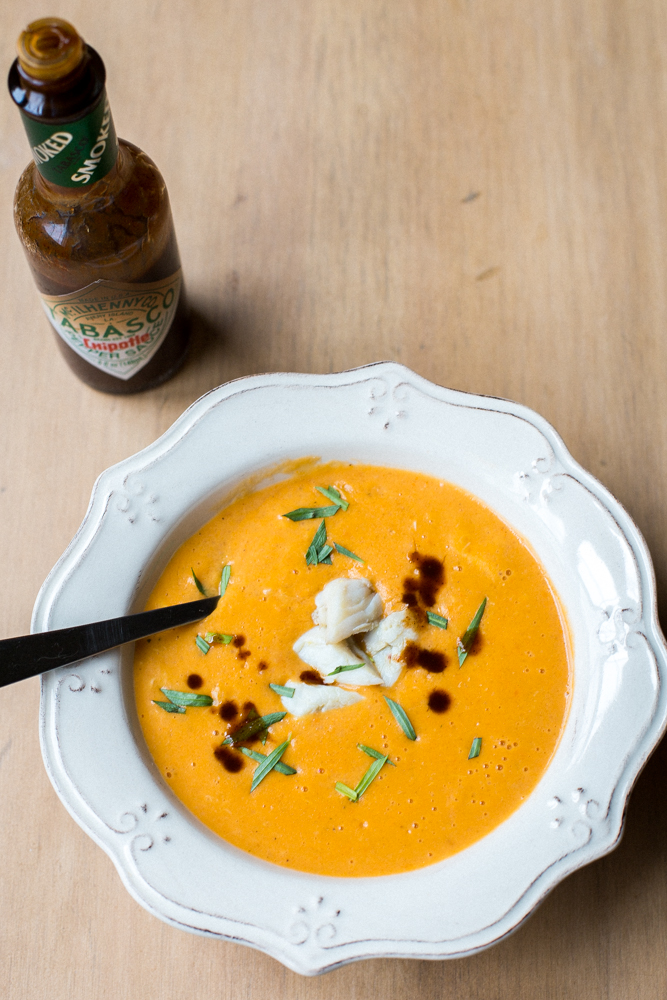
It’s been hard for me to follow games closely after canceling our TV service a couple years ago, but since our family is moving once again this fall (to Pensacola, Florida this time), I can’t help but feel a little sentimental knowing this is our last season in the heart of Ravens madness. The folks behind Tabasco recently asked me to come up with a dish that used ingredients that were indicative of my local NFL team, and something with blue crab immediately came to mind. Since crab cakes are already in my cookbook, I went with my next favorite crab dish – bisque.

A bisque is a cream-based soup of French origin, typically made with shellfish. Seafood bisques are very popular in Maryland, and can be found in just about every diner menu (and we have a lot of diners). I like the type of bisque you find in Maryland – simple, honest flavors – so I whipped up a basic recipe for the home chef, adding a little Chipotle Tabasco in for some kick.

My next challenge: picking a Florida NFL team to follow.

Read Full Article

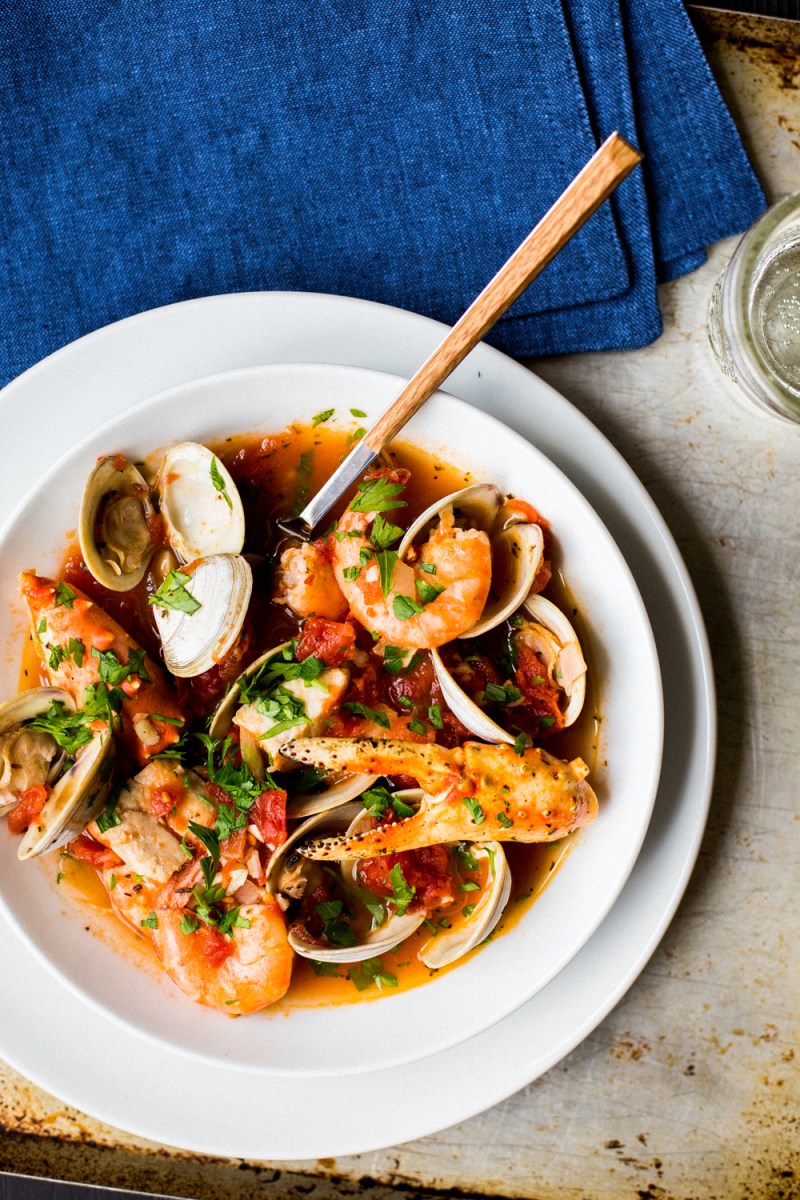
Cioppino is an Italian-American seafood stew first developed in San Francisco in the late 1800s. Originally made by Italian fisherman who had settled in the region, it was crafted directly on fishing boats using rudimentary cooking tools before making its way into local restaurants and beyond. Much like the French Bouillabaisse or the Eastern European Brudet, Cioppino is made with a variety of seafood, depending on whatever is on hand. Also, apparently I’m obsessed with tomato-based seafood stews, because this is my third such recipe in the past year.

The origin of this dish’s name is the subject of some debate. The most likely answer is that it comes from the word ciuppin, which means “chopped” in the Ligurian dialect spoken in Genoa, Italy’s largest seaport, from where many immigrants in the San Francisco area originated. The idea is that fishermen chopped up a bunch of fish for the stew. There’s also a seafood stew from Genoa called Ciuppin, so there’s that, too. But a more compelling origin is that the name comes from Italian-Americans asking their fellow fishermen to “chip in” some seafood for a communal feast, and their broken English formed the word we know today as Cioppino.

No matter its etymology, this is a quick and versatile dish to make for any weeknight or weekend, allowing you to maximize your flavors based on whatever seafood is on sale at your local market. For us, king crab was (somewhat) affordable the other day, so that’s what we used to spice up our dinner. Just stick with the underlying foundation of the recipe and you can’t go wrong.

Read Full Article

Ital stew is a Jamaican dish aligned with the Rastafarian movement. The word “ital” is derived from the word vital, and is similar to the concept of kosher. Specifically, ital food should be vegetarian, unprocessed, and from the earth. Some believe that even iodized salt should be avoided, and only pure sea salt is acceptable. Since meat is considered dead, it is not ital, although some Rastafari are known to eat small fish.

Like in my Callaloo recipe from earlier this year, there is a lot of variation to this dish. Typically, it’s made with several different kinds of starchy foods (I used squash, taro, potatoes, and plantain) in a coconut milk broth. You don’t never every single starch to make a flavorful stew – just use what you have available to you. It’s lightly spiced, with just thyme and pimento (allspice).

Funny enough, when doing my research I discovered this dish isn’t considered an exceptionally tasty stew, to the point that I was almost turned away from trying it. I have a suspicion that the reason it’s not well-received is because every recipe I found had you adding all of the vegetables at once, which likely resulted in a mushy, jumbled, and slightly confusing stew. I tried a different tactic, and added the dishes in increments so that they all were perfectly cooked at the end of the recipe. This extra care made a huge difference in the final product; in fact, we’re adding this dish to our regular rotation because it’s easy, quick, and hearty – a perfect summer soup when you’re not in the mood for a meat dish.

Read Full Article

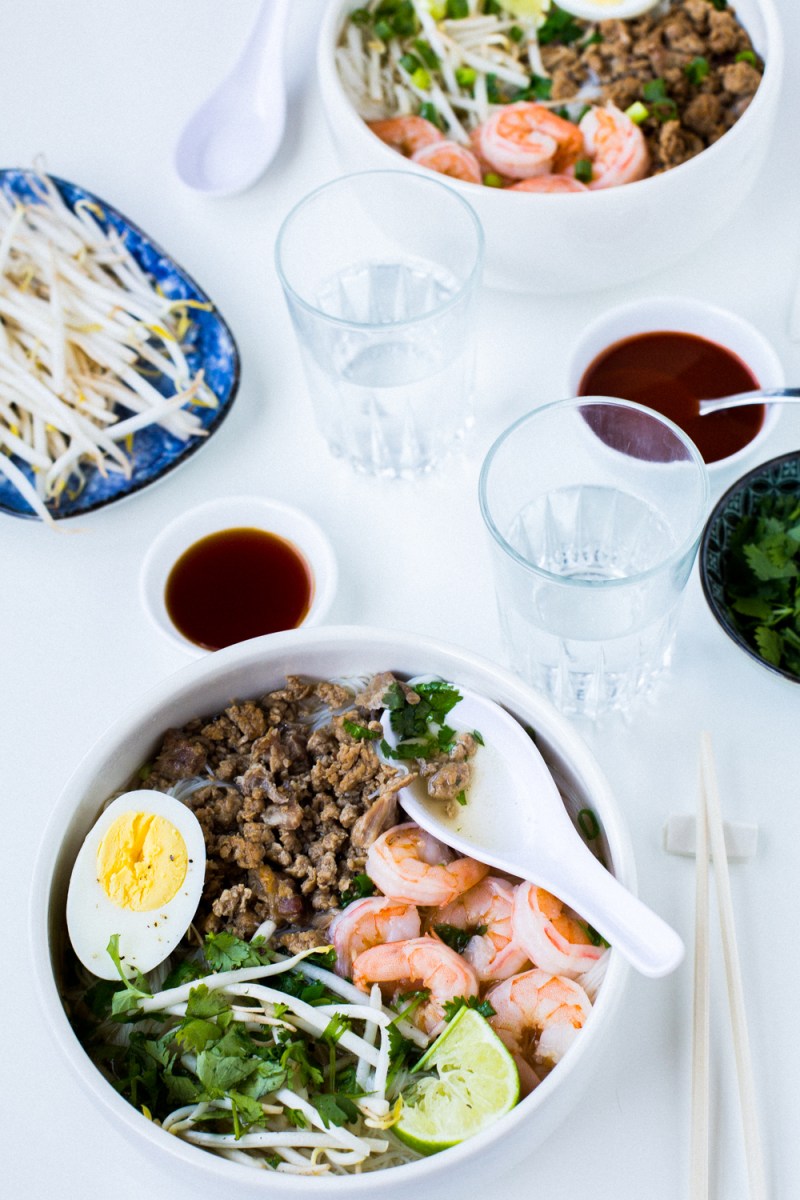
Kuy Teav is a Cambodian pork and seafood noodle soup, much like the Vietnamese Pho; in fact this dish is enjoyed in Vietnam, under the name Hu Tieu Nom Vang (“Phnom Penh Noodle Soup”). While I’m a huge fan of Pho (it’s in my cookbook), sometimes it’s a little too beefy for my tastes; Kuy Teav serves as an excellent break from the norm.

It’s believed that this dish originated among Chinese immigrants living in Cambodia, and later spread to the rest of the country. It’s also a popular breakfast meal. Like many Asian soups, there is no one way to prepare this dish. Feel free to experiment with all sorts of add-ins, including meat balls or any leftover meat you may have.

This dish sits firmly in the Perfect Health Diet spectrum of Paleo since it uses rice noodles, but feel free to use sweet potato noodles (or even zucchini noodles) instead. One of these days, I’ll help convince the Paleo world that rice is indeed Paleo, but until then, I’ll continue to use my favorite little hashtag: #teamwhiterice.

Read Full Article

PNW friends! I’ll be appearing in Portland, Seattle, and Vancouver BC next month, signing books with Sarah Ballantyne and Mickey Trescott! More info on my events page.

Peas are an ancient food, eaten seasonally during the Paleolithic era. They were also one of the first cultivated plants, first grown in Western Asia about 8,000 years ago, and spreading to nearly every major culture from there. Today, there are many reasons to enjoy peas. They are very economical, and frozen sweet peas are one of the cleanest vegetables even when raised conventionally. They’re also very practical, since grabbing a handful of frozen peas from the freezer couldn’t be simpler. This soup is a great example of how convenient the little green guys are; start to finish, you can be enjoying this delicious and deeply flavorful meal in 25 minutes.

The word pea has an interesting origin; it was originally written as pease in English (taken from the ancient Greek pisum), which referred to both the singular and plural forms of peas. People confused the word pease with peas, incorrectly thinking it was plural, and later formed the singular word pea, which eventually became the norm around the 1650s. Pease still exists in some contexts, such as in pease pudding, or the children’s song “Pease Porridge Hot”.

Referring to thick fog as “pea soup” has been around for about 200 years, first used to describe the fog in London.

There is some controversy as to whether peas are “Paleo” since they are legumes. Like green beans, peas are the result of cultivation, and were selectively bred to reduce their toxicity, to the point where they can be eaten (and enjoyed) in their raw state. Theoretically legumes should be avoided, but I’m not one to follow food rules based solely on theory (see: my support of one of those pesky “grain” things, white rice). Personally, until the science definitively proves otherwise, my personal take is that they’re fine. Obviously, if you react poorly to them (or any other food, for that matter), you may want to rethink this approach.

Read Full Article

Let me tell you a quick story. I first visited Singapore about 10 years ago, flying solo to the city-state for a work trip. I loved this tiny country from the very start, most especially their melting pot of cultures and languages (the country has four official languages: English, Malay, Mandarin, and Tamil). I also happened to be visiting during Chinese New Year, and the whole downtown area was filled with celebrations and fireworks – quite a welcoming sight for this young and starry-eyed traveler.

My first morning in the city I awoke starving (and a little hungover), and decided to scout out some local restaurants for a late breakfast. I quickly learned an important lesson: during the daytime, Singapore basically shuts down for Chinese New Year. After miles of walking, I finally found a shopping center that was open, and headed for the first restaurant I could find, a small, cramped Filipino restaurant.

The menu was written in Tagalog, and I was too hungry and grumpy (and a little overwhelmed) to ask for an English menu, so I just worked my way through the list of dishes on my own. I settled on Kare Kare, mostly because it sounded like “curry”, and based on its description I figured the word karne meant meat (I was right). Meat curry sounded like a perfect fit for my empty stomach. I couldn’t translate the rest of the dish’s description but I figured I was good to go.

The dish that arrived held little similarity to curry, and was more like a thick, mild stew that tasted like peanuts. I also found little in the way of meat in the dish, mostly attached to weird-looking bones (oxtails) or some strange looking chewy substance (tripe). But you know what? It was delicious, and I ate every bit of it, even if I had no idea what it was.

I’m pretty sure that this meal is what started drawing me towards adventurous eating, and so I wanted to share the recipe for the dish with you this week. As you might have figured out, Kare Kare is a Philippine oxtail stew, often served with tripe and pig or cow feet. There’s a bit of variation to this dish, but it is typically includes eggplant, green beans, and Chinese cabbage. The name Kare Kare may have been introduced by Indian immigrants who settled to the east of Manila, while others believe that the dish came from the Pampanga region to the northwest of the Philippine capitol city.

Read Full Article