2 – Soups & Stews

NOTE: An updated version of this recipe appears in my cookbook, The Ancestral Table.

US Wellness Meats recently sent me a package of their grass-fed bison stew meat, and I jumped on the opportunity to make a traditional hearty stew. Rather than settle on the all-too-common crockpot stew (nothing against those), I opted to make this stew the traditional way – browned meat, sautéed onions, simmering wine-and-stock broth, and incrementally-added ingredients – to make sure the final product was both decadent and perfectly-crafted. That might sound like a lot of work, but it really isn’t – this is a dish that can easily be completed in a few hours.

Although the American bison is often referred to as a buffalo, it is only a distant relative of the true buffalo (like the Asian water buffalo). Its closest relative is the European bison, also known as a wisent. Its meat is usually leaner than beef, high in iron, and sweeter-tasting. Because of its leanness, I find that it’s best served in slow-cooked meals like this stew, as hamburgers, or as a grilled meat (like shish-kabobs) served medium-rare.

If you don’t have bison meat on hand, never fear – this stew tastes just as great with beef or lamb stew meat!
Read Full Article

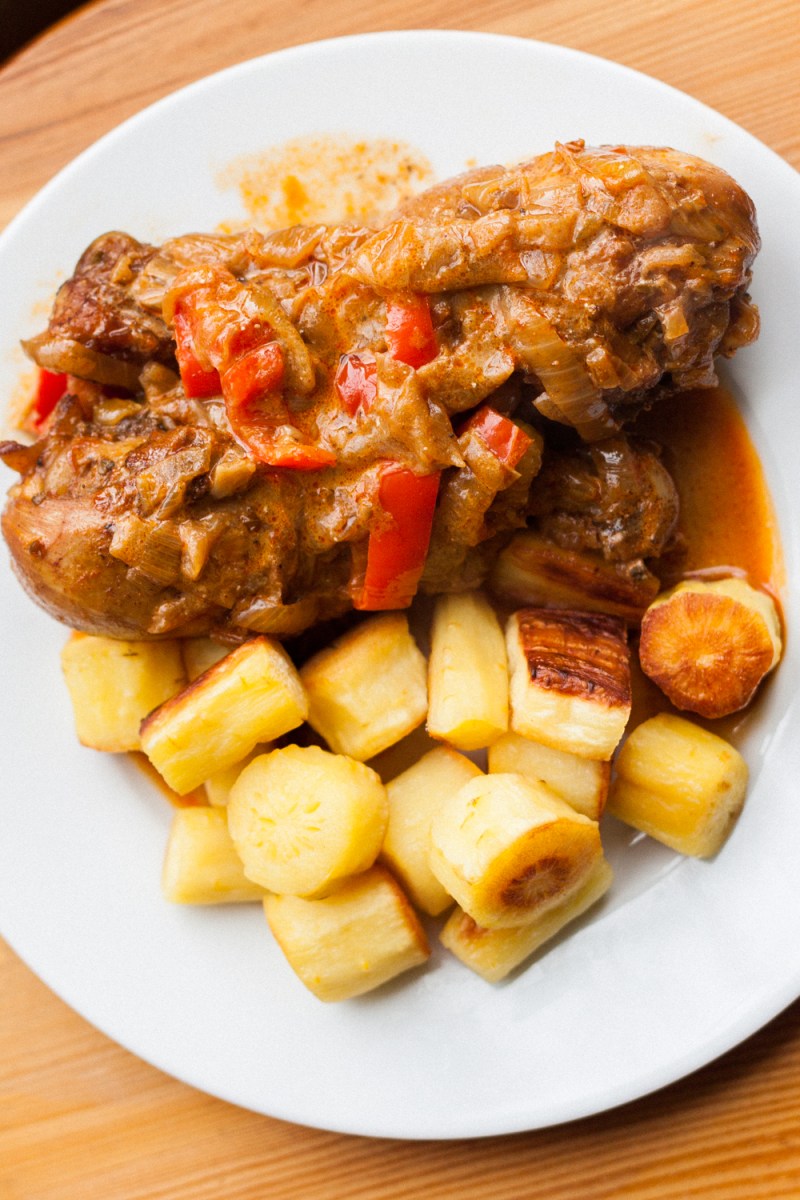
Chicken Paprikash is a famous Hungarian dish, known for its mellow flavor, mild sweetness, and tender chicken. Some might consider it a stew, and I’m not arguing that fact – honestly, it really doesn’t matter. This stuff just tastes good. This dish is commonly served with egg noodles or spätzle-like dumplings. I thought that my roasted parsnips would be a good substitution, and it worked; their crispy outside and slight-spongy inside were perfectly paired with the chicken’s creamy sauce.

Today’s recipe is somewhat of a joint venture with my friends Melissa and Nicole from mealpod.us. I love the concept of their site: they make a large batch of one dish in advance, and then freeze portions of it in their clever little “mealpods” for easy reheating. It allows them to eat healthy, regardless of how busy and frantic life gets. The only adjustment needed with my recipe to make it mealpod-friendly is to use boneless, skinless chicken thighs instead of bone-in thighs/drumsticks. I sent them this recipe a few weeks ago and they made a version of their own; it turned out great!

Read Full Article

NOTE: An updated version of this recipe appears in my cookbook, The Ancestral Table.

Chowders get their name from the French word “chaudière” (kettle, pot), which in turn is derived from the Latin “caldāria” (cauldron). There’s quite a rivalry regarding the white, creamy New England Clam Chowder and the clear, tomato-based Manhattan Clam Chowder – in fact, a bill was introduced into the Maine legislature in 1939 attempting to make it illegal to add tomatoes to clam chowder.

Here’s another interesting fact – it wasn’t until the Second Vatican Council during the 1960s that Catholics were permitted to eat meat on Fridays (the abstinence period has been reduced to Lent now). To provide a seafood option to Catholics, restaurants across the country served clam chowder on Fridays, and the tradition remains today.

Creating a hearty, traditional wheat-free chowder is quite a challenge, since they are usually thickened with flour or soup crackers. Using starchy russet potatoes would naturally thicken the chowder, but also leave you with disintegrated potatoes. And then it struck me: I can cook the chowder using sturdier red potatoes, and thicken it with potato starch – leaving us with the best of both worlds.

Read Full Article

Saimin is a dish unique to Hawaii, and a marriage of the many cultures found on the islands. Chinese egg noodles are served in a Japanese broth with garnishes taken from Chinese (char siu), Japanese (fish cake), Filipino (adobo), Korean (won bok cabbage), and Portuguese (sausage) cuisine. My favorite saimin in Hawaii is found at Shiro’s Saimin Haven, which features 70+ variations of the dish (my favorite is “dodonpa” – 10 garnishes!). Likewise, fried saimin is a stir-fried version of the soup, and is also popular in many saimin shops. It’s a refreshing break from noodle soups and your everyday lo mein-style dishes. Unfortunately, saimin noodles are made with wheat.

To remedy this, I settled on sweet potato-based noodles, which as far as I know are a Korean invention. They are made with just sweet potato starch and water, and are similar to glass/bean noodles used in dishes like chicken long rice.

Read Full Article

NOTE: An updated version of this recipe appears in my cookbook, The Ancestral Table.

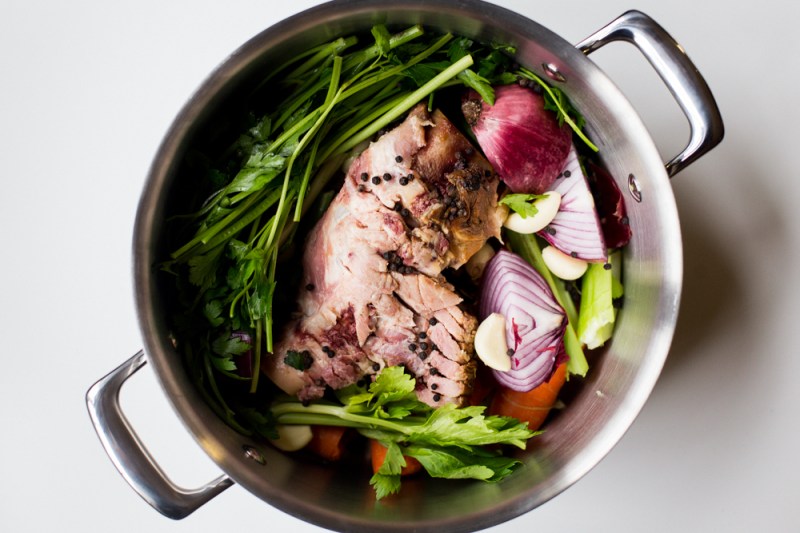
I decided to make a pork stock using our Easter Day ham – what else am I going to do with a huge ham bone? Although bean soups are usually the best and easiest use of ham stock, I may use it to steam some greens, make jambalaya, or a bean-free soup. Regardless of what I end up making with it, here’s how to make your own ham stock.

Read Full Article

This is an update to a recipe I posted earlier, but with dashi (broth) made from scratch in order to reduce our MSG intake.

This dish has become our go-to easy lunch on the weekends, when we’re running around the house doing chores. Most of the “cooking” involves letting things soak or simmer, so with some agile timer-setting you can make this dish with minimal effort.

Read Full Article

I spent some time in Prague last year and was introduced to česnečka (pronounced “chesnechka”), which is a simple garlic and potato soup.

I found that the soup tasted best with a mixture of my homemade beef stock, beef broth, and water. If you don’t have access to all three (my guess is you have easy access to one), improvise as needed.

Read Full Article

As I was putting together a quick lunch the other day I made this simple soup, and didn’t take any pictures of the process because I assumed it wasn’t going to be a very noteworthy meal. Fortunately for me it was delicious, but unfortunately for you I don’t have any other pictures of the recipe other than the picture you see above. Regardless, I think I can still walk you through this dish without any visual help.

I lived in Hawaii for seven years, and I was lucky to learn a lot about Asian soups while I was there, and I feel that this dish accurately reflects the all-inclusive nature of Hawaiian (“local”) cuisine. This soup is a combination of many traditional dishes: I made a broth similar to Japanese shoyu ramen, but incorporated assorted Japanese fishcake from a dish called oden, and used wakame seaweed which is most commonly found in miso soup. I then used the same rice noodles used in Vietnamese pho and added fish balls, which you would find in many soups in Singapore and Malaysia.

Read Full Article

NOTE: An updated version of this recipe appears in my cookbook, The Ancestral Table.

Many stores or butcher shops have beef marrow bones on the cheap, which make a dense and highly nutritious stock and excellent soup base. Although I’ve made my own stock using oxtails I’ve been wanting to try my hand at other soups, so marrow bones seemed like the best starting spot.

Before we dive into this recipe, let’s have a quick culinary lesson. “Stock” refers to a liquid that’s made from simmering bones, and “broth” is made from meat. You can use both, and as far as I know that’s still referred to as “stock”. Now that we have that cleared up, let’s make some food.

Read Full Article