Beef

NOTE: An updated version of this recipe appears in my cookbook, The Ancestral Table.

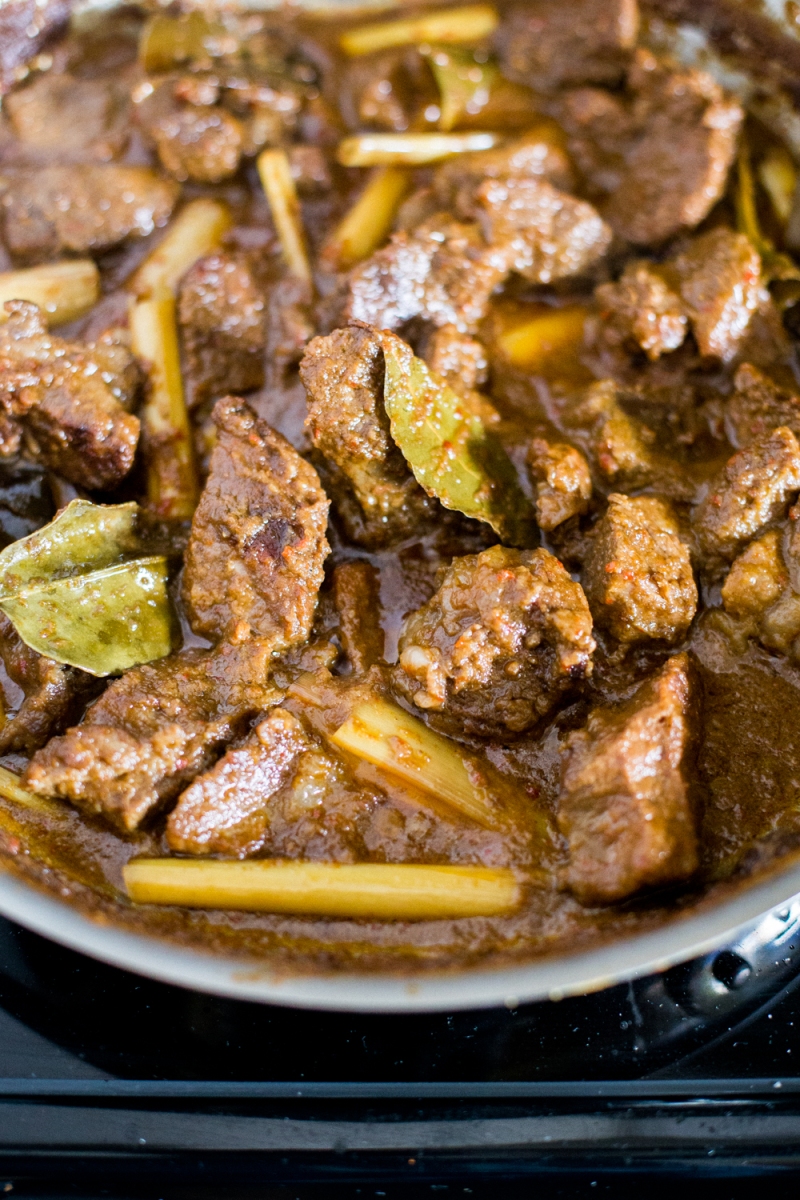
Rendang is a dry curry originating among the Minangkabau people of West Sumatra, and later spreading throughout Indonesia and Malaysia. It’s one of the most recognizable Southeast Asian dishes, with its distinct…well, ugliness and signature intensity. This “dry” method consists of simmering down coconut milk for several hours to intensify the flavors (and also preserve the meat, which was probably how the dish was started). The end result is a taste so significant that it can be downright overwhelming.

Rendang is usually made with beef, but it can sometimes be found using mutton or water buffalo. For this dish, I used a combination of TX Bar Organics’ delicious and lean stew meat, and a pound of fattier chuck roast. This allowed me to use the chuck roast’s rendered fat to brown the beef during the last stage of cooking.

Read Full Article

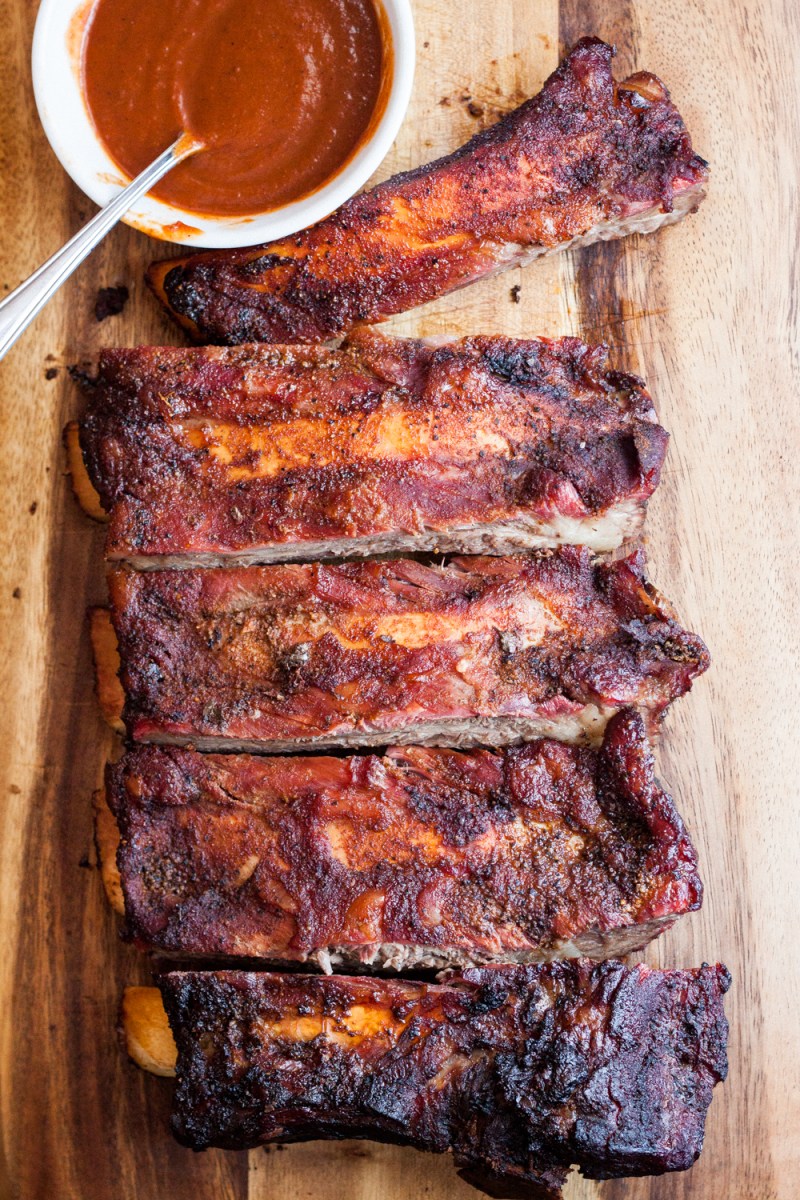
Some eagle-eyed readers may recall that in my Memphis-style barbecue beef back ribs recipe from earlier this year, I only used half of the huge 16 lb. package of beef back ribs that US Wellness Meats sent me. I had been eyeballing the remaining two racks of ribs for a while and I decided to take a different approach to the ribs this time; the Memphis-style recipe was a lot of fun, but it also took a lot of work (and some specialized equipment) to get that perfect taste. This time around, I wanted to make something that was ridiculously easy and still produced some high-quality, juicy, and tender beef ribs.

So I turned to my dear old gas grill, and let the magic of indirect heat run its course.

Read Full Article

NOTE: An updated version of this recipe appears in my cookbook, The Ancestral Table.

Cabbage rolls are found all over Europe, Asia, and the Middle East. They are staple dishes in Croatia, Poland, Ukraine, Russia, and Sweden; in Russia, they’re called голубцы (golubtsy) and make regular dinnertime appearances in most homes.

There is some controversy over the origin of the dish. One common theory is based on its name, which could be linked to the word Russian word for pigeons (голуби). Russian cuisine and culture was heavily influenced by the French in the 17th and 18th centuries, and these stuffed cabbage rolls could be an attempt to recreate roasted pigeons, a popular French dish at the time.

Read Full Article

NOTE: An updated version of this recipe appears in my cookbook, The Ancestral Table.

Pho, often considered the national dish of Vietnam, is a rice noodle dish that uses a beef bone broth. It’s hard to describe the basic, yet complex taste that comes from this unique mix of broth, beef, spices and herbs – I recommend just going to your local pho joint and trying it for yourself. You’ll be hooked. I had my first bowl right after moving to Hawaii in 2001, and ever since then I’ve been slightly obsessed with figuring it how to make it at home. After several dozen ho-hum attempts I finally settled on this, which I consider my definitive, recipe.

This dish emerged from Hanoi in the early 20th century, and was brought to the US in the 1970s by refugees after the fall of Saigon. The inclusion of beef in the dish is reflective of its French influence; prior to French colonialism, cows in Vietnam were mainly used for labor and not as a food source. I’ve read a few different histories of the word “phở” itself, and my favorite is that it came from the French word “feu” (fire), and that pho itself is Vietnam’s take on the popular French beef stew, pot au feu.

Read Full Article

US Wellness Meats recently asked me to make a recipe for their beef back ribs, and I was happy to oblige (note: don’t ever turn down ribs). Little did I know, I was in for a surprise: this package, which included four racks of ribs, weighed in at SIXTEEN POUNDS of beefy goodness. I immediately knew that I had to call in for backup to give these monsters the attention they deserved.

Enter my friend Jeremy from SeaDog BBQ. SeaDog BBQ is a locally-based Kansas City Barbeque Society competition team, and they’ve done pretty well here in Maryland against some very talented teams. Not only did he come up with an awesome sugar-free barbecue rub recipe to accompany these beef ribs, he brought over his own smoker! While his smoker is from a small, locally-produced source, he did mention that the Weber Smokey Mountain is one of the best introductory smokers that are commercially available. If you don’t own a smoker, never fear – I added tips on how to replicate this recipe using a grill.

Okay, enough with the background, on to the ribs! For this recipe we cooked two of the racks, totaling eight pounds. We opted for a dry, sauceless cooking method, typical of Memphis-style barbecue, with an hour’s braise in the middle to speed up the cooking process and to keep the ribs juicy and full of beefy flavor.

Read Full Article

Gyro meat, often referred to as doner or shawarma meat, is simply meat roasted on a rotating vertical spit and shaved off. Most Mediterranean and Middle-Eastern countries have some variation of this dish as a common street food. Depending on where you’re getting it, the meat can be made of lamb, beef, goat, chicken or a combination of meats. It’s one of my favorite meats of all time, and one that’s not easily replicated at home without a rotisserie setup. Lava Lake Lamb was gracious enough to send me some ground lamb recently, so I thought it was time to try and figure out how to make it on my own.

I spent a lot of time researching how to make authentic gyro meat at home, and in the end I found that Alton Brown’s approach was just about perfect. It involves processing the meat to make a thick paste, which is then stored for a couple hours before being cooked on the grill using a rotisserie or in the oven using a meatloaf pan. I went with the meatloaf pan variation with just a few adjustments, and it was awesome.

Read Full Article

NOTE: An updated version of this recipe appears in my cookbook, The Ancestral Table.

Growing up with the Standard American Diet (otherwise known as SAD), I became accustomed to certain tastes. One of my favorite random meals was Salisbury steak TV dinners – something about that squishy meat and savory broth really hit the spot for me. So I decided to re-create this dish, but instead of squishy, breadcrumb-filled beef, I used some of the best ground beef I’ve ever tasted – US Wellness Meats’ 75% lean ground beef (by the way, their 25lb. bulk pack is on sale until 10PM CST on Saturday, March 3rd!). It tasted just as good as it looks.

Interestingly enough, Salisbury steak was first developed in the late 19th century by Dr. J H Salisbury as a low-carb, weight-loss dish. Similar dishes are popular worldwide, especially in Japan (hanbāgu steak) and Russian (котлета).

Read Full Article

NOTE: An updated version of this recipe appears in my cookbook, The Ancestral Table.

Although flanken-cut short ribs (sometimes called L.A. or English cut ribs) are more commonly found in Korean restaurants today, every so often you’ll find that a chef that prepares kalbi (galbi, 갈비) in the traditional way – by using a full length of rib that’s filleted in layers. This traditional cut is called wang galbi/kalbi, which is literally translated as “king ribs”.

My most recent box of goodies from US Wellness Meats included a package of their delicious beef short ribs. This beautiful one-pound rack was the perfect opportunity to make some “king ribs” of my own.

Read Full Article

Yesterday I posted my own recipe for one of Alex Boake’s awesome illustrations. I was really happy with the results.

Additionally, I’ve got a little secret: in writing up one of her creations, I secretly coerced her into making an illustration of one of my recipes. She decided to take on my kalbi recipe, and her piece is probably the coolest thing on the entire internet right now. Head over to her blog to check out her post about my recipe.

Liver and onions. You really can’t say the former without saying the latter, at least here in the United States. Surprisingly, I had a hard time finding anyone that’d even try and tackle beef liver in many of my cookbooks. Instead, I had to scour the internet for something palatable. Your typical online liver and onions recipe calls for sautéing the liver for a few minutes on each side, and then throwing some onions on top to simmer until they’re cooked through. While that does effectively mix the onion flavor with the liver, it also can easily result in a gray, overcooked and dry liver.

US Wellness Meats recently sent me a package of their beef liver to make a recipe for their site; the liver comes from grass-fed, antibiotic-free, non-added hormone cows. As far as organs go, it was beautiful! I thought this was the perfect time to try a liver recipe I’ve been cooking up in my head for a while now. The process uses a combination of sautéed liver, caramelized onions, and crispy bacon to create a textured and slightly complicated taste from a dead simple ingredients list. I think it turned out pretty well.

Read Full Article