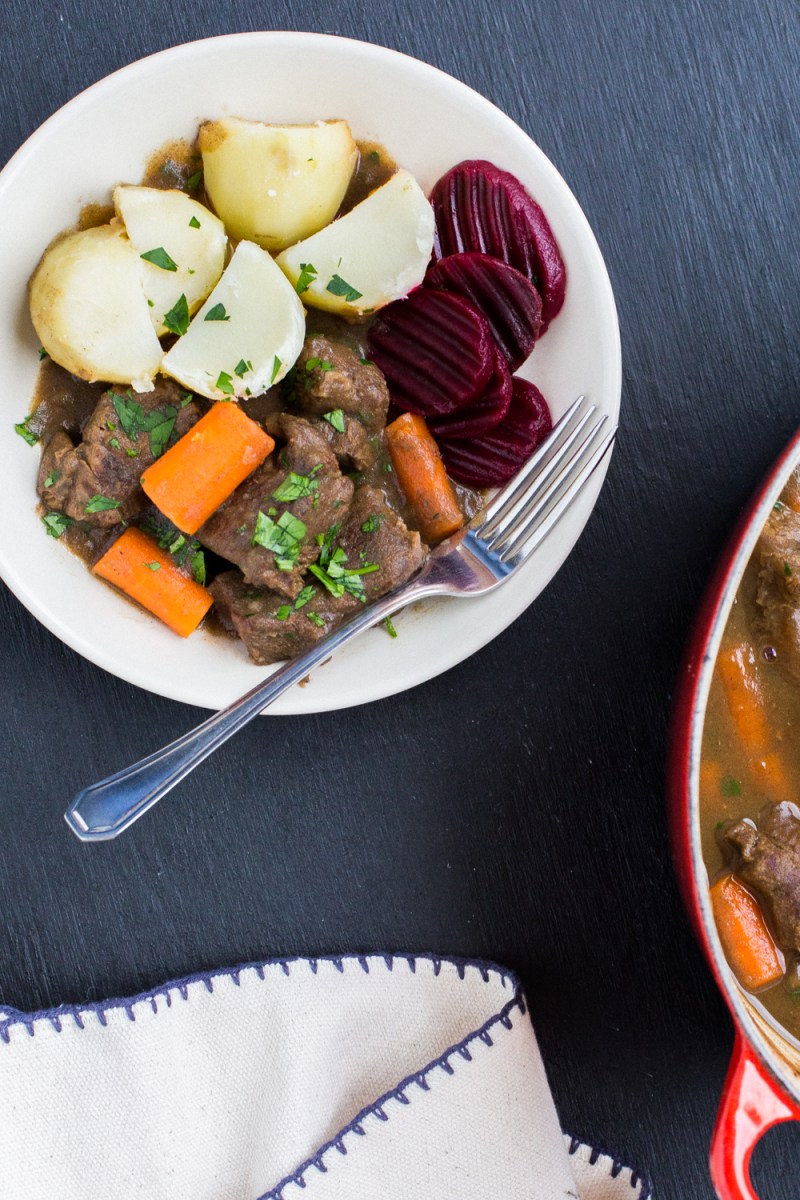
Beef

Kalops is a traditional Swedish stew, first recorded in the 18th century. The word kalops itself is a cognate with the English word collops, which simply means “a slice of meat” – there’s actually some dispute as to whether the Swedish or English word came first. Either way, this stew is very similar to many English stews, but with a few Scandinavian twists: its signature flavor comes from a healthy amount of allspice, and it is commonly served with pickled beets. When carrots are added, the dish is called Skånsk Kalops, referring to the Skåne region (which is in Southern Sweden – perhaps carrots grow most abundantly there?).

Kalops is most often prepared with chunks of beef, but reindeer or elk are used as well. Personally, I thought it would be neat to make it with bison chuck roast, which US Wellness Meats recently sent me to try. It was pretty awesome. Overall, I loved this stew, and its characteristic allspice-heavy flavor gave it a warm, hearty, and very distinct taste.

Read Full Article

With our extended winter this year (spring is finally springing in our neck of the woods this week!), I found myself craving comfort foods to help me get over the cold-weather blues. And for that very same reason, I decided to focus on an American classic for this week’s recipe – one that some might consider a quintessential comfort food. Believe it or not, it’s very hard to find any sort of origin or history around the combination of sausage, peppers and onion. It’s a staple food of Fenway Park, so it must be a Boston thing, right? But others associate it with NYC, and still more with Chicago. All I can say with certainty is that it’s of Italian-American descent, with fairly deep roots, and an easy way to make a quick delicious meal.

The word “sausage” originally comes from the Latin word salsus, which means “salted.” There is evidence of it being enjoyed in Italy as much as 2,000 years ago. That it has a long culinary existence isn’t so surprising; sausage is a perfect way of making sure every bit of the animal is used, and deliciously so. Here in the US, the words “Italian sausage” imply a seasoning based on fennel seeds and anise, and can be sold as either mild or spicy.

Read Full Article

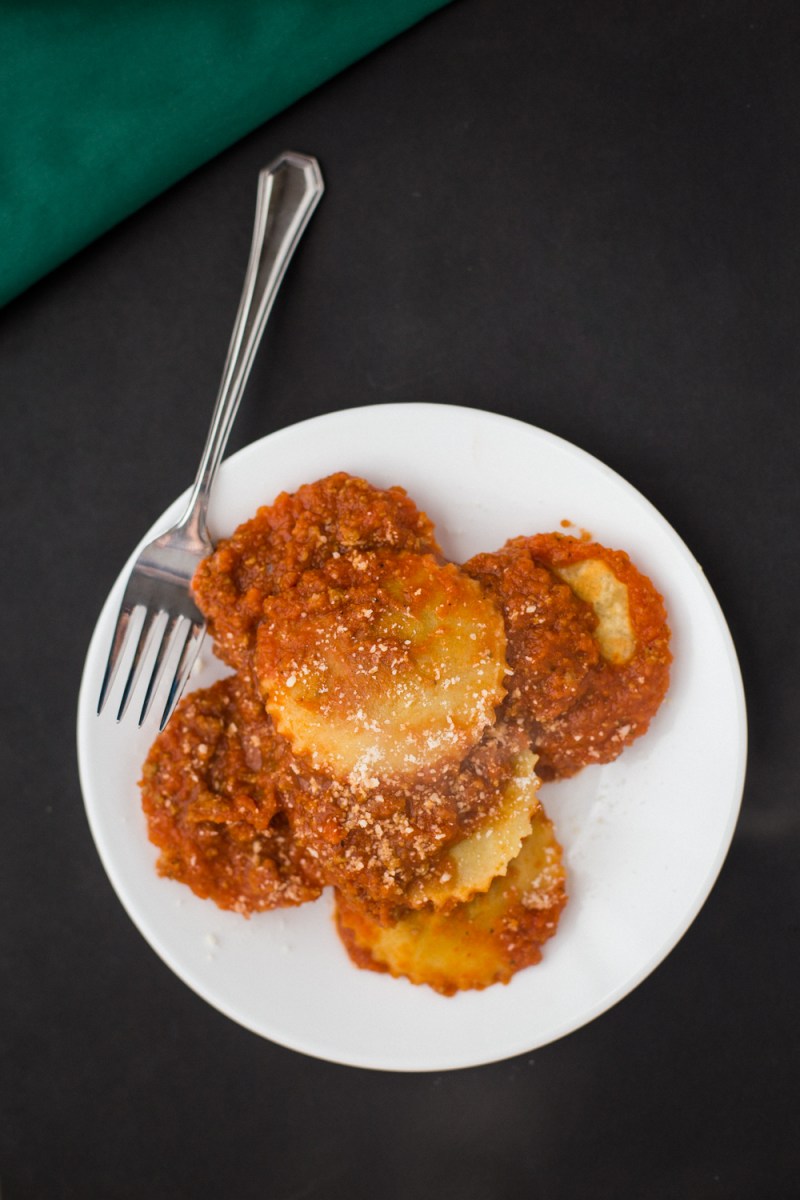
When removing gluten from my diet a couple years ago, one dish I assumed I would never taste again was ravioli. Seriously, how could I pull that one off without flour? I’m sure it could be done, but it would take weeks, even months, of trial and error. I love ravioli, but frankly, not enough to put myself through that kind of ordeal. Luckily, a moment of genius struck me when trying to figure out something unique to make with my most recent batch of Cappello’s Gluten/Grain Free lasagna sheets. They did all the hard work for me; I just had to put everything together.

Ravioli has been written about since the 1300s, so logic dictates that it’s been around longer than that. It probably took a while to get the attention of the scribes, right? There are countless variations of ravioli, but since this was my first time making it in years, I wanted to style it after my childhood favorite – Chef Boyardee beef ravioli!

Read Full Article

The word cutlet is a bit of a culinary mystery – everyone has their own interpretation of what it means. Throughout most of Europe, a cutlet is a thinly-sliced cut of meat (usually pork or veal) that is beaten, covered in breadcrumbs, and fried (think schnitzel). This is the same in the US, but they are mostly made with chicken breasts. The Japanese like to use pork (tonkatsu). Australia uses either chicken or lamb. Great Britain is a little different in that cutlets are usually not breaded.

And then there’s Russia. Somehow, as they trotted down the path of history, the Russians decided that котлет was a pretty good word for what we in the US would call a hamburger steak. Russian cutlets are a very common household dish, probably due to how easy they are to prepare. What’s funny is that they often eat cutlets between two slices of bread as a snack – which sounds a lot like a hamburger to me, although they are still called cutlets.

So at the end of the day, you could have three people walking down the street,

a) eating a Chick-Fil-A sandwich
b) eating a schnitzel sandwich (they exist!)
c) eating what basically looks like a hamburger

…and they’d all tell you they are eating cutlets.

So, after working on my Russian cutlets for a while, I decided to make a dish that is unique in that it would be fit to serve at a restaurant (which is ironic, because cutlets are rarely served in restaurants in Russia).

Read Full Article

To start off the New Year, I’ll be posting only Whole30-compliant recipes this month. What is the Whole30 Program? It’s very similar to what I eat already, but with a few more restrictions: no dairy (except ghee), no white potatoes, no rice, no alcohol, no sugars or sweeteners of any kind. It’s a great way to jump headfirst into an ancestral diet (although easing into a Paleo diet is just fine, too) and see some dramatic changes in your health.

For my first January recipe I wanted to share one of my go-to comfort foods: sausage and sauerkraut. It can be whipped up in less than 30 minutes and always hits the spot! Sauerkraut is a superfood thanks to its healthy bacteria; Genghis Kahn took it with him as he conquered Eurasia, and Germans brought it with them on ships as they traveled to America, in order to fight off disease. Admittedly, many of its healthy bacteria are destroyed in the cooking process of this dish, but don’t let it deter you from chowing down on this tasty recipe! When shopping for sauerkraut, be sure to buy some that only has water, salt and cabbage as its ingredients. You can always make it yourself, too; it’s one of the easiest pickling endeavors you could undertake.

Read Full Article

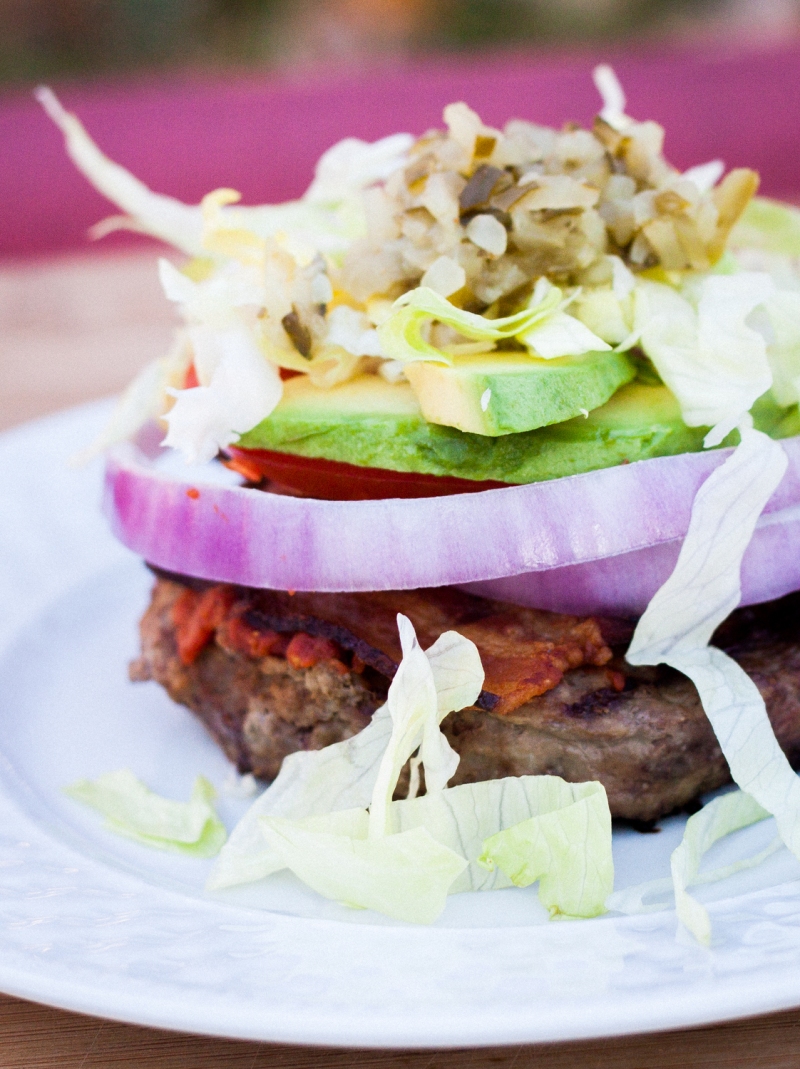
Last weekend we got together with our friends Brent and Heather from Virginia is for Hunter-Gatherers and collaborated on a couple of dishes. Brent tackled a cole slaw that was pretty dang tasty, and we also built a few interesting fork-and-knife burger creations based on some standard burger concepts. It was fun to jump into someone else’s kitchen and throw together some food, and it all turned out so well that I figured I should share our results.

The origin of hamburgers is greatly disputed, but most sources point to the bread-and-burger invention being of American origin, and showing up in the late 19th century. A connection to the German port city of Hamburg is a little hard to find, but it turns out that ground beef steaks were common in Hamburg in the mid 1800s, which were brought to the city by Russians. They were served raw. Some years later, New York City became a common destination for travelers from Hamburg, and local German immigrants started selling the raw ground beef steaks, called Hamburg steaks, to visiting German tourists – who were otherwise known as “Hamburgers” (in the same sense that someone from New York is a “New Yorker”). Sometime down the line, the “Hamburger sandwich” was born, and the rest is history.

Read Full Article

My friends at Lava Lake Lamb recently started carrying grass-fed beef, and I jumped at the chance to give some of it a try. One particular challenge came in finding a unique, yet somewhat traditional, way of preparing sirloin steak; it’s a very simple cut, which fares the best with a simple preparation (garlic, salt, and pepper are usually perfect). Luckily, after some digging I discovered quite a few different ways that people grill this steak in Turkey, so I developed a recipe based on some of those traditional Turkish methods.

It’s hard to find specific history related to grilled beef steaks in Turkey – in fact, many regions only ate meat during special celebrations until very recently. My guess is that this particular preparation is relatively new to the country, probably only 50 years old. But at the end of the day, it doesn’t really matter – this steak was delicious, regardless of how long people have been cooking it!

Read Full Article

NOTE: An updated version of this recipe appears in my cookbook, The Ancestral Table.

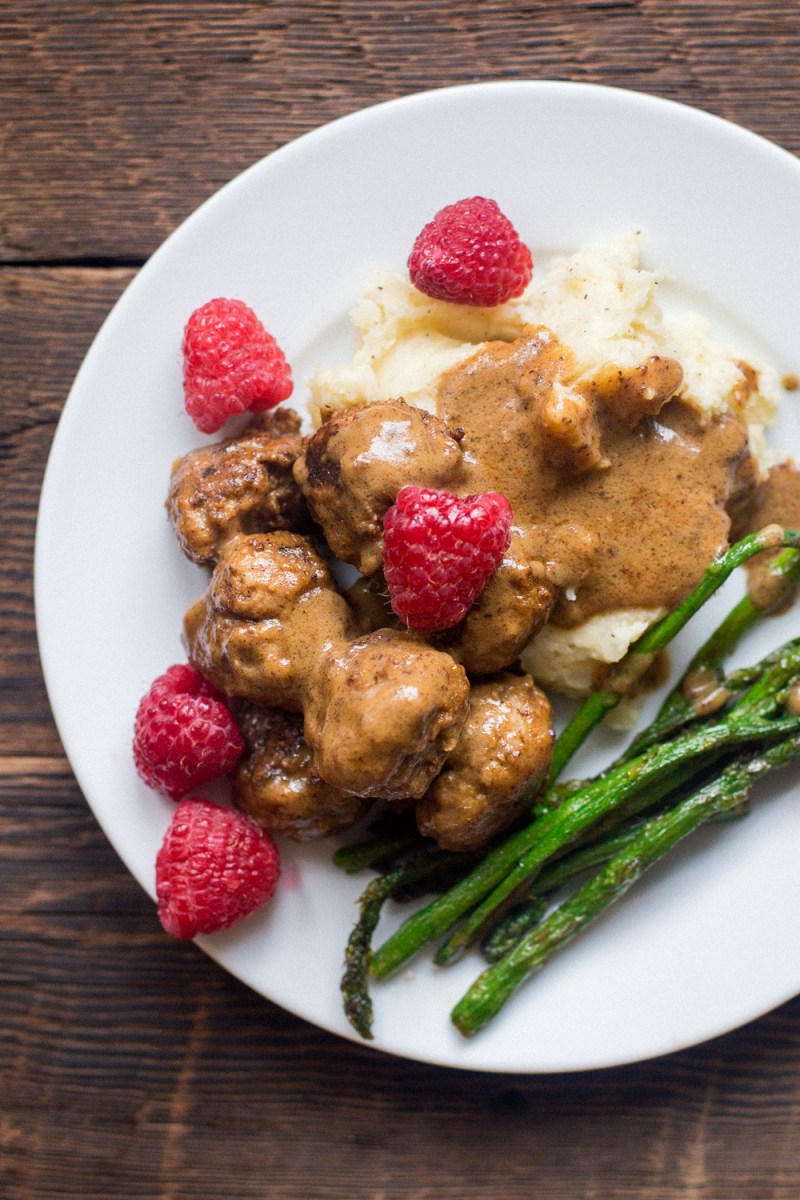
While meatballs have been around forever, the first written documentation of meatballs in Sweden appeared in the 18th century. Meatballs were likely an uncommon food in Sweden until the widespread use of meat-grinders; they later became standard Smörgåsbord (the original buffet!) fare. Scandinavian immigrants brought their meatballs to the United States, particularly the Midwest, during the 1920s. Swedish meatballs are unique in that they are pretty small and often served with a cream-based gravy.

Most Swedish meatballs are made using breadcrumbs (even IKEA’s!) so I set off to make a gluten-free version of the classic dish. It was surprisingly easy, with almond meal, cream, and egg yolk making a pretty hefty binder. I also found that in making the gravy, regular white rice flour (not sweet rice flour) created the best consistency.

Read Full Article

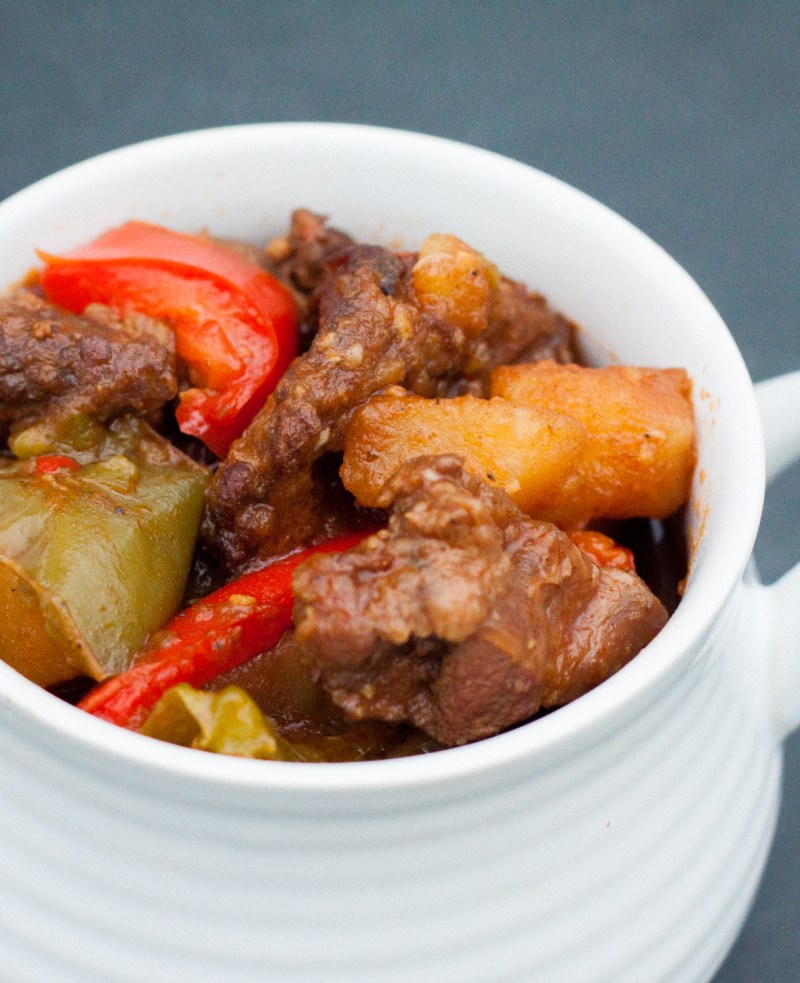
Goulash has a fairly long history, as it is traced back to 9th century Hungarian shepherds (the term gulyás translates to “herdsmen”), when soup was an important part of the lifestyle. People would dry meats and veggies and then add hot water later to create a soup, and goulash was born. Although paprika is a signature spice of both Hungarian cuisine and this dish, it wasn’t introduced until the 16th century (bell peppers came from the New World), so the original variations of this dish were paprika-less.

Goulash is often classified as a stew here in the United States, but many Hungarians maintain that it’s a soup, often to differentiate it from a similar, thicker dish called pörkölt. Goulash is often served over egg noodles or spätzle, but many variations use potatoes, including mine. They help to bring a hearty feel to the dish, plus they conveniently thicken the sauce at the same time.

Read Full Article

NOTE: An updated version of this recipe appears in my cookbook, The Ancestral Table.

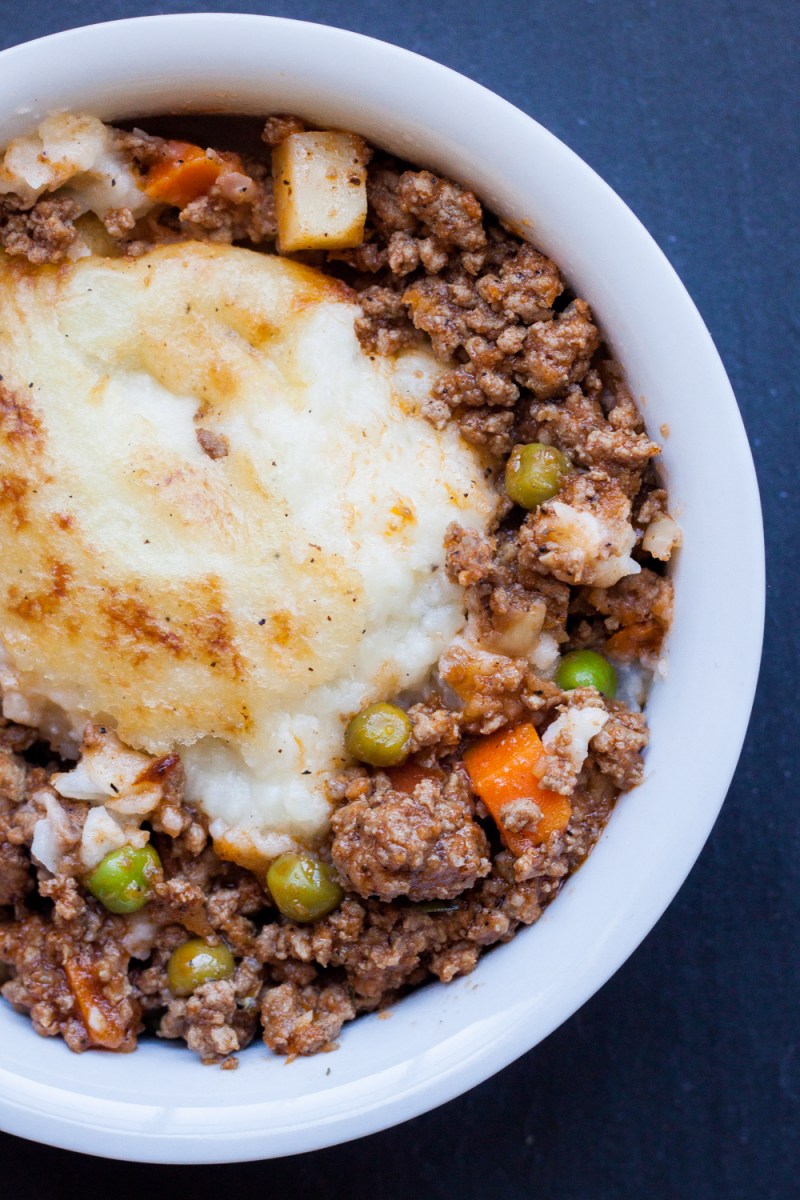
Although meat pies have been eaten in the British Isles since the Middle Ages (14th Century, last I heard), Shepherd’s Pie as we know it today coincided with the arrival of the potato in Europe. The Spanish brought potatoes to Europe in 1520, but they didn’t catch on until the 18th Century in Great Britain. Shepherd’s Pie appeared shortly thereafter – although under its original name, Cottage Pie, and made mostly with beef. The term Shepherd’s Pie followed about a hundred years later, along with the idea that it should be made with mutton. Today, Shepherd’s Pie can be made with beef or lamb, or sometimes both, while Cottage Pie usually refers only to the beef version of the dish.

Another interesting thing about this dish is the fact that it’s prevalent in many other cultures, with some pretty amusing names, like Pâté Chinois (“Chinese Pie”, French Canada), Картофельная Запеканка (“Potato Baked Pudding”, Russia), and Escondidinho (“Hidden”, Brazil).

Read Full Article