4 – Red Meat

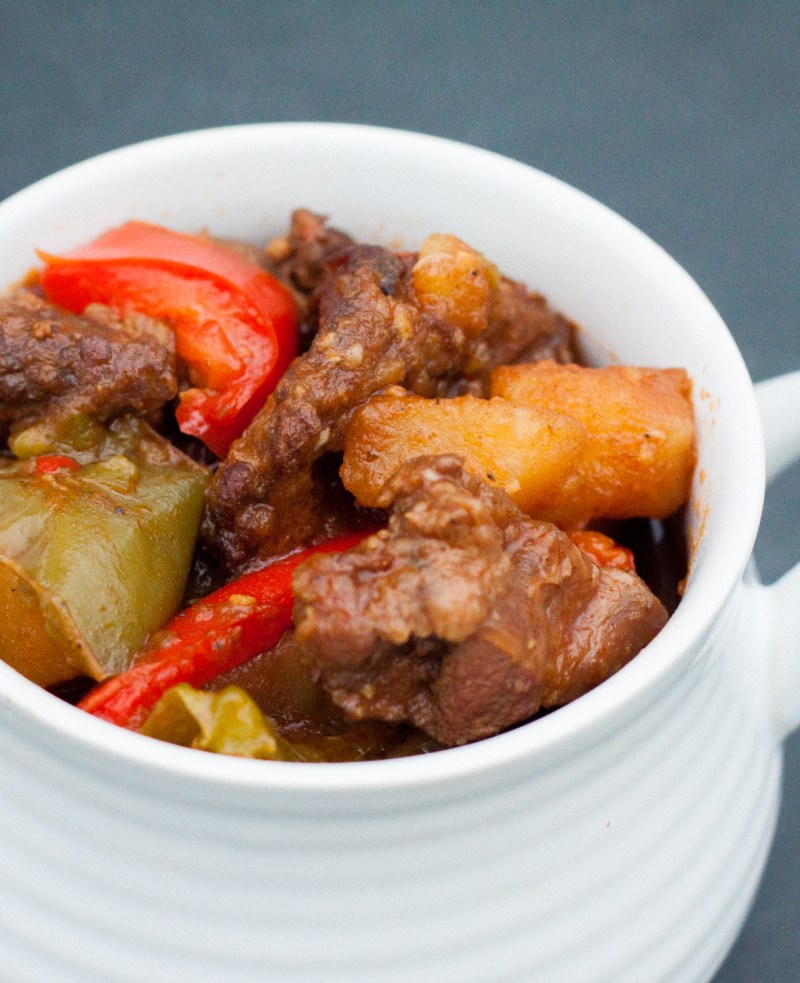
Goulash has a fairly long history, as it is traced back to 9th century Hungarian shepherds (the term gulyás translates to “herdsmen”), when soup was an important part of the lifestyle. People would dry meats and veggies and then add hot water later to create a soup, and goulash was born. Although paprika is a signature spice of both Hungarian cuisine and this dish, it wasn’t introduced until the 16th century (bell peppers came from the New World), so the original variations of this dish were paprika-less.

Goulash is often classified as a stew here in the United States, but many Hungarians maintain that it’s a soup, often to differentiate it from a similar, thicker dish called pörkölt. Goulash is often served over egg noodles or spätzle, but many variations use potatoes, including mine. They help to bring a hearty feel to the dish, plus they conveniently thicken the sauce at the same time.
Read Full Article

NOTE: An updated version of this recipe appears in my cookbook, The Ancestral Table.

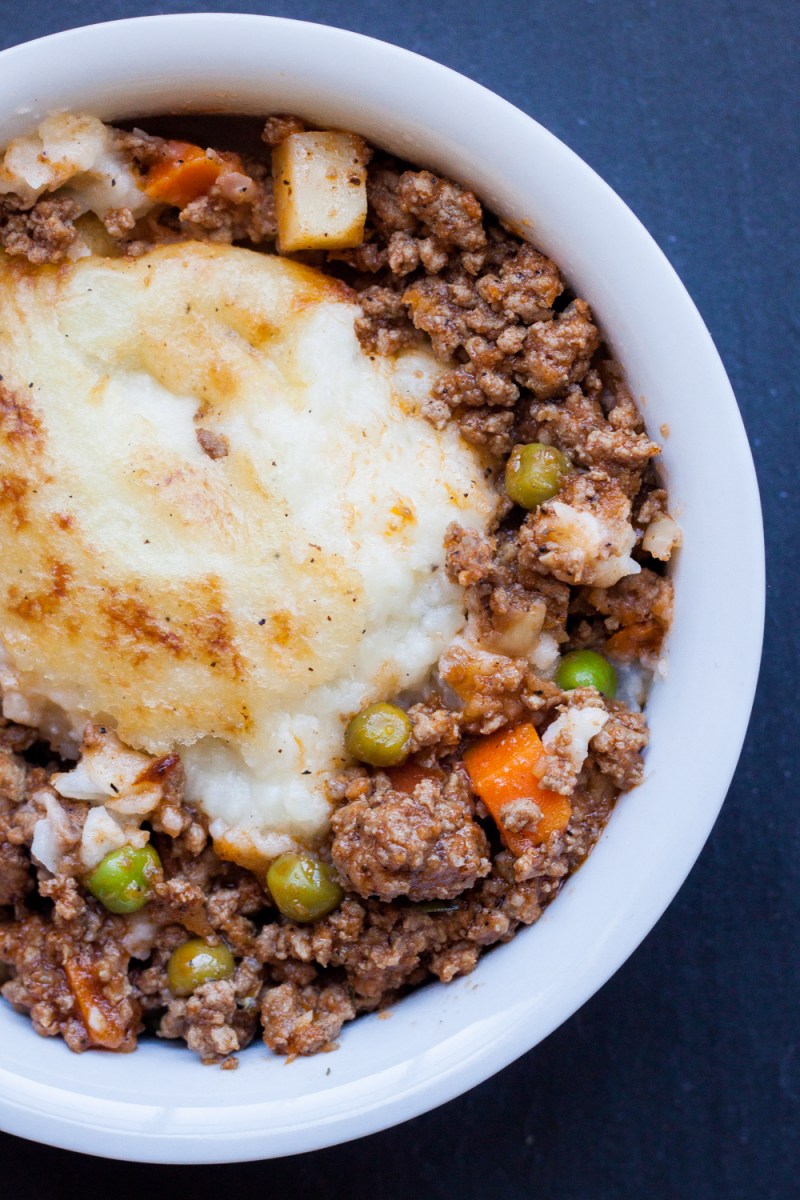
Although meat pies have been eaten in the British Isles since the Middle Ages (14th Century, last I heard), Shepherd’s Pie as we know it today coincided with the arrival of the potato in Europe. The Spanish brought potatoes to Europe in 1520, but they didn’t catch on until the 18th Century in Great Britain. Shepherd’s Pie appeared shortly thereafter – although under its original name, Cottage Pie, and made mostly with beef. The term Shepherd’s Pie followed about a hundred years later, along with the idea that it should be made with mutton. Today, Shepherd’s Pie can be made with beef or lamb, or sometimes both, while Cottage Pie usually refers only to the beef version of the dish.

Another interesting thing about this dish is the fact that it’s prevalent in many other cultures, with some pretty amusing names, like Pâté Chinois (“Chinese Pie”, French Canada), Картофельная Запеканка (“Potato Baked Pudding”, Russia), and Escondidinho (“Hidden”, Brazil).

Read Full Article

NOTE: An updated version of this recipe appears in my cookbook, The Ancestral Table.

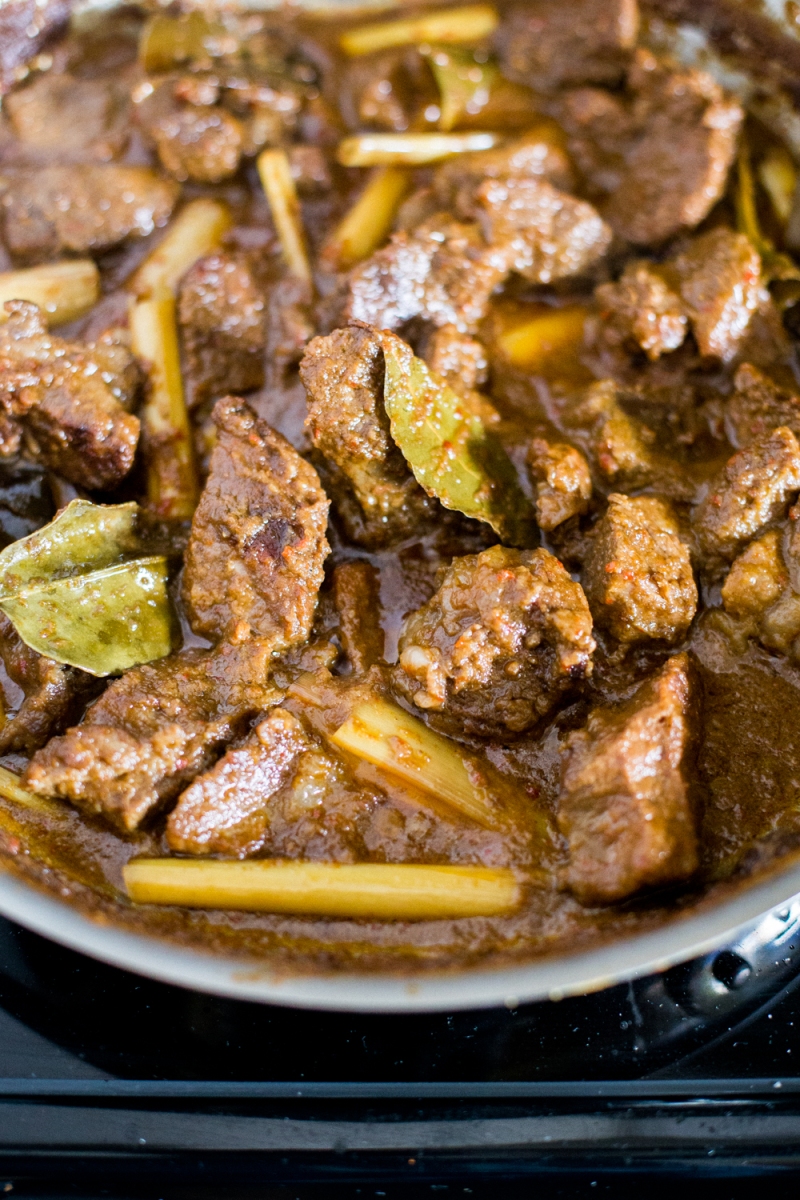
Rendang is a dry curry originating among the Minangkabau people of West Sumatra, and later spreading throughout Indonesia and Malaysia. It’s one of the most recognizable Southeast Asian dishes, with its distinct…well, ugliness and signature intensity. This “dry” method consists of simmering down coconut milk for several hours to intensify the flavors (and also preserve the meat, which was probably how the dish was started). The end result is a taste so significant that it can be downright overwhelming.

Rendang is usually made with beef, but it can sometimes be found using mutton or water buffalo. For this dish, I used a combination of TX Bar Organics’ delicious and lean stew meat, and a pound of fattier chuck roast. This allowed me to use the chuck roast’s rendered fat to brown the beef during the last stage of cooking.

Read Full Article

Some eagle-eyed readers may recall that in my Memphis-style barbecue beef back ribs recipe from earlier this year, I only used half of the huge 16 lb. package of beef back ribs that US Wellness Meats sent me. I had been eyeballing the remaining two racks of ribs for a while and I decided to take a different approach to the ribs this time; the Memphis-style recipe was a lot of fun, but it also took a lot of work (and some specialized equipment) to get that perfect taste. This time around, I wanted to make something that was ridiculously easy and still produced some high-quality, juicy, and tender beef ribs.

So I turned to my dear old gas grill, and let the magic of indirect heat run its course.

Read Full Article

NOTE: An updated version of this recipe appears in my cookbook, The Ancestral Table.

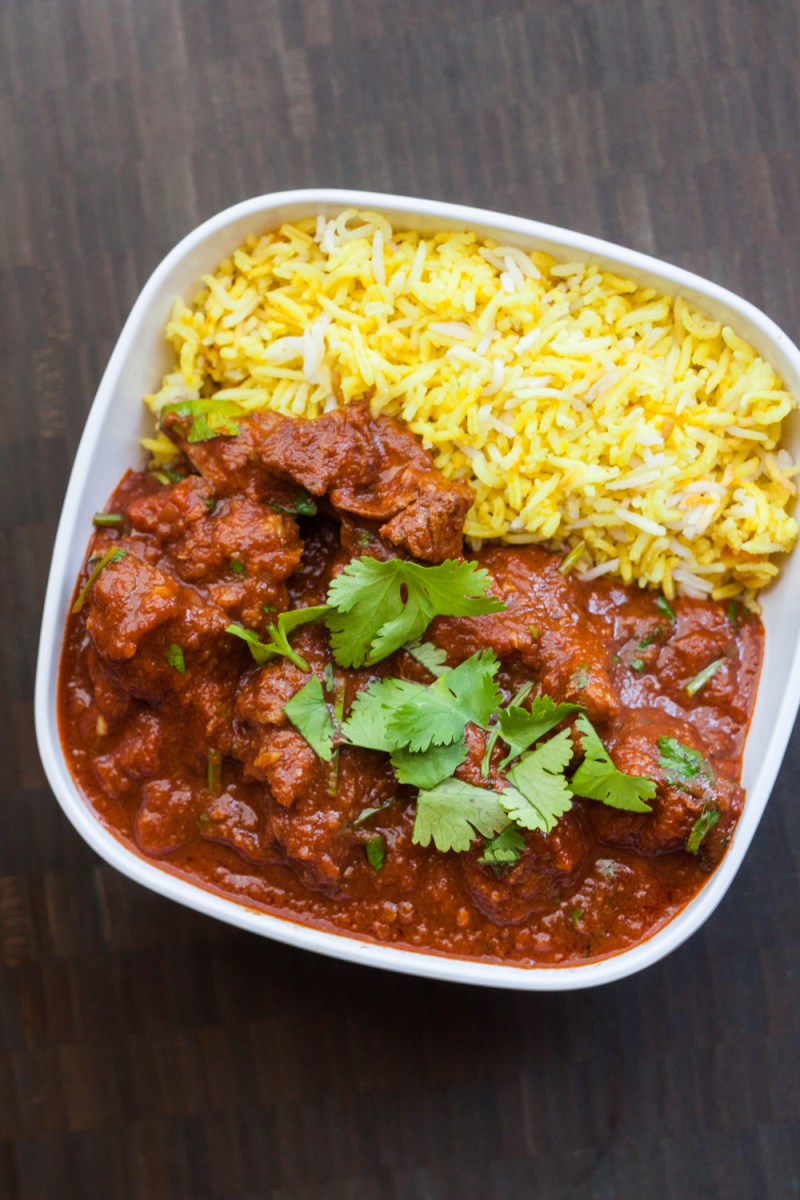
Rogan Josh is a popular Kashmiri dish that is believed to have originated in Persia before making its way to Northern India and beyond (in Persian, “rogan” means clarified butter and “josh” means hot or passionate). Its signature red color is historically the result of mild red Kashmiri chiles which were used in making this dish. Over the years, many restaurants started using tomatoes in the dish to bring about that red color easily. My recipe follows the more modern interpretation of the dish, mostly because you and I don’t have the money to travel to Kashmir for some chiles! Well, maybe you do, but I most certainly do not.

An excellent cut of lamb for this dish was the other half of Lava Lake Lamb’s beautiful lamb shoulder (the other half was used to make shashlik). This slightly-fatty cut imparted a ton of flavor into the dish, which just tasted better and better the longer it simmered.

I’m also happy to announce that this is my first recipe that features a printer-friendly version! I’ll be sure to do this with every recipe from now on, and as I get the spare time I will go back and make printer-friendly versions of all my recipes.

Read Full Article

NOTE: An updated version of this recipe appears in my cookbook, The Ancestral Table.

Shashlik (Шашлык) is a type of shish kebab commonly found in Russia and the former Soviet republics. It was likely brought to Moscow from Central Asia in the 19th century. Today, it’s a popular summer food cooked over an open fire at social gatherings. It’s traditionally prepared with lamb, but chicken, pork, and beef variations are becoming increasingly prominent. With summer in full swing throughout the country right now, I thought it would be a great time to share this tasty dish!

There are a few tricks that I came up with when developing this recipe that I think are pretty sweet. While the dish is traditionally marinated in either vinegar or lemon juice, I found that the combination of lemon juice and apple cider vinegar gives the meat a tangy and subtly sweet flavor. Secondly, leaving the salt out of the marinade and saving it for the last stage of the recipe provides for a really great complementary texture to the tender and juicy meat.

Read Full Article

NOTE: An updated version of this recipe appears in my cookbook, The Ancestral Table.

Cabbage rolls are found all over Europe, Asia, and the Middle East. They are staple dishes in Croatia, Poland, Ukraine, Russia, and Sweden; in Russia, they’re called голубцы (golubtsy) and make regular dinnertime appearances in most homes.

There is some controversy over the origin of the dish. One common theory is based on its name, which could be linked to the word Russian word for pigeons (голуби). Russian cuisine and culture was heavily influenced by the French in the 17th and 18th centuries, and these stuffed cabbage rolls could be an attempt to recreate roasted pigeons, a popular French dish at the time.

Read Full Article

There’s an old saying: lamb is a meat best grilled. Okay, that may not be an old saying, but it should be. Something about lamb and direct heat go together really, really well. So when Lava Lake Lamb sent me some of their lamb sirloin for a recipe, I knew it was going directly on the grill.

This recipe uses a simple marinade that combines maple syrup and spicy brown mustard to complement the lamb’s natural deliciousness.

Read Full Article

NOTE: An updated version of this recipe appears in my cookbook, The Ancestral Table.

Pho, often considered the national dish of Vietnam, is a rice noodle dish that uses a beef bone broth. It’s hard to describe the basic, yet complex taste that comes from this unique mix of broth, beef, spices and herbs – I recommend just going to your local pho joint and trying it for yourself. You’ll be hooked. I had my first bowl right after moving to Hawaii in 2001, and ever since then I’ve been slightly obsessed with figuring it how to make it at home. After several dozen ho-hum attempts I finally settled on this, which I consider my definitive, recipe.

This dish emerged from Hanoi in the early 20th century, and was brought to the US in the 1970s by refugees after the fall of Saigon. The inclusion of beef in the dish is reflective of its French influence; prior to French colonialism, cows in Vietnam were mainly used for labor and not as a food source. I’ve read a few different histories of the word “phở” itself, and my favorite is that it came from the French word “feu” (fire), and that pho itself is Vietnam’s take on the popular French beef stew, pot au feu.

Read Full Article

Bangers and mash is a traditional English dish and the quintessential “pub food”; it can be made for large groups of people at once with relative ease. This isn’t your standard bangers and mash dish since it’s typically served with beef or pork sausage and mashed potatoes, and I’m being crazy and using lamb sausage and colcannon. Regardless, this dish still has the same desired effect: it’s a hearty, savory dish that really hits the spot on a rainy day.

A perfect sausage for this dish was Lava Lake Lamb’s Rosemary and Garlic Sausage, which had a rich sausage flavor but was only slightly “lamby” in taste – in the end it was an excellent pairing of this savory sausage and the mild, buttery colcannon.

Read Full Article