
6 – Pork

Saimin is a dish unique to Hawaii, and a marriage of the many cultures found on the islands. Chinese egg noodles are served in a Japanese broth with garnishes taken from Chinese (char siu), Japanese (fish cake), Filipino (adobo), Korean (won bok cabbage), and Portuguese (sausage) cuisine. My favorite saimin in Hawaii is found at Shiro’s Saimin Haven, which features 70+ variations of the dish (my favorite is “dodonpa” – 10 garnishes!). Likewise, fried saimin is a stir-fried version of the soup, and is also popular in many saimin shops. It’s a refreshing break from noodle soups and your everyday lo mein-style dishes. Unfortunately, saimin noodles are made with wheat.

To remedy this, I settled on sweet potato-based noodles, which as far as I know are a Korean invention. They are made with just sweet potato starch and water, and are similar to glass/bean noodles used in dishes like chicken long rice.

Read Full Article

While in Germany last year, I came across a Bavarian dish called “Schweinshaxe” (pork knuckle), which is a ham hock that is boiled and roasted to a crisp. I enjoyed picking apart this barbarian hunk of meat, and I wanted to replicate the experience at home. Since uncured ham hocks are hard to come by, and most butchers would look at you funny if you asked for a pork knuckle, I decided to try out a different cut but with similar result.

I settled on a pork shoulder (same thing as a pork butt), which is easy to find and fairly marbled. Pork shoulder is the cut used in pulled pork, so I thought I would roast a shoulder in the grill but take it off before it starts to fall apart; the outer shell came out deliciously crispy and the meat was juicy and tender.

Read Full Article

NOTE: An updated version of this recipe appears in my cookbook, The Ancestral Table.

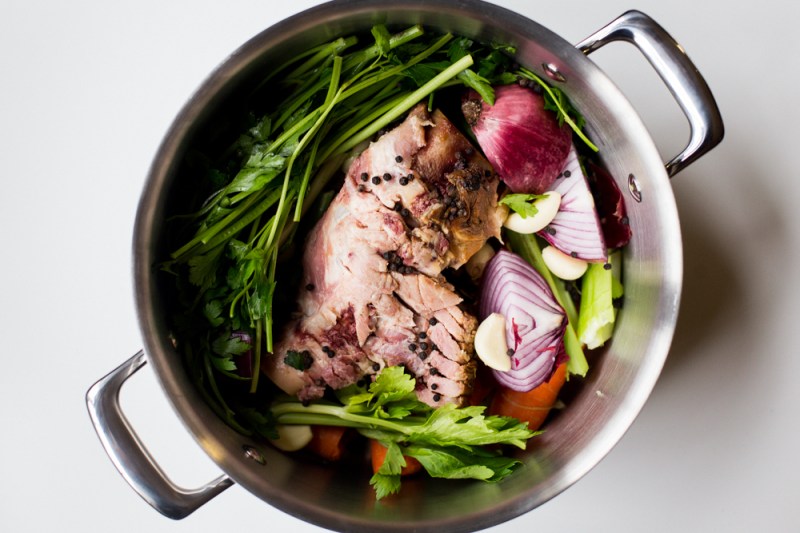
I decided to make a pork stock using our Easter Day ham – what else am I going to do with a huge ham bone? Although bean soups are usually the best and easiest use of ham stock, I may use it to steam some greens, make jambalaya, or a bean-free soup. Regardless of what I end up making with it, here’s how to make your own ham stock.

Read Full Article

NOTE: An updated version of this recipe appears in my cookbook, The Ancestral Table.

Chances are you saw the picture above when you read my post about mac and cheese the other day. Maybe not. Either way, I think the picture is good enough to use twice.

This pulled pork recipe is very similar to my kalua pig recipe but with less salt and liquid smoke (and BBQ sauce). Like most slow-cooked meats, I think that less is more when it comes to ingredients, so I like the meat’s natural taste and the BBQ sauce do all the talking.

Read Full Article

This recipe is similar to my original ribs recipe, but with spare ribs instead of baby back ribs, and with more ingredients in the braising liquid. It resulted in a rich, complex meaty taste.

The first thing you’ll probably notice right off the bat is that spare ribs aren’t very nice looking. “Spare ribs” is a phrase used for the lower ribs, which aren’t particularly evenly cut. That’s the sacrifice one makes for getting cheaper ribs! The ribs I used in my recipe were pre-cut but you may have to cut them yourself. Also, spare ribs are usually home to a bunch of pieces of cartilage, which some people find unappealing; personally, I like to dig around the ribs and find them.

Read Full Article

Since most spring and egg rolls are made with wheat-based wrappers, Vietnamese spring rolls end up being one of the only spring rolls that are compatible with our wheat-free diet. Luckily, these spring rolls are nice and tasty.

The traditional recipe calls for cellophane noodles, which are usually made with bean starch (although which bean is sometimes hard to decipher). I decided to circumvent the whole problem by using glass noodles made with sweet potato starch, which you can find in many Korean markets for relatively cheap.

Read Full Article

NOTE: An updated version of this recipe appears in my cookbook, The Ancestral Table.

What’s there not to love about pork belly? It’s basically just super thick slices of uncured bacon. I’ve seen this cut at our local Asian market for years but didn’t know how to prepare it until I stumbled upon this recipe at Rasa Malaysia, and decided to give it a shot. What resulted was an impressive-looking dish with a crispy, flavorful outside layer and a tender and delicious center.

Read Full Article

NOTE: An updated version of this recipe appears in my cookbook, The Ancestral Table.

If you’ve ever been to a Vietnamese restaurant and not headed straight to the pho section of the menu, you may have tried lemongrass pork, which is a sweet/savory grilled pork dish. I decided to incorporate these unique flavors into thick-cut pork chops (because face it, there’s only so many ways to cook pork chops) and I added a citrusy pan sauce on top for good measure.

Brining is an essential part of juicy pork chops (even the traditional Vietnamese recipe calls for marinating overnight), so be sure to start this recipe well in advance of dinnertime.

Read Full Article

NOTE: An updated version of this recipe appears in my cookbook, The Ancestral Table.

Successfully making BBQ ribs is probably the most hotly-debated item in my repertoire. True BBQ experts insist that the only way to cook ribs is over a slow heat outdoors for a long period of time (read: all day). My recipe creates consistently-good BBQ ribs that all but narrow-minded purists can easily enjoy.

Read Full Article

Spam is very popular in Hawaii, dating back from its widespread use in World War II. In fact, spam is consumed more per capita in Hawaii than in any other state, and is even served at McDonald’s and Burger King there. This little dish also doesn’t carry the “poor people’s food” stigmatism that it enjoys in the rest of the US. Spam musubi is a variation of Japanese onigiri (rice balls wrapped in nori seaweed) and is a common snack in Hawaii; I personally lived off of them for years. We would often sneak them into our pockets for UH football games and take them on plane trips to the mainland. Ah, memories.

Now that we’ve been living in the Baltimore/DC area for the past couple years, our only shot at getting our hands on spam musubi is making it at home. Luckily my wife is awesome and can make it with her eyes closed. To capture the authentic Hawaii taste you’ll need Aloha brand shoyu (which contains soy and wheat) as well as mirin (sweet rice wine, which is hard to find without corn syrup nowadays) so I’m labeling this as an “official cheat meal”. You could definitely try it with tamari to eliminate the wheat, or coconut aminos to also eliminate the soy, but the taste may be compromised. Also, keep a look out for mirin without corn syrup, which you can find at some Japanese grocery stores.

Interestingly, spam is paleo-friendly; its ingredients consist mainly of pork products and potato starch. It is, however, loaded with sodium and nitrites, so you’ll definitely want to eat it sparingly, look for the lower sodium version, and drink lots of water! (I sound like my mother.)

Also, you’ll need a onigiri/musubi mold, which you can find on Amazon for relatively cheap.

Read Full Article