Fish

Baltimore/DC friends: Come join me for a cooking demo and holiday social this Sunday! $10 entry to cover grocery costs, space limited to 30 guests. Click here for more info. See you there!

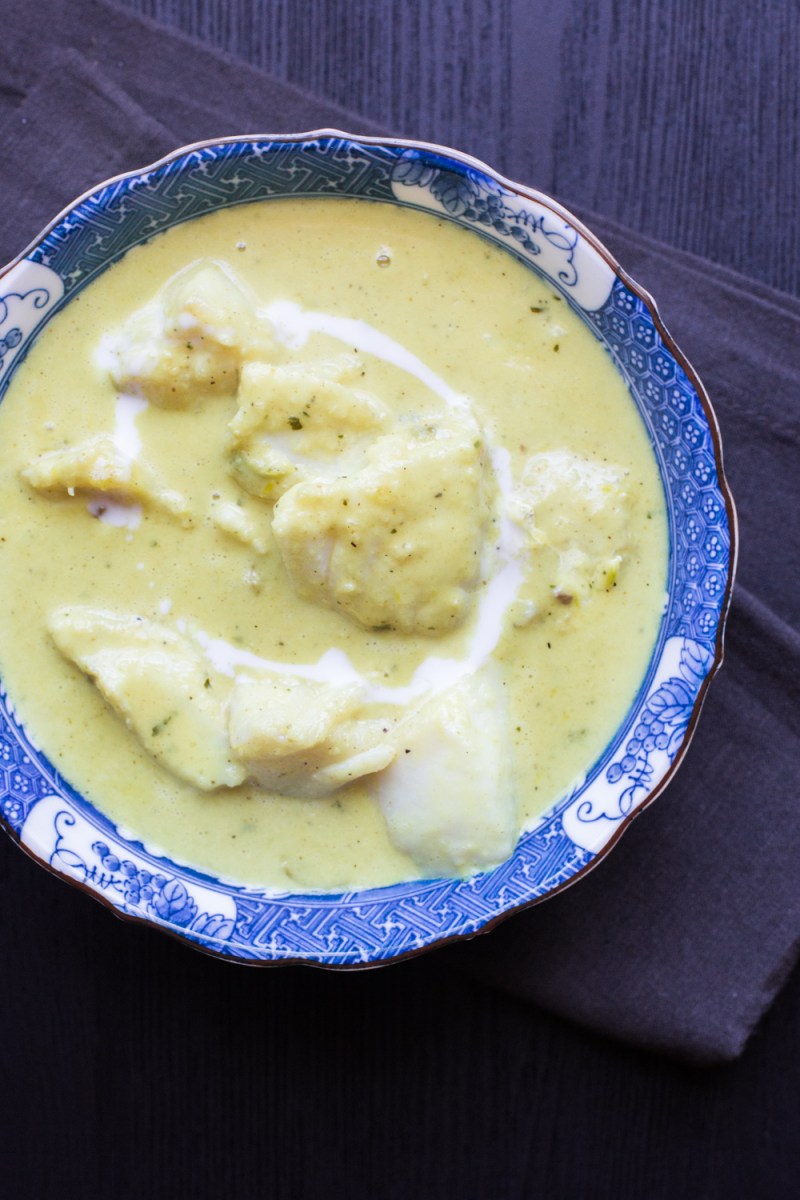
Mas Riha is a fish curry from Maldives, the small group of islands to the Southwest of the Indian subcontinent (it’s officially the smallest country in Asia). The dish is very representative of Maldivian cuisine, which is based on three main staples: fish, coconut, and starch.

While many people associate curries with hot, humid weather, I prefer them in the cold of winter; to me, the contrast of bitter cold weather and tropical food tends to embolden the curry’s flavors. This week is our first real glimpse of winter on the East Coast (there’s snow on the ground as I type this), so it seems like the perfect time to share this recipe. Fish curry is just about perfect, since it needs so little time to cook; you can easily throw together this entire delicious meal in less than 30 minutes.
Read Full Article

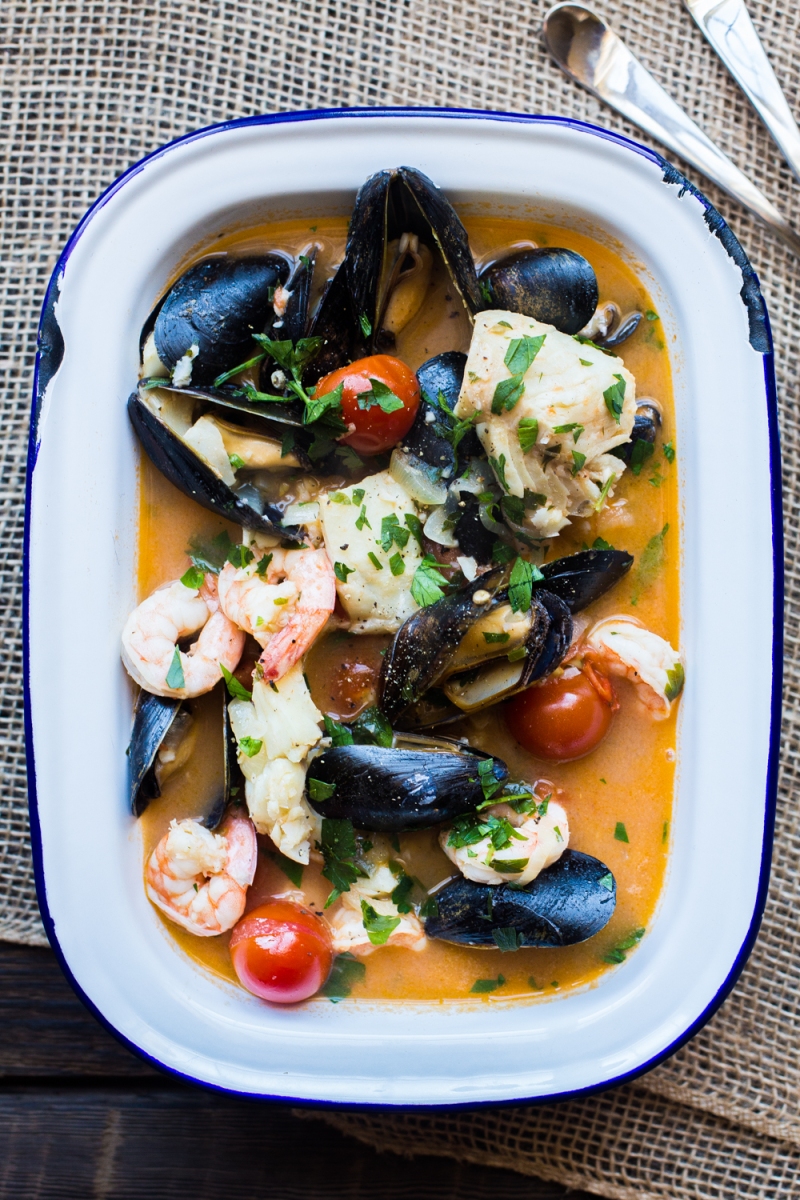
Brudet is a fish stew from Croatia, similar to an Italian Brodetto or Greek Bourdeto. All three are based on the Venetian word brodeto (“broth”). The recipes for each dish are similar; in fact, if you ever find yourself traveling along the Adriatic coast and see a similarly-named dish on a restaurant menu, you can probably bet it’s going to be a delicious fish stew cooked in a tomato base.

While there is a lot of variation to this dish, I like the Croatian version because it is an easy and unassuming approach to making soup. Marinate some fish for a while, then throw everything together at the proper time; it’s a true one-pot dish. Traditionally this dish is made with a mixture of fishes, to include eel, rockling, or coral trout; since they’re hard to come by, I think any firm white fish should be okay. I used cod. Adding shrimp and mussels also gives the stew a more rich and satisfying flavor.

Read Full Article

Mohinga is a Burmese rice noodle soup not unlike many other rice noodles soups found in Southeast Asia, like Pho and Laksa. Mohinga is unique in that it uses a catfish soup stock and it’s typically served for breakfast.

There are many variations of this dish out there, but the most common versions usually include chickpea flour (which I omitted since it’s legume-based) and banana tree stem (which I wasn’t able to find in my area). The fish used to make the stock is often pan fried and added to the soup upon serving. To replace the chickpea flour and pan-fried fish, I used crushed up fish and rice fritters, which was my recipe from last week. It ended up being a very good decision.

Read Full Article

Mankind has been dealing with leftover rice for a long time. While some common uses for old rice are fried rice and congee (rice porridge), rice cakes are also a great way to clean out the fridge. Many variations of rice cakes are made using leftover rice that’s pressed together and steamed or pan-fried. When ingredients are mixed into the rice cake, they often take on a different name, fritter.

In putting together this recipe, I looked to create a dish that has an ideal macronutrient ratio (40% fat, 30% protein, 30% carb), which I achieved by mixing in fish and an egg yolk, and pan-frying them in coconut oil. They came out great, and I plan on using this recipe as a baseline for future creations.

Read Full Article

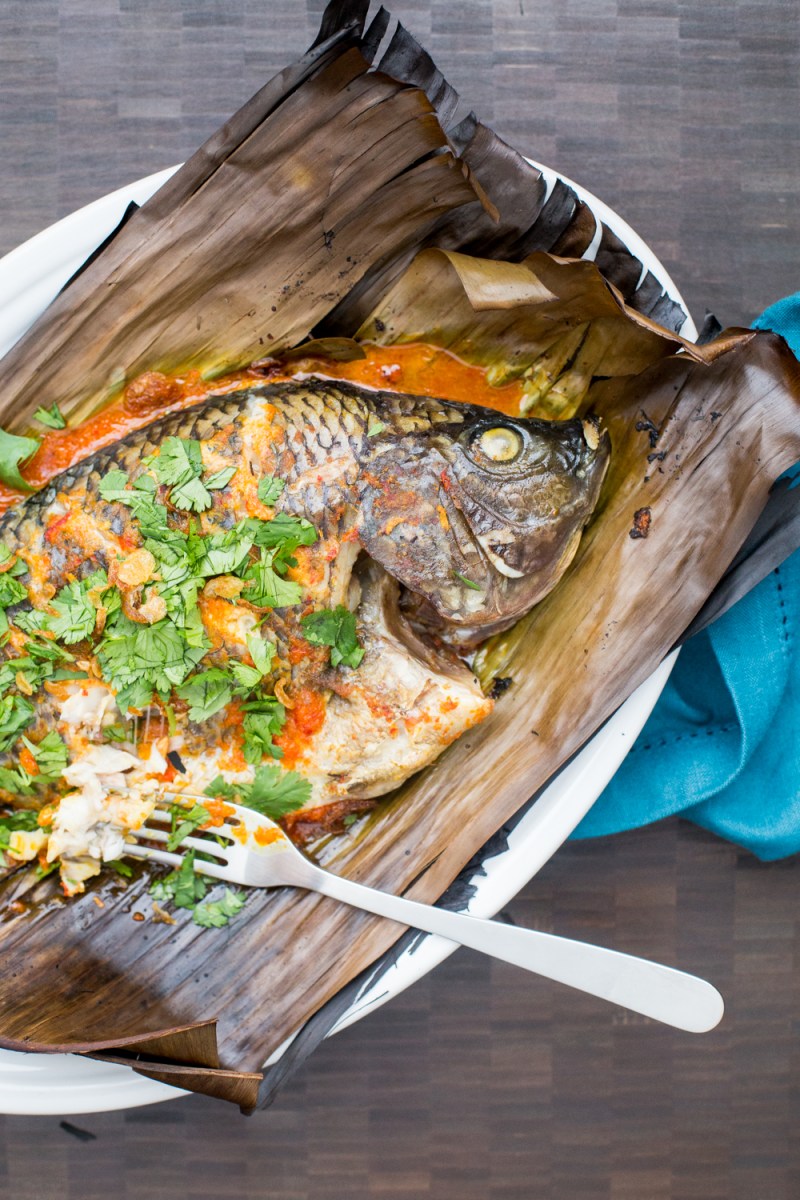
Ikan Bakar is a popular grilled fish dish (say that 3x fast) in Indonesia and Malaysia, usually sold by street vendors. The fish is marinated in sambal – a Southeast Asian chili-based condiment – and grilled over banana leaves. Popular fishes used for the dish include tilapia, skate, snapper, sea bass, or stingray.

While this is a very exotic-sounding dish, it’s surprising that all of the ingredients can be easily found during a trip to your local Asian market. Banana leaves are commonly sold frozen in large sheets for very cheap – usually a dollar will get you as many as 20 leaves. Bear in mind that frozen banana leaves are more brittle than fresh, and don’t hold up to heat as well – so you’ll want to get plenty of them, at least five leaves per fish.

Read Full Article

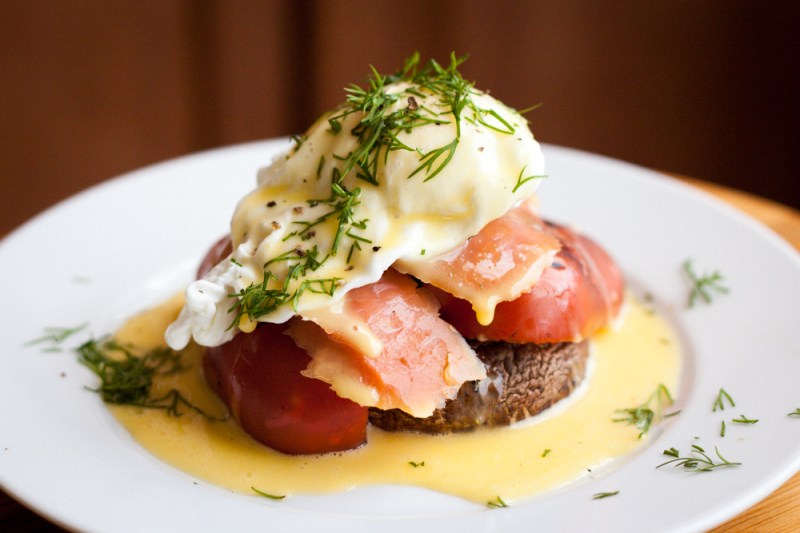
Have you been to Alex Boake’s blog yet? It’s pretty awesome. She complements each of her unique recipes with beautiful illustrations in place of photos, and each illustration carries a great sense of motion and impeccable placement. After a bit of gushing about her work, she offered to do a recipe swap – wherein she makes one of my dishes and draws it, and I make one of her dishes and take pictures of it. I thought it was a great idea.

I decided to try and tackle her Smoked Salmon Eggs Benedict recipe (also known as Eggs Atlantic, Eggs Hemingway, and Eggs Royale). I thought it was a fun gourmet dish to try for a weekend brunch, and I liked the idea of using a portabella mushroom cap to replace the standard english muffin typically found in this dish. The red bell pepper also adds a hint of sweetness not normally found in the dish, which was great. I only made one adjustment to her original recipe, and that was to add a little white vinegar to the water I used to poach my eggs – a trick I learned while working at a breakfast restaurant many years ago – the acidity helps to make sure the eggs don’t break apart during the poaching process.

Read Full Article

Saimin is a dish unique to Hawaii, and a marriage of the many cultures found on the islands. Chinese egg noodles are served in a Japanese broth with garnishes taken from Chinese (char siu), Japanese (fish cake), Filipino (adobo), Korean (won bok cabbage), and Portuguese (sausage) cuisine. My favorite saimin in Hawaii is found at Shiro’s Saimin Haven, which features 70+ variations of the dish (my favorite is “dodonpa” – 10 garnishes!). Likewise, fried saimin is a stir-fried version of the soup, and is also popular in many saimin shops. It’s a refreshing break from noodle soups and your everyday lo mein-style dishes. Unfortunately, saimin noodles are made with wheat.

To remedy this, I settled on sweet potato-based noodles, which as far as I know are a Korean invention. They are made with just sweet potato starch and water, and are similar to glass/bean noodles used in dishes like chicken long rice.

Read Full Article

NOTE: An updated version of this recipe appears in my cookbook, The Ancestral Table.

Lomi lomi salmon is a traditional Hawaiian dish served in most luaus. It is served cold and is an interesting way to consume a good chunk of nutritious, fresh food. The words “lomi lomi” in Hawaiian actually translate to “massage”, and comes from the the mixing of the ingredients by hand at the end.

I should caveat here at that I can’t stand raw onions, so I’ve never actually had lomi lomi salmon. However, my wife loves it, and makes a killer recipe that I thought the world should know.

Read Full Article

As I was putting together a quick lunch the other day I made this simple soup, and didn’t take any pictures of the process because I assumed it wasn’t going to be a very noteworthy meal. Fortunately for me it was delicious, but unfortunately for you I don’t have any other pictures of the recipe other than the picture you see above. Regardless, I think I can still walk you through this dish without any visual help.

I lived in Hawaii for seven years, and I was lucky to learn a lot about Asian soups while I was there, and I feel that this dish accurately reflects the all-inclusive nature of Hawaiian (“local”) cuisine. This soup is a combination of many traditional dishes: I made a broth similar to Japanese shoyu ramen, but incorporated assorted Japanese fishcake from a dish called oden, and used wakame seaweed which is most commonly found in miso soup. I then used the same rice noodles used in Vietnamese pho and added fish balls, which you would find in many soups in Singapore and Malaysia.

Read Full Article