Food

Update: Congratulations to Christopher S., who won the giveaway!

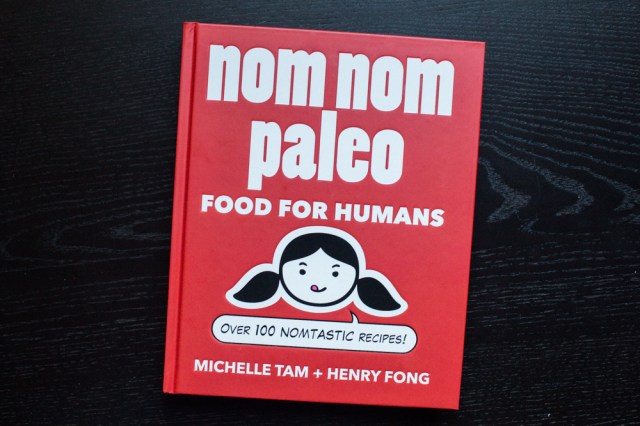
A while back, I made the decision that I wasn’t going write single book reviews, and instead write book review roundups (check out my Summer and Fall roundups). But then I had a look at Nom Nom Paleo: Food for Humans, which came out on Tuesday. Here’s the deal: it’s so good that writing anything other than a single book review doesn’t do this piece of art justice. Don’t even read this review, just go buy the book. Not convinced? Well, then keep reading.

Read Full Article

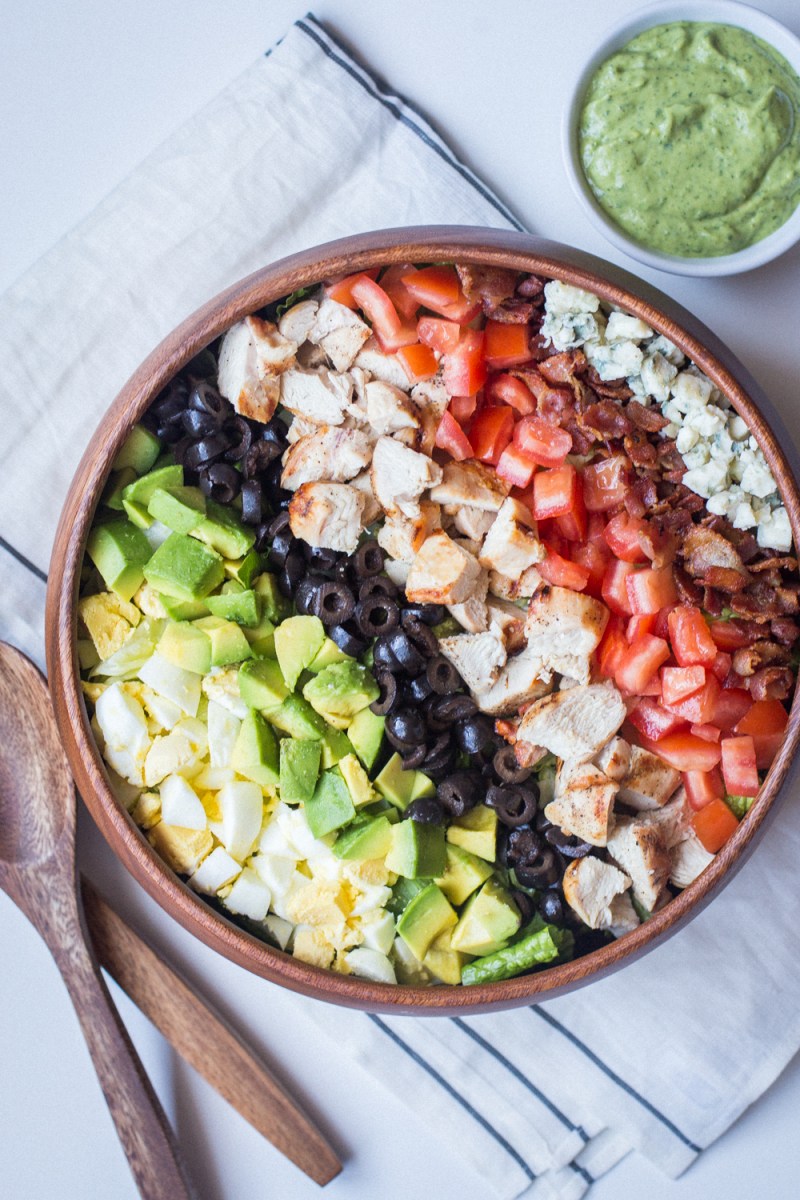
To tell the truth, it’s not often that I get a hankering for a meal-sized salad. There’s a lot of chewing involved. But if I am going to sit down and enjoy a full salad, I prefer to eat something made with a wide variety of hearty ingredients. In that regard, Cobb Salad takes the cake: it’s basically lettuce and a bunch of solid, pleasurable mix-ins. No dainty ingredients like sprouts, no sir! Okay, sometimes Cobb recipes call for chives, but you get my point.

Both the salad and dressing used in today’s recipe come from California in the early 20th century. Bob Cobb, owner of the Brown Derby Restaurant in Hollywood during the 1930s, whipped up a quick salad for a friend with a toothache using leftovers found in his kitchen. He cut the ingredients up into small pieces so as not to exacerbate his friend’s condition. (Personally, I would have whipped up a pureed soup if my friend had a toothache.) Other stories contend that there was no toothache involved. Either way, the salad was such a hit that Cobb added it to his menu, and it took off from there. Green Goddess Dressing was made by a San Francisco chef in the 1920s, after a popular stage play of the same name. While the salad and dressing don’t traditionally go together (Cobb salad is usually served with red wine vinaigrette), I really like the pairing of the two. Plus, they each call for 1/2 an avocado, so in that sense, they fit together perfectly.

Special thanks to my friends at Pacific Merchants who donated the hand-carved acacia wood salad bowl for the picture you see above. Their 12″ bowl is both beautiful and sturdy; it’s a perfect size for a whopping salad like this one.

Read Full Article

Baltimore/DC friends: Come join me for a cooking demo and holiday social this Sunday! $10 entry to cover grocery costs, space limited to 30 guests. Click here for more info. See you there!

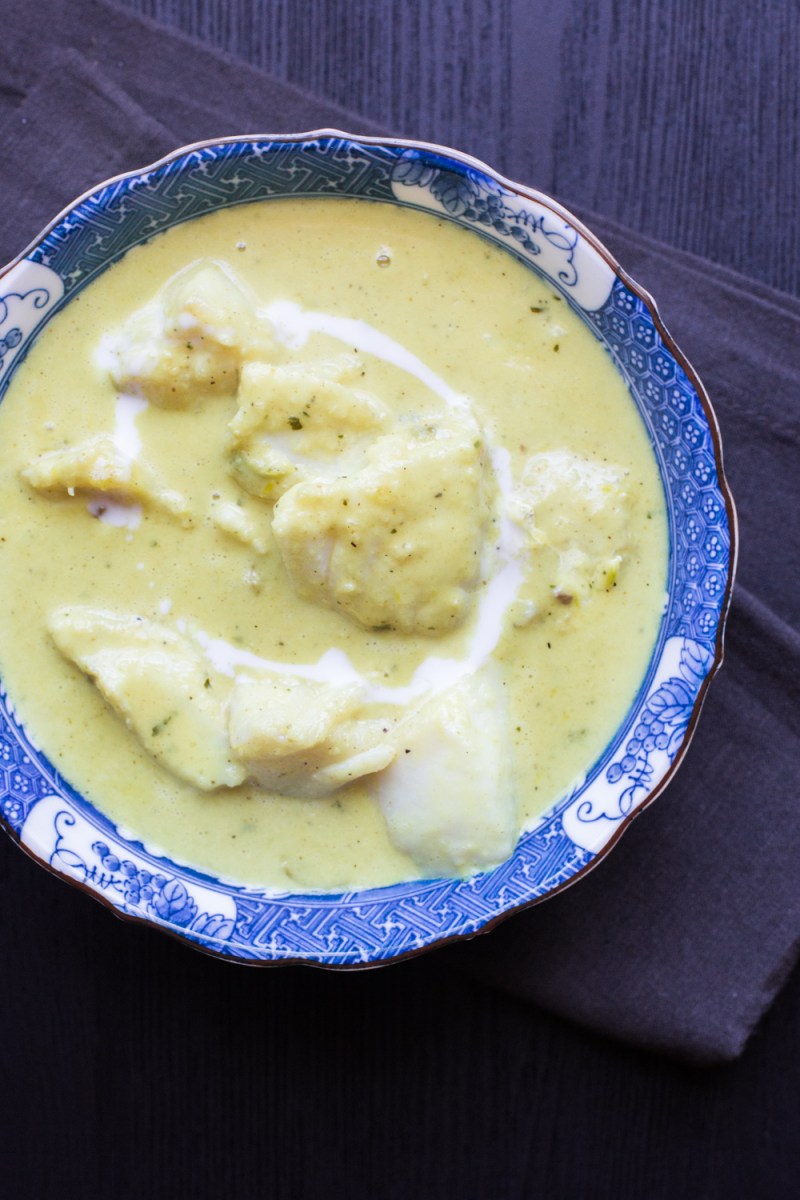
Mas Riha is a fish curry from Maldives, the small group of islands to the Southwest of the Indian subcontinent (it’s officially the smallest country in Asia). The dish is very representative of Maldivian cuisine, which is based on three main staples: fish, coconut, and starch.

While many people associate curries with hot, humid weather, I prefer them in the cold of winter; to me, the contrast of bitter cold weather and tropical food tends to embolden the curry’s flavors. This week is our first real glimpse of winter on the East Coast (there’s snow on the ground as I type this), so it seems like the perfect time to share this recipe. Fish curry is just about perfect, since it needs so little time to cook; you can easily throw together this entire delicious meal in less than 30 minutes.

Read Full Article

Jaegerschnitzel (Jägerschnitzel) is a traditional German dish, most commonly made with pork or veal cutlets (schnitzels) today. Historically, they were made with wild boar or venison (jäger means “hunter” in German) and paired with wild mushrooms. Today, its accompanying mushroom gravy is what separates Jaegerschnitzel from its more commonly-known (and gravy-less) counterpart, Wiener Schnitzel. Fun fact: it’s believed that Chicken Fried Steak originated from this dish, when German and Austrian immigrants brought it to Texas during the 1800s.

Making this dish within a Paleo template is easy, as it only requires a different type of flour. A combination of potato starch and arrowroot flour works best, but if you have only one flour on hand it still turns out pretty well. Tapioca starch can also be used in a pinch.

Read Full Article

A few years ago I spent a winter in Bavaria, the Southeastern state in Germany. One of my favorite dishes there was Blaukraut, a simple simmered red cabbage. The dish has three different names in Germany – Blaukraut (“blue cabbage”) in the South, Rotkraut (“red cabbage”) in Central Germany, and Rotkohl (also “red cabbage” – kohl is a Northern word for kraut).

It’s believed that the different names stemmed from the fact that the cabbage can take on different colors depending on the acidity of the soil it was grown in and its method of preparation. Some contend that the variation comes from the fact that there wasn’t a German word for the color purple until after the cabbage had been introduced. Since red cabbage has a tendency to turn a blueish color when cooked, adding acid (in this case, apple cider vinegar) helps retain its redness.

Read Full Article

A while back I received an email asking if I’d like to come visit the Culinary Institute of America’s campus in Hyde Park, NY. At first, I was hesitant to accept the invite – what did they want from me in return? – but it turns out they simply wanted to show me their program in case I wanted to share it with my readers. Eager to have an inside look at one of the biggest and most-respected culinary schools in the country (I mean, come on, Anthony Bourdain!), I accepted the offer and spent a couple days on campus. Along the way, I familiarized myself with their program and ate some delicious food. The folks at the school were also kind enough to share one of their recipes with me, which I’ve included below.

Read Full Article

Boniato (also called batata or tropical sweet potato) is a white, starchy, and dry version of the common sweet potato. It’s popular in Florida and the Caribbean, but well-known throughout the Americas and some of Europe (Spain in particular). It was cultivated as far back as 1,000 years ago in Central and South America. Its skin is red-to-purple in color, and has white flesh. As far as I can tell, it is nearly identical to the Japanese sweet potato in terms of appearance and taste; considering the fact that sweet potatoes were a late addition to Japan (around the 17th century), I’d guess that the differences between the two is minimal. I’ve also seen identical sweet potatoes labeled as Korean sweet potatoes here in Maryland.

Taste-wise, boniato is like a cross between a white potato and sweet potato. If you’re missing the consistency of white potatoes but react poorly to them, this is the dish for you.

Preparing boniato is easy. Because the potato is naturally creamy, you only need to add a little cream to them to get a truly decadent flavor. If you’re dairy-free, they’re still surprisingly creamy when made with only chicken broth.

Read Full Article

I love finding new ways to transform cheap cuts of meat into something spectacular. I think most people feel the same way, as my Eye of Round Roast recipe remains the most popular recipe on my blog. So when I read my friend Peter’s Tjälknöl recipe from earlier this year, I knew that I needed to try it. The method intrigued me: take a frozen chunk of lean beef and slow cook it until it reaches a certain temperature, then remove it and let it sit in a brine for a few hours. The Tjälknöl came out utterly delicious and not unlike roast beef, perfect for thinly slicing and enjoying cold.

I love the story behind the dish, which I pulled straight from Peter’s excellent blog, Striclty Paleo…ish:

“Ragnhild Nilsson, the wife of moose hunter Eskil Nilsson, asked her husband one evening to thaw a frozen moose steak in the oven on low temperature. He did…and forgot about it, and Ragnhild found it still laying in the oven the next day. She understood it would be rather tasteless eating it like that, so in an attempt to save it she placed it in a brine for a few hours. When they later ate it, they both found it to be not only delicious, but also extremely juicy and tender. A year or so later, she submitted the recipe for a national contest to find new regional signature dishes, and won! Tjälknöl was declared the new signature dish of Medelpad (a region of northern Sweden), and it spread nationwide.”

I took a few liberties with the original recipe as I converted it to US measurements, mostly because I’m constantly tweaking things in the kitchen.

Read Full Article

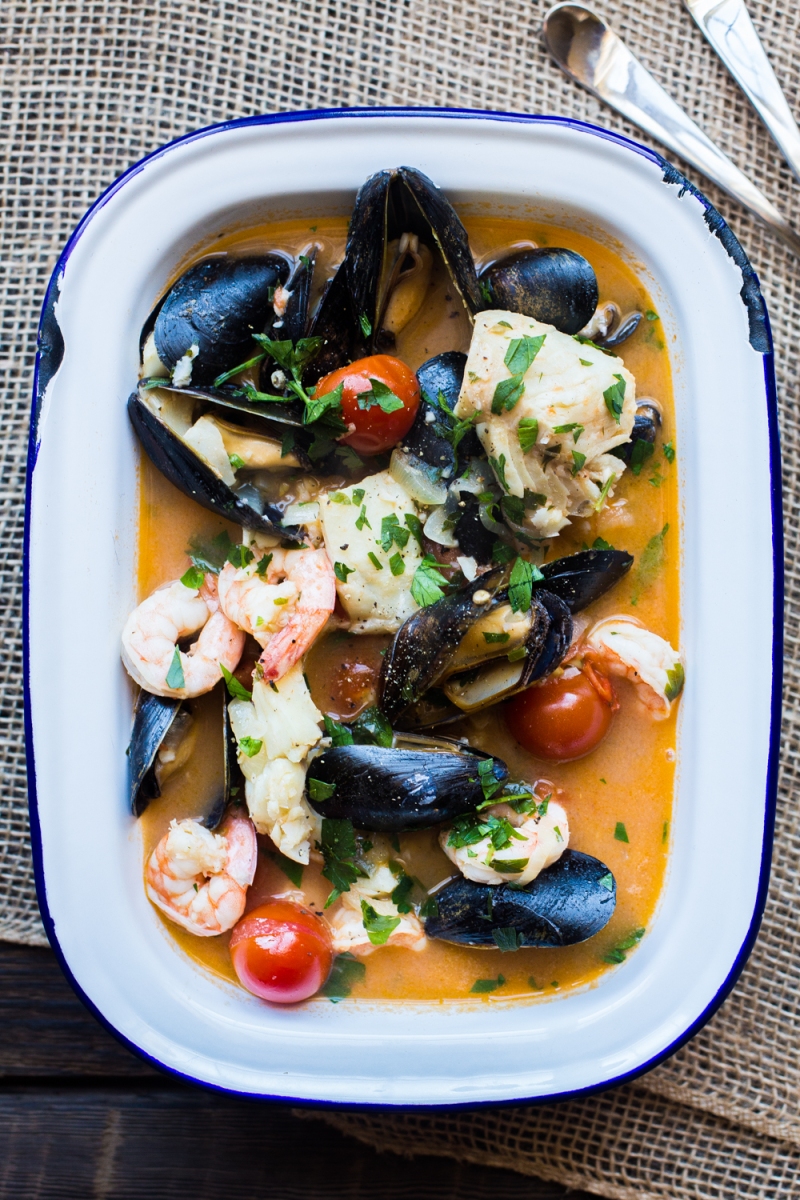
Brudet is a fish stew from Croatia, similar to an Italian Brodetto or Greek Bourdeto. All three are based on the Venetian word brodeto (“broth”). The recipes for each dish are similar; in fact, if you ever find yourself traveling along the Adriatic coast and see a similarly-named dish on a restaurant menu, you can probably bet it’s going to be a delicious fish stew cooked in a tomato base.

While there is a lot of variation to this dish, I like the Croatian version because it is an easy and unassuming approach to making soup. Marinate some fish for a while, then throw everything together at the proper time; it’s a true one-pot dish. Traditionally this dish is made with a mixture of fishes, to include eel, rockling, or coral trout; since they’re hard to come by, I think any firm white fish should be okay. I used cod. Adding shrimp and mussels also gives the stew a more rich and satisfying flavor.

Read Full Article

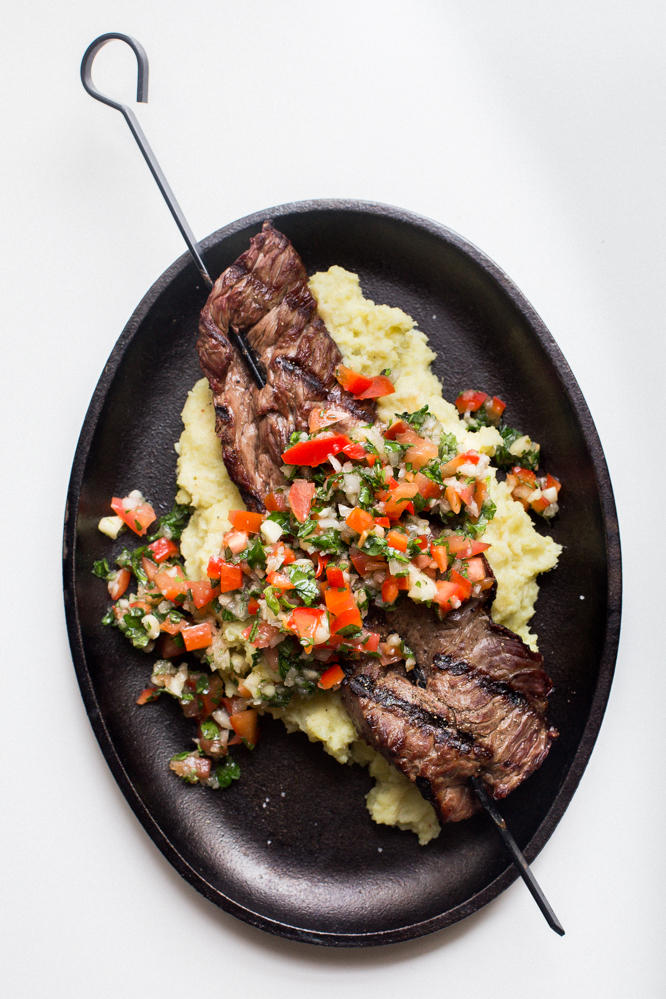
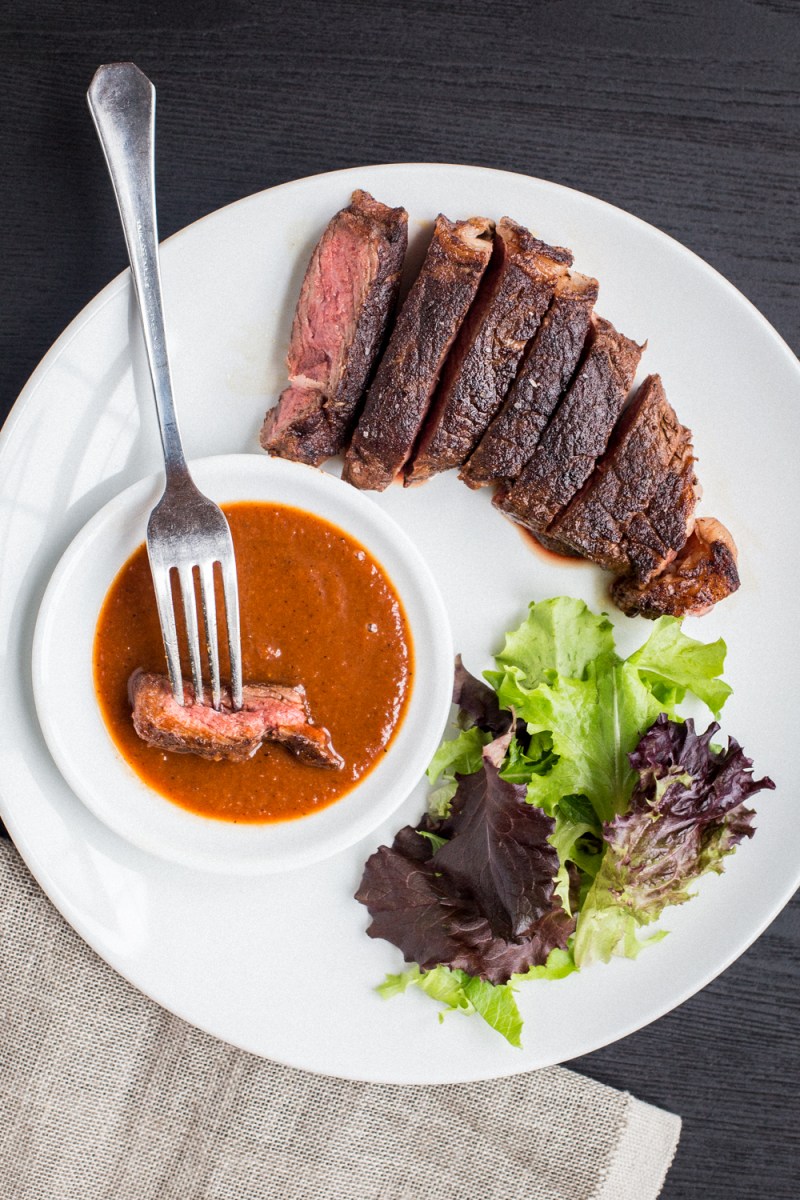
As the temperatures fall this month, I expect many people to be hesitant about going outside to grill food. Personally, we keep the grill outside and ready all year long, but I realize that not everyone feels that way (especially my Midwestern readers, whose winters are a little more significant than ours). So I thought it would be a good time to work on a solid, foolproof pan-seared steak recipe.

To be honest, we as a family don’t eat steak much, due to its high price point. But it’s an excellent celebratory meal, or for when you’re looking for a simple, developed taste without having to spend much time preparing your meal. Generally, steaks are made from the most tender cuts of the animal and cooked quickly; their tenderness comes from a lack of tough fibers and connective tissue found in the muscles that are more worked. Applying a light spice rub on a steak is ideal, and right before cooking, so that you have contrasting tastes of the crust and delicate interior. The combination of cacao, peppers, and salt go especially well with steak.

Read Full Article