
Food

Although breakfast is my least favorite meal to eat, I definitely like to prepare it. For a couple years I worked at a restaurant that served breakfast, and learned a couple cool dishes. The one you see above we called a “hobo” , which may not be the most politically correct term out there for it. Luckily, the chances of offending a homeless person is pretty low, since I assume that most homeless people a) don’t have access to the internet and b) don’t visit this site when they do get online.

A hobo is probably called that because it’s made by throwing a bunch of ingredients into a single pan. As far as I know, it always contains eggs, cheese, and potatoes, and some sort of meat. I like making this dish because it’s an easy way to get rid of leftover meat, as well as ingesting a good amount of healthy coconut oil.

Read Full Article

I’ve got two issues with beer can chicken. First of all, I’ve decided to only drink beer on special occasions, and it’s wasteful to pour out a beer/soda can and fill it with wine or cider (let alone buying a six pack of canned beer just for the purpose of roasting chickens).

Secondly, taking the beer can out of a cooked chicken is a pain in the butt. Luckily, one simple kitchen tool solves all of my problems: this two-in-one vertical chicken roaster from Williams-Sonoma. This heavy duty dish allows you to roast one or two chickens using any liquid you’d like, with a lower tray that allows you to roast vegetables at the same time (and be basted in the chickens’ falling liquid). The roaster sells for $50 and I think it’s totally worth it.

Read Full Article

NOTE: An updated version of this recipe appears in my cookbook, The Ancestral Table.

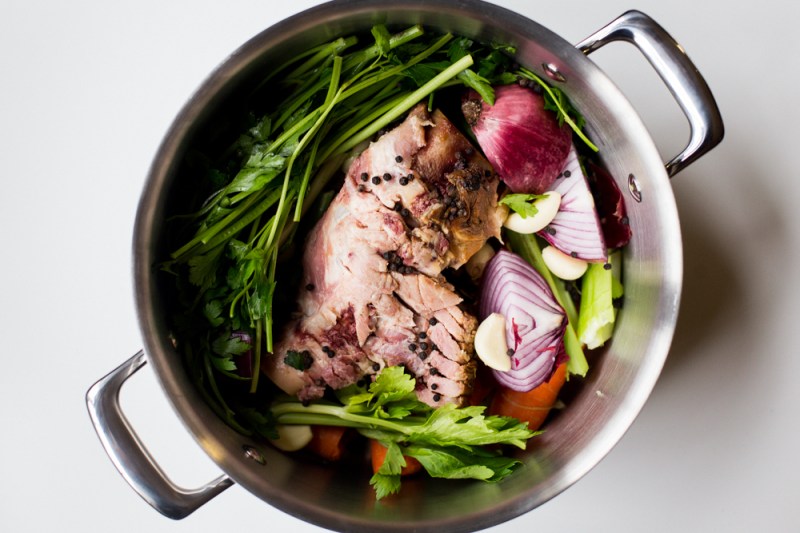
I decided to make a pork stock using our Easter Day ham – what else am I going to do with a huge ham bone? Although bean soups are usually the best and easiest use of ham stock, I may use it to steam some greens, make jambalaya, or a bean-free soup. Regardless of what I end up making with it, here’s how to make your own ham stock.

Read Full Article

My parents came out to visit last week, and it’s become a tradition that they ship out some dungeness crabs from the West coast every time they visit. Personally, I think it’s a wonderful tradition.

Steaming dungeness crab is a delicate process, since most of the flavor comes naturally from the crab itself; instead, you want to season it lightly to complement the crab’s distinct taste.

Read Full Article

Rosemary potatoes are a classic French side dish, and we often roast them in the oven. I figured that grilling them under direct heat would speed up the process while eliminating the need to scrape and clean a pan afterwards – and I was right!

Read Full Article

We prefer to eat our short ribs in the form of kalbi, but roasting an entire rack is also a rewarding experience. Off the rack, these ribs are meaty, fatty and delicious.

Although my pork ribs are usually cooked by braising or boiling and then grilling, I decided to do the opposite this time around, and grill them first. The result is soft, juicy meat – akin to a pot roast.

Read Full Article

Grilling vegetables on an open flame sure looks nice, but it rarely results in anything but dried out veggies. To remedy this, I’ve come up with a simple way of steaming them in butter and garlic on the grill; the result is a tasty and effortless dish.

Read Full Article

NOTE: An updated version of this recipe appears in my cookbook, The Ancestral Table.

Chances are you saw the picture above when you read my post about mac and cheese the other day. Maybe not. Either way, I think the picture is good enough to use twice.

This pulled pork recipe is very similar to my kalua pig recipe but with less salt and liquid smoke (and BBQ sauce). Like most slow-cooked meats, I think that less is more when it comes to ingredients, so I like the meat’s natural taste and the BBQ sauce do all the talking.

Read Full Article

Satay is a dish that originated out of Indonesia. It’s basically just marinated, skewered, grilled pieces of meat. It’s most commonly found with chicken or beef, but like Japanese yakitori, you can find all sorts of weird varieties as well if you look hard enough. This is my shrimp version.

The most critical ingredient for this dish is turmeric, which gives the meat its yellow coloring. It’s somewhat hard to find but you’ll only need to get a small container, because a little bit goes a looong way.

Read Full Article