Page 15 of 55

Bacalhau à Gomes de Sá is a traditional dish from Porto, in Northwest Portugal. As I’ve written in an earlier post using bacalhau, the Portuguese were one of the first European cultures to fish for cod, off the coast of Newfoundland after Columbus discovered the New World. Salted cod has been an integral part of Portuguese culture, and it’s often said that you can cook a new dish using bacalhau every day of the year – it’s often cited that there are over 1,000 total recipes to be found.

Advances in fishing technology in the mid 20th century had collapsed the Northwest Atlantic cod market by the 1990s – cod takes a long time to mature, and overfishing had run rampant. Today, bacalhau is most often made using cod harvested from Arctic waters under more strict quotas.

Bacalhau is made by salting and drying the fish in the sun; while it was originally a method of preservation (salted cod keeps a long time even without refrigeration), its unique, strong flavor is unmistakable and delicious, and its popularity endures today. The only downside to eating bacalhau is that it requires a bit of foresight, since it needs to be soaked overnight to reconstitute the fish.

If you’re new to using bacalhau, you might be surprised to find that it’s available in many common grocery stores, often sold near the cured meats section. For example, my local Publix grocery store sells a few different varieties of bacalhau. I like to keep some in the fridge at all times; I’ll generally throw some in a bowl of water, then put it in the fridge to soak overnight, and either pan-fry it to enjoy with my breakfast, or making something fancy like today’s recipe.
Read Full Article

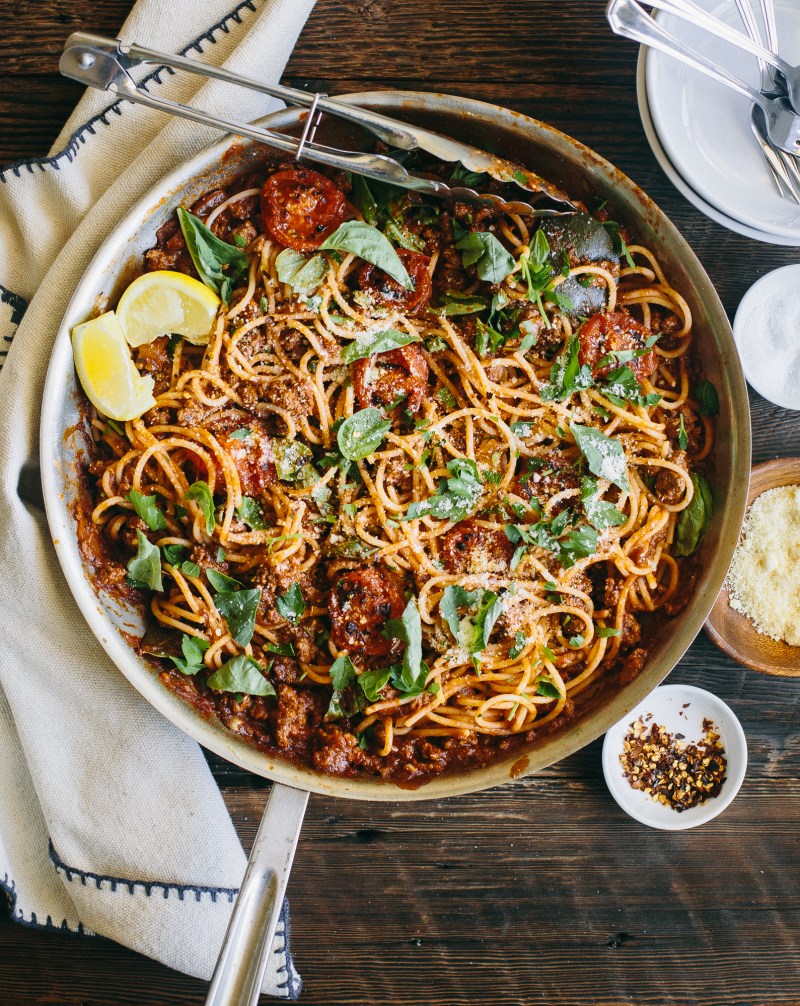
Lately, I’ve been obsessed with the idea of making meals that give me a distinct sense of accomplishment in the shortest amount of time. Part of that comes from having the new baby in the house, as I’ve resumed full dinner-making duties, but maintaining my typical busy workdays (for a while there, my wife was taking the brunt of dinner duty, using my cookbooks and this blog as a reference). Sure, I could grab a jar of tomato sauce and toss it with some gluten-free pasta, but how long would it take me to make bolognese from scratch? Today’s recipe is the result of a recent project, where I worked to make a meal that’s the best of both worlds: something I can be proud of, but not keep my family waiting in the process.

The method is simple: sauté an onion, add some beef, then tomato sauce and spices; as the flavors marry, boil the pasta and blast some tomatoes under the broiler, then throw it all together. Your pasta options are many: gluten-free spaghetti, spiralized vegetables, or even Cappello’s grain-free fettuccine – whatever fits your dietary restrictions or budget.

Read Full Article

When one blogs about their food experiences, some patterns start to show. For example, over the past 5+ years writing for this blog, I’ve only posted four salad recipes. That’s not because I think salads aren’t worth making, but rather, it’s an indication of how I view salads: as something you throw together using the vegetables available in your crisper, or on your counter.

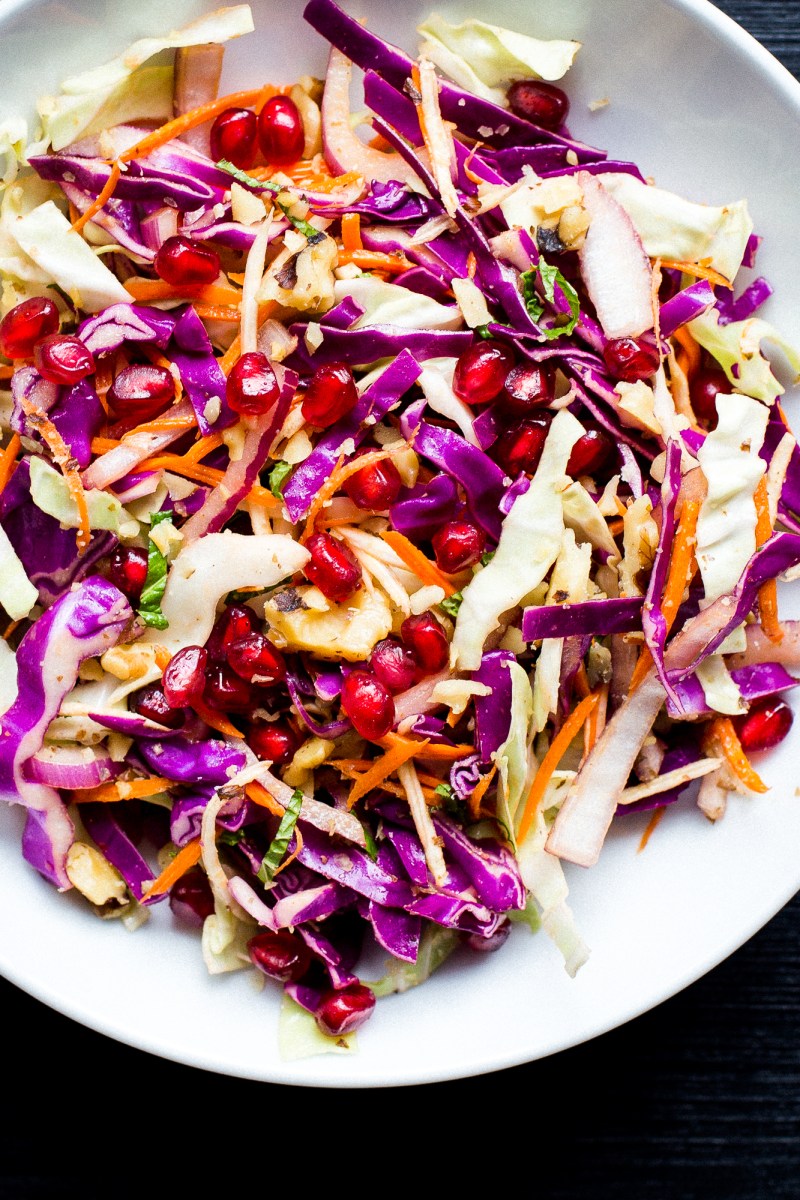
In truth, there is still some merit to writing salad recipes. Sometimes, it’s good to have a solid blueprint for future cooking endeavors. Case in point is this Winter Slaw, modeled after European-style cabbage salads.

Out of the countries who count their cabbage intake, Russians consume the most – about 40 pounds per person, compared to 9 pounds per person in the United States. Cabbage often carries a bad reputation, since some folks experience a negative response after eating it; this is due to the trisaccharide raffinose, which is found in cabbage, beans, broccoli, and asparagus. That gassiness is caused by the trisaccharide fermenting in your lower intestine.

Read Full Article

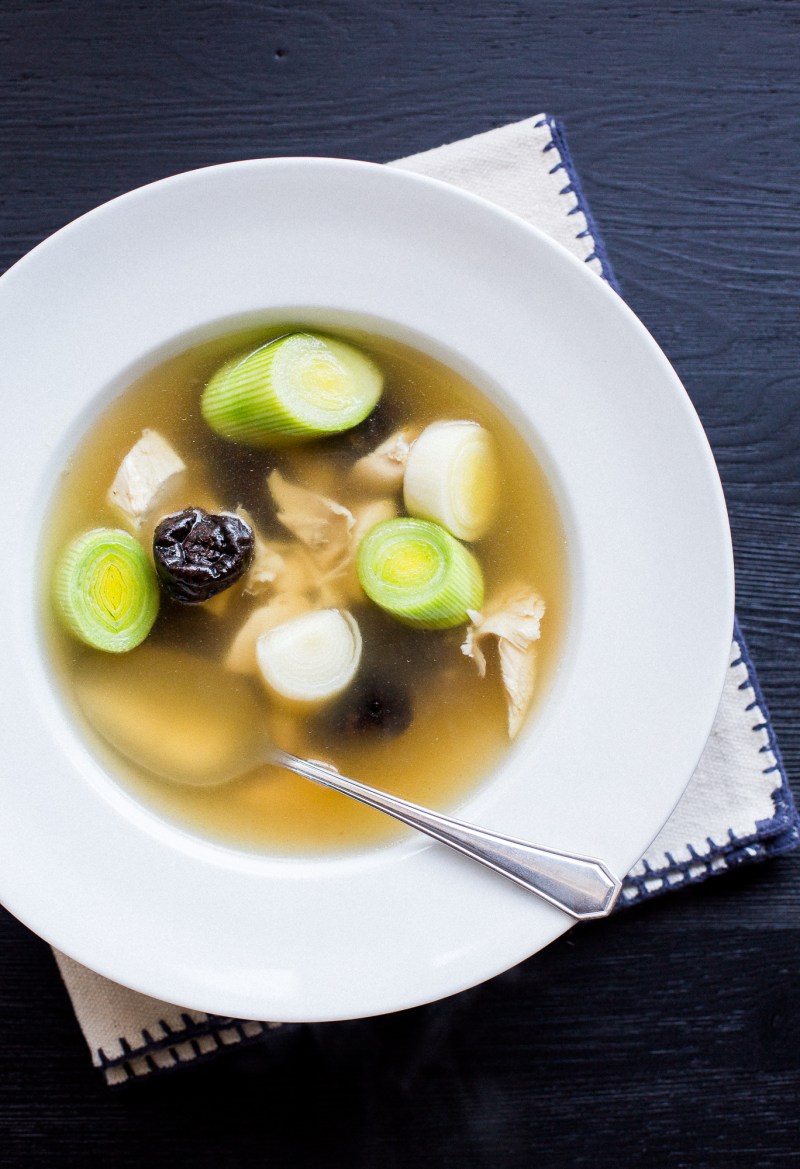
I’m traveling this week, and feeling a little under the weather. These two events frequently coincide; that is just the price one pays for seeing new places and shaking new hands. So this week seems like an appropriate time to share one of my favorite chicken soups.

Cock-A-Leekie (sometimes spelled Cockie Leekie) is a Scottish soup likely derived from French chicken and onion soup during the Middle Ages. It was later adapted to Scottish regional ingredients (namely, leeks), and sometime down the line prunes were an added element of the dish – probably to increase the dish’s flavor and nutritional profile. The soup is often thickened with cooked rice or barley, or enjoyed plain, as in this recipe.

Fun fact: this soup is one of two items on the menu the day the Titanic sank.

Read Full Article

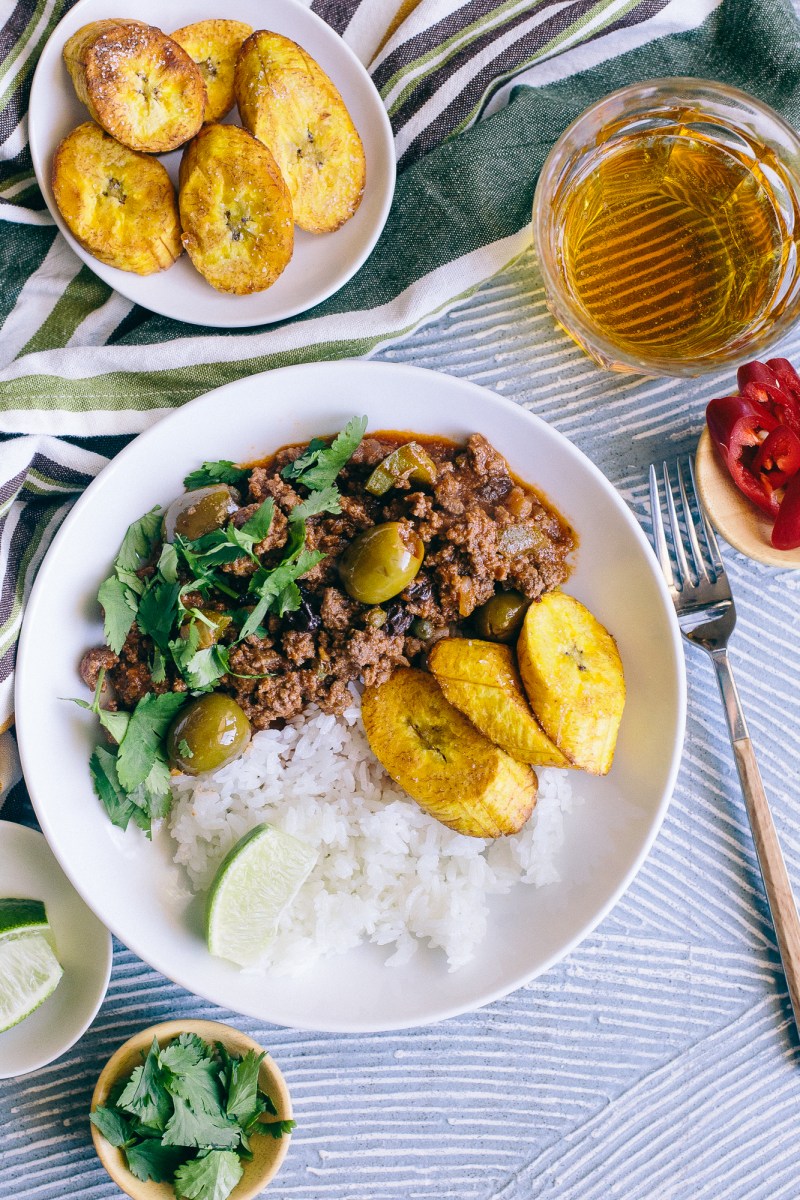
Picadillo is the name of a variety of dishes first originating in Spain. Versions of Picadillo can be found across Latin America and the Caribbean, and it has reached as far as the Philippines. Each variation has its own distinct quality; in the Dominican Republic, Picadillo is served with hard-boiled eggs, while in Puerto Rico it is used as a filler in Empanadas, or in savory pastries known as Piononos. The word Picadillo itself comes from the Spanish word Picar, to chop or mince.

My favorite Picadillo is the Cuban version, aptly named Picadillo Cubano. As with any beloved dish, there are many regional variations, but it generally combines the unique flavors of cumin, oregano, green olives, capers, and raisins. The end result is not unlike America’s favorite crockpot dish, Chili con Carne, but with a sweet-and-savory dynamic that’s equally comforting and exotic – and it all comes together in 30 minutes.

Not to confuse you, but the Cuban version of Picadillo is found in other countries, as well. For example, it is called Arroz a la Cubana in the Philippines, where it is topped with a fried egg. Not a terrible addition, if you ask me.

For today’s recipe I tested ButcherBox‘s ground beef; this is my second time trying their 100% grassfed beef (read about my first experience here), and I was just as impressed as the first time around. If you’re looking for a fun new take on pasture-raised meats – as part of a curated package shipped monthly – you can’t go wrong with these folks.

Read Full Article

This week’s recipe has a personal twist to it. I recently teamed up with Skype to help create some healthy eating challenges for popular vlogger Claire Marshall as part of their SkypeFit project. I’ve had a few roles in the campaign, to include jumping on Skype’s group chats to answer food-related questions, and taking over the Skype Instagram account for a weekend. My favorite piece has been brainstorming with Claire to help her find healthy food solutions.

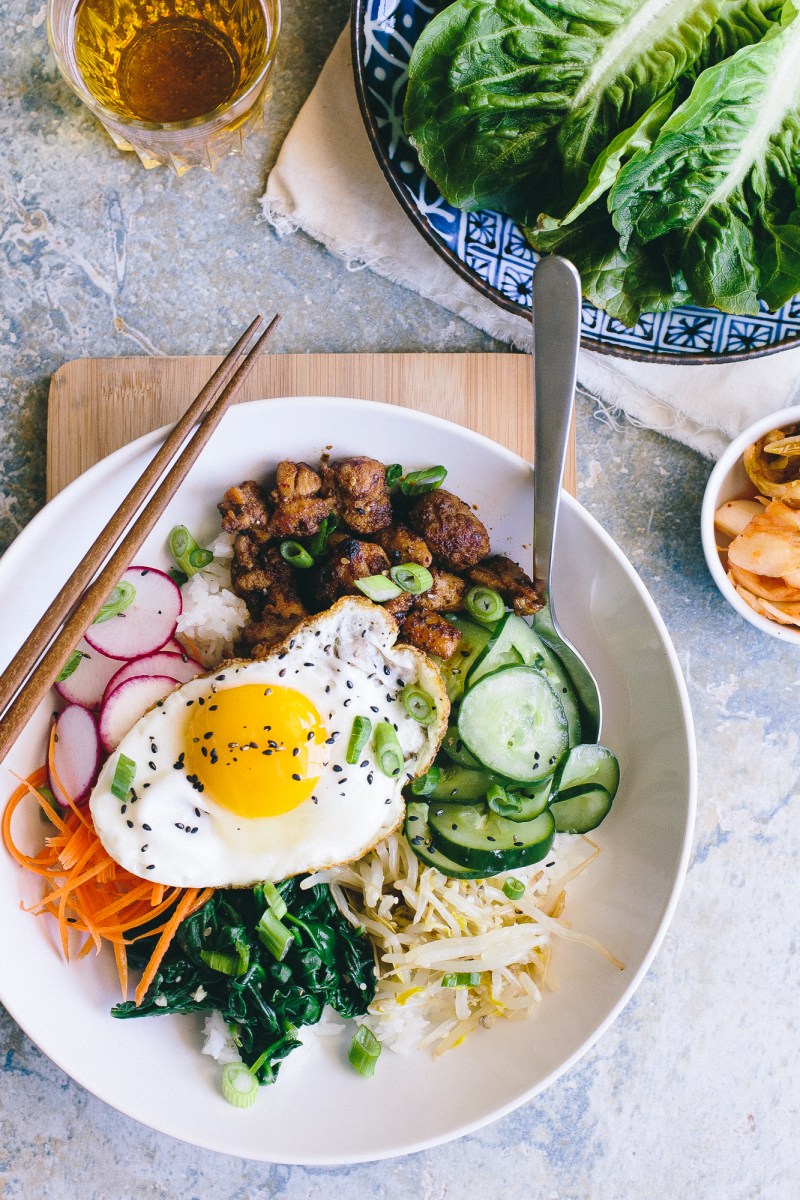
In our chats, Claire had mentioned that she loves eating out (don’t we all!), Korean barbecue in particular, which is too often laden with sickeningly-sweet marinades. Additionally, she’s been trying to cut back on red meat. So we settled on a weeknight-friendly version of Bibimbap, made with spicy chicken (Dak Bulgogi, 닭불고기), and I challenged her to try and make it on her own. She made a video of the experience, which you can find after the recipe below.

Legend has it that Bibimbap (비빔밥) originated from the belief that leftover food cannot be brought into the New Year. For that reason, Koreans started the practice of mixing together various ingredients in one bowl, and this dish rose to prominence in the early 20th century. Today, you can find it on nearly every Korean restaurant menu.

Let’s talk about the tweaks I made for today’s recipe; in the end, this dish isn’t unlike the Bibimbap found in my first cookbook, but with a few conscious steps to speed up the cooking process for our busy lives. Bibimbap is typically served with Gochujang (고추장), a spicy red sauce, but the intensely flavorful chicken replaces the Gochujang while eliminating the need to make a separate sauce. I also sweetened the marinade with my favorite one-two punch when making Korean barbecue: honey and applesauce. Finally, instead of asking Claire to make her own kimchi (the recipe is in both of my cookbooks, but takes upwards of 5 days to prepare traditionally), I left it as an optional side assuming that your local market sells some.

Read Full Article

Today is a big voting day here in the United States. If you’re one of the 12 states (or American Samoa) participating, be sure to let your voice be heard! While I’m not in a voting state today, I’m holding a mini celebration by peppering this post with election-related vocabulary. How many words can you spot?

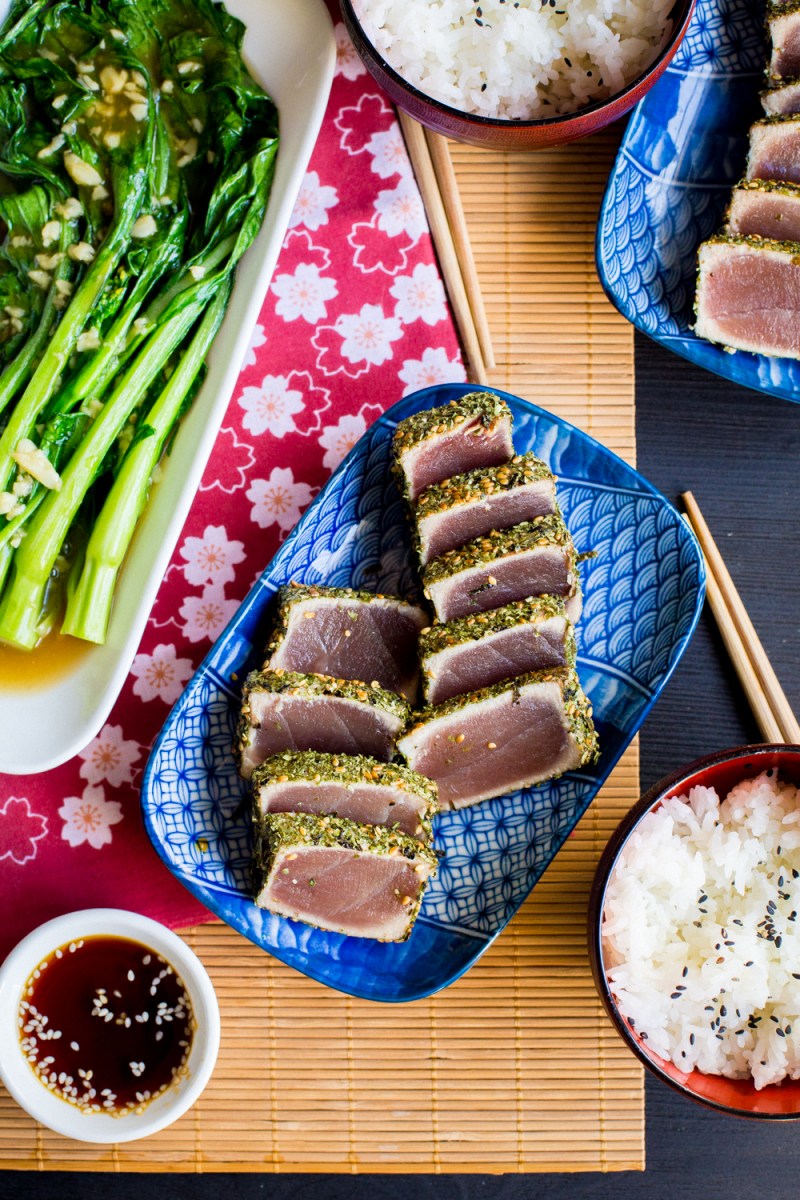
You may have noticed a vegetable side dish peeking out from last week’s Furikake Ahi recipe. It happens to be one of my favorite ways to prepare leafy greens, and until today, the recipe could only be found in my debut cookbook, The Ancestral Table. That’s all going to change today, as we’re going to have a bit of a…well, super Tuesday today with this recipe.

There’s a lot of flexibility in this dish, but the technique remains the same: prepare a sauce, simmer the greens in the sauce, then remove the greens and thicken the sauce before reuniting them in a savory, delicately-flavored superdelegate. I can’t be upset if you elect to add a few other ingredients, as the absolute majority of the flavor comes from the primary components of broth, ginger, and garlic. Other write-in options would be tamari, chopped cashews, dried shrimp, or fried shallots.

Read Full Article

I’m really starting to find beauty in simple meals. Like I mentioned a few weeks ago when sharing my recipe for three-ingredient Spaghetti Squash Bolognese Boats, I’ve had less time in the kitchen than usual (new babies will do that). It’s always tempting to reach for a takeout menu, but I’ve been determined to simply find quicker solutions for dinners. For example, I’ve been making a lot of pressure-cooker risotto, since it reheats well for lunches throughout the week.

This week’s recipe is similar in its approach – it contains just a few ingredients, and comes together in minutes. It’s a popular preparation in Hawaii, found on many restaurant menus. But to be honest, once I figured out how easy it is to prepare at home, I’ve had a hard time shelling out money to let someone else make it for me.

Furikake is a Japanese rice seasoning typically made with dried fish, sesame seeds, and seaweed. It was initially distributed in the early 1900s under the name Gohan No Tomo (“A friend for rice”) as a possible source of calcium (early recipes used ground fish bones). At first, the seasoning was too pricey for everyday eaters, but by 1948 it was commercially produced by Nissin foods (most famous for their Top Ramen), to help combat malnutrition in the Japanese population.

Read Full Article

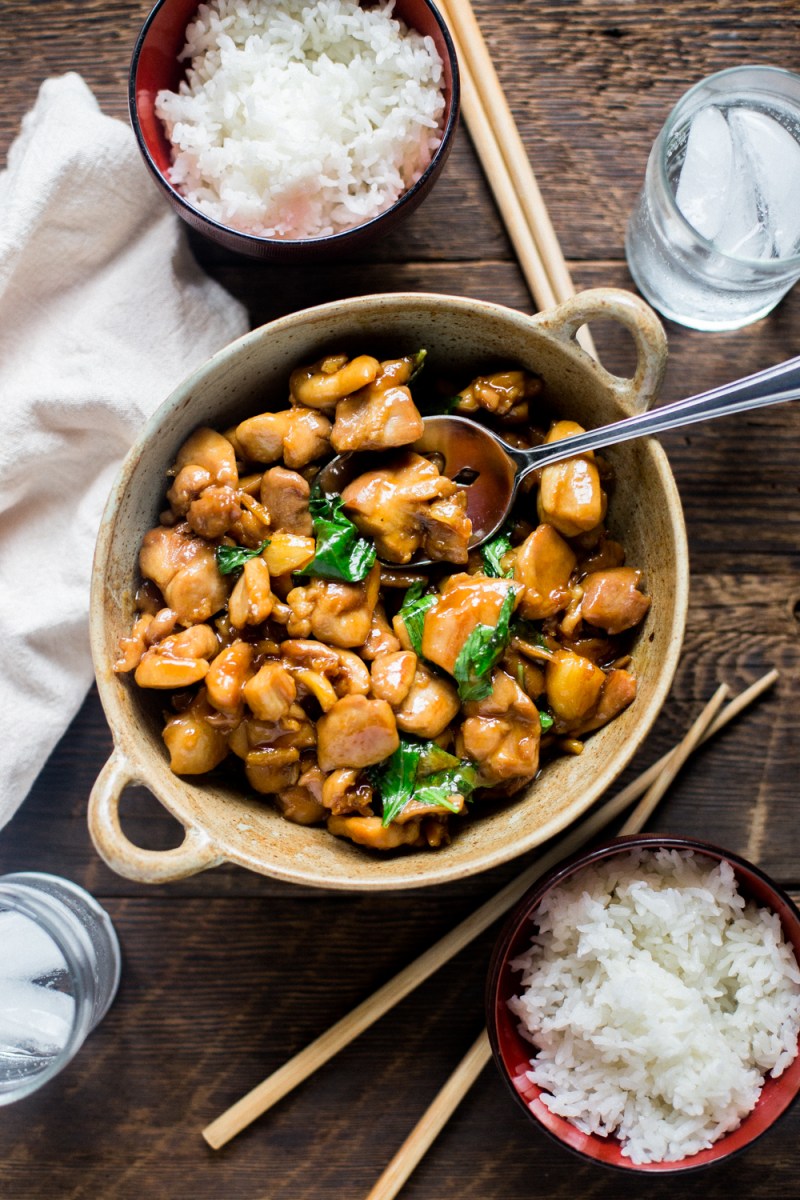
Sanbeiji is a popular Chinese dish, most often served in Southern China and Taiwan. The dish derives its name from its three key ingredients: sweet rice wine, soy sauce, and sesame oil. Garlic, ginger, fish sauce, honey, and basil round out the flavors in this deceptively simple preparation. Chicken is the most common protein, but pork, and occasionally frog, are also used.

What sets this dish apart is that there is no real trickery involved; the chicken and sauce simmer until the sauce evaporates, then it is removed from heat right when the chicken starts to sizzle and pop. The result is fully-flavored with a delightful texture – no breading or thickener required.

Read Full Article

My parents-in-law recently visited from Hawaii over the holidays, to help around the house as we adjusted to having a new baby in our family. It was great spending the holidays with them, but it also made me realize how much I miss living in Hawaii. I lived there from ages 21 to 28, and many of the events that shaped who I am today – from meeting and marrying my wife, to honing my skills as a home chef, to suffering the worst of my health adventures – came while living in view of the Honolulu skyline. For a few of those years, Janey and I lived with her parents, whom we affectionately called our “roommates”.

When we left the island in 2008, it genuinely felt like I was leaving home; time has caused that sentiment to wane a bit, but in the end, Hawaii has a special place in my heart. And within that special place in my heart there is another, perhaps specialer place in my heart, which is where Hawaii’s Chinese-style oxtail soup resides.

The title for Hawaii’s best oxtail soup is hotly contested. I’ve heard everything from Kapiolani Coffee Shop to Aiea Bowl. Somewhat surprisingly, restaurants attached to bowling alleys are generally known for having good oxtail soup – even the famous Kapiolani Coffee Shop oxtail soup got its start at Kam Bowl, which closed in 2007 but re-opened just last month.

I like to think that preparing an authentic dish from Hawaii makes the sting of not living there hurt a little less, and you really can’t go wrong with a Chinese-inspired creation that’s equal parts rich and comforting. So we’re going to recreate it today for those of us who can’t just drive to our local bowling alley to buy a bowl of soup. Included below are stovetop and electric pressure cooker variations of the recipe, whatever floats your boat.

Read Full Article