Page 35 of 55

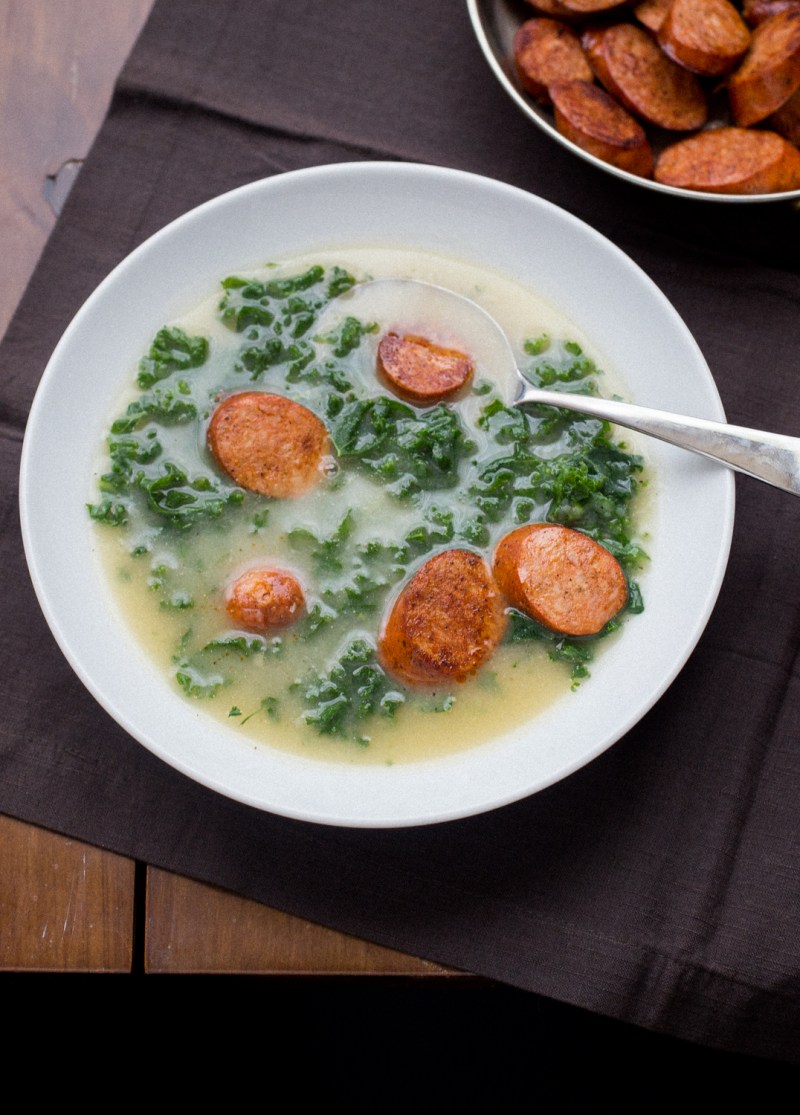
A few weeks ago, a reader suggested I try my hand at Caldo Verde (“green broth”), a traditional Portuguese soup that is often considered their national dish. It was the perfect recommendation – the soup’s use of simple, satisfying ingredients, plus the addition of slightly-spicy sausage, make it an ideal late spring / early summer meal.

Initially, the soup’s use of kale might seem out of place for a country that is geographically closer to Africa than the rest of Europe. But when you take into context the fact that the soup originates from Portugal’s northern Minho region, which was once under Roman and Celtic occupation and still retains some of that influence today, the culinary presence of a hearty cabbage like collard greens (or kale like in this recipe) makes sense. One of my favorite aspects of this dish is that it’s a perfect pauper’s meal: combine some very basic and always-available ingredients (water, onion, potatoes, cabbage) and add other items if and when they are available (broth, sausage).
Read Full Article

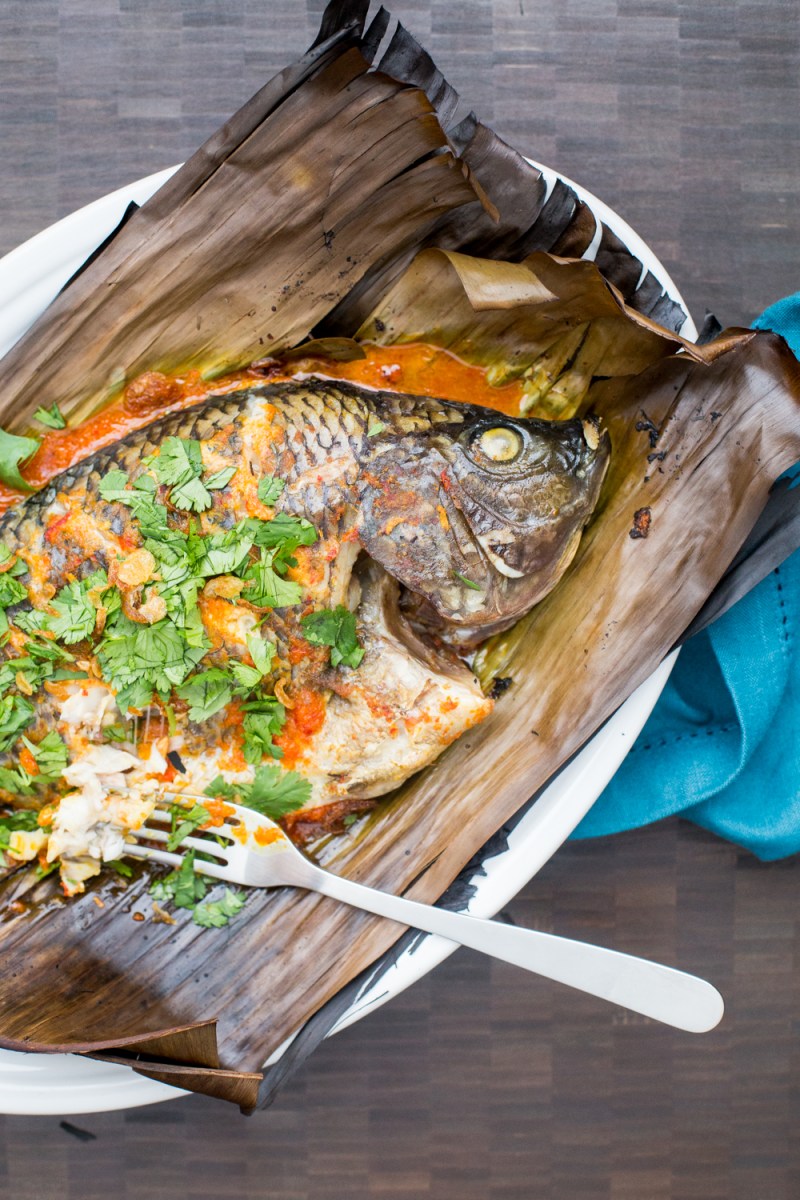
Ikan Bakar is a popular grilled fish dish (say that 3x fast) in Indonesia and Malaysia, usually sold by street vendors. The fish is marinated in sambal – a Southeast Asian chili-based condiment – and grilled over banana leaves. Popular fishes used for the dish include tilapia, skate, snapper, sea bass, or stingray.

While this is a very exotic-sounding dish, it’s surprising that all of the ingredients can be easily found during a trip to your local Asian market. Banana leaves are commonly sold frozen in large sheets for very cheap – usually a dollar will get you as many as 20 leaves. Bear in mind that frozen banana leaves are more brittle than fresh, and don’t hold up to heat as well – so you’ll want to get plenty of them, at least five leaves per fish.

Read Full Article

I don’t know about you guys, but after our longer-than-expected winter I’ve been in on a month-long grilling bender. And though I love to come up with tasty marinades for my grilling adventures (Exhibit A: Izgara Bonfile), sometimes I just want a tasty creation that’s also quick to make. The solution is pretty easy, really: you just throw a salsa on top of an otherwise basic grilled steak!

This salsa is inspired by Insalata Caprese, a fresh salad originating from the island of Capri in the early 20th century. It’s traditionally made with tomatoes, fresh mozzarella cheese, oregano, and arugula, but over time most people have substituted the oregano and arugula with fresh basil. We Americans are even weirder in that we also like to add balsamic vinegar as well. For my salsa I decided to keep a little balsamic vinegar and also add a bit of lemon juice to provide some acidity and sourness without an overpowering vinegar taste.

Read Full Article

I have a feeling that if you asked a child what sweetbreads are, and then asked a chef, you’d get wildly varying answers. The word “sweetbread” first popped up in the 1500s, and it’s hard to tell what part of the animal they were referring to: historians generally agree that it’s likely the thymus gland or pancreas. Today, the word is often used for many small organs, from the sublingual gland to (gasp!) the testicle. Common sense assumes that these glands were eaten regularly throughout history, and was probably highly sought after due to their rarity (in relation to the rest of the food you get from an animal) and delicacy.

When my friends at US Wellness Meats offered to send me some of their lamb sweetbreads to try, I jumped at the opportunity; I hadn’t made them at home before, and I was up for a challenge. It turns out that they are relatively simple to make, they just take a little finesse and patience. To fill out the dish, I wanted to add something hearty and filling (cauliflower purée), something sweet (a pear reduction sauce), and a firm texture to make sure the dish didn’t turn out to “mushy” and to add a sharper taste to everything (spring greens tossed in balsamic vinaigrette). It all turned out beautifully.

Read Full Article

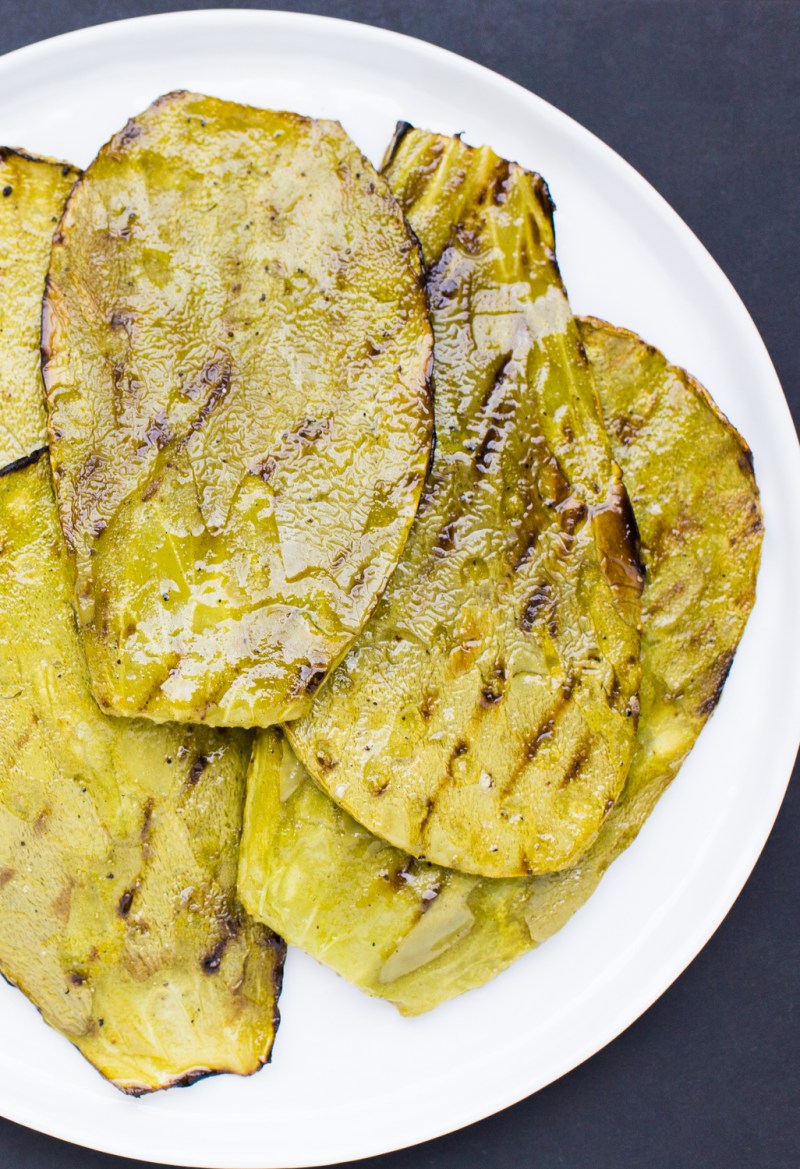
With spring upon us, I’ve been looking to expand my grilling options. The idea of cooking and eating a cactus might sound intimidating, but the reality is much simpler than you’d think. All you have to do is scrape off their thorns, and grill them – it’s that easy.

Nopales are the paddles of oputina (prickly pear) cactus, commonly found in Mexico. They are a common vegetable in Mexico, and taste a little like green beans, but slightly more acidic. They are a great addition to grilled meat dishes, or tasty just on their own. They are also often sliced/diced and served with eggs or in salads.

Read Full Article

Hey folks, I’m starting to get quite a collection of cookbooks (although it pales in comparison to this stash!), so I’m going to review some Paleo-minded cookbooks as I receive them, and give a copy away as well. If you have a book coming out soon, I’d be happy to have a look and run it through its paces.

UPDATE: Congratulations to Molly D. from Houston, TX, who won the giveaway. Thanks to everyone for participating!

I’m really excited about Gather: The Art of Paleo Entertaining, which releases next week. Personally, I think it is a huge step forward in the Paleo cooking world. Not only have Bill Staley and Hayley Mason created some really tasty recipes, they’ve upped the bar in terms of presentation and thoughtfulness. This is the first Paleo cookbook I’ve seen that I think can stand toe-to-toe with the best non-Paleo cookbooks coming out this year.

Read Full Article

While spending a few days in Austin last month, I basically dove head-first into Texas barbecue: the pickles, the vinegar-based cole slaw, and man, the brisket! I loved how a dry, blackened crust over their barbecued meats isn’t a bad thing, and how sauce is added according to individual taste, after plating. Even better, the barbecued meats are sold by the quarter pound, so each person gets to choose how much they want to eat. If that’s not the most American way of eating ever, I don’t know what is! These are all concepts that are relatively uncommon in our neck of the woods here in Maryland, so I decided to try my hand at some Texas-style barbecued beef the other day.

When choosing a meat to try, I decided to go the easy route with some boneless short ribs: they are a great size, and fatty enough that I was sure I didn’t need to worry about them drying out while cooking. Turns out I made a great choice – the short ribs were perfectly moist and tasty, and a great change of pace from our typical method of cooking short ribs (braising).

Read Full Article

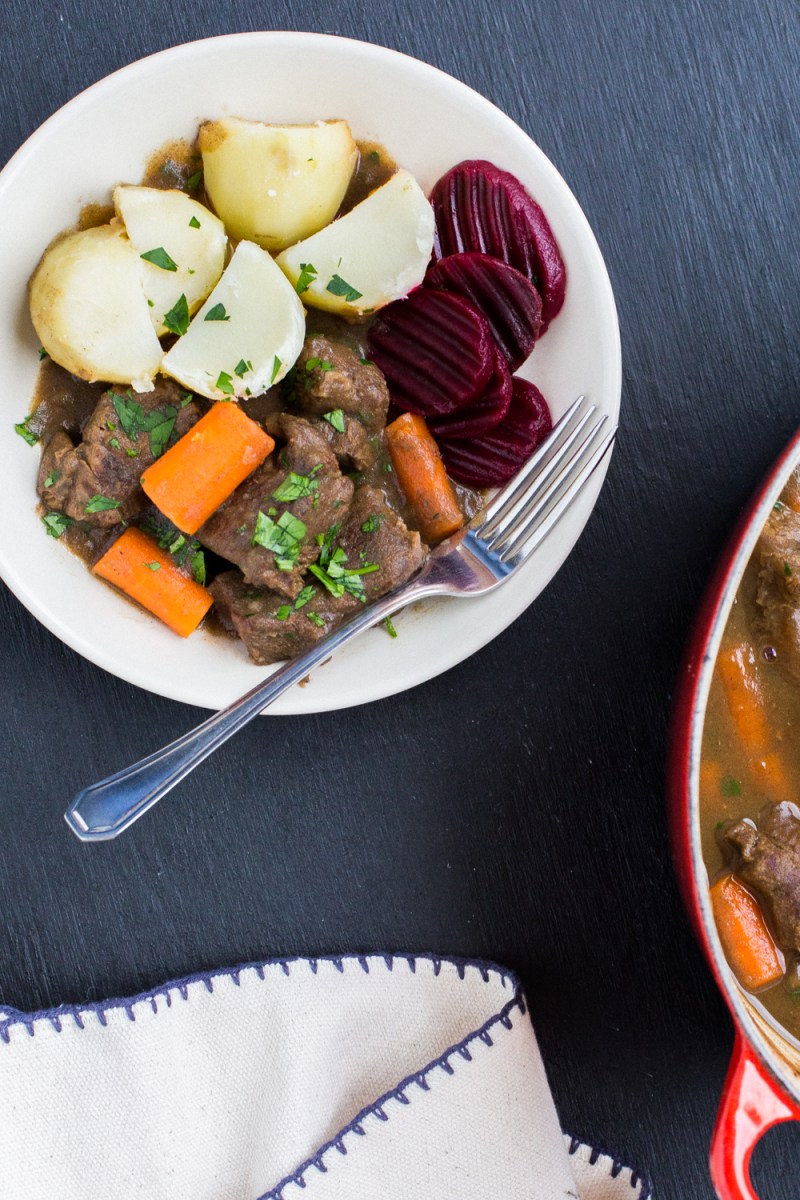
Kalops is a traditional Swedish stew, first recorded in the 18th century. The word kalops itself is a cognate with the English word collops, which simply means “a slice of meat” – there’s actually some dispute as to whether the Swedish or English word came first. Either way, this stew is very similar to many English stews, but with a few Scandinavian twists: its signature flavor comes from a healthy amount of allspice, and it is commonly served with pickled beets. When carrots are added, the dish is called Skånsk Kalops, referring to the Skåne region (which is in Southern Sweden – perhaps carrots grow most abundantly there?).

Kalops is most often prepared with chunks of beef, but reindeer or elk are used as well. Personally, I thought it would be neat to make it with bison chuck roast, which US Wellness Meats recently sent me to try. It was pretty awesome. Overall, I loved this stew, and its characteristic allspice-heavy flavor gave it a warm, hearty, and very distinct taste.

Read Full Article

Folks, I basically flipped out when I found out that this tiny blog was chosen as a finalist for the Saveur 2013 Best Food Blog Awards, under the Special Diet category! SAVEUR is an incredible magazine and online resource, and one of my favorite places on the internet – so you can imagine my surprise when they gave a nod to little ol’ me! I’m speechless.

Okay, I’m not totally speechless, because I have a little more talking to do. I need your help. Although the Saveur editors whittled thousands of nominations down to us finalists, the winner is chosen by tallying votes, and it’s still anybody’s game: so please vote for me so I can win the whole thing!! I’m not joking when I refer to this blog as “tiny”, because I am tiny in comparison to some of my competitors, and every vote counts.

So please, rally the troops, grab your friends, and guilt-trip your families into voting for The Domestic Man on Saveur’s page. Please note that you have to register with Saveur.com first before voting. I realize that it’s an inconvenient extra step, but I really, really appreciate it. Voting ends at midnight, Friday, April 19th, so please hurry!

To vote, click here and then hover over one of the blog name and select “Register”, and fill out the form. Then return to the voting page and cast your vote.

Finally, I just want to say THANK YOU to everyone that reads this little nook of the web, and I hope you’ve enjoyed my recipes so far. I have a lot more to share, so stick around!

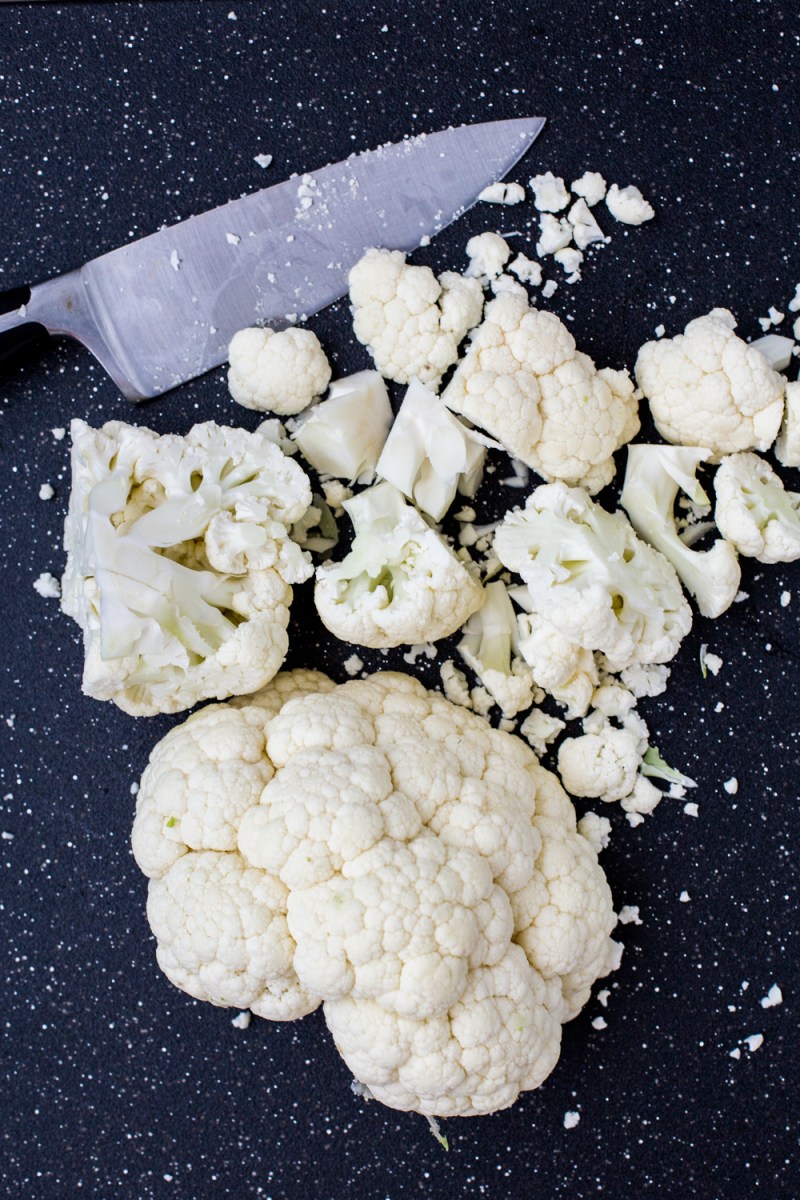
I must be reverting to some sort of baby food phase, because lately I’ve been really into puréed veggies. I think it’s the idea of eating familiar foods in unfamiliar ways. Either way you look at it, this cauliflower purée recipe isn’t the most innovative recipe I’ve created, but it serves an excellent purpose as an easy and mild-tasting accompaniment to robust dishes (which you’ll see in a couple upcoming recipes!).

It’s unsurprising that cauliflower is a close relative to broccoli, but until recently I wasn’t aware that it is from the same family (Brassica oleracea) as cabbage, brussels sprouts, kale, and collard greens. It was first brought to mainstream attention by some French cookbooks in the 17th century, although the plant itself originally came from Genoa, Italy.

Read Full Article