dinner

Nakji Jeongol (낙지전골) is a Korean octopus stew that deserves a bit of primer, since the world of Korean soups and stews can be pretty intimidating. In Korea, most meals are accompanied with some form of soup, categorized into two main categories: soups like guk or tang, and stews like jjigae or jeongol.

Soups are typically thin, simple, and simmered for extended periods. In general, guk are meatless, and a little watery; last year I posted a recipe for the popular Gul Guk (Oyster Soup). Tang are, you guess it, made with meat (a favorite of mine, Gamjatang, is made with pork neck and potatoes – it appears in my first cookbook, The Ancestral Table).

Stews are more ornate, adorned with fresh vegetables, and served in large, family-style dishes. Jjigae are typically made with a single defining ingredient; Kimchi Jjigae and Sundubu Jjigae, the latter made with curdled tofu, are the most popular. Jeongol contain a variety of ingredients, and are a little more elaborate; historically, jeongol were served for members of the royal court, while jjigae were for commoners.

Today’s Nakji Jeongol has a fair amount of add-ins, but the basic recipe is very simple: marinate the octopus, prepare the soup base, throw it all together. There is no single set of add-ins, so feel free to throw in whatever you have available to you (for example, I used cilantro because the more traditional herb, perilla, is hard to find where I live). Frozen packages of pre-cleaned octopus can be found in most Asian markets, or you can get some fresh (and likely cleaned, but here’s a quick video if needed) from your local fishmonger.

One fairly uncommon ingredient in the soup base is doenjang, which is the Korean version of miso paste; if you’re not able to find it locally, it is sold online, or red miso paste will work in a pinch. If you’re curious as to my thoughts on fermented soy, here is something I wrote earlier this year (spoiler alert: I think fermented soy is fine).
Read Full Article

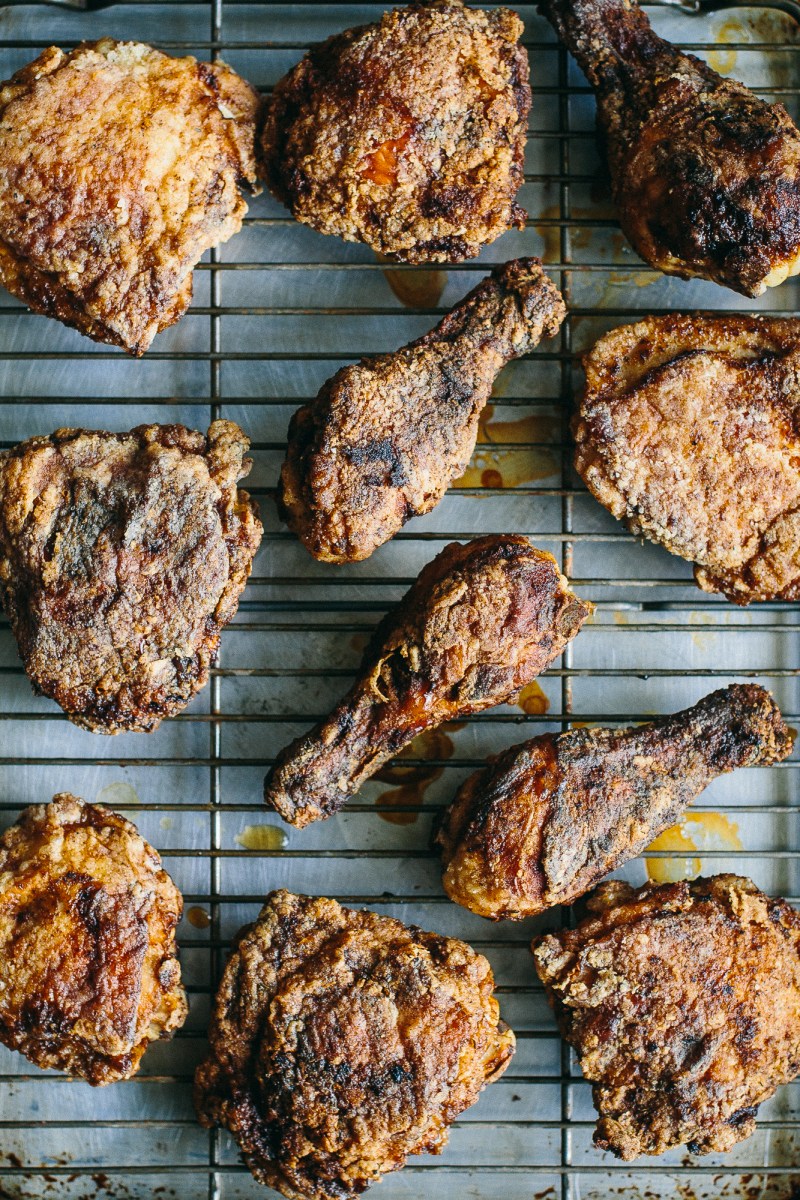
About four years ago, I posted a recipe for Southern Fried Chicken, which quickly became one of the more popular recipes on this site. I liked the recipe so much that I ended up adding it to my first cookbook, The Ancestral Table, and then improving it for my second cookbook, Paleo Takeout, to incorporate seasonings similar to those you’d find at a certain famous fried chicken chain restaurant (you know, the kind that comes in a bucket).

As I mentioned in that first fried chicken post, this dish is the convergence of three different events. First, the West African practice of frying chicken was brought to the US as a result of the slave trade. Second, the mass production of pork in the South resulted in an excess of lard for cooking. And finally, cast-iron cookware became a staple of every kitchen during the 19th century. It’s only natural that these elements came together as they did, to create one of the tastiest ways to prepare chicken.

Colonel Harland Sanders first started selling fried chicken during the Great Depression, in Kentucky, and opened his first franchise restaurant in 1952; his success challenged the assumption that “fast food” was limited to hamburgers. His original recipe of “11 herbs and spices” was finalized in 1940, and has been a closely guarded secret ever since. In honor of the original Kentucky Fried Chicken recipe, I also used 11 herbs and spices (although, to be fair, the pinch of thyme used in my recipe was added mostly to reach 11!).

The original preparation for KFC chicken was through traditional pan-frying, but it would take upwards of 30 minutes to prepare one batch of chicken. Ultimately, Colonel Sanders modified a pressure cooker to make the first pressure fryer, which is the method they use today. For my recipe, we’ll be returning to KFC’s roots and pan-frying the chicken – no modified pressure cooker needed.

Read Full Article

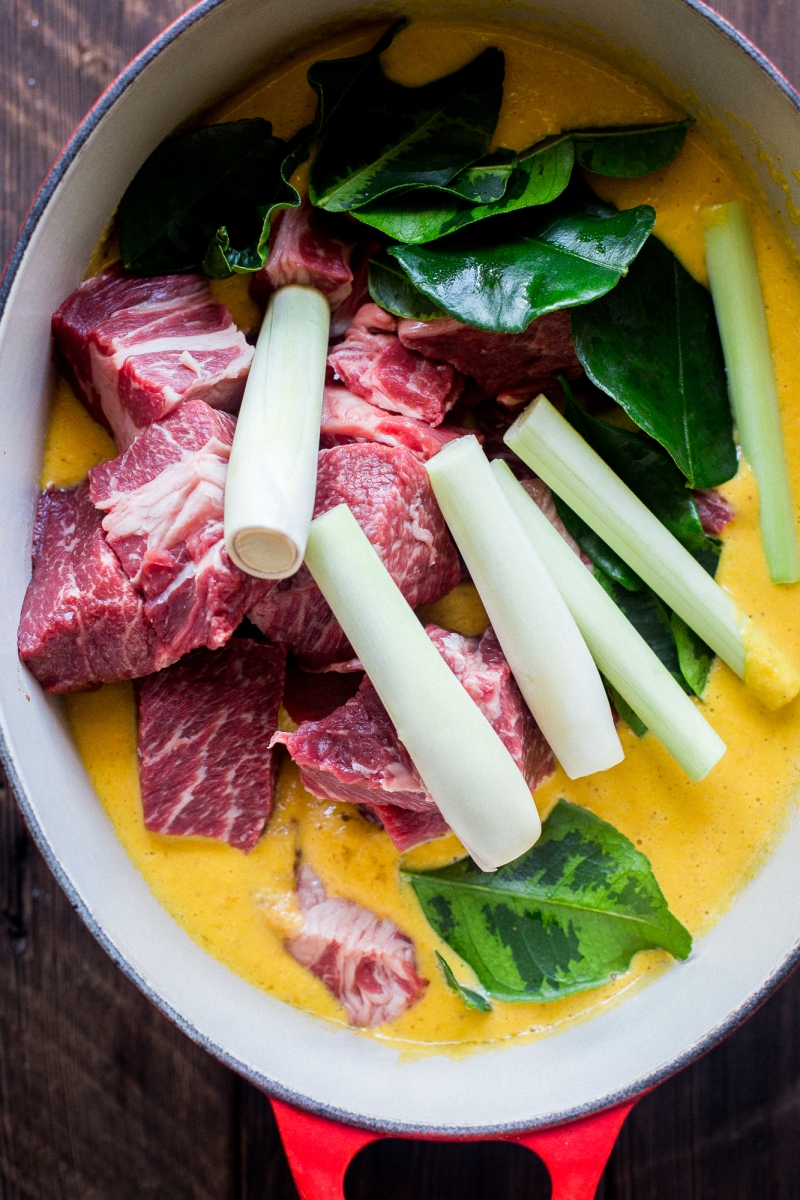
I’m often asked what is my favorite dish to prepare; it basically comes with the territory in this line of work. While it’s hard to choose a favorite, Beef Rendang often comes to mind – there’s truly no taste like it.

Rendang is a dry curry that originated among the Minangkabau people of West Sumatra and later spread throughout Indonesia and Malaysia. Its age is unknown, but historians have traced its origin as far back as 500 years. There are three recognized forms of rendang in Minangkabau culture, each depending on the cooking time: a pale, lightly cooked curry known as gulai; a browned but still liquid curry called kalio; and a rich, dry, dark brown dish called rendang, the version prepared in this recipe. In other countries, most notably Malaysia and the Netherlands, the rendang most often served is closer to kalio. While its extended cooking time can be a test of patience, it’s well worth the wait; the aroma and overwhelming richness of rendang are unforgettable.

I first published a rendang recipe nearly four years ago, and it’s made some slight but significant changes since then. Earlier this year I made a batch, and took the photo you see above – it quickly became one of my favorite photos of the year, and so I figured it was a good excuse to share the updated recipe. For the past year or two, this has been the version we’ve been making at home, as it has fewer steps and comes together very quickly.

Read Full Article

Bubble and Squeak is a traditional English dish, served as a hash of leftover roasted vegetables. It can be made from a variety of vegetables, but potatoes and cabbage are almost always included; it can be served at any meal, and is a common accompaniment to a full English breakfast. This dish was first mentioned in the 1800s, but really fell into its own as a way of elongating meals during World War II, when food rationing was common.

The name “bubble and squeak” refers to the name that the vegetables make as they fry in the pan. There are some similarly fun names for other dishes that share the same technique, like Panackelty (NE England) and Rumbledethumps (Scotland).

Prepared traditionally, Bubble and Squeak is kind of tragic, because that means you could only enjoy it on those rare occasions when you have leftover roasted vegetables in the fridge. As a solution, the recipe below is written using fresh vegetables – you roast the vegetables while you boil the potatoes, then toss them all together for the final, beautiful creation. Of course, if you have leftover vegetables, this recipe will work, too; just skip directly to step #3.

Read Full Article

You know, I really thought I was done with soup for a while. The weather has been nice and warm down here in the Florida panhandle, balmy in just the right way – never so cold that a light jacket won’t do the trick, and never too hot for pants. But then last week I visited my old stomping grounds in Maryland, and the weather was distinctly cooler; in other words, it was soup weather.

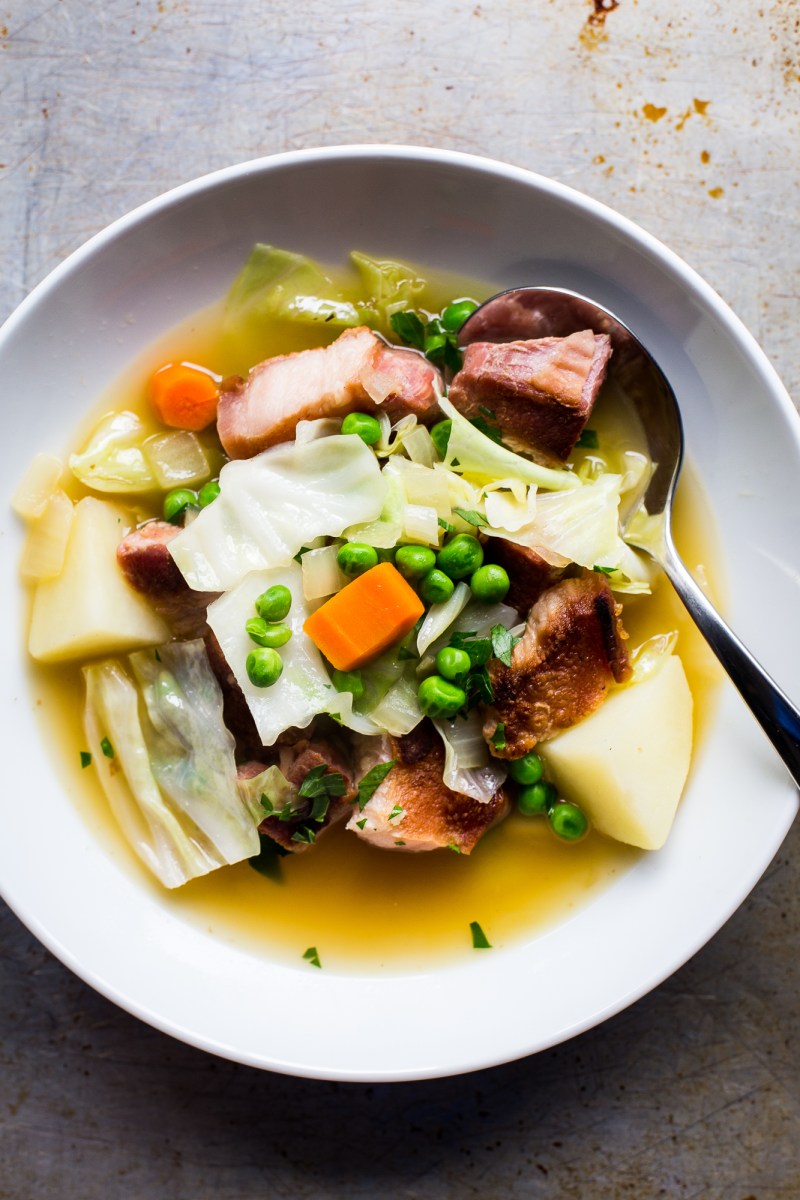
Garbure is a peasant’s soup originally from the Aquitaine (southwest) region of France; its defining ingredients include cabbage, meat (typically ham or duck), and seasonal vegetables like beans or peas. The consistency of the soup varies – some are nice and thick thanks to copious beans or chunks of bread (a good Garbure, I’ve read, should allow to spoon to stick up on its own), while others let cabbage provide the soup’s body.

My recipe takes cues from the second idea of Garbure, partly because I don’t typically cook with beans or chunks of delicious French bread (yep, there are definitely drawbacks to a Paleo-minded lifestyle), but also because I really enjoy cabbage soup.

Read Full Article

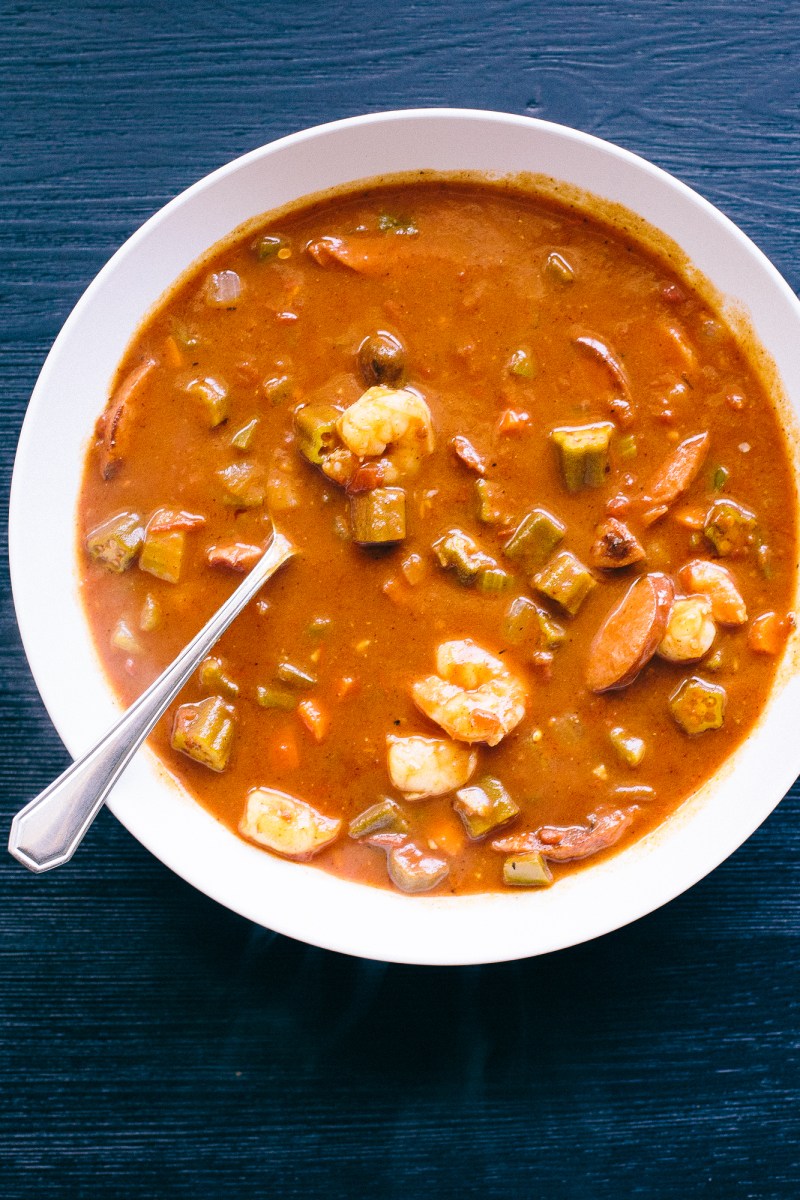
Gumbo is a stew of Louisiana origin, dating back as far as the 18th century. As with Jambalaya, there are two popular versions of gumbo, Creole and Cajun; generally, the former includes tomatoes, while the latter omits them. It can be made with all sorts of meats, from chicken, to rabbit, to nutria, to oysters; today, we’re going to make one with shrimp and andouille sausage.

There are several ways to prepare gumbo, many of them influenced by how you thicken the stew. Most methods today include a French-inspired flour roux, while others use okra or filé powder (ground sassafras leaves) – or combination – as a thickener. I’ve found that mochiko (sweet rice flour) makes the best gluten-free roux for gumbo, with plain white rice flour coming in second – but on their own, they’re not quite enough to thicken the gumbo to what I’d like (I tried simply adding more flour, but it overtook the dish’s texture and flavor). In the end, a combination of rice flour roux and okra worked best, as the roux dampened okra’s sliminess, and adding a bit of optional gumbo filé powder at the end gave the stew a perfect earthiness, befitting a warm Southern kitchen.

Gumbo is often characterized by its dark roux, made by stirring the roux over an open flame for up to an hour, right until it’s at the threshold of being burnt. I’ve found that a rice flour roux tends to burn too quickly when compared to a traditional wheat flour roux, so my solution is pretty simple: roast the flour in the oven to a golden brown before turning it into a roux. This also gives you some time to multitask, and simmer up a quick shellfish broth using shrimp shells and clam juice, while the flour browns.

The origin of the word “gumbo” is a bit of a mystery. It’s commonly thought that it is either derived from the Choctaw word for filé powder (kombo), since the spice came from similar Native stews from the region, or the Bantu word for okra (ki ngombo) – as the vegetable was introduced to the area via the West African slave trade. Regardless of its origin, gumbo is a perfect example of the cultural melting pot that eventually came to exemplify Louisiana cuisine, with its French, Native, and African influences.

Finally, I would like to note that this isn’t a weeknight-friendly meal (unless, of course, you have a weeknight off, or you’re unemployed). But that’s the beauty of gumbo – when you spend a couple hours pouring yourself into a cooking project, a bit of your soul joins the dish.

Read Full Article

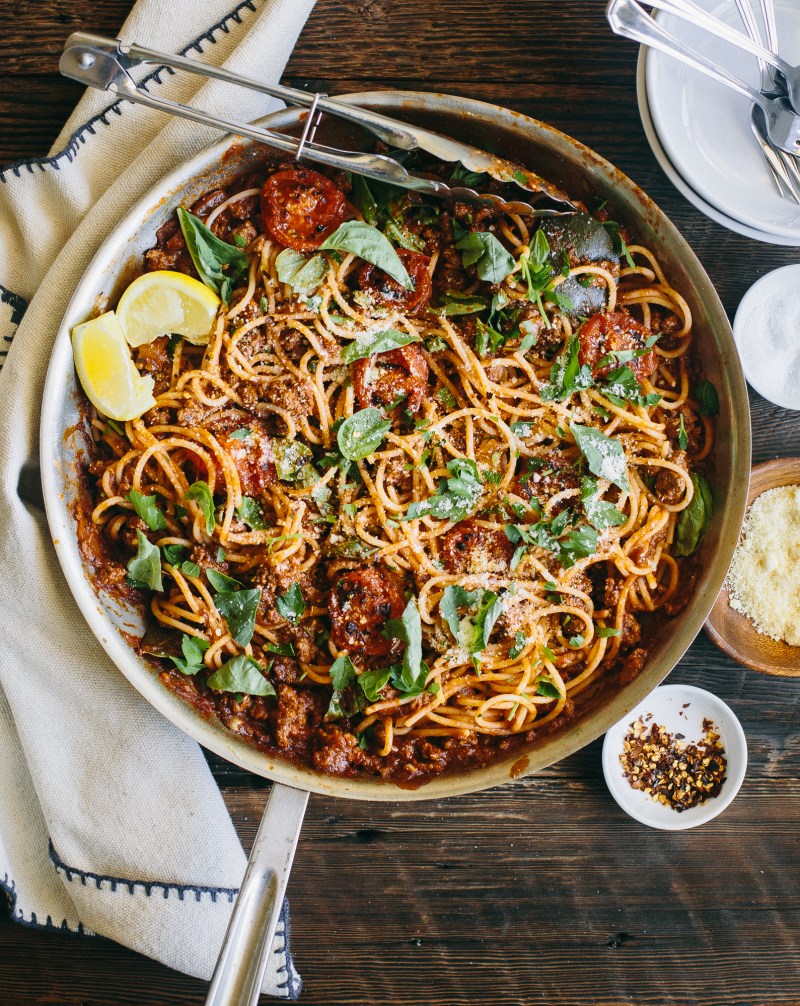
Lately, I’ve been obsessed with the idea of making meals that give me a distinct sense of accomplishment in the shortest amount of time. Part of that comes from having the new baby in the house, as I’ve resumed full dinner-making duties, but maintaining my typical busy workdays (for a while there, my wife was taking the brunt of dinner duty, using my cookbooks and this blog as a reference). Sure, I could grab a jar of tomato sauce and toss it with some gluten-free pasta, but how long would it take me to make bolognese from scratch? Today’s recipe is the result of a recent project, where I worked to make a meal that’s the best of both worlds: something I can be proud of, but not keep my family waiting in the process.

The method is simple: sauté an onion, add some beef, then tomato sauce and spices; as the flavors marry, boil the pasta and blast some tomatoes under the broiler, then throw it all together. Your pasta options are many: gluten-free spaghetti, spiralized vegetables, or even Cappello’s grain-free fettuccine – whatever fits your dietary restrictions or budget.

Read Full Article

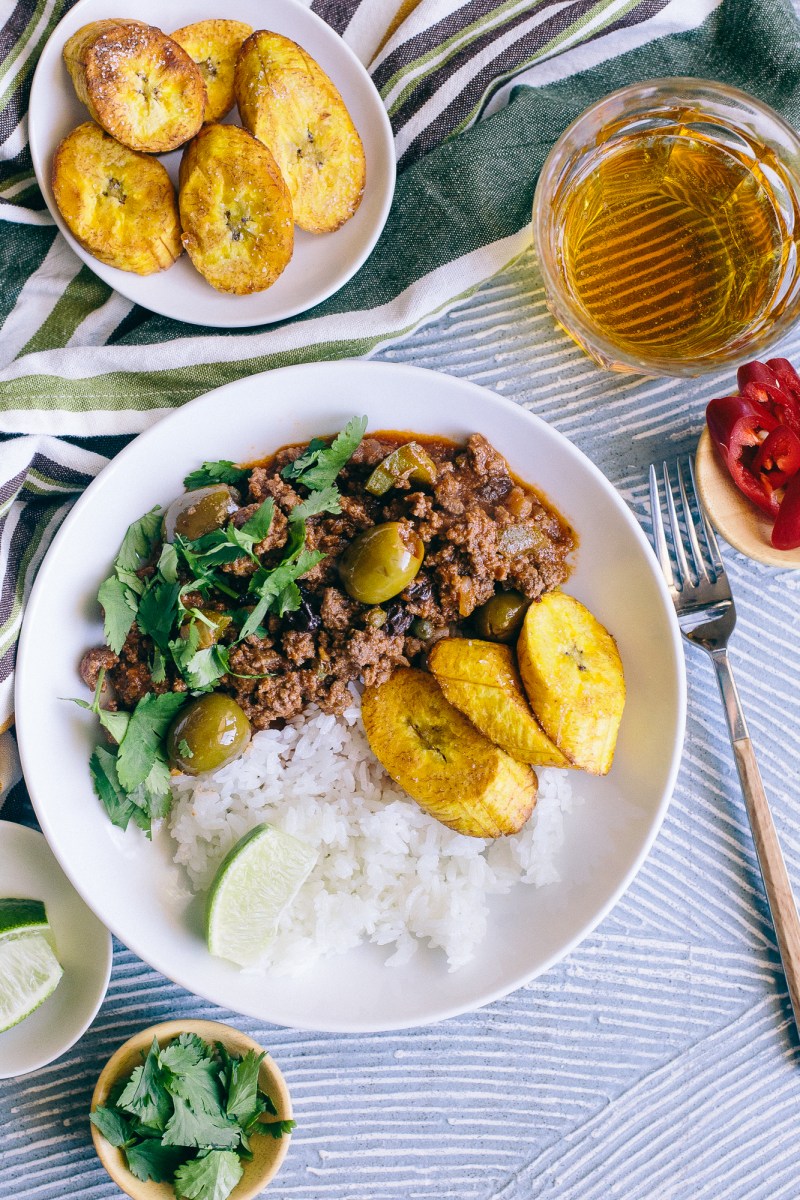
Picadillo is the name of a variety of dishes first originating in Spain. Versions of Picadillo can be found across Latin America and the Caribbean, and it has reached as far as the Philippines. Each variation has its own distinct quality; in the Dominican Republic, Picadillo is served with hard-boiled eggs, while in Puerto Rico it is used as a filler in Empanadas, or in savory pastries known as Piononos. The word Picadillo itself comes from the Spanish word Picar, to chop or mince.

My favorite Picadillo is the Cuban version, aptly named Picadillo Cubano. As with any beloved dish, there are many regional variations, but it generally combines the unique flavors of cumin, oregano, green olives, capers, and raisins. The end result is not unlike America’s favorite crockpot dish, Chili con Carne, but with a sweet-and-savory dynamic that’s equally comforting and exotic – and it all comes together in 30 minutes.

Not to confuse you, but the Cuban version of Picadillo is found in other countries, as well. For example, it is called Arroz a la Cubana in the Philippines, where it is topped with a fried egg. Not a terrible addition, if you ask me.

For today’s recipe I tested ButcherBox‘s ground beef; this is my second time trying their 100% grassfed beef (read about my first experience here), and I was just as impressed as the first time around. If you’re looking for a fun new take on pasture-raised meats – as part of a curated package shipped monthly – you can’t go wrong with these folks.

Read Full Article

This week’s recipe has a personal twist to it. I recently teamed up with Skype to help create some healthy eating challenges for popular vlogger Claire Marshall as part of their SkypeFit project. I’ve had a few roles in the campaign, to include jumping on Skype’s group chats to answer food-related questions, and taking over the Skype Instagram account for a weekend. My favorite piece has been brainstorming with Claire to help her find healthy food solutions.

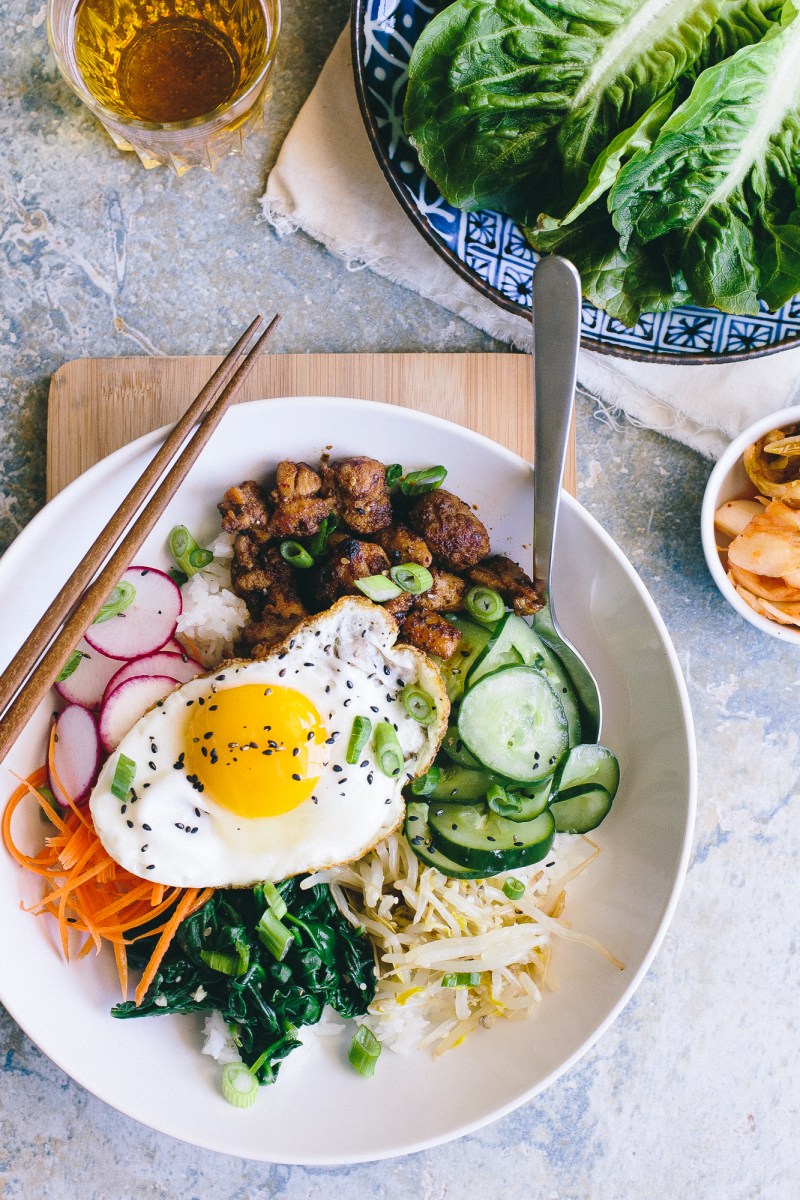
In our chats, Claire had mentioned that she loves eating out (don’t we all!), Korean barbecue in particular, which is too often laden with sickeningly-sweet marinades. Additionally, she’s been trying to cut back on red meat. So we settled on a weeknight-friendly version of Bibimbap, made with spicy chicken (Dak Bulgogi, 닭불고기), and I challenged her to try and make it on her own. She made a video of the experience, which you can find after the recipe below.

Legend has it that Bibimbap (비빔밥) originated from the belief that leftover food cannot be brought into the New Year. For that reason, Koreans started the practice of mixing together various ingredients in one bowl, and this dish rose to prominence in the early 20th century. Today, you can find it on nearly every Korean restaurant menu.

Let’s talk about the tweaks I made for today’s recipe; in the end, this dish isn’t unlike the Bibimbap found in my first cookbook, but with a few conscious steps to speed up the cooking process for our busy lives. Bibimbap is typically served with Gochujang (고추장), a spicy red sauce, but the intensely flavorful chicken replaces the Gochujang while eliminating the need to make a separate sauce. I also sweetened the marinade with my favorite one-two punch when making Korean barbecue: honey and applesauce. Finally, instead of asking Claire to make her own kimchi (the recipe is in both of my cookbooks, but takes upwards of 5 days to prepare traditionally), I left it as an optional side assuming that your local market sells some.

Read Full Article

My parents-in-law recently visited from Hawaii over the holidays, to help around the house as we adjusted to having a new baby in our family. It was great spending the holidays with them, but it also made me realize how much I miss living in Hawaii. I lived there from ages 21 to 28, and many of the events that shaped who I am today – from meeting and marrying my wife, to honing my skills as a home chef, to suffering the worst of my health adventures – came while living in view of the Honolulu skyline. For a few of those years, Janey and I lived with her parents, whom we affectionately called our “roommates”.

When we left the island in 2008, it genuinely felt like I was leaving home; time has caused that sentiment to wane a bit, but in the end, Hawaii has a special place in my heart. And within that special place in my heart there is another, perhaps specialer place in my heart, which is where Hawaii’s Chinese-style oxtail soup resides.

The title for Hawaii’s best oxtail soup is hotly contested. I’ve heard everything from Kapiolani Coffee Shop to Aiea Bowl. Somewhat surprisingly, restaurants attached to bowling alleys are generally known for having good oxtail soup – even the famous Kapiolani Coffee Shop oxtail soup got its start at Kam Bowl, which closed in 2007 but re-opened just last month.

I like to think that preparing an authentic dish from Hawaii makes the sting of not living there hurt a little less, and you really can’t go wrong with a Chinese-inspired creation that’s equal parts rich and comforting. So we’re going to recreate it today for those of us who can’t just drive to our local bowling alley to buy a bowl of soup. Included below are stovetop and electric pressure cooker variations of the recipe, whatever floats your boat.

Read Full Article