epicurious

Meatloaf is a dish that changes with age: it is often reviled by children and treasured by parents. It makes sense, actually. Kids like to know what’s in their food, and meatloaf is the antithesis of this idea; it’s just a brown hunk of mystery, coupled with a nagging feeling that there are vegetables inside. Adults like meatloaf because it’s a way to eat many ingredients at once, with minimal effort. Personally, I think that a perfectly-cooked meatloaf is appealing to both sides of the coin: easy to make but tasty enough for everyone to enjoy. To ensure a perfectly-roasted loaf, I developed a recipe that uses a water bath to keep the oven moist and cook everything evenly.

Meatloaf has origins in many countries, spread throughout the world. It’s universally considered a comfort food. Some of my favorite variations include Jewish Klops (made with boiled eggs inside), Czech Sekaná (with pickles and sausage inside), and Austrian Faschierter Braten (wrapped in ham or bacon before baking). The American variation rose to popularity during the Great Depression, when families tried to stretch food out to last longer. Americans typically added breadcrumbs to help bind and add volume to the dish, and the tradition persists today. The truth is that a well-cooked meatloaf doesn’t really need a breadcrumb binder – mushrooms work just fine, and add some great flavor as well.

Read Full Article

Bacalhau à Brás is a Portuguese dish using salted cod (bacalhau), eggs, and potatoes. The Portuguese were one of the first European cultures to fish for cod, making huge harvests and preserving the fish off the coast of Newfoundland shortly after Columbus discovered the New World. Since then, this salted cod has been an integral part of Portuguese culture, and it’s often said that you can cook a new recipe using bacalhau every day of the year (some say there are over 1,000 recipes that include this fish). Advances in fishing technology in the mid 20th century had collapsed the Northwest Atlantic cod market by the 1990s – cod takes a long time to mature, and overfishing had run rampant. Today, bacalhau is most often made using cod harvested from Arctic waters under more strict quotas.

Bacalhau is made by salting and drying the fish in the sun; while it was originally a method of preservation (salted cod keeps a long time even without refrigeration), its unique, strong flavor is unmistakable and delicious, and its popularity endures today. The only downside to eating bacalhau is that it requires a bit of foresight, since it needs to be soaked overnight to reconstitute the fish.

Bacalhau à Brás is one of the most famous Portuguese dishes, and is considered the ultimate comfort meal in Portugal. The dish uses many of the quintessential ingredients found in Portuguese cooking – bacalhau, eggs, potatoes, and black olives.

Read Full Article

Callaloo is a Caribbean dish that originated in Africa. It is typically made with amaranth leaves (aptly called callaloo in the West Indies), taro leaves (dasheen), or water spinach; since these plants are somewhat hard to find in the United States, spinach is a common replacement stateside. There are many variations of this dish, and my recipe follows the Trinidadian version, which includes coconut milk and okra. In the Caribbean, Callaloo is often served as a side dish, but when I make it, it almost always turns into a main course. I’m not the type of guy that craves vegetables often, or vegetable soups for that matter, and I crave this dish. A lot.

I think I could eat my weight in Callaloo. I don’t know what it is about this dish that makes me go crazy about it. For one thing, I feel like a superhero after I eat it – like I’ve consumed a week’s worth of vegetables in one sitting. It’s also ridiculously delicious, and carries a unique flavor despite using fairly common ingredients. The only ingredient in here we don’t eat regularly is okra, since my wife isn’t a fan of okra’s slimy texture; luckily, the texture is cleverly masked in this dish.

Read Full Article

I’m a big fan of Thai curries, and Green Curry is one of my favorites. It’s been a couple years since I tackled my last Thai curry (Panang Curry), so I thought it was time to share another recipe. Like in my Panang Curry recipe, this recipe is a template for you to adjust as you see fit; directions on how to change the protein or add vegetables are provided below the recipe.

The Thai word for Green Curry (แกงเขียวหวาน) actually translates to “Sweet Green Curry”, but that doesn’t imply that this dish is sweet. Instead, “sweet green” means “light green” in Thai.

While the idea of making curry from scratch may be initially daunting, nothing could be further from the truth. My curry paste has quite a few ingredients, but all you do is basically throw them all together and purée; the paste will keep for a month in the fridge (or several months in the freezer) and there’s enough paste to make three curries. Making the actual curry is even easier – it’s a 20-minute meal, if not less.

Read Full Article

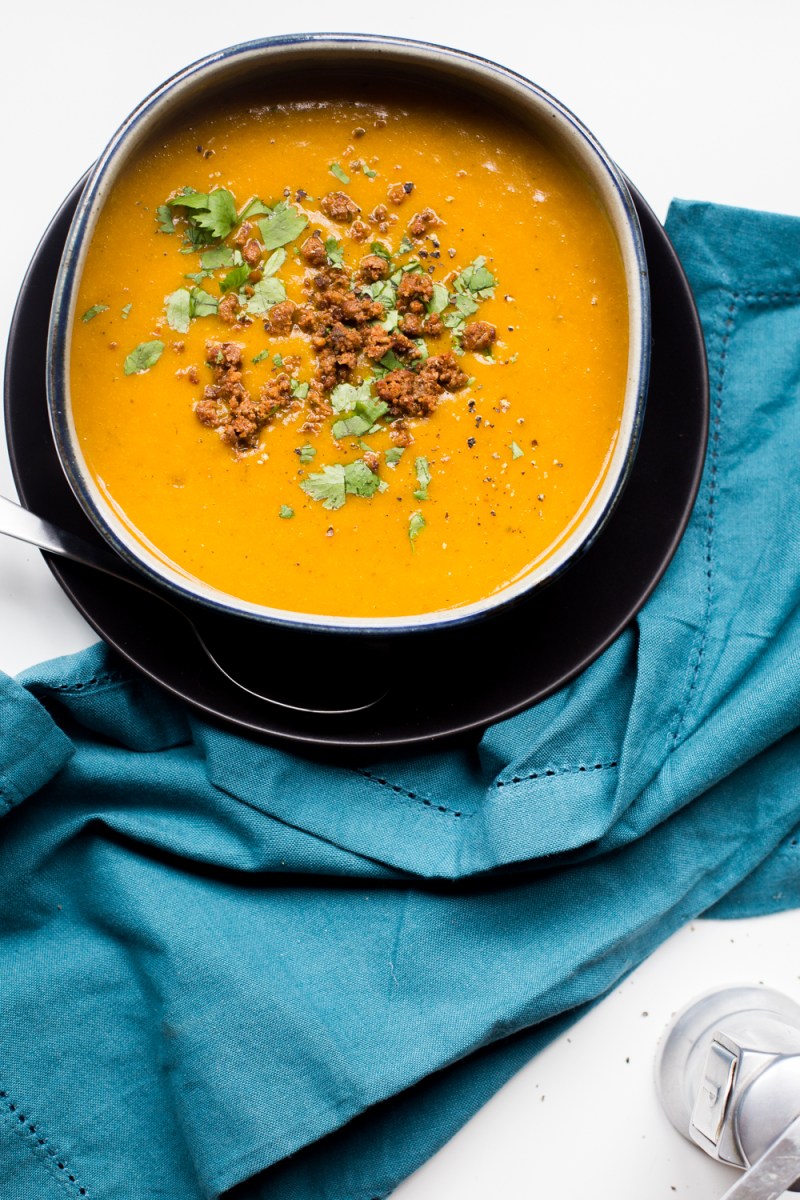
I figure it’s safe to post a pumpkin recipe now. For a while there (all of October and November) I thought I was going to drown in pumpkin-flavored products. Is it just me, or are they becoming more and more prominent every year? Regardless, pumpkin soup is a hearty, warming way to enjoy the cold months of fall and winter, and I didn’t want to let spring hit me before sharing this recipe.

Like many foods we enjoy today, pumpkins are a product of the New World, and entered Europe in the 15th century. Most foods introduced during that time took a while to gain momentum in Europe – sometimes hundreds of years – but not the pumpkin. Because they resembled gourds and squashes common in the Old World, pumpkins were readily adopted and prized for their robust flavor and easy cultivation. It was quickly made into various soups, and mixed with honey and spices as early as the 17th century – a precursor to pumpkin pie.

For today’s recipe I wanted to keep pumpkin closer to its place of origin – North America – so I decided to focus on a Mexican soup commonly referred to as Sopa de Calabaza, often flavored with cumin and chorizo sausage. I really like the cyclical nature of this dish. Cumin was first cultivated in India and introduced to the Americas by the Portuguese and Spanish. Chorizo is the best of both worlds: Old World sausage flavored with paprika made by New World peppers, and later re-introduced to the Americas. So this dish is the product of the unique culinary marriage of these two continents and cultures.

While pre-roasting a whole pumpkin inevitably lends more depth of flavor, using canned pumpkin puree drastically cuts down on your cooking time and effectively turns this dish into a 30-minute meal. Read Full Article

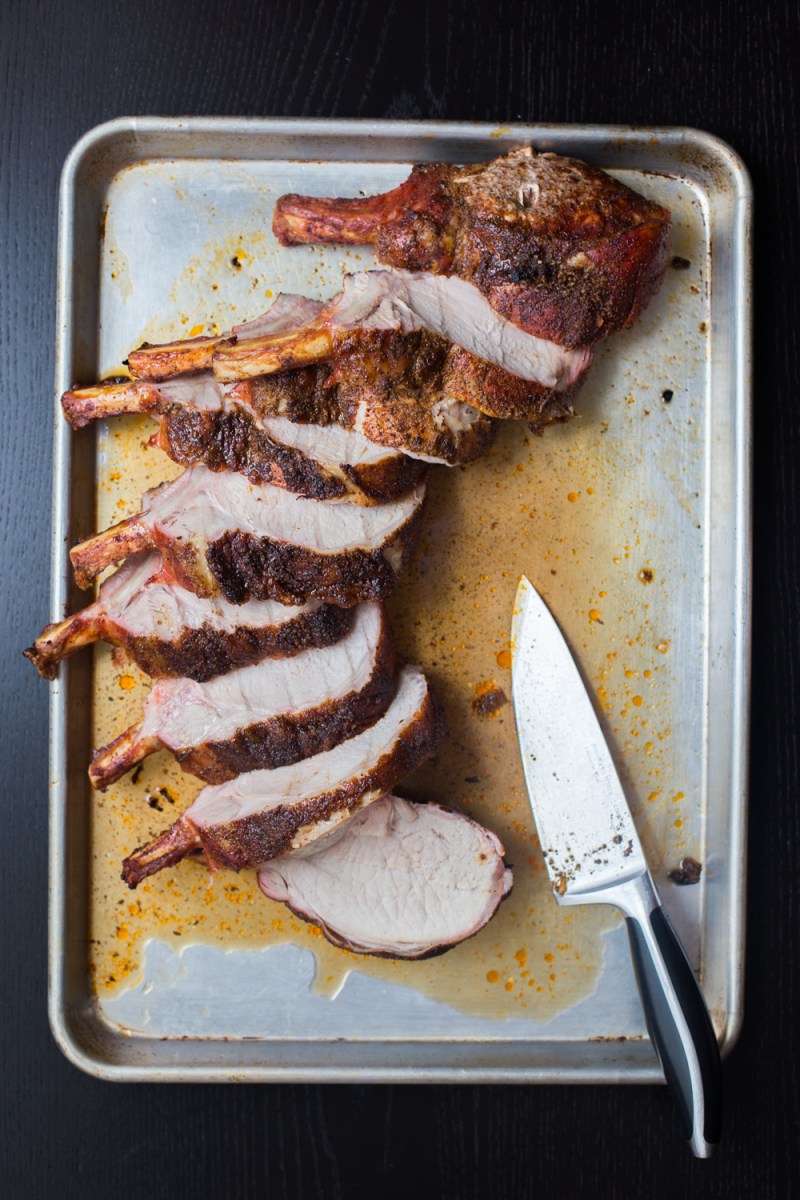
Today’s recipe is a combination of two recent events in our house. First, I recently bought a remote grill thermometer, and I was itching to try it out. The thermometer has has two probes: one that goes in the meat and one to gauge the overall grill temperature. It’s an easy way to keep an eye on both the grill temp and your food without having to open the grill lid. Plus, it has a wireless receiver so I can keep an eye on the temperatures from afar, perfect for some wintertime grilling.

Second, we recently came across a beautiful French Rack of Pork at our local market, which is a shoulder pork loin still attached to the ribs; basically, it’s a rack of center cut pork chops. As luck would have it, the rack was on sale; my guess is that it intimidated customers and the store was having a hard time selling it. Either way, we couldn’t turn down the price, so I dragged the big hunk of meat home and the rest is history.

I decided to smoke the rack on my gas grill, which would allow me to give it a flavorful crust without overcooking the tender meat inside. Just to be safe, I brined the pork overnight to keep it from drying out, which was also a good call. The end result was crisp on the outside, and ridiculously juicy and flavorful on the inside.

Read Full Article

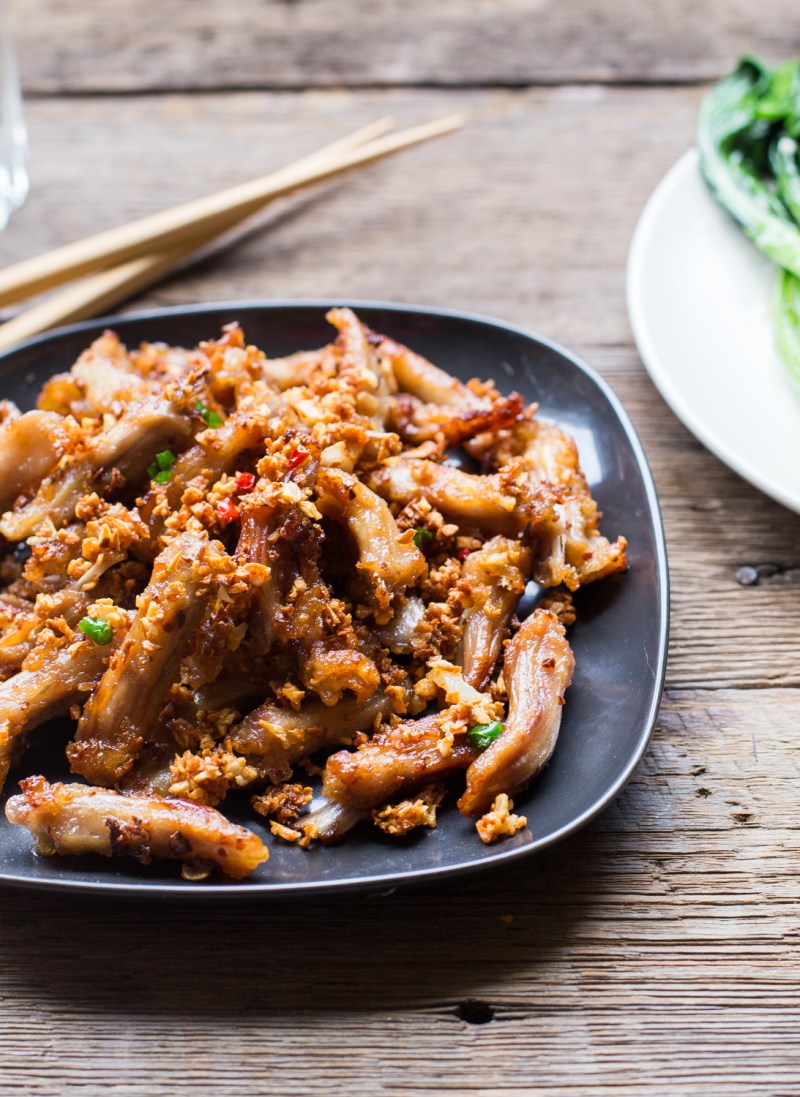
WAIT!! Don’t turn away just yet. If the idea of duck tongues is too much for you, know that you can make this exact recipe with shrimp instead and it’s equally tasty; in fact, this recipe is based on Salt and Pepper Shrimp (椒盐虾), a common Chinese dish that’s one of our favorites. I’ll probably do up the shrimp version of the recipe in the future.

Okay, now that I’ve coaxed you into staying, let’s talk about duck tongues. They’re very different from what you may be expecting from tongue – usually considered dense, muscled, and tough – and are instead tender and succulent. They carry an inherent richness which reminds me of escargot. They have a tender bone in the center of the tongue, that’s mostly cartilage; many people come to relish the slight crunch of eating the whole tongue, bone and all. They’re also very affordable considering their status as a delicacy: US Wellness Meats offers a pack of 50-60 tongues (which I used in making this recipe) for well under $10.

Read Full Article

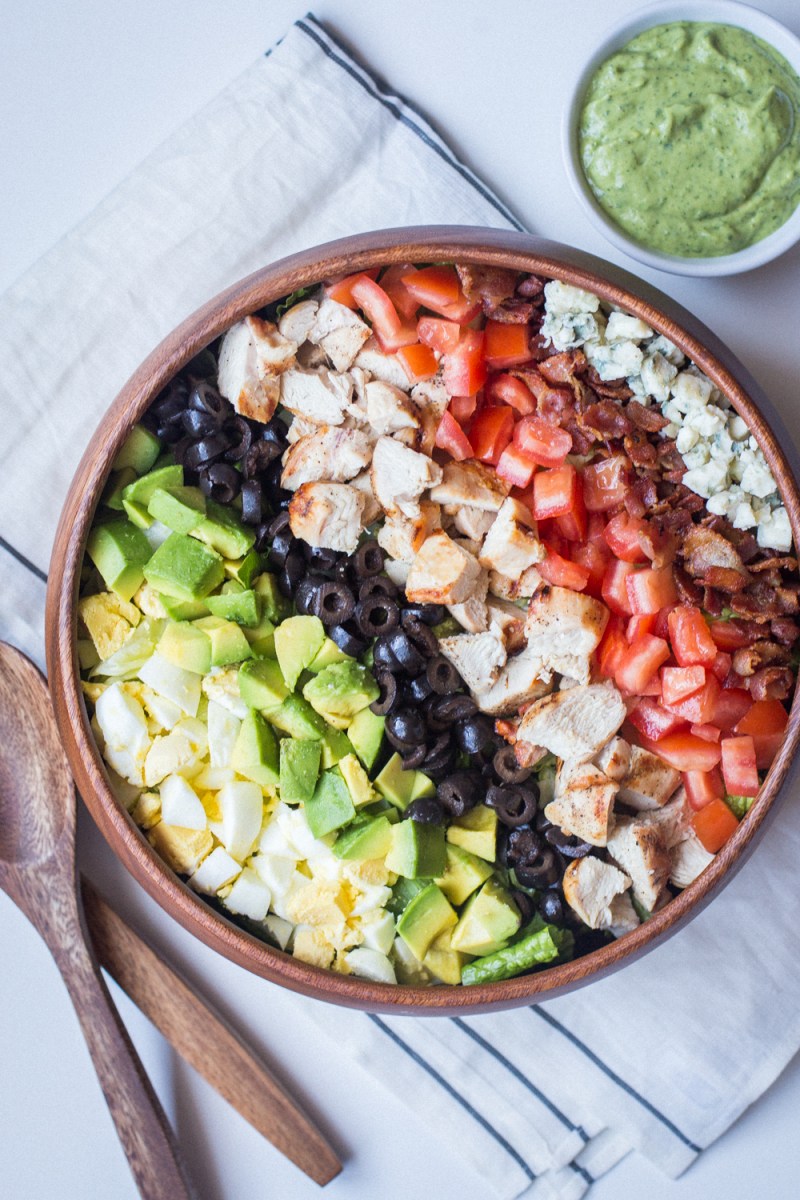
To tell the truth, it’s not often that I get a hankering for a meal-sized salad. There’s a lot of chewing involved. But if I am going to sit down and enjoy a full salad, I prefer to eat something made with a wide variety of hearty ingredients. In that regard, Cobb Salad takes the cake: it’s basically lettuce and a bunch of solid, pleasurable mix-ins. No dainty ingredients like sprouts, no sir! Okay, sometimes Cobb recipes call for chives, but you get my point.

Both the salad and dressing used in today’s recipe come from California in the early 20th century. Bob Cobb, owner of the Brown Derby Restaurant in Hollywood during the 1930s, whipped up a quick salad for a friend with a toothache using leftovers found in his kitchen. He cut the ingredients up into small pieces so as not to exacerbate his friend’s condition. (Personally, I would have whipped up a pureed soup if my friend had a toothache.) Other stories contend that there was no toothache involved. Either way, the salad was such a hit that Cobb added it to his menu, and it took off from there. Green Goddess Dressing was made by a San Francisco chef in the 1920s, after a popular stage play of the same name. While the salad and dressing don’t traditionally go together (Cobb salad is usually served with red wine vinaigrette), I really like the pairing of the two. Plus, they each call for 1/2 an avocado, so in that sense, they fit together perfectly.

Special thanks to my friends at Pacific Merchants who donated the hand-carved acacia wood salad bowl for the picture you see above. Their 12″ bowl is both beautiful and sturdy; it’s a perfect size for a whopping salad like this one.

Read Full Article

Jaegerschnitzel (Jägerschnitzel) is a traditional German dish, most commonly made with pork or veal cutlets (schnitzels) today. Historically, they were made with wild boar or venison (jäger means “hunter” in German) and paired with wild mushrooms. Today, its accompanying mushroom gravy is what separates Jaegerschnitzel from its more commonly-known (and gravy-less) counterpart, Wiener Schnitzel. Fun fact: it’s believed that Chicken Fried Steak originated from this dish, when German and Austrian immigrants brought it to Texas during the 1800s.

Making this dish within a Paleo template is easy, as it only requires a different type of flour. A combination of potato starch and arrowroot flour works best, but if you have only one flour on hand it still turns out pretty well. Tapioca starch can also be used in a pinch.

Read Full Article

A few years ago I spent a winter in Bavaria, the Southeastern state in Germany. One of my favorite dishes there was Blaukraut, a simple simmered red cabbage. The dish has three different names in Germany – Blaukraut (“blue cabbage”) in the South, Rotkraut (“red cabbage”) in Central Germany, and Rotkohl (also “red cabbage” – kohl is a Northern word for kraut).

It’s believed that the different names stemmed from the fact that the cabbage can take on different colors depending on the acidity of the soil it was grown in and its method of preparation. Some contend that the variation comes from the fact that there wasn’t a German word for the color purple until after the cabbage had been introduced. Since red cabbage has a tendency to turn a blueish color when cooked, adding acid (in this case, apple cider vinegar) helps retain its redness.

Read Full Article