gluten-free

I’m not sure what it is about 2017, but I’ve really appreciated ground meat more than usual. Much like last month’s Beef Tinaktak, I appreciate the ease and brevity that comes from these quick meals, both done in less than 30 minutes.

Today’s recipe for Keema Matar is a North Indian and Pakistani dish characterized by mincemeat (typically lamb or goat) and peas. The word “Keema” (mincemeat) appears to have a universal origin; in addition to being the same word in Hindi (क़ीमा), Punjabi (ਕ਼ੀਮਾ), and Urdu (قیمہ), similar words can be found throughout Europe and Asia, like the Greek κιμάς (kimás), Turkish kıyma, and Armenian ղեյմա (gyemah). This has led scholars to believe that the Greek “kimas” and English “mince” may share the same origin, from the Proto-Indo-European *(e)mey-, a word that translates to “small, little”, and eventually led to our modern words like “minute”, “diminish”, and “minimum”. Others believe that the Greek “kimas” is derived from the Ancient Greek κόμμα (komma), which translates to “piece, that which is cut off”, and which later became our modern word for “comma”. Isn’t language fun?

While many diners may not recall experiencing Keema Matar as an entrée, they’ve likely seen it before, used as a common filling for everybody’s favorite Indian savory pastry, the mighty samosa.

Read Full Article

The other day, as I was experimenting with pressure-cooked rice to enjoy with my recent Simple Saag recipe, I thought it was long overdue to discuss the merits of white rice in my diet. I usually mention this every year or two, and I’ve touched on it in each of my books, but it’s always good to open up the discussion from time to time.

The use of rice on a Paleo-friendly website might seem counterintuitive, since most Paleo resources suggest avoiding grains. The reasoning is typically that grains are relative newcomers to humankind’s three-million-year history, since agriculture didn’t spread until the start of the Neolithic era, some 12,000 years ago. But historians estimate that the progenitor of rice existed over 130 million years ago (you know, about 127 million years before humans appeared). It’s so old that similar strains were found in both Africa and Asia, indicating that it was around before the continents first shifted to where they are today.

There is evidence that wild rice was eaten by prehistoric peoples when available, and it was first domesticated around 13,000 years ago, before the end of the Paleolithic era and a couple thousand years before wheat was domesticated. So it’s been around for a long time, much longer that many other foods on our dinner plates – like tomatoes, which were exclusive to South America until about 600 years ago, and cultivated in the Andes only for about 1,000 years prior to that. I’m not picking on tomatoes, because they’re delicious, but you get my point: worldwide, they’ve had 1/12 the culinary lifespan of rice.

Another reason to avoid grains is the fact that many contain low-grade toxins and antinutrients, which can be disruptive to the digestive system. White rice has the lowest toxicity of all the cereal grains, and most of its toxins exist in the bran found in brown rice. A common concern is that grains contain phytic acid, which binds to dietary minerals like zinc and iron, causing them to be less digestible and potentially leading to micronutrient deficiencies. While brown rice carries a significant amount of phytic acid (about the same amount as whole wheat bread), white rice is much lower; in fact, it has less phytic acid than many foods approved by common Paleo diet standards, such as coconut, avocados, walnuts, almonds, and spinach. Finally, the majority of toxins that remain in white rice are destroyed in the cooking process. For this reason, I prefer white rice over brown rice (and it tastes better, too). I like to think of it this way: consider that rice has a reputation among many traditional cultures as being a safe food for digestion, and it is often given to children and the infirm as a way to provide safe, digestible calories. Rice is not nutrient dense, so it’s a good idea to cook it in broth and eat it as part of a nutrient-packed meal; we often top our rice with furikake, a Japanese rice seasoning made from seaweed.

Glycemic load is also a concern when eating rice, and I think my friend Paul Jaminet summed it up perfectly several years ago, here. To paraphrase, the GI of white rice is tempered by a number of factors, including its type (basmati is better than average), cooking method (boiling is best), and the presence of other foods which contain dairy (butter!), fat (meat!), fiber (veggies!), or acids (wine! fermented veggies!). So while the glycemic index on paper looks scary, rice is rarely eaten in a vacuum, but as part of a complete meal.

Last sticking point: it’s true that like other plant-based foods, rice absorbs inorganic arsenic, and there are some pretty frightening reports about the arsenic content found in rice products. First, it’s important to note that the vast majority of rice products with high arsenic content come from brown rice, not white rice. Moreover, the source of your rice is also critical; for example, most rice grown in the US is from Texas, Arkansas, or Louisiana, typically on former cotton fields. Those fields contain high levels of arsenic in their soil, as a result of using pesticides to combat boll weevils, and these rices absorb that arsenic. Alternatively, rice grown in California, East Asia, and South Asia generally contain less arsenic than rice grown in the Southern US. The type of rice also influences its arsenic content, with basmati rice containing the lowest amount of arsenic. While the effects of inorganic arsenic is often disputed, to play it safe, we stick to white rice grown in California or Asia (or Europe, if buying risotto or paella rice).

Okay, I hope I’ve made my point, that white rice isn’t some predatory frankenfood that should be avoided at all costs. So let me leave you with one last example: most people would agree that a meal of sautéed chicken, steamed broccoli, and a bit of olive oil is technically “healthy” meal (albeit one that would have me craving pizza afterwards). So how would that meal compare to the flavor, satisfaction, and nutrients found in this Seafood and Sausage Paella, made with broth, seafood, a bunch of veggies, and 1 1/2 cups of white rice spread among six servings? Case closed. Let’s make some rice.

Read Full Article

I’ve been to the small Pacific island of Guam about a dozen times in my life, but never for long – usually I was disembarking from a US Navy ship and headed to the airport, on my way back home. There were a few moments when I was lucky enough to spend a day or two on the island before catching a flight, relaxing by the beach and reveling in the novelty of not having to wear a uniform 24/7. Regrettably, though, I never got a chance to enjoy a homestyle meal while in Guam. To be fair, the last time I was there was well over 10 years ago, in the dark period before smartphone apps like Yelp–at the time, my food explorations usually just consisted of eating wherever was within walking distance.

I think the fact that I missed out on some of Guam’s homestyle cuisine is what draws me towards one of Guam’s signature comfort foods, and today’s recipe, Beef Tinaktak. In essence, this dish is like a taste of what could have been, had I the opportunity to enjoy a home-cooked meal there. Beef Tinaktak’s pairing of ground beef, tomatoes, green beans, and coconut milk sounds a little strange on paper, but the resulting flavor is anything but; it’s immediately comforting, while wholly unique.

Read Full Article

As I mentioned in last week’s recipe for Skillet-Roasted Winter Vegetables, I recently had quite an adventure photographing a couple dishes in the middle of a Florida storm. This week’s recipe for Center-Cut Pork Rib Roast is the last dish I photographed during that session, and I was lucky enough to get a pretty good shot of the meal. In hindsight, a tripod would have helped stabilize the photo above, but I’m so used to shooting by hand that I didn’t think of it in time.

Today’s cooking method will work for most bone-in cuts of meat; try it with beef prime rib or roast. The key is to cook the meat at a low temperature (250F) so that the center reaches an ideal temperature without overcooking the outer layers, then to finish it off in a searing-hot oven after a brief period of rest. The timing works out perfectly, as you can rest the roast while you crank up the oven heat – I’m a big fan of this type of efficiency.

Another reason I like this roast is that it is the counterpoint to my popular Eye of Round Roast recipe (which celebrated its five-year birthday earlier this month). The older recipe starts at a high heat, then finishes the roast at a very low heat; while both methods consistently result in tender roasts, I also like the sense of control that comes with searing the roast at the end, as in today’s recipe.

Read Full Article

The other weekend, I was killing it in the kitchen. I had just finished off development and photos for a couple new recipes (my recent Curried Beef Stew and Garlic Smashed Potatoes dishes), and I was digging into two new creations: this week’s Skillet-Roasted Winter Vegetables, and next week’s Center-Cut Pork Rib Roast. Everything was going well, and my timing was just right – the dishes were going to finish just as the afternoon sun would be in the perfect position for photos.

But as anyone who’s visited Florida can attest, the weather can change in a blink of an eye. Case in point was this day, because in the course of a few minutes, my early afternoon sunshine transformed into a late evening sky, just as a tornado watch warning chimed on my phone. Clouds rushed in, winds gusted; the ambient light near the window I use for photography disappeared. So, picture this: in the middle of a storm, I rushed outside to our screened-in porch, laid down my photography surfaces, and desperately snapped some photos in near-dark conditions. Sure, I probably could have just waited for a different day, but I also enjoyed the challenge that mother nature threw my way.

The point of this story is to say that sure, my picture came out a bit blurry, but I will likely have fond memories associated with this photography session for years to come. I think it’s moments like those that I appreciate having a food blog in the first place; while cookbooks are often very particular – run through a team of editors and designers – blogging can be as fluid as the author defines. And really, the photo looks much better than some of the photos from this site’s early days, anyway!

This week’s recipe isn’t glamorous, and one we make often. Since the vegetables have varying cooking times, the best approach is to par-boil the hardier vegetables – carrots and parsnips, in this case – and then finish them all off together in the oven. Feel free to swap out the carrots and parsnips with other vegetables, like turnips or beets.

Read Full Article

While we typically eat Basic Mashed Potatoes with our daily meals, you can’t deny the fun that is Smashed Potatoes. In few other recipes can you treat a food so poorly–smashing it with the heel of your palm!–and still come away with something that’s both perfectly crispy and secretly fluffy.

This recipe takes a bit longer than a typical mashed or roasted potato, mostly because you’ll need to cool the potatoes for about 10 minutes, but the extra effort is an excellent way to periodically spice up your relationship with America’s favorite tuber.

Read Full Article

As I mentioned over Instagram the other day, our youngest son recently came down with a fever, the first of his life (he’s only 11 months old, but still, I like saying that). Four airplane rides over the course of seven days will do that (we traveled to my home state of Washington for Thanksgiving last week). No problem regarding the fever, though – chicken soup to the rescue, and he was back to his usual, trouble-making self the following day.

I think the Instant Pot pressure cooker craze has reached a fever pitch this year; in fact, it was on heavilty discounted during both Black Friday and Cyber Monday this past week on Amazon (I mentioned the sale in my periodic newsletter – which you’re signed up for, right?). So it seems right to share a simple pressure-cooker chicken soup recipe with you folks today.

Read Full Article

Scouse is a form of stew popular in Northern Europe. The English word scouse is a shortened form of lobscouse, taken from similar words like the Norwegian lapskaus, Swedish lapskojs, and Danish labskovs. The dish, which likely originated in the Baltic, is a traditional sailor’s stew consisting of salted meat or fish and thickened with ship’s biscuits. Today, the word is closely related to the port city of Liverpool, to the point where inhabitants of Liverpool are colloquially called “Scousers”.

In my research, I focused on the modern Liverpool interpretation of Scouse, and quickly found that there is a certain pride in preparing what’s known today as a “proper Scouse”. A proper Scouse, it seems, is low on ingredients, indicative of the dish’s humble origins. Today, the dish is prepared with lamb neck, onion, carrots, and potato – and not much else. In keeping with this tradition, I kept the ingredients list to a minimum; no fancy parsley here. This dish is typically served with pickled cabbage or beets, so grab those when you’re at the market, too.

My main purpose in creating and sharing this recipe was to treat it as an exercise in restraint, relying only on salt and pepper to perfect the stew’s subtle profile. To round out the flavor, many will serve HP Sauce with the finished stew (HP Sauce is a UK-based brown sauce that is like a cross between ketchup and Worcestershire sauce). As a concession, I flavored my stew with Worcestershire near the end, for those of us without access to this condiment.

Read Full Article

I’m out of town for work this week and next, slumming it in Spain, Sicily, and Italy! If you’re interested, you can follow some of my adventures via Instagram. In order to keep my “new recipes every Tuesday” theme going (something I’ve proudly maintained since 2011), I’m sharing a favorite from my second cookbook, Paleo Takeout.

Here’s what I wrote in the book about this dish:

Moo Goo Gai Pan (蘑菇雞片) is an Americanized version of a Cantonese stir-fried chicken and mushroom dish, which translates literally (“Moo Goo” = button mushrooms, “Gai” = chicken, and “Pan” = slices). I like this recipe because it’s a cinch to put together and has a light, refreshing body to it. Feel free to experiment with adding more vegetables. How about a bit of cabbage or some bamboo shoots?

Read Full Article

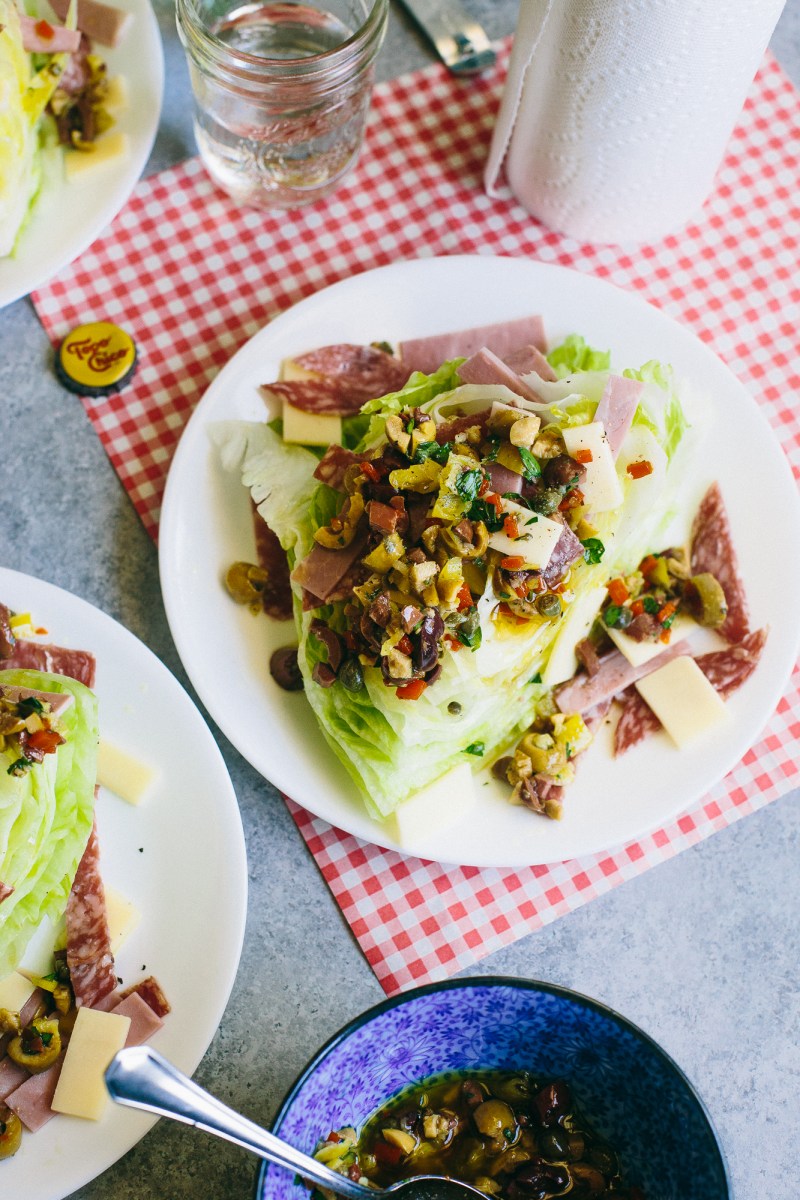
Let me start this post by acknowledging that this recipe title is a second-order misnomer. You see, combining the words “muffuletta” and “wedge salad”, at face value, is just preposterous. For those of you who know their Sicilian bread history, muffuletta is a large, round, and sturdy bread not unlike focaccia. It was brought to the United States by Italian immigrants, who created a sandwich that bears this same name.

The story goes that Italian-Americans living in New Orleans tired of having to manage a whole plate of pickled vegetables, meat, cheese, and muffuletta bread, so they started throwing it all together for the sake of convenience, and the muffuletta sandwich was born. Today, the signature traits of this sandwich include an olive salad (sometimes mixed with chopped giardiniera pickled vegetables like carrots and cauliflower) and layers of Italian ham, salami, and provolone cheese. Some versions include other meats, like mortadella (similar to bologna), or other cheeses like mozzarella.

So for today’s recipe, not only am I not sharing a bread recipe, I’m also not sharing a sandwich recipe (hence the second-order misnomer). Instead, I wanted to combine the rich and potent flavors of the muffuletta sandwich with the unmistakable crispness and convenience of a wedge salad. After all, what could be easier than making a salad that only requires minimal chopping? Another added bonus of this method: the olive oil used to flavor the olive salad doubles as a salad dressing, making this recipe a simple, two-step process. Sure, it’s not as convenient as a one-handed sandwich, but still – pretty convenient.

Coincidentally, I’m making my first trip to Sicily in a couple weeks, so I’ll be sure to keep an eye out for muffuletta bread while there.

Read Full Article