gluten free

Arroz con Pollo is a chicken and rice dish popular in Spain and Latin America. While its origin is difficult to trace, it is likely an adaptation of the Paella, a staple Spanish (Valencian) rice dish dating as far back as the 15th century. As with many dishes stemming from Spain’s exploration and colonization, Arroz con Pollo deliciously marries both worlds; Spanish rice and technique combine with ingredients native to the Americas (namely tomatoes and peppers).

There are dozens of variations on Arroz con Pollo, and I fully expect a few comments below lamenting the fact that my version is not exactly like abuelita’s recipe. It’s understandable that this dish evokes some fairly raw emotion, as it is closely aligned with what I’d consider comfort food. I find that there is beauty in creating a personal version of an oft-tweaked recipe; I think that personalization is part of being human, and the many variations of this dish stand as a testament to this concept.

Some common extra add-ins for Arroz con Pollo include pimento-stuffed green olives, beer, and/or ham. Its flavoring paste, known as sofrito, is also the subject of some debate; some call for tomatoes, others eschew them, and still others use an added fat like lard or olive oil.
Read Full Article

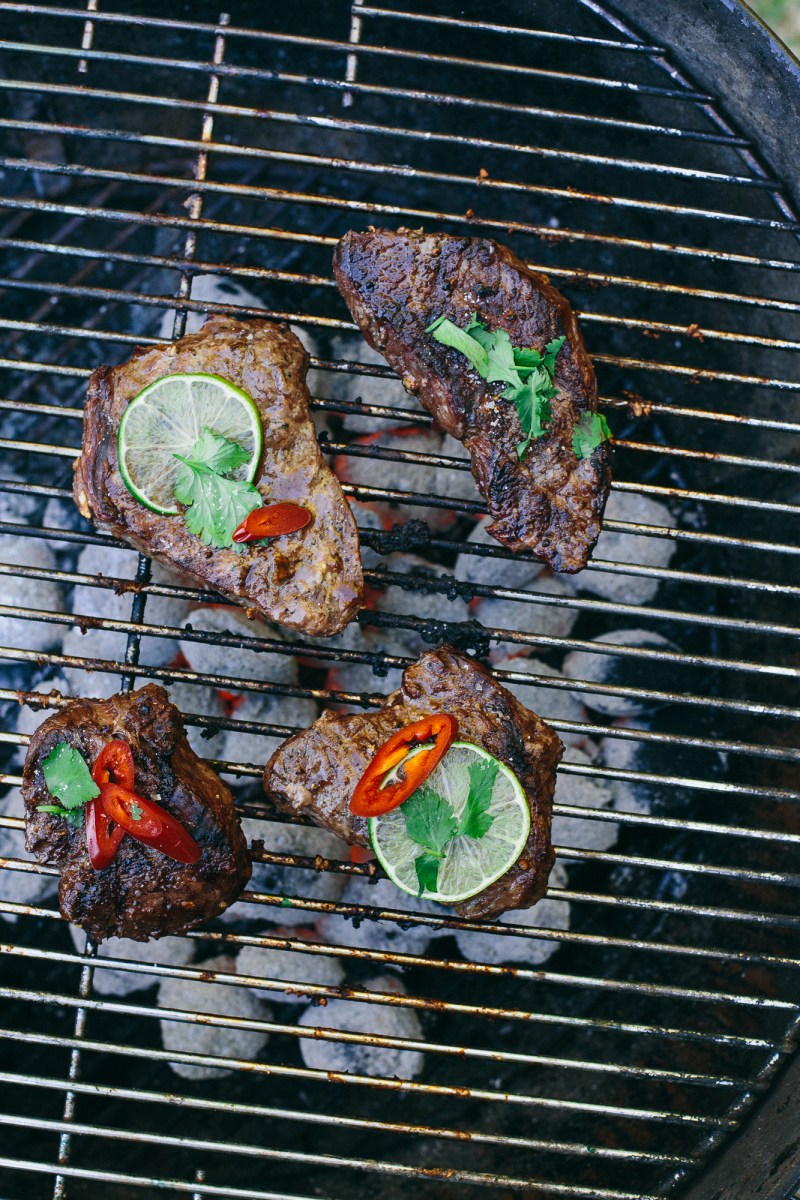
Pulehu is a Hawaiian cooking method, which translates to “roast over hot embers”. This method was traditionally used for items like breadfruit, but today it’s most associated with steak, typically seasoned simply with ginger, garlic, salt, pepper, and a bit of sugar.

If you haven’t already, I encourage you to read my short history on beef in Hawaii, at the start of my recent Pipikaula recipe post. If you’ve already read it, cool, let’s pulehu some steaks.

Read Full Article

Nakji Jeongol (낙지전골) is a Korean octopus stew that deserves a bit of primer, since the world of Korean soups and stews can be pretty intimidating. In Korea, most meals are accompanied with some form of soup, categorized into two main categories: soups like guk or tang, and stews like jjigae or jeongol.

Soups are typically thin, simple, and simmered for extended periods. In general, guk are meatless, and a little watery; last year I posted a recipe for the popular Gul Guk (Oyster Soup). Tang are, you guess it, made with meat (a favorite of mine, Gamjatang, is made with pork neck and potatoes – it appears in my first cookbook, The Ancestral Table).

Stews are more ornate, adorned with fresh vegetables, and served in large, family-style dishes. Jjigae are typically made with a single defining ingredient; Kimchi Jjigae and Sundubu Jjigae, the latter made with curdled tofu, are the most popular. Jeongol contain a variety of ingredients, and are a little more elaborate; historically, jeongol were served for members of the royal court, while jjigae were for commoners.

Today’s Nakji Jeongol has a fair amount of add-ins, but the basic recipe is very simple: marinate the octopus, prepare the soup base, throw it all together. There is no single set of add-ins, so feel free to throw in whatever you have available to you (for example, I used cilantro because the more traditional herb, perilla, is hard to find where I live). Frozen packages of pre-cleaned octopus can be found in most Asian markets, or you can get some fresh (and likely cleaned, but here’s a quick video if needed) from your local fishmonger.

One fairly uncommon ingredient in the soup base is doenjang, which is the Korean version of miso paste; if you’re not able to find it locally, it is sold online, or red miso paste will work in a pinch. If you’re curious as to my thoughts on fermented soy, here is something I wrote earlier this year (spoiler alert: I think fermented soy is fine).

Read Full Article

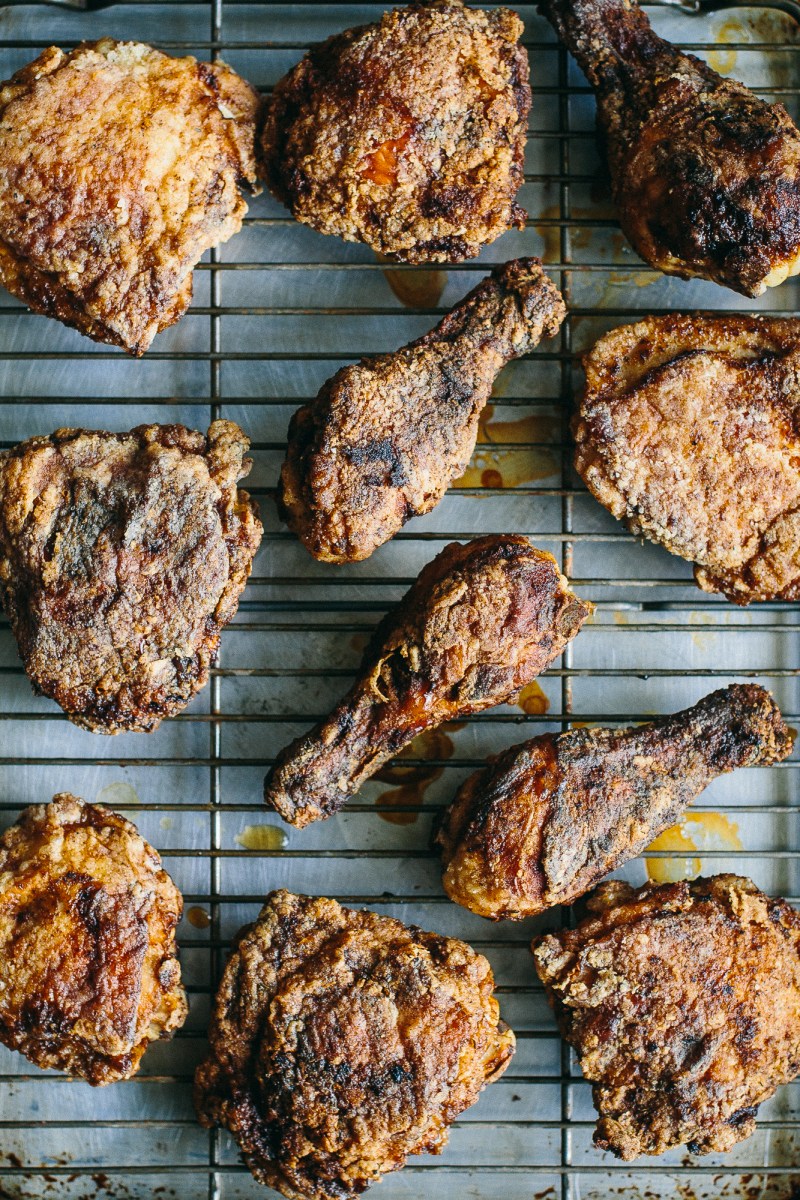
About four years ago, I posted a recipe for Southern Fried Chicken, which quickly became one of the more popular recipes on this site. I liked the recipe so much that I ended up adding it to my first cookbook, The Ancestral Table, and then improving it for my second cookbook, Paleo Takeout, to incorporate seasonings similar to those you’d find at a certain famous fried chicken chain restaurant (you know, the kind that comes in a bucket).

As I mentioned in that first fried chicken post, this dish is the convergence of three different events. First, the West African practice of frying chicken was brought to the US as a result of the slave trade. Second, the mass production of pork in the South resulted in an excess of lard for cooking. And finally, cast-iron cookware became a staple of every kitchen during the 19th century. It’s only natural that these elements came together as they did, to create one of the tastiest ways to prepare chicken.

Colonel Harland Sanders first started selling fried chicken during the Great Depression, in Kentucky, and opened his first franchise restaurant in 1952; his success challenged the assumption that “fast food” was limited to hamburgers. His original recipe of “11 herbs and spices” was finalized in 1940, and has been a closely guarded secret ever since. In honor of the original Kentucky Fried Chicken recipe, I also used 11 herbs and spices (although, to be fair, the pinch of thyme used in my recipe was added mostly to reach 11!).

The original preparation for KFC chicken was through traditional pan-frying, but it would take upwards of 30 minutes to prepare one batch of chicken. Ultimately, Colonel Sanders modified a pressure cooker to make the first pressure fryer, which is the method they use today. For my recipe, we’ll be returning to KFC’s roots and pan-frying the chicken – no modified pressure cooker needed.

Read Full Article

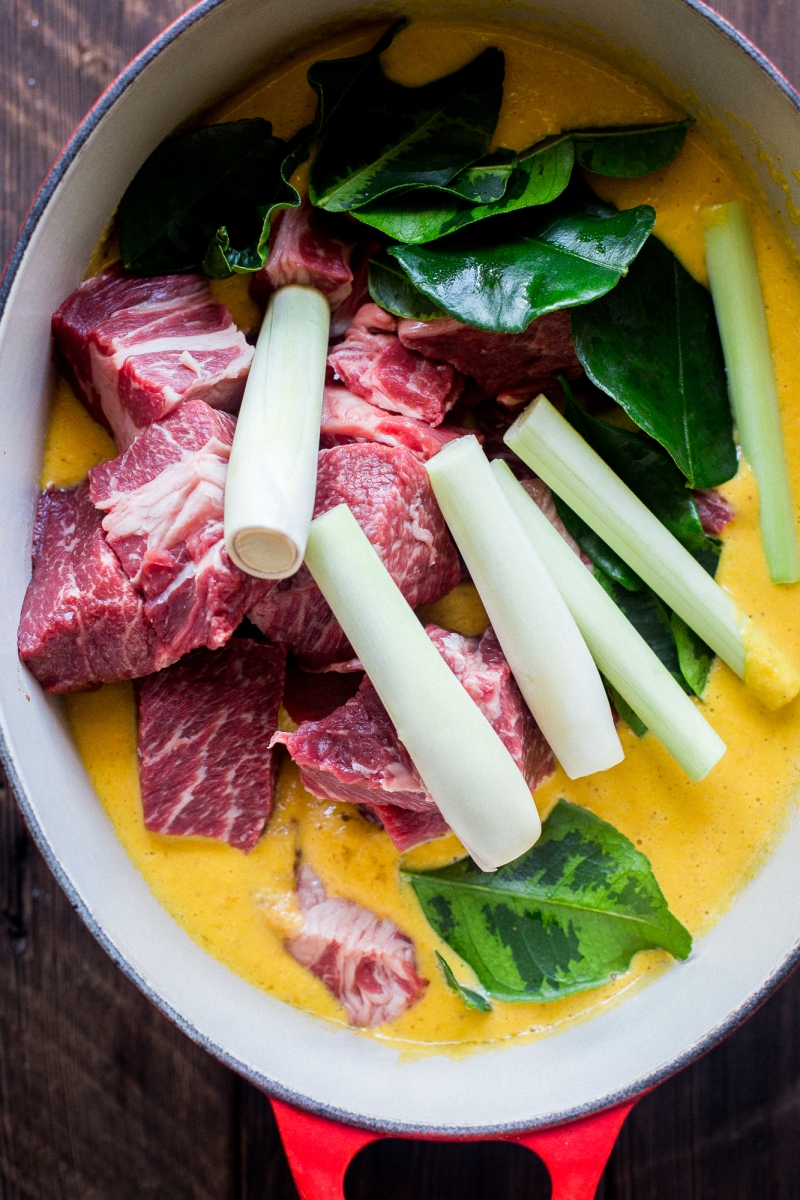
I’m often asked what is my favorite dish to prepare; it basically comes with the territory in this line of work. While it’s hard to choose a favorite, Beef Rendang often comes to mind – there’s truly no taste like it.

Rendang is a dry curry that originated among the Minangkabau people of West Sumatra and later spread throughout Indonesia and Malaysia. Its age is unknown, but historians have traced its origin as far back as 500 years. There are three recognized forms of rendang in Minangkabau culture, each depending on the cooking time: a pale, lightly cooked curry known as gulai; a browned but still liquid curry called kalio; and a rich, dry, dark brown dish called rendang, the version prepared in this recipe. In other countries, most notably Malaysia and the Netherlands, the rendang most often served is closer to kalio. While its extended cooking time can be a test of patience, it’s well worth the wait; the aroma and overwhelming richness of rendang are unforgettable.

I first published a rendang recipe nearly four years ago, and it’s made some slight but significant changes since then. Earlier this year I made a batch, and took the photo you see above – it quickly became one of my favorite photos of the year, and so I figured it was a good excuse to share the updated recipe. For the past year or two, this has been the version we’ve been making at home, as it has fewer steps and comes together very quickly.

Read Full Article

I’ll admit it – sometimes it’s hard to get excited about cabbage. I think this recipe will change your mind a little bit. Roasting the cabbage provides for a subtly sweet flavor, and slicing it into thick steaks gives them an unexpected heft.

That’s not to say that cabbage is without merit. For starters, it’s very affordable, and mildly-flavored. Next, it’s easy to prepare: this dish literally takes seconds to prepare, and then you toss it in the oven until it’s ready to be devoured.

Cabbage has a long history in Europe, traced back at least 3,000 years as a cultivated vegetable. Its English name is derived from the Latin word caput (“head”); ironically, the actual Latin word for cabbage is brassica, derived from the Celtic word bresic. Quite a journey for one word to make!

Read Full Article

When creating recipes, I find inspiration in several places. I’ll typically stumble upon traditional recipes while researching random food facts (quite a black hole of information, trust me). Other times, I solicit ideas from friends, or readers via my facebook page, and add potential dishes to a growing list of contenders. But how I created this dish is unique for me, so I’d like to share that story.

I recently stumbled upon a photo on Instagram from Food & Wine’s Chefs Club, a restaurant concept featuring a line-up of visiting chefs. For this particular event, they offered menu items from La Caravelle, a classic French restaurant that closed its NYC doors in 2004. One of their signature dishes, Chicken in Champagne Sauce, was a favorite of the Kennedys; the restaurant re-named the dish Poularde Maison Blanche (“White House Chicken”) when JFK was elected president.

Inspired by that photo, I set out to make my own Chicken in Champagne Sauce. Let me be clear: I did not attempt to recreate this famous dish, but rather, I wanted to make a dish that tasted as good as this picture looks. Considering I’m late to the party and wasn’t able to attend the event (or visit the restaurant before it closed), this may be the closest thing I experience to the dish, and I’m fine with that.

Champagne is the name of a sparkling wine made from grapes grown in the Champagne wine region in Northeast France, fermented under strict guidelines; sparkling wines that don’t feature Champagne grapes, or weren’t produced under the required guidelines, cannot legally be called Champagne. For this recipe, any sparkling white wine will do. Fun fact: the bubbles in sparkling wine are a result of second fermentation, similar to how kombucha achieves its effervescence.

Read Full Article

As many of you may know, I’m a regular contributor to the Paleo Magazine Radio podcast, hosted by my friend Tony Federico (author of Paleo Grilling). About a year ago, Tony and I were discussing future collaborations, and in a fit of inspiration, we started tinkering with a new project — which is making its debut today.

Deep Dish combines our collective interests — in recipe development, historical research, and radio broadcasting — to create something truly unique. We decided to make a deep dive into one single meal, researching its entire history and recipe-testing it to perfection, then sharing that story. Instead of a cookbook with many recipes (where you honestly may only cook a few of the recipes), we wanted to focus the project on one delicious dinner – no more, no less. Once we had completed the recipe development, we got together to record four radio shows highlighting the dishes, their history, cultural significance, and our experience with the project.

Read Full Article

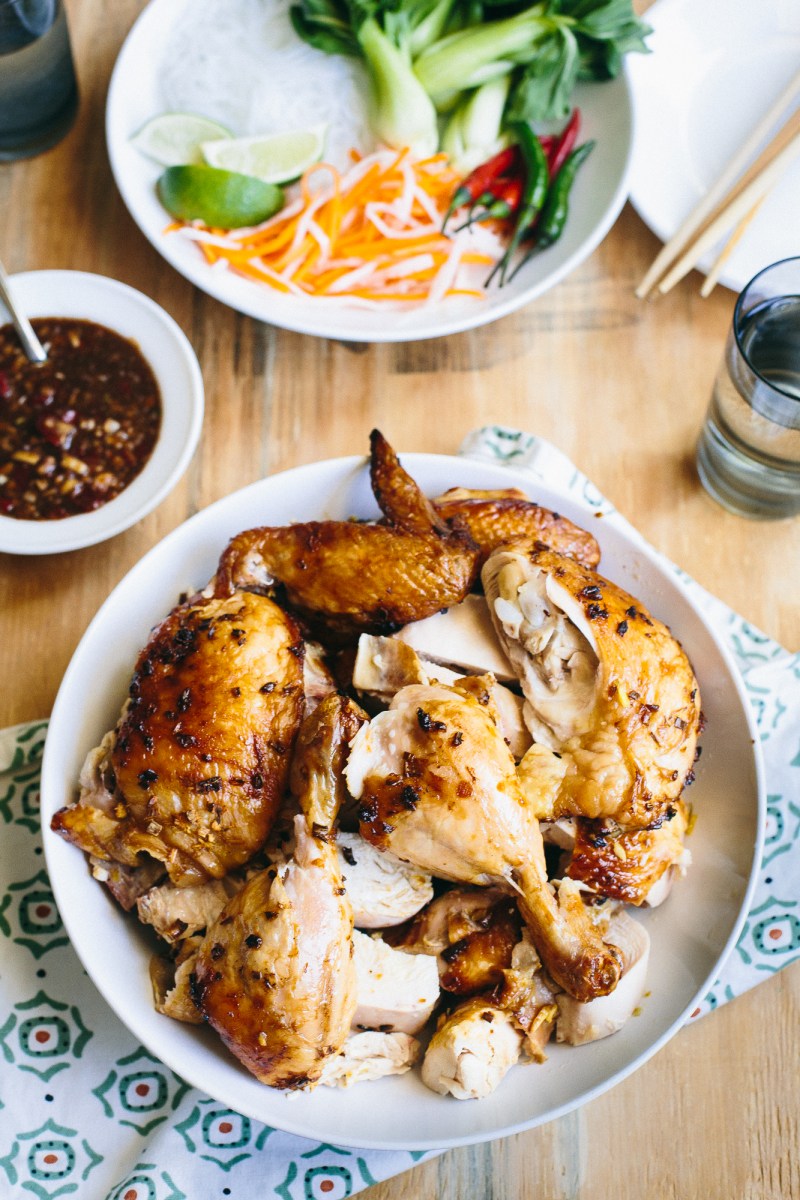
Gai Yang (ไก่ย่าง, sometimes spelled Kai Yang) is a barbecue grilled chicken recipe originally from Laos, but most commonly associated with Thailand today; it is a popular street food often served alongside Green Papaya Salad and sticky rice.

This dish is quickly becoming a favorite at our house because it is super simple to put together and all of the ingredients are relatively easy to find – only one ingredient (lemongrass) isn’t available in our everyday grocery store. Luckily, we keep chopped lemongrass in our freezer, and if that runs out, our local Asian market is only a few minutes away.

I enjoy preparing this dish because it gives me an opportunity to roll up my sleeves and get physical with its preparation – by spatchcocking the chicken, pounding some ingredients in a mortar and pestle, and finally chopping the entire bird up with a cleaver at the end.

Read Full Article

Hi everyone, just wanted to send a quick note to let you know that I’m releasing my Paleo Takeout Secret Menu Items list to the public. It features items that can be created using existing recipes and techniques found in the book; eagle-eyed readers might remember these secret menu items from the holiday package I offered last year.

To access your free, printer-friendly download, simply sign up for my periodic newsletter and it will be delivered to your inbox. My newsletter is the easiest way for you to get new info from me and my site – I send out a new edition every 2-3 weeks, featuring new recipes, tips, and news that I find relevant.

There are 32 secret menu items in total, bringing the recipe count of Paleo Takeout up to nearly 300 dishes! These items will make it into the next printing of the book, but for now, check out the list below.

Read Full Article