gluten free

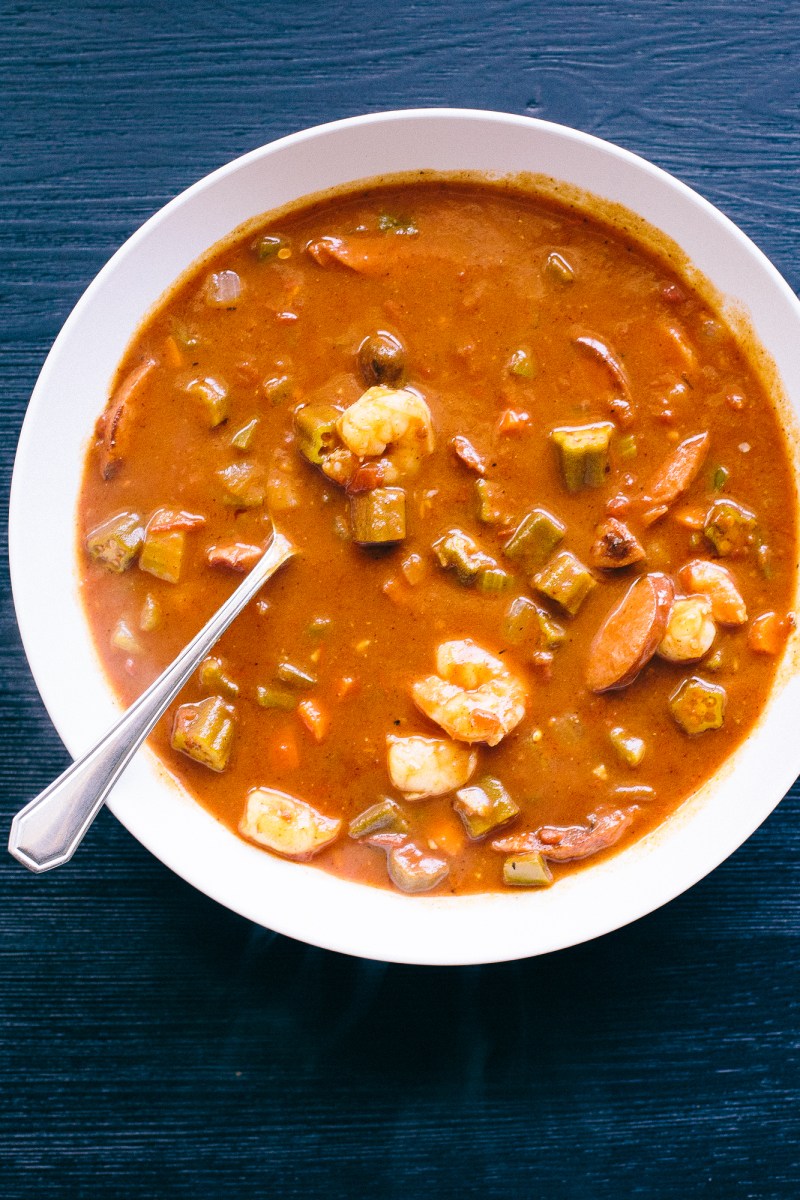
Gumbo is a stew of Louisiana origin, dating back as far as the 18th century. As with Jambalaya, there are two popular versions of gumbo, Creole and Cajun; generally, the former includes tomatoes, while the latter omits them. It can be made with all sorts of meats, from chicken, to rabbit, to nutria, to oysters; today, we’re going to make one with shrimp and andouille sausage.

There are several ways to prepare gumbo, many of them influenced by how you thicken the stew. Most methods today include a French-inspired flour roux, while others use okra or filé powder (ground sassafras leaves) – or combination – as a thickener. I’ve found that mochiko (sweet rice flour) makes the best gluten-free roux for gumbo, with plain white rice flour coming in second – but on their own, they’re not quite enough to thicken the gumbo to what I’d like (I tried simply adding more flour, but it overtook the dish’s texture and flavor). In the end, a combination of rice flour roux and okra worked best, as the roux dampened okra’s sliminess, and adding a bit of optional gumbo filé powder at the end gave the stew a perfect earthiness, befitting a warm Southern kitchen.

Gumbo is often characterized by its dark roux, made by stirring the roux over an open flame for up to an hour, right until it’s at the threshold of being burnt. I’ve found that a rice flour roux tends to burn too quickly when compared to a traditional wheat flour roux, so my solution is pretty simple: roast the flour in the oven to a golden brown before turning it into a roux. This also gives you some time to multitask, and simmer up a quick shellfish broth using shrimp shells and clam juice, while the flour browns.

The origin of the word “gumbo” is a bit of a mystery. It’s commonly thought that it is either derived from the Choctaw word for filé powder (kombo), since the spice came from similar Native stews from the region, or the Bantu word for okra (ki ngombo) – as the vegetable was introduced to the area via the West African slave trade. Regardless of its origin, gumbo is a perfect example of the cultural melting pot that eventually came to exemplify Louisiana cuisine, with its French, Native, and African influences.

Finally, I would like to note that this isn’t a weeknight-friendly meal (unless, of course, you have a weeknight off, or you’re unemployed). But that’s the beauty of gumbo – when you spend a couple hours pouring yourself into a cooking project, a bit of your soul joins the dish.

Read Full Article

Bacalhau à Gomes de Sá is a traditional dish from Porto, in Northwest Portugal. As I’ve written in an earlier post using bacalhau, the Portuguese were one of the first European cultures to fish for cod, off the coast of Newfoundland after Columbus discovered the New World. Salted cod has been an integral part of Portuguese culture, and it’s often said that you can cook a new dish using bacalhau every day of the year – it’s often cited that there are over 1,000 total recipes to be found.

Advances in fishing technology in the mid 20th century had collapsed the Northwest Atlantic cod market by the 1990s – cod takes a long time to mature, and overfishing had run rampant. Today, bacalhau is most often made using cod harvested from Arctic waters under more strict quotas.

Bacalhau is made by salting and drying the fish in the sun; while it was originally a method of preservation (salted cod keeps a long time even without refrigeration), its unique, strong flavor is unmistakable and delicious, and its popularity endures today. The only downside to eating bacalhau is that it requires a bit of foresight, since it needs to be soaked overnight to reconstitute the fish.

If you’re new to using bacalhau, you might be surprised to find that it’s available in many common grocery stores, often sold near the cured meats section. For example, my local Publix grocery store sells a few different varieties of bacalhau. I like to keep some in the fridge at all times; I’ll generally throw some in a bowl of water, then put it in the fridge to soak overnight, and either pan-fry it to enjoy with my breakfast, or making something fancy like today’s recipe.

Read Full Article

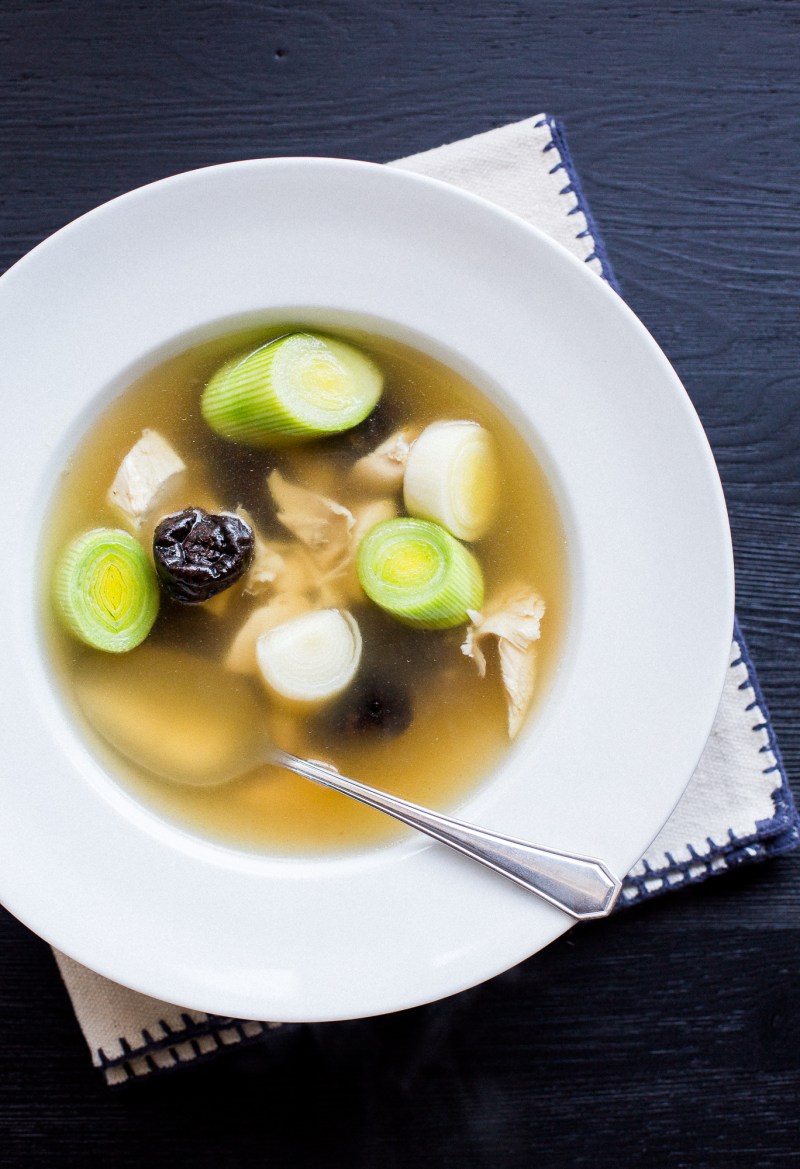
I’m traveling this week, and feeling a little under the weather. These two events frequently coincide; that is just the price one pays for seeing new places and shaking new hands. So this week seems like an appropriate time to share one of my favorite chicken soups.

Cock-A-Leekie (sometimes spelled Cockie Leekie) is a Scottish soup likely derived from French chicken and onion soup during the Middle Ages. It was later adapted to Scottish regional ingredients (namely, leeks), and sometime down the line prunes were an added element of the dish – probably to increase the dish’s flavor and nutritional profile. The soup is often thickened with cooked rice or barley, or enjoyed plain, as in this recipe.

Fun fact: this soup is one of two items on the menu the day the Titanic sank.

Read Full Article

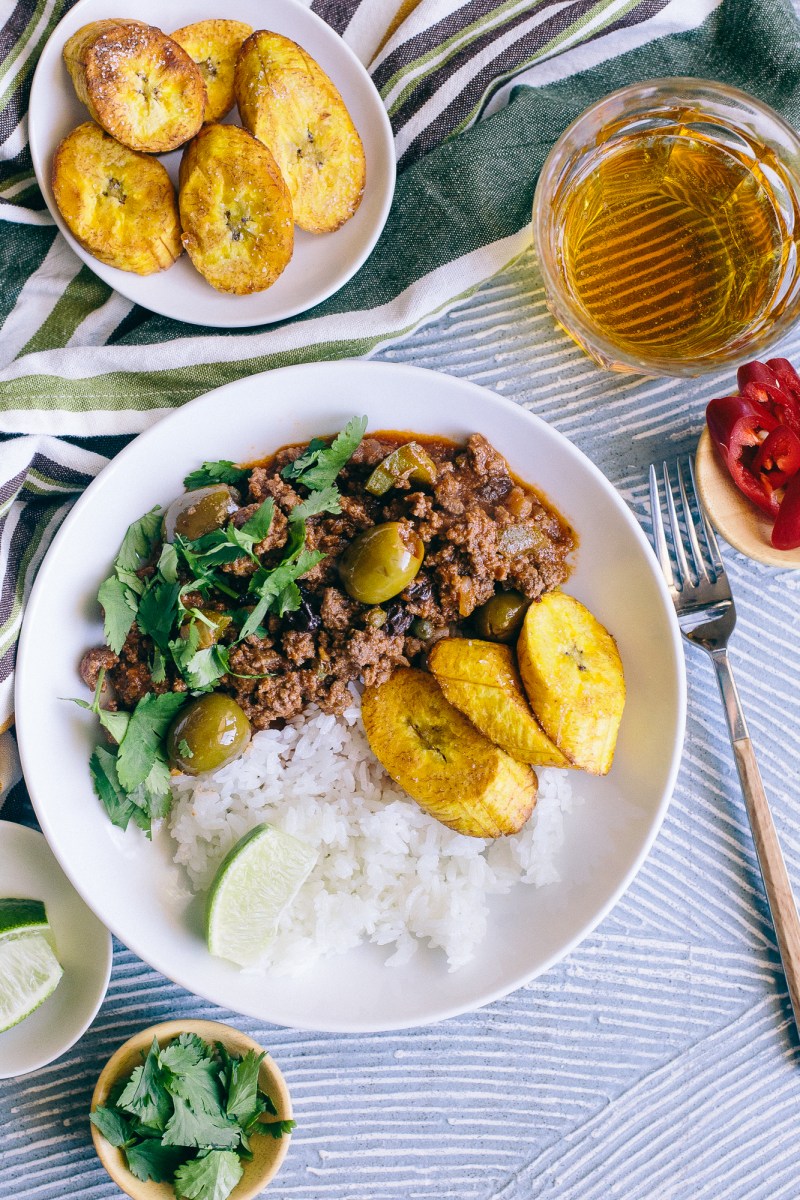
Picadillo is the name of a variety of dishes first originating in Spain. Versions of Picadillo can be found across Latin America and the Caribbean, and it has reached as far as the Philippines. Each variation has its own distinct quality; in the Dominican Republic, Picadillo is served with hard-boiled eggs, while in Puerto Rico it is used as a filler in Empanadas, or in savory pastries known as Piononos. The word Picadillo itself comes from the Spanish word Picar, to chop or mince.

My favorite Picadillo is the Cuban version, aptly named Picadillo Cubano. As with any beloved dish, there are many regional variations, but it generally combines the unique flavors of cumin, oregano, green olives, capers, and raisins. The end result is not unlike America’s favorite crockpot dish, Chili con Carne, but with a sweet-and-savory dynamic that’s equally comforting and exotic – and it all comes together in 30 minutes.

Not to confuse you, but the Cuban version of Picadillo is found in other countries, as well. For example, it is called Arroz a la Cubana in the Philippines, where it is topped with a fried egg. Not a terrible addition, if you ask me.

For today’s recipe I tested ButcherBox‘s ground beef; this is my second time trying their 100% grassfed beef (read about my first experience here), and I was just as impressed as the first time around. If you’re looking for a fun new take on pasture-raised meats – as part of a curated package shipped monthly – you can’t go wrong with these folks.

Read Full Article

Today is a big voting day here in the United States. If you’re one of the 12 states (or American Samoa) participating, be sure to let your voice be heard! While I’m not in a voting state today, I’m holding a mini celebration by peppering this post with election-related vocabulary. How many words can you spot?

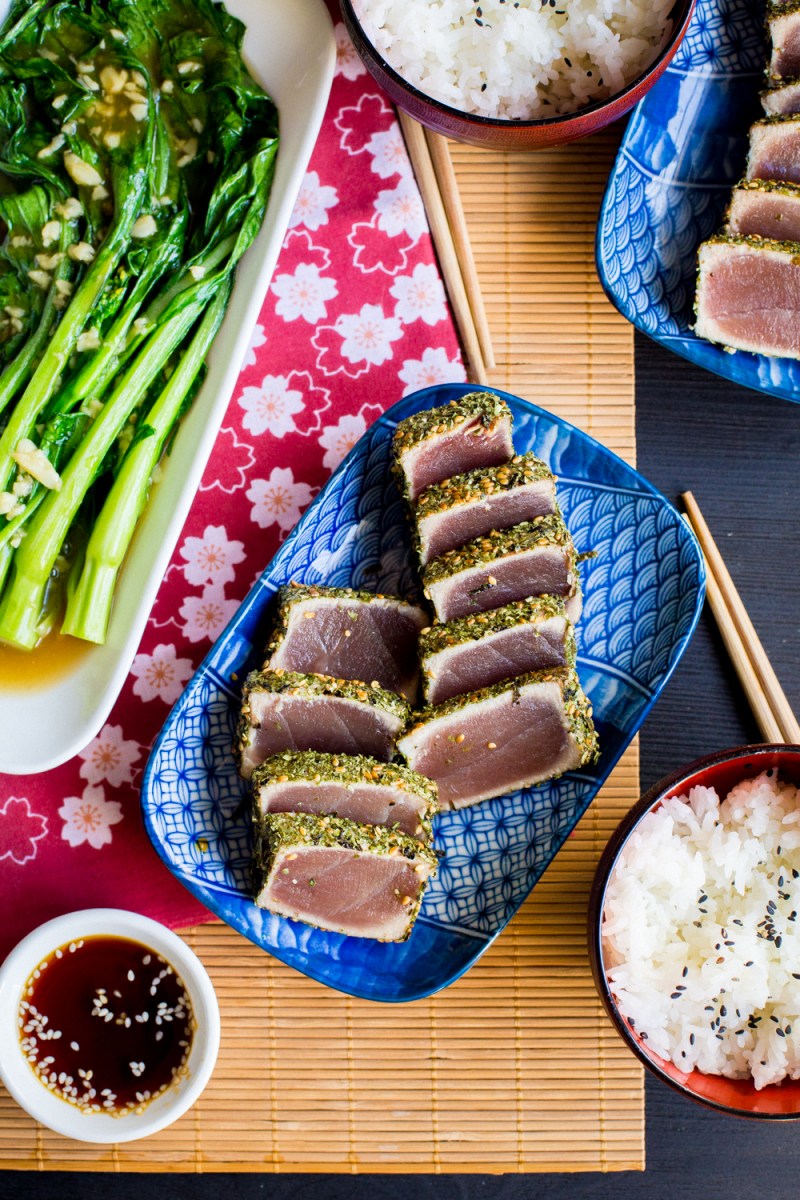
You may have noticed a vegetable side dish peeking out from last week’s Furikake Ahi recipe. It happens to be one of my favorite ways to prepare leafy greens, and until today, the recipe could only be found in my debut cookbook, The Ancestral Table. That’s all going to change today, as we’re going to have a bit of a…well, super Tuesday today with this recipe.

There’s a lot of flexibility in this dish, but the technique remains the same: prepare a sauce, simmer the greens in the sauce, then remove the greens and thicken the sauce before reuniting them in a savory, delicately-flavored superdelegate. I can’t be upset if you elect to add a few other ingredients, as the absolute majority of the flavor comes from the primary components of broth, ginger, and garlic. Other write-in options would be tamari, chopped cashews, dried shrimp, or fried shallots.

Read Full Article

I’m really starting to find beauty in simple meals. Like I mentioned a few weeks ago when sharing my recipe for three-ingredient Spaghetti Squash Bolognese Boats, I’ve had less time in the kitchen than usual (new babies will do that). It’s always tempting to reach for a takeout menu, but I’ve been determined to simply find quicker solutions for dinners. For example, I’ve been making a lot of pressure-cooker risotto, since it reheats well for lunches throughout the week.

This week’s recipe is similar in its approach – it contains just a few ingredients, and comes together in minutes. It’s a popular preparation in Hawaii, found on many restaurant menus. But to be honest, once I figured out how easy it is to prepare at home, I’ve had a hard time shelling out money to let someone else make it for me.

Furikake is a Japanese rice seasoning typically made with dried fish, sesame seeds, and seaweed. It was initially distributed in the early 1900s under the name Gohan No Tomo (“A friend for rice”) as a possible source of calcium (early recipes used ground fish bones). At first, the seasoning was too pricey for everyday eaters, but by 1948 it was commercially produced by Nissin foods (most famous for their Top Ramen), to help combat malnutrition in the Japanese population.

Read Full Article

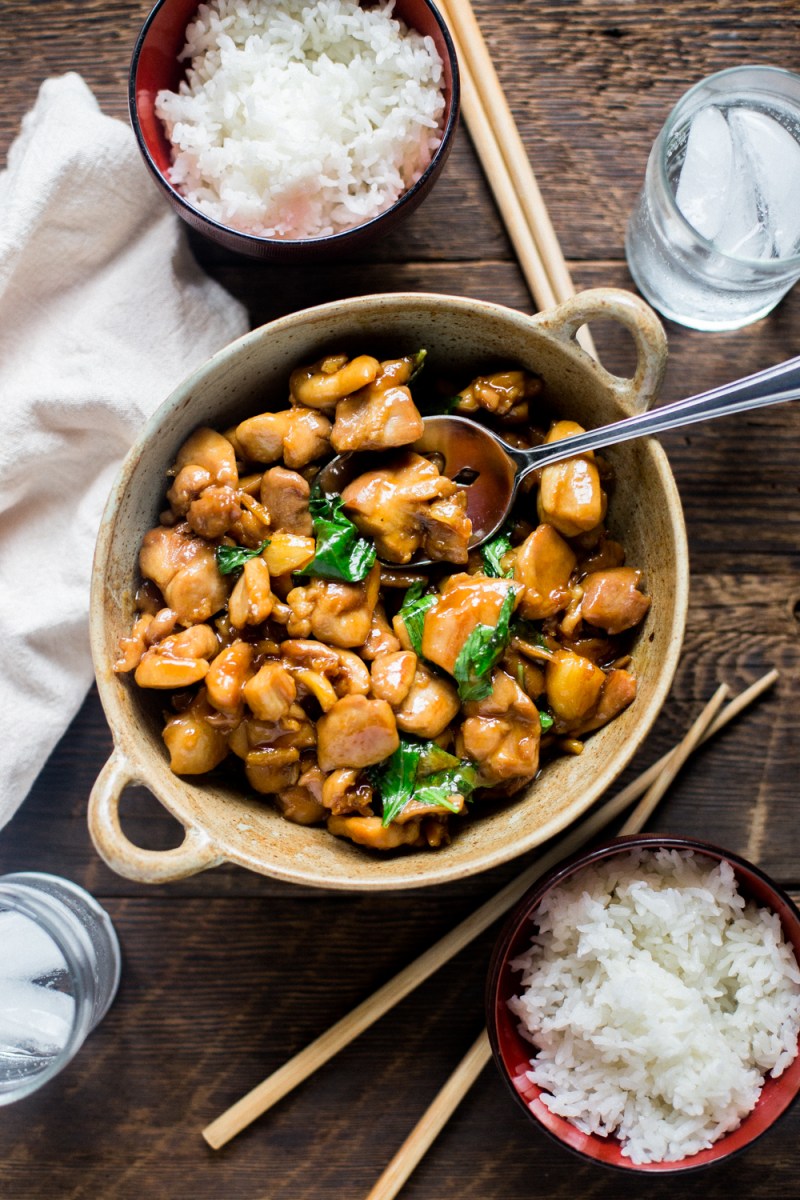
Sanbeiji is a popular Chinese dish, most often served in Southern China and Taiwan. The dish derives its name from its three key ingredients: sweet rice wine, soy sauce, and sesame oil. Garlic, ginger, fish sauce, honey, and basil round out the flavors in this deceptively simple preparation. Chicken is the most common protein, but pork, and occasionally frog, are also used.

What sets this dish apart is that there is no real trickery involved; the chicken and sauce simmer until the sauce evaporates, then it is removed from heat right when the chicken starts to sizzle and pop. The result is fully-flavored with a delightful texture – no breading or thickener required.

Read Full Article

My parents-in-law recently visited from Hawaii over the holidays, to help around the house as we adjusted to having a new baby in our family. It was great spending the holidays with them, but it also made me realize how much I miss living in Hawaii. I lived there from ages 21 to 28, and many of the events that shaped who I am today – from meeting and marrying my wife, to honing my skills as a home chef, to suffering the worst of my health adventures – came while living in view of the Honolulu skyline. For a few of those years, Janey and I lived with her parents, whom we affectionately called our “roommates”.

When we left the island in 2008, it genuinely felt like I was leaving home; time has caused that sentiment to wane a bit, but in the end, Hawaii has a special place in my heart. And within that special place in my heart there is another, perhaps specialer place in my heart, which is where Hawaii’s Chinese-style oxtail soup resides.

The title for Hawaii’s best oxtail soup is hotly contested. I’ve heard everything from Kapiolani Coffee Shop to Aiea Bowl. Somewhat surprisingly, restaurants attached to bowling alleys are generally known for having good oxtail soup – even the famous Kapiolani Coffee Shop oxtail soup got its start at Kam Bowl, which closed in 2007 but re-opened just last month.

I like to think that preparing an authentic dish from Hawaii makes the sting of not living there hurt a little less, and you really can’t go wrong with a Chinese-inspired creation that’s equal parts rich and comforting. So we’re going to recreate it today for those of us who can’t just drive to our local bowling alley to buy a bowl of soup. Included below are stovetop and electric pressure cooker variations of the recipe, whatever floats your boat.

Read Full Article

Lately, I’ve been taking tiny steps to minimize all those little stresses in life. For example, I’ve been driving on backroads on my way home from work each day, which has much better scenery and fewer cars zipping in and out in front of me. It might take an extra minute or two out of my day, but it’s adding years to my life, right? That’s what I’d like to think. Regardless of any increases in my life expectancy, I’ve been arriving at home in a better mood, so it’s well worth it.

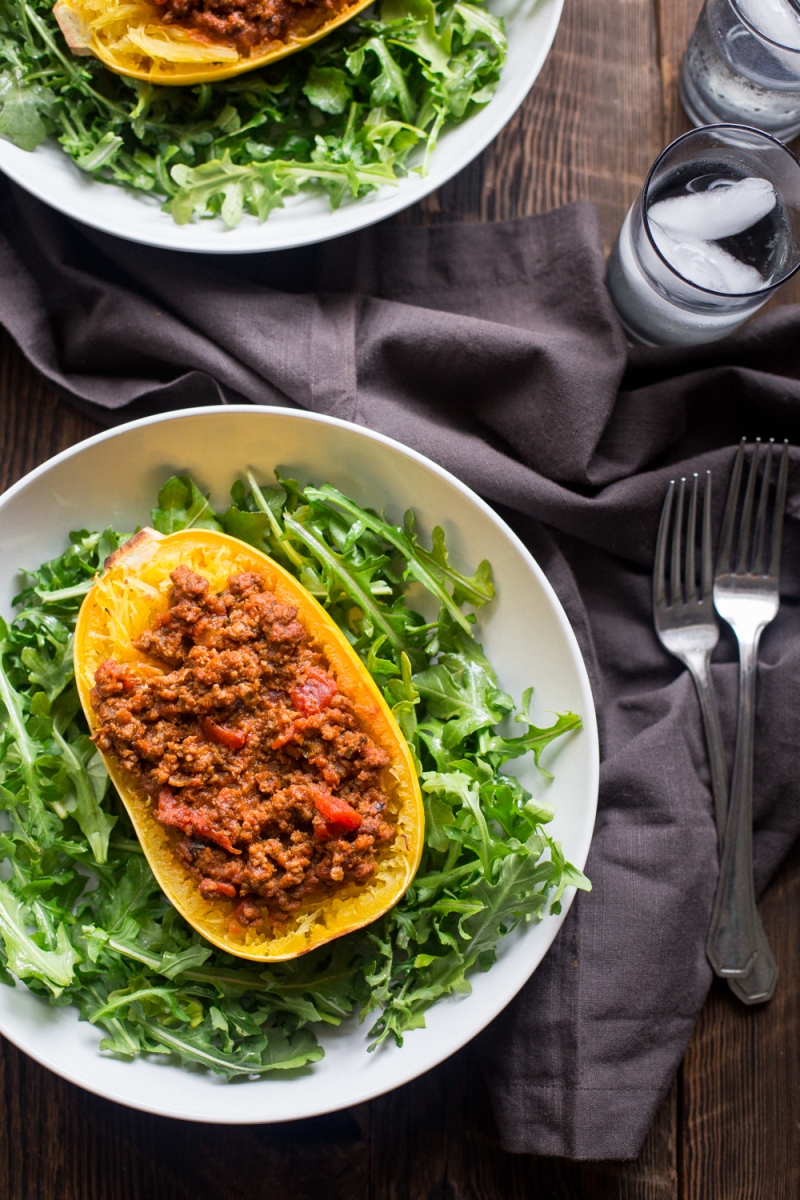
In similar fashion, we’ve recently been taking it a bit easy in the kitchen. Having a small baby at home will do that; my lullaby-singing skills have greatly improved, but I definitely have less time to chop up a bunch of ingredients. So meals like these Spaghetti Squash Bolognese Boats have been a hit, with minimal hands-on time but plenty of flavor. Plus, this recipe requires only three ingredients: squash, pasta sauce, and ground beef.

If you’re hoping to spend a bit more time in the kitchen, you could always make your own pasta sauce (here’s my recipe). Additionally, I’ve included quick instructions on how to roast the spaghetti squash seeds, so that nothing is wasted.

Read Full Article

Recently, I stumbled upon J. Kenji Lopez-Alt’s technique for pressure-cooker risotto, and decided to take it for a spin using my Instant Pot electric pressure cooker. Considering that risotto has been around for 600 years, it’s nice to see a new spin on a classic preparation.

This technique worked perfectly (big surprise), so I have been using it frequently as a means to make perfect risotto without all that stirring. I even had to buy a new bag of arborio rice this past weekend, which is a rare occurrence – risotto rice always seems to last forever. If you don’t have a pressure cooker (yet!), don’t worry, I’ve included stovetop instructions as well.

To highlight this new take on risotto, I decided to err on the side of decadent: duck fat, mushrooms, prosciutto, and orange zest all fit together seamlessly to form a dish that’s equal parts familiar and exotic – and surprisingly dairy-free, to boot.

Read Full Article