health

During the month of January, my wife and I did the Whole30 challenge. The challenge is very similar to our current diet, but without any dairy, white potatoes, white rice, or sweeteners like honey and maple syrup. I felt great all month, but I did struggle with maintaining my weight (I’m a pretty skinny guy). In order to keep up a good amount of carbs, I spent a lot of time eating carb-heavy foods like sweet potatoes, parsnips, sun-dried tomatoes, squash, and plantains.

Of all of those foods, grilled plantains may have been my favorite. They were dead simple to make, and have distinct tastes depending on how ripe the fruits are. Green plantains have a dry, starchy texture and mild taste, while yellow and black plantains are sweeter and less starchy. While fried plantain chips seem to be the standard way to eat plantains in the Paleo world, I wanted to try out grilled plantains (admittedly, it was because I was grilling a lot anyway and I figured, why dirty another dish?).

Read Full Article

NOTE: An updated version of this recipe appears in my cookbook, The Ancestral Table.

Although flanken-cut short ribs (sometimes called L.A. or English cut ribs) are more commonly found in Korean restaurants today, every so often you’ll find that a chef that prepares kalbi (galbi, 갈비) in the traditional way – by using a full length of rib that’s filleted in layers. This traditional cut is called wang galbi/kalbi, which is literally translated as “king ribs”.

My most recent box of goodies from US Wellness Meats included a package of their delicious beef short ribs. This beautiful one-pound rack was the perfect opportunity to make some “king ribs” of my own.

Read Full Article

NOTE: An updated version of this recipe appears in my cookbook, The Ancestral Table.

Poi is a Polynesian staple food, typically made with mashed taro root. However, it’s a little-known fact that the Hawaiian people also made poi from sweet potato and breadfruit. Given the fact that taro root is relatively hard to come by here in Maryland, we regularly make sweet potato poi to stave off our Hawaiian-food cravings. To bring in a little extra island flavor, I add a little coconut milk to the poi, which gives it a taste similar to haupia (a Hawaiian coconut dessert). Its creamy texture and sweet taste are perfect accompaniments to my kalua pig recipe.

Read Full Article

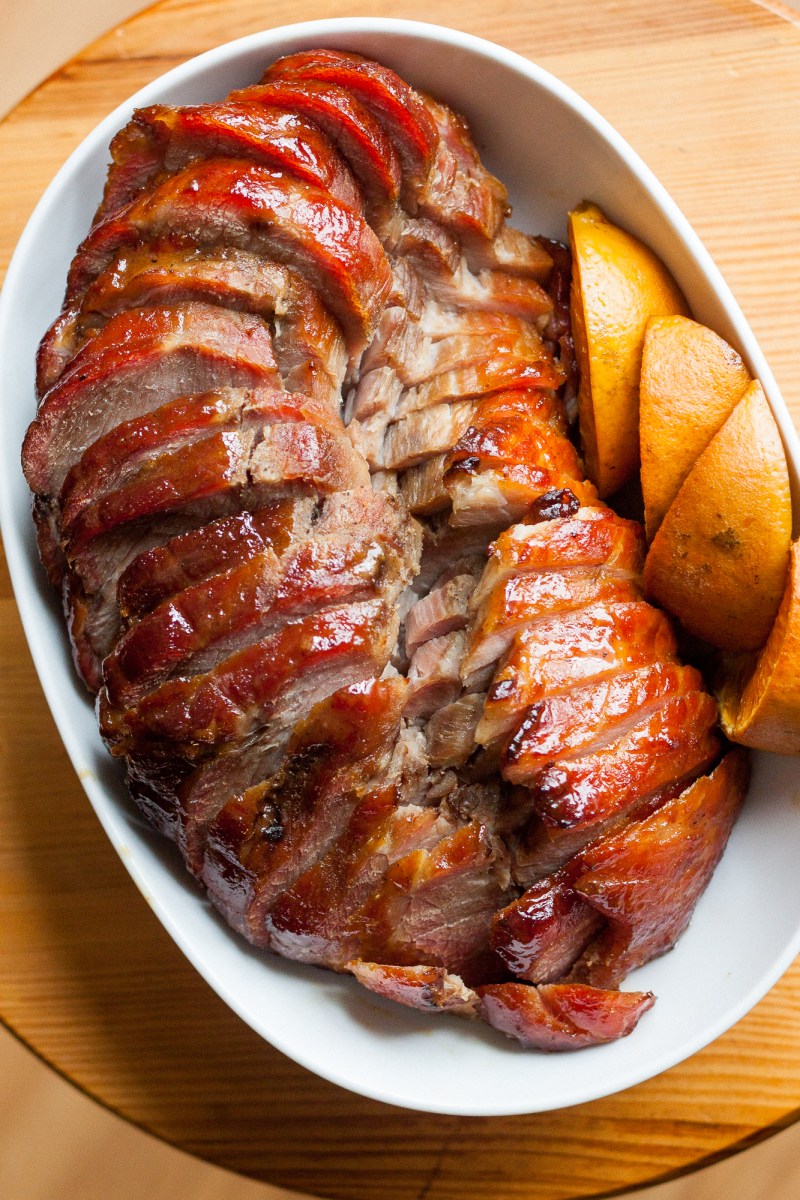
Ham seems like a simple hunk of meat. All you have to do is buy a cured, pre-sliced ham and warm it up in the oven. Unfortunately, while this is the easiest (and most common) way to get some ham in your belly, it’s not the healthiest option. Your everyday pre-cooked ham is loaded with sugar and nitrates.

I’ve been meaning to tackle an uncured ham for a while, so imagine my delight when US Wellness Meats asked me to write up a recipe for their petite ham. This smoked ham is both sugar and nitrate free, using compassionate certified pork. Its size is also perfect for our family of three – 2.5 lbs of porcine goodness. There was plenty for us to eat, and a good amount of leftovers to boot. For those of you using a cured and/or a spiral-cut ham, don’t worry – this recipe works just fine for them as well.

Read Full Article

Yesterday I posted my own recipe for one of Alex Boake’s awesome illustrations. I was really happy with the results.

Additionally, I’ve got a little secret: in writing up one of her creations, I secretly coerced her into making an illustration of one of my recipes. She decided to take on my kalbi recipe, and her piece is probably the coolest thing on the entire internet right now. Head over to her blog to check out her post about my recipe.

Have you been to Alex Boake’s blog yet? It’s pretty awesome. She complements each of her unique recipes with beautiful illustrations in place of photos, and each illustration carries a great sense of motion and impeccable placement. After a bit of gushing about her work, she offered to do a recipe swap – wherein she makes one of my dishes and draws it, and I make one of her dishes and take pictures of it. I thought it was a great idea.

I decided to try and tackle her Smoked Salmon Eggs Benedict recipe (also known as Eggs Atlantic, Eggs Hemingway, and Eggs Royale). I thought it was a fun gourmet dish to try for a weekend brunch, and I liked the idea of using a portabella mushroom cap to replace the standard english muffin typically found in this dish. The red bell pepper also adds a hint of sweetness not normally found in the dish, which was great. I only made one adjustment to her original recipe, and that was to add a little white vinegar to the water I used to poach my eggs – a trick I learned while working at a breakfast restaurant many years ago – the acidity helps to make sure the eggs don’t break apart during the poaching process.

Read Full Article

Liver and onions. You really can’t say the former without saying the latter, at least here in the United States. Surprisingly, I had a hard time finding anyone that’d even try and tackle beef liver in many of my cookbooks. Instead, I had to scour the internet for something palatable. Your typical online liver and onions recipe calls for sautéing the liver for a few minutes on each side, and then throwing some onions on top to simmer until they’re cooked through. While that does effectively mix the onion flavor with the liver, it also can easily result in a gray, overcooked and dry liver.

US Wellness Meats recently sent me a package of their beef liver to make a recipe for their site; the liver comes from grass-fed, antibiotic-free, non-added hormone cows. As far as organs go, it was beautiful! I thought this was the perfect time to try a liver recipe I’ve been cooking up in my head for a while now. The process uses a combination of sautéed liver, caramelized onions, and crispy bacon to create a textured and slightly complicated taste from a dead simple ingredients list. I think it turned out pretty well.

Read Full Article

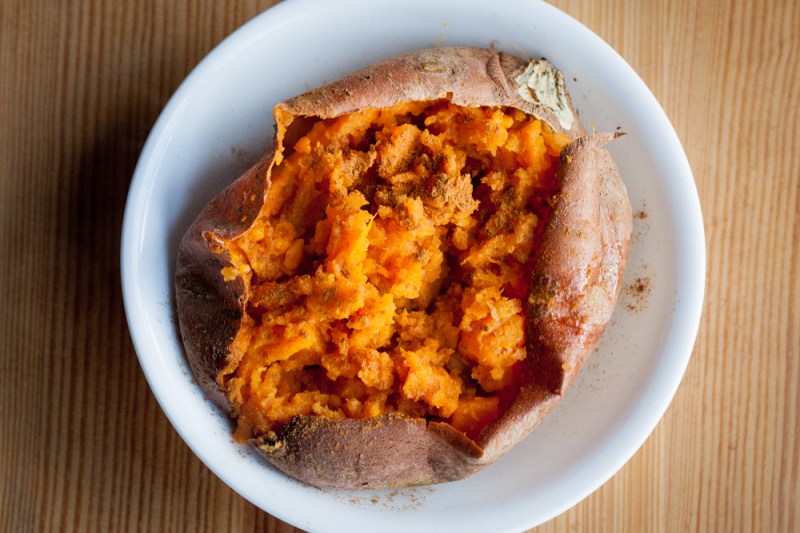
This may fall under the no-brainer category, but I thought I would explain how we bake our sweet potatoes here at the house. It’s one of our simplest recipes, and the only thing it needs is about 45 minutes of cooking time to ensure you get that perfect potato. Additionally, we like to take five seconds out of our busy day and add a little cinnamon to our potatoes, which gives just a twinge of complexity to the taste.

Here’s a couple neat facts about sweet potatoes. Sweet potatoes originated in Central/South America. Papua New Guinea eats the most sweet potatoes per capita, with 500kg per person annually. North Carolina supplies most of the sweet potatoes we find in US markets. They’re only distant cousins to the white potato, despite sharing the same name. They’re also pretty distantly related to yams (which originated in Africa), even though here in the US we often (incorrectly) label our sweet potatoes as “yams”.

Read Full Article

NOTE: An updated version of this recipe appears in my cookbook, The Ancestral Table.

Eye of round is a pretty intimidating piece of beef. It’s an extremely lean cut taken from the hindquarters of the cow, which gets a lot of exercise. To be honest, I usually just use the eye of round roast to make jerky (along with london broil, which is also from the same area of the cow) because making steaks and roasts with this part of the cow is usually always a gamble.

The other day I stumbled upon a recipe that seemed both crazy and intriguing; you roast the meat at a high temperature for a while, and then you turn off the oven and leave it in there for 2 1/2 hours. The end result is something like prime rib – a dark, crusty outside with a juicy, pink, tender inside. Honestly, it makes this fairly inexpensive cut of meat taste about 100x better than what you paid for. I may never cook an eye of round roast any other way for the rest of my life!

Read Full Article

NOTE: An updated version of this recipe appears in my cookbook, The Ancestral Table.

Satay is a dish that originated in Indonesia, and can be found in many Asian restaurants as an appetizer. It’s basically meat on a stick, so it has a universal appeal. Making an authentic satay dish is easy, provided you have access to the ingredients (galangal, turmeric, and lemongrass in particular).

Read Full Article