health

Today is kind of a big deal for our family. After nearly two years of work, The Ancestral Table is finally in stores today! To celebrate, I thought it would be fitting to post my cookbook recipe for Japchae, which is a common party dish in Korea today.

Japchae has its origins in the 17th century; fittingly, it was first served at a party for the reigning king. Originally made with just vegetables and mushrooms, sweet potato noodles (dangmyeon, also called glass noodles) were introduced in the 20th century and are now an integral part of the dish.

Read Full Article

I know, it’s totally unfair of me to be writing about how people like my book when it won’t release until Tuesday! I’m a big jerk. But I wanted to take a minute and thank the people that have helped to bring some attention to The Ancestral Table during these past couple of weeks, and to share some of their impressions of the book. Without further ado, let’s dig in.

Read Full Article

Bouillabaisse is a traditional Provençal (Southeast France) stew, typically made with fish and shellfish. Although it was originally made with rockfish, today it’s also made with all sorts of different seafood. For this recipe in particular, I decided to go with lobster and mussels; I like the idea of pairing two foods that are at opposite ends of the price spectrum (lobster = rare & elegant, mussels = common & unglamorous). This dish is paired with my lobster stock recipe, so be sure to check that out since you’ll need some stock. Putting this dish together – stock and all – is actually a fairly quick experience: in about 90 minutes you’ll have a recipe that will have your dinner guests swooning.

Don’t let the assumed costs of buying lobster deter you. If available in your area, live lobsters are surprising affordable when compared to the going rate at a seafood restaurant. And really, sometimes you can’t put a price tag on eating a rich, classic meal in the comfort of your own home.

Also, don’t forget that I’m hosting a giveaway this week; click here for a chance to win two live 1.5 lb lobsters from lobster.com ($65 value)! The giveaway is limited to continental US residents and ends midnight, Saturday, Feb 8th, 2014. Good luck!

Read Full Article

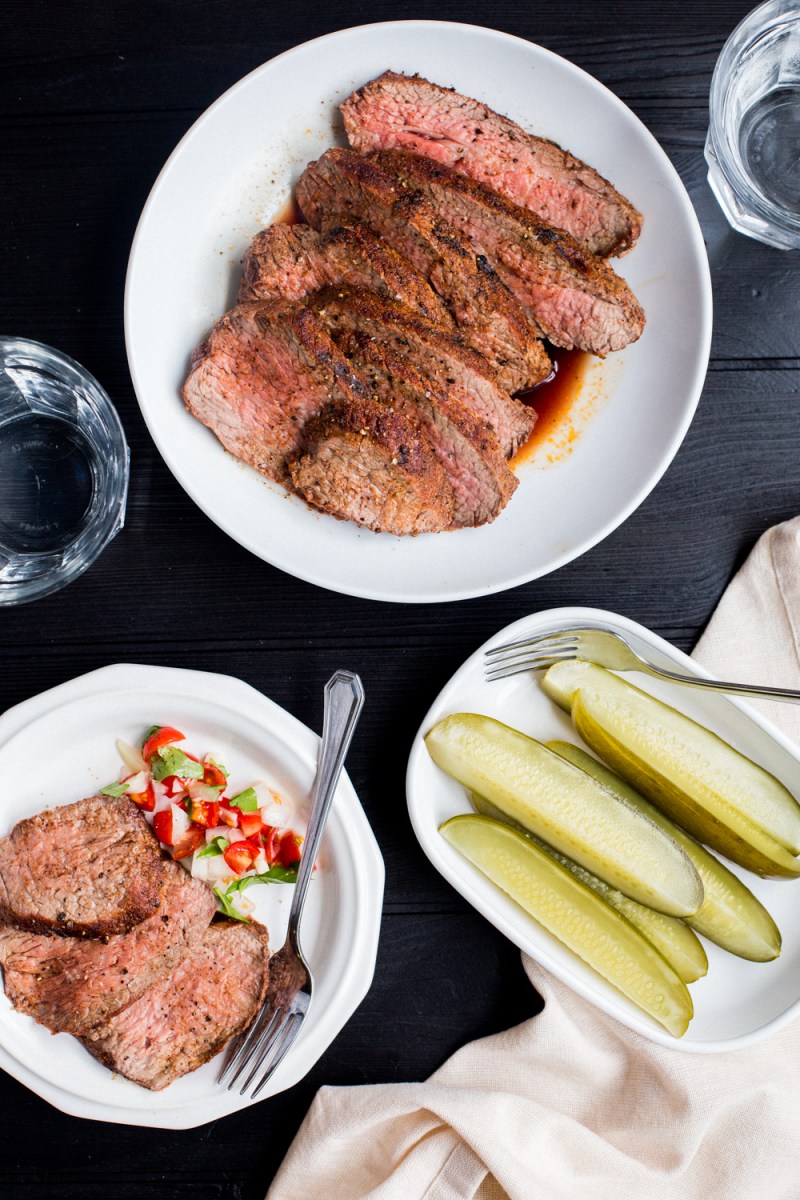
Santa Maria Tri-Tip Steak is a specialty of Santa Maria, California, which lies about 100 miles northwest of Los Angeles. Tri-tip is taken from the bottom sirloin of the cow, and is often cut into steaks and sold as “sirloin steak” (a tougher version of the prized “top sirloin steak”). When sold whole, as is used in this recipe, it can weigh up to 4 pounds. This lean, moderately tough, and economical cut of meat fares best when cooked only to medium-rare or medium.

The key to making a good Santa Maria Tri-Tip is cooking it so that it has a crusty outside and tender, juicy inside. There are different ways to achieve this result; in Santa Maria, chefs often use a grill that can be adjusted up and down, so as to develop a crust and then pull it away from the fire to prevent burning.

My method is similar. We’re going to only heat one side of the grill, indirectly roast it until it reaches a certain temperature, then place it directly over the fire to create a tasty crust at the end. The end result is a dead simple recipe that always makes for a tasty experience.

Read Full Article

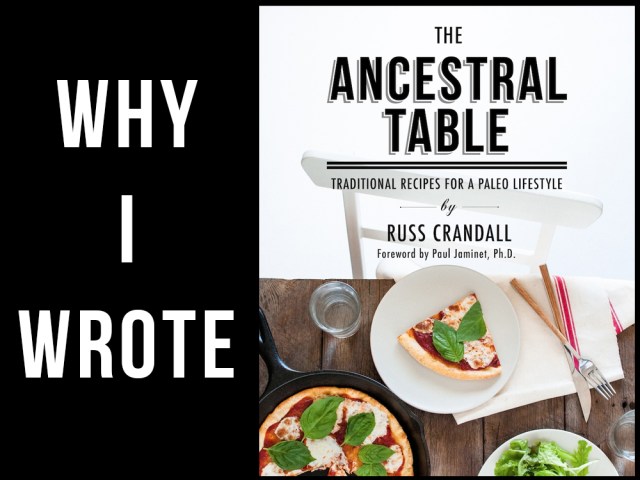
With early copies of The Ancestral Table making their way into the hands of media and reviewers this week and next, I’ve been getting a little reflective lately. More than once during some recent marathon email sessions, I’ve had to remind myself of why I wrote this book in the first place (hint: it wasn’t to get more emails). After sitting down to think about it more than a few times, I thought you might be interested to hear why I wrote my cookbook.

Read Full Article

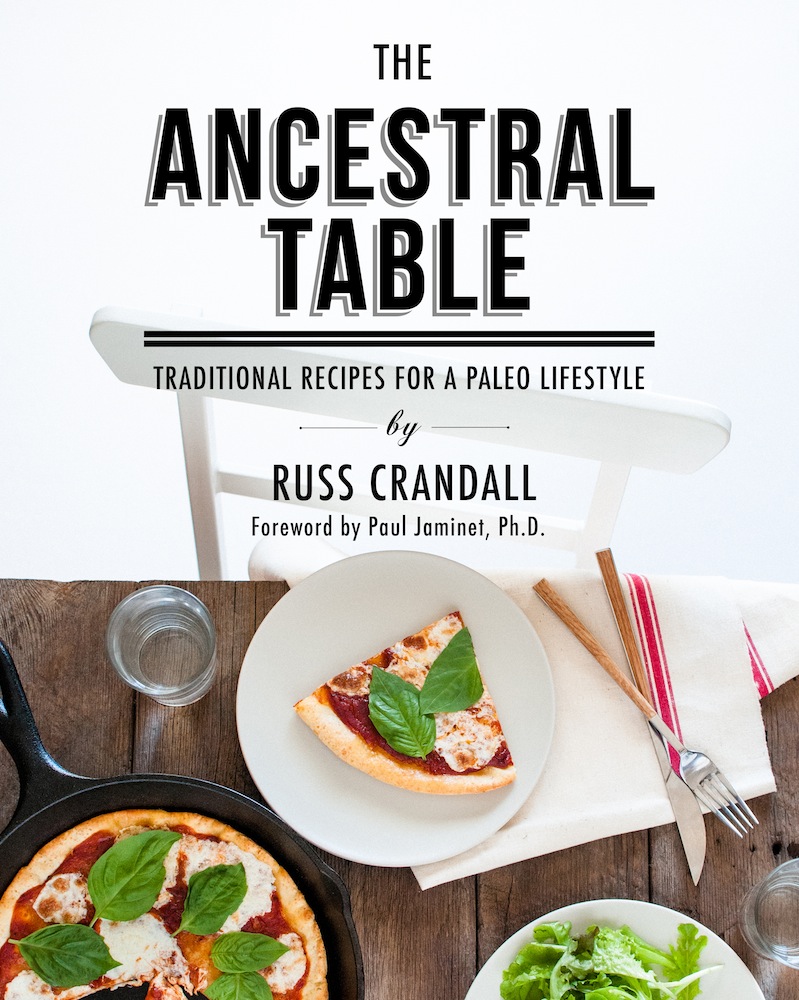
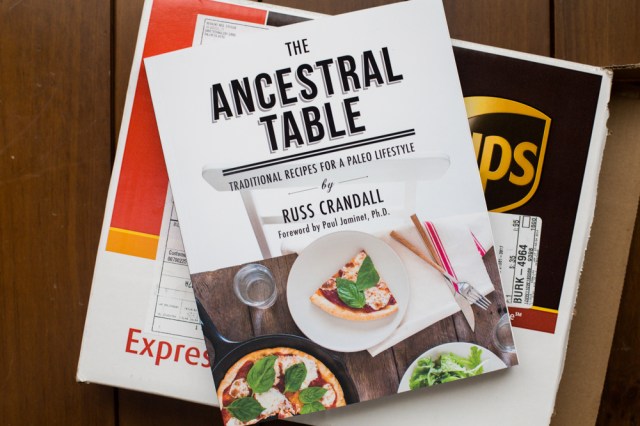
I’m happy to say that I have a copy of The Ancestral Table sitting on my lap as I type this! While I was at work yesterday, I got an email from my publisher that the first copy – hot off the press – was en route. As you can imagine, it was the longest workday ever.

But this post isn’t (only) about gloating that I have an early copy of the book. Serendipitously, Amazon has also updated their webpage for my book to now include theor “Look Inside!” feature, which allows you to get a glimpse of a good chunk of the book (40 pages, to be exact). So check it out, if you’re inclined, to get an idea of what you’ll get when The Ancestral Table releases on February 11th.

It may sound funny, but writing, designing, and shooting The Ancestral Table was the easy part. Now I actually have to promote and sell the thing! That’s where you come in. If you’re excited about the book, please tell your friends about it! Tweeting, Instagramming, Facebooking, Pinteresting, texting, snail mailing, or simply shouting out my cookbook’s landing page link – https://thedomesticman.com/cookbook – would be really helpful. Heck, call your congressman while you’re at it. Politicians eat food, too. I even have a hashtag going (ridiculous, right?): #TheAncestralTable.

It would be beyond awesome if this little book went viral, and people started cooking more delicious, healthy meals around the world.

Thank you for your support and readership. I can’t wait for you to see the book.

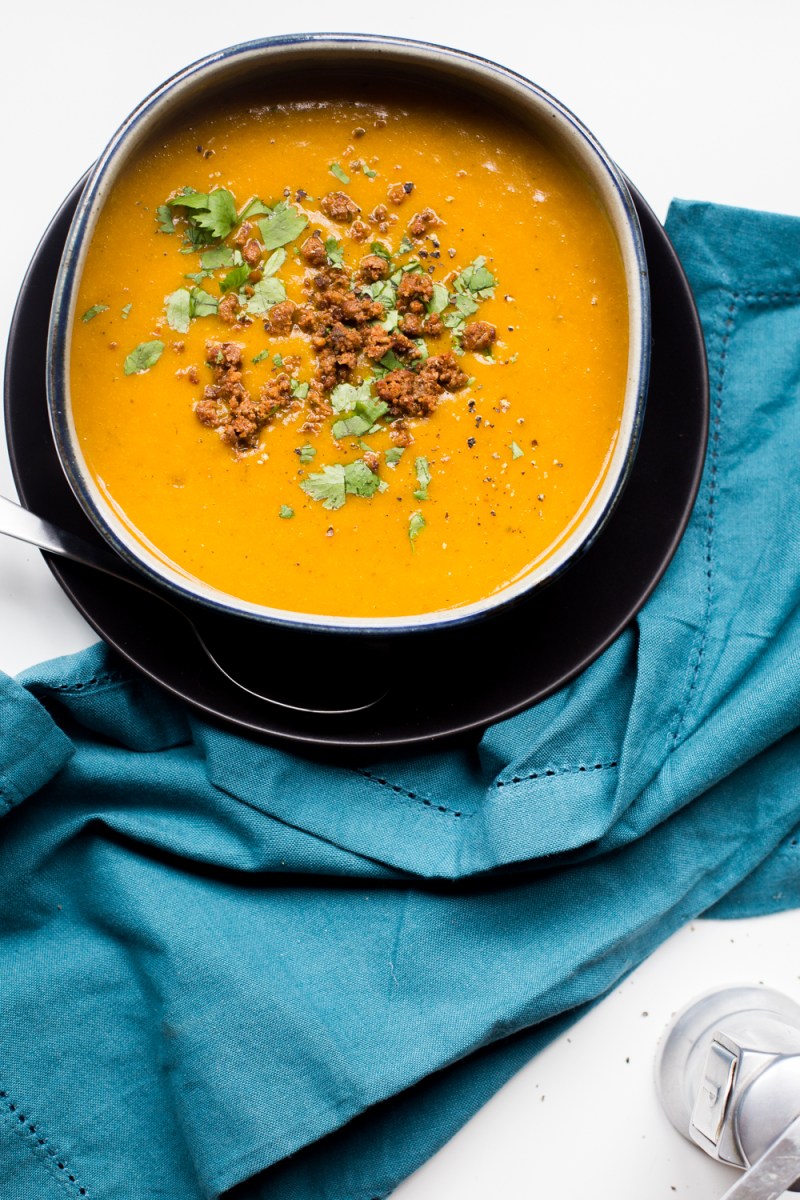
I figure it’s safe to post a pumpkin recipe now. For a while there (all of October and November) I thought I was going to drown in pumpkin-flavored products. Is it just me, or are they becoming more and more prominent every year? Regardless, pumpkin soup is a hearty, warming way to enjoy the cold months of fall and winter, and I didn’t want to let spring hit me before sharing this recipe.

Like many foods we enjoy today, pumpkins are a product of the New World, and entered Europe in the 15th century. Most foods introduced during that time took a while to gain momentum in Europe – sometimes hundreds of years – but not the pumpkin. Because they resembled gourds and squashes common in the Old World, pumpkins were readily adopted and prized for their robust flavor and easy cultivation. It was quickly made into various soups, and mixed with honey and spices as early as the 17th century – a precursor to pumpkin pie.

For today’s recipe I wanted to keep pumpkin closer to its place of origin – North America – so I decided to focus on a Mexican soup commonly referred to as Sopa de Calabaza, often flavored with cumin and chorizo sausage. I really like the cyclical nature of this dish. Cumin was first cultivated in India and introduced to the Americas by the Portuguese and Spanish. Chorizo is the best of both worlds: Old World sausage flavored with paprika made by New World peppers, and later re-introduced to the Americas. So this dish is the product of the unique culinary marriage of these two continents and cultures.

While pre-roasting a whole pumpkin inevitably lends more depth of flavor, using canned pumpkin puree drastically cuts down on your cooking time and effectively turns this dish into a 30-minute meal. Read Full Article


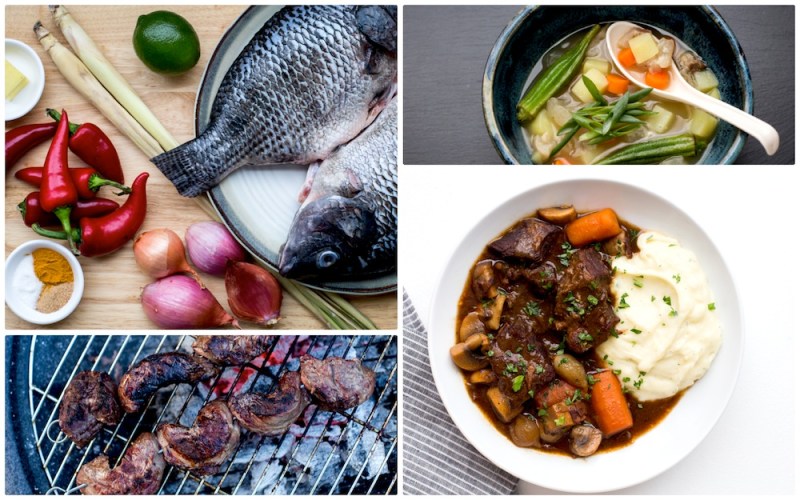
Holy smokes, my cookbook will be out in one month! That is pretty crazy. I figure that some of you would like to see a little more about the book before committing to buy – I don’t blame you, I’d want the same thing – so here is a list of every recipe in the book, as well as some pretty pictures to look at.

Some longtime readers may notice recipes that I’ve already published here on the site; don’t worry – every dish in the book has been redeveloped from scratch, so every taste you encounter will be new!

Read Full Article


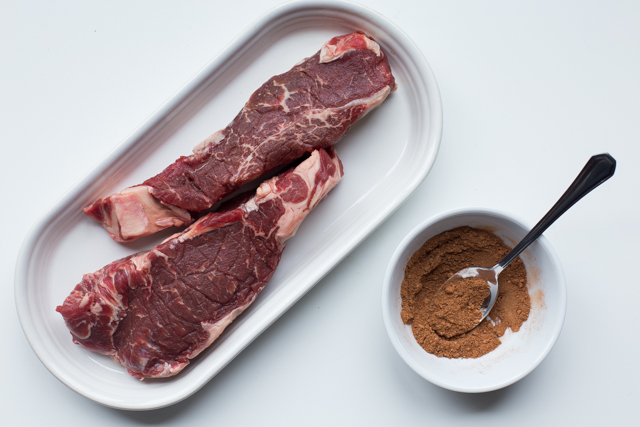
Cacao-Rubbed Steak

Yep, last month I quietly celebrated the three-year anniversary of switching my diet and regaining my health. It’s been a crazy ride, and I thought it was time to update you on some of my experiences over the years, and share some quick fundamentals that I’ve learned along the way.

Read Full Article

Before I forget, let me start off by saying thank you for your support and continued readership. In October of 2011, I made a decision to follow a strict posting schedule – one post a week at the least, two posts a week at the most – to make sure that I had enough recipes to keep this little website chugging along at a steady pace. I’m happy to say that I haven’t missed a week since, and The Domestic Man has grown to be something far beyond my expectations; to give you an idea, my average daily traffic is now far higher than the traffic for the entire month of October 2011. This is all thanks to you and your encouragement along the way.

To be honest, I had expected 2013 to be a relatively quiet year for me. I started secretly writing and shooting for my debut cookbook in late 2012, and my goal was to basically just keep the website afloat while I focused on writing the book. Turns out that everyone else had other plans! Let’s look through some of this year’s surprises.

Read Full Article