paleo

As we enter into November, I have exciting news – I’m just about done with developing and photographing recipes for my next cookbook! I’ve been at it for nearly two years straight – researching, testing, and retesting. I’m looking forward to moving to the next stage of the book-writing process, as I organize the contents, design the layout, and edit the manuscript. To be honest, editing is my favorite part of writing books; I like making small, incremental tweaks to refine my voice, and perfectly lining up every little element of the narrative.

So in celebration of moving on to the next (and arguably the most complicated) stage of the process, let’s enjoy this simple Greek stewed okra recipe. These okra fall into the lathera (λαδερά), or oil-based, dishes commonly found among Greek home chefs – simple to prepare, but packed with flavor. This dish works well as a hearty side, but really shines during Lent or other fasts, since it is remarkably filling thanks to its generous helping of olive oil.

Read Full Article

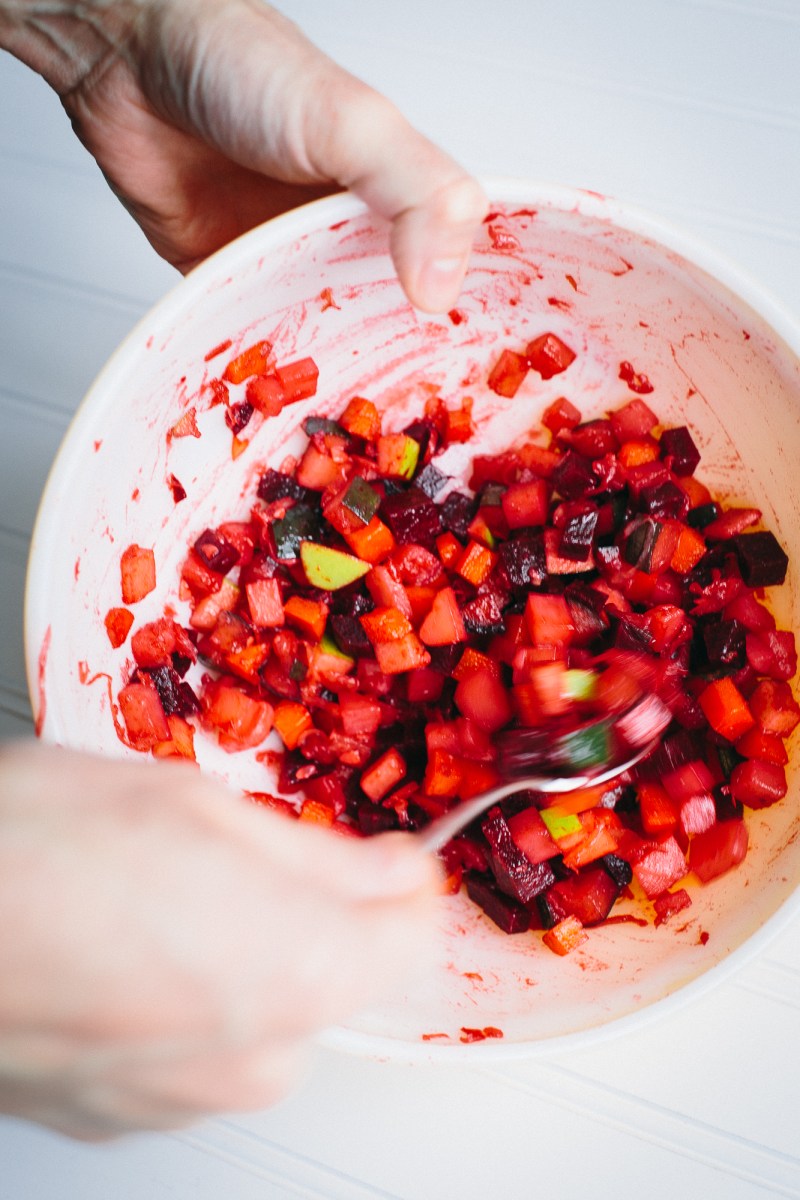
Every once in awhile, I get a big craving for beets. The craving doesn’t hit me often, but when it does, I typically turn to my Vinegret (винегрет) recipe from The Ancestral Table. So without further ado, here is the text from the book:

Vinegret is the name of a Russian salad that is likely not of Russian origin, but rather borrowed from German or Scandinavian cuisine. In traditional Russian cuisine, salads were pretty rare. Vinegret is often cited as the first Russian salad, first mentioned in the 19th century.

Another Russian favorite is Olivier salad, which has a much more interesting history. It was invented by Lucien Olivier, a Belgian chef working in Moscow in the 1860s. The original recipe was a closely held secret and was never truly duplicated. Documents reveal that the salad likely included caviar, crawfish tails, aspic, and veal tongue. Over the years, these rare ingredients were replaced by common ones. Instructions for making Olivier Salad are also found below, as the method is similar.

Read Full Article

I’m currently sitting at my computer with a blanket and a cat on my lap, and wearing a hoodie and house slippers for the first time this year. Sounds like the perfect time to break out a stew recipe.

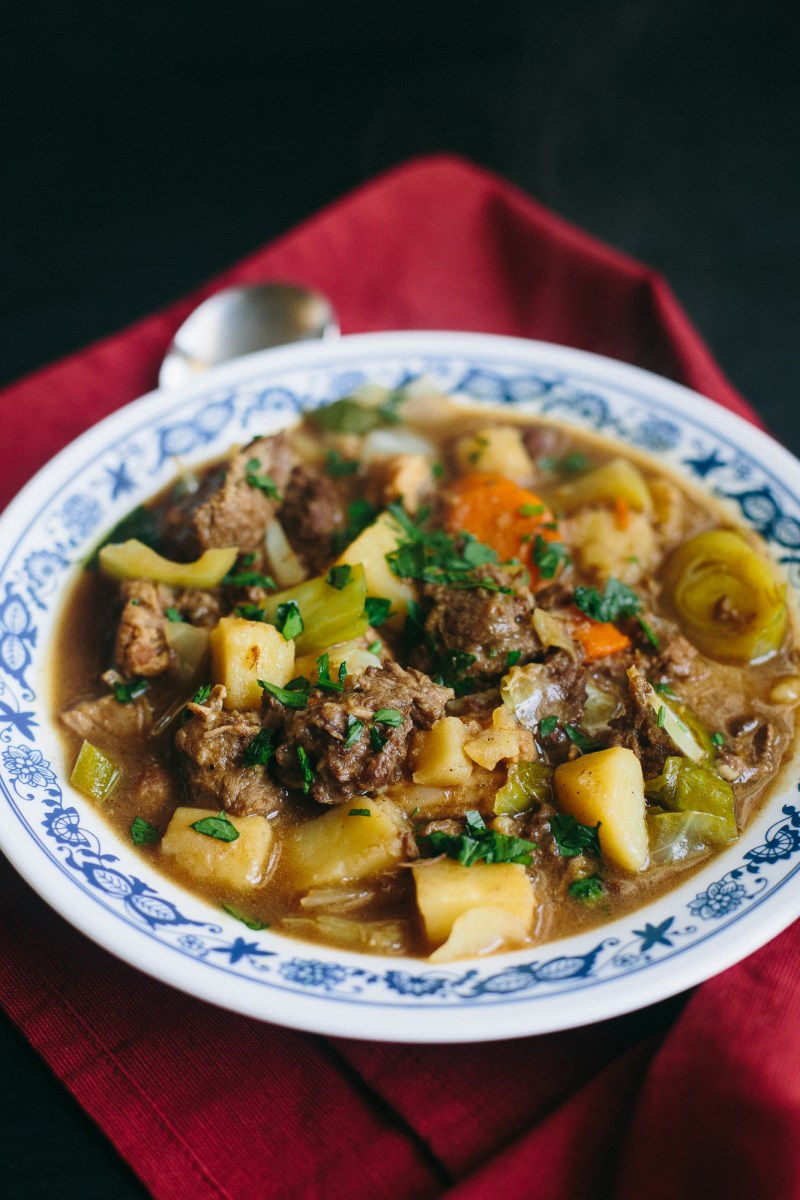
Pichelsteiner is a very typical stew, found in similar shapes and sizes all over the world. There are several stories to explain its invention, a common trait among stews. One folk tale details how a farmer’s wife fed the stew to a group of marauding soldiers, saving the day (and her family) with this new culinary invention. Another tale explains how a Bavarian chef prepared Pichelsteiner for party atop Büchelstein mountain (allegedly, the name of this dish morphed from there). Finally, the small Bavarian village of Regen, along the Czech border, claims ownership of this dish as well, which they have communally served at the anniversary of their church’s dedication in 1874.

Pichelsteiner shares another feature with other regional stews: it serves as the solution to those pesky leftovers that creep up in the fridge. As truly communal fare, the stew incorporates a spectrum of ingredients available to pre-industrial Germans: mushrooms, onion, carrots, leeks, cabbage, potatoes, and three types of meat. So if you don’t have all the ingredients, or if you have a couple extra that aren’t listed below, don’t fret – there’s a lot of wiggle room here.

Read Full Article

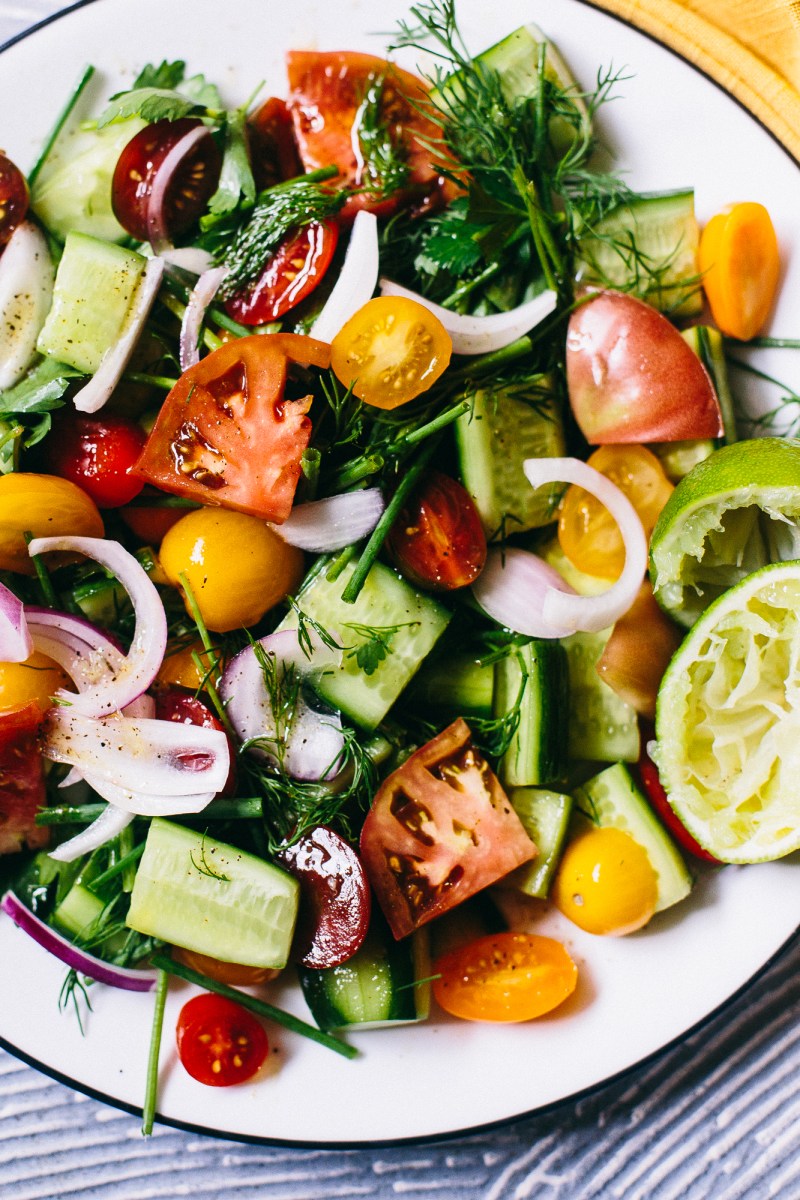
Salad Shirazi is a herb and vegetable salad from the southern Iranian city of Shiraz. It’s enjoyed year-round as a side dish, but is often served as a full meal during the hot summer months. While the vegetables are often diced – giving them an appearance not unlike Pico de Gallo – I have found that using larger chunks give each ingredient a bit more distinction, and results in a livelier eating experience.

There isn’t much to this recipe; theoretically, you could just throw all of the ingredients together and chow down. But I prefer to soak the onions in cold water first, which removes some astringency, and to salt the tomatoes and cucumbers to leech out a bit of their juice. That way, most of the salad’s moisture comes from more flavorful sources, like olive oil and lime juice.

Read Full Article

The weather is starting to cool down, so it’s time to share one of the many soups in my repertoire.

Caldo Xóchitl is a simple chicken soup from Mexico, a carryover of traditional, pre-Columbian fare, when soup (and corn) were dietary staples in the region. The word Xóchitl itself means “flower” in the Nahuatl (Aztec) language, but the original meaning behind this name is lost to history. I’ve read that this soup may have originally coincided with the daysign Xóchitl in the Aztec and Maya calendars; think of it like the astrological or Chinese zodiac signs, based off a specific day of the year that is governed by the goddess Xochiquetzal. Another, perhaps more practical theory is that squash blossoms may have simply been added to the soup when in season.

While chicken is more commonly served in this soup today, chickens were likely first introduced after Columbus’ voyage to the Americas in 1492 (there is some evidence that there were chickens in South America, via Polynesia, but that debate rages on). Either way, turkeys were available, so if you’re up for it, use turkey meat instead. We’re going to season the soup broth with a few New World spices, to give just a hint of depth to the recipe.

Read Full Article

Shakshuka is a dish of tomatoes, peppers, and poached eggs, ubiquitous in North Africa and the Middle East. Countries across the Middle East, from Yemen to Turkey, claim to have first created the dish, where it then supposedly spread across North Africa. Regardless of origin, I like to think the best Shakshuka embodies many of the countries and cultures that claim ownership of this dish, so I like to incorporate many influences, like Harissa from Morocco, or olives and artichoke hearts from across the Mediterranean.

And that’s the beauty of this dish – there are so many possible variations, all readily available in most pantries and fridges, that this dish can be cooked up most any morning; it only takes a few extra minutes to turn your typical fried eggs into something magical. Today’s recipe hosts an all-inclusive mix of possible additions, a tapestry of what you could use – but if you’re missing an ingredient or two, it’ll still turn out spectacularly. And if you don’t have any pre-made Harissa within arm’s reach, and want to capitalize on the spontaneous nature of this dish, simple replace the Harissa with some tomato paste and cayenne (measurements in the recipe below).

On a separate note, my friends at ButcherBox are celebrating their two-year birthday (just ahead of our youngest son, Elliott!). To celebrate, they’re throwing in a package of two 10oz ribeyes (a $25 value) for new customers’ first orders – that’s in addition to $10 off that The Domestic Man readers already receive by using my affiliate link. I’m a big fan of ButcherBox, and I look forward to receiving my customizable box every month – stocked full of staples and new cuts of beef, pork, and/or chicken every time. This offer expires at midnight on Tuesday, October 3rd, so don’t wait!

Read Full Article

Hey folks, we’re going to enjoy a short, simple dish this week. I’m in the middle of prep for a two-week stretch of recipe development, hopefully my last big push in the kitchen before I focus on writing other parts of my next book!

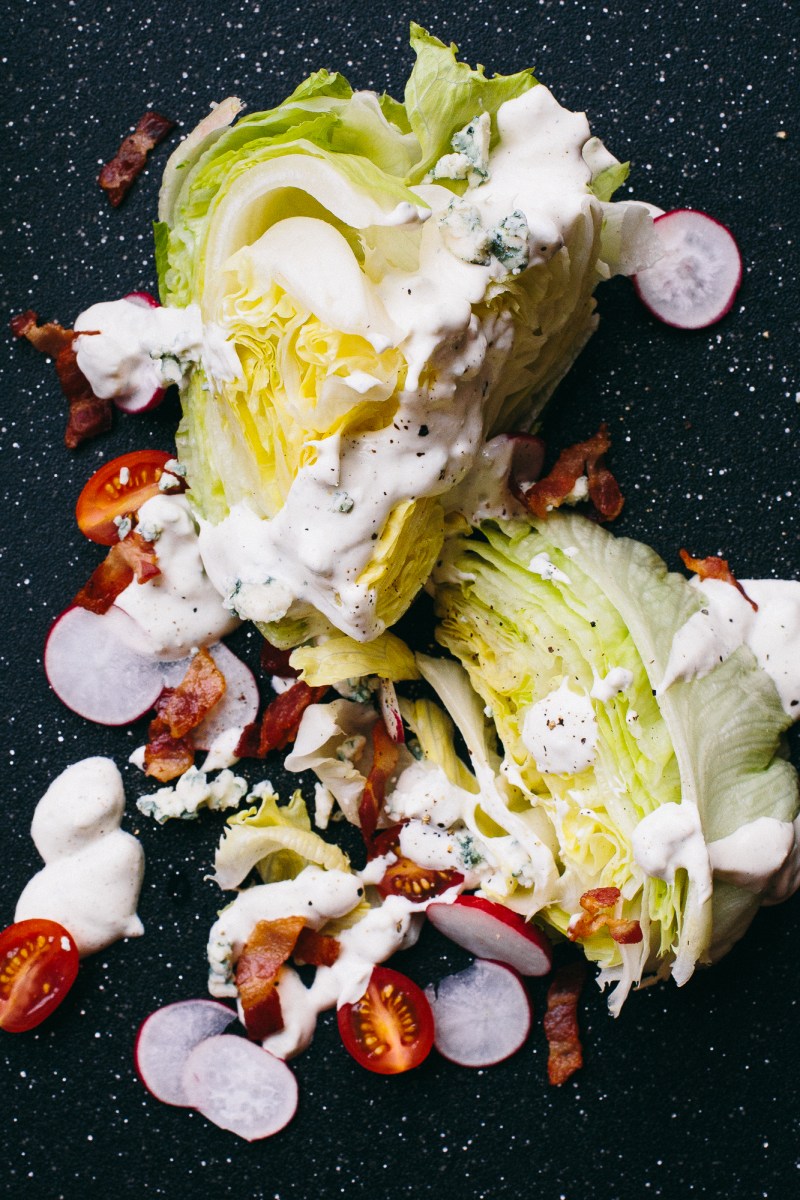
I think there’s something unfairly simple about wedge salads. They’re a cinch to put together at home, but I often find myself ordering them at restaurants, despite the fact that I’m paying someone to simply chop a head of lettuce into quarters. This week’s recipe is the classic preparation of the dish, which is wonderful in its ease and approachability; for something a little more challenging, I encourage you to check out my Muffuletta Wedge Salad recipe from last year.

A little history on wedge salads, from The Ancestral Table:

Salads served wedge-style date back to the 1910s and reached peak popularity in the 1960s. Iceberg lettuce, the staple lettuce used in this dish, has slowly been replaced by leaf lettuces over the years, but I still have a soft spot in my heart for this crispy, blank-canvas lettuce; it stays fresher longer than leaf lettuces and pairs better with creamy dressings and heavier toppings, as in this recipe.

Read Full Article

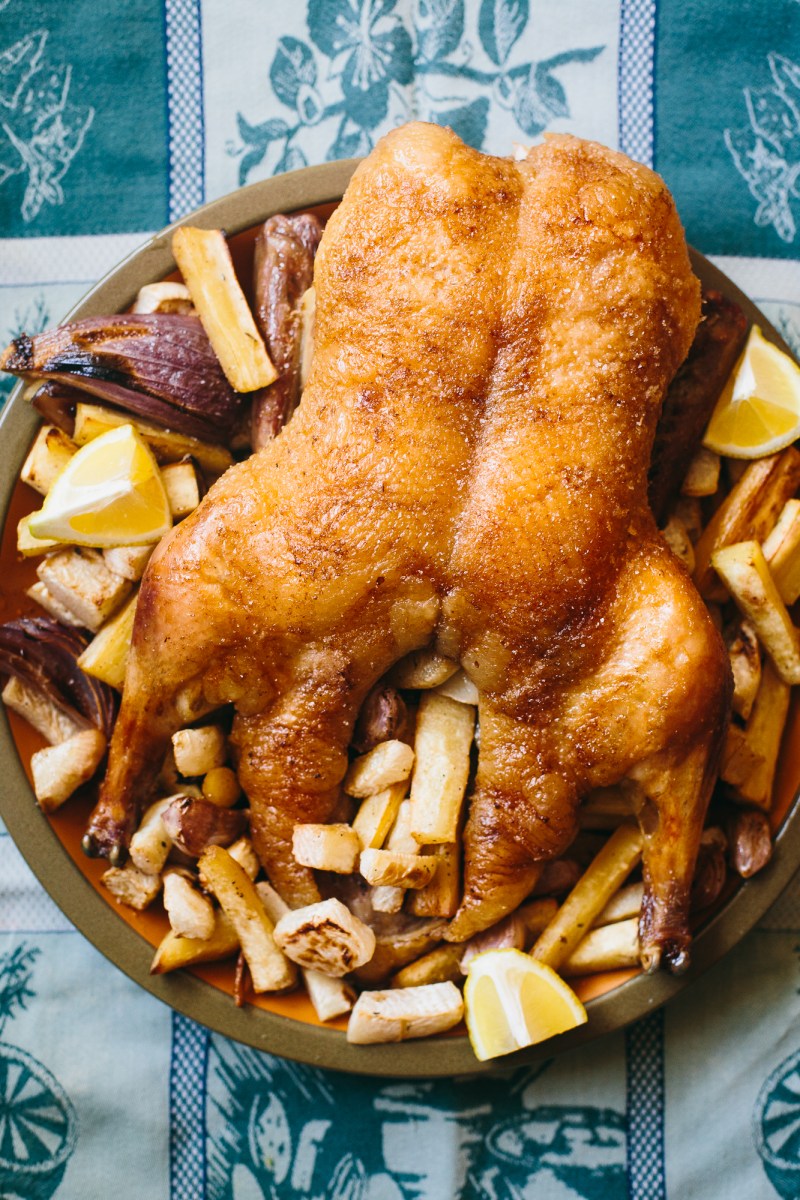
Guess what? It’s getting noticeably cooler here in Virginia, which means it’s just about roasting weather. I love making roast dishes once the temperatures dip, because it’s an easy (and aromatic) way to warm up the kitchen during chilly weather. In truth, I developed this dish a few months ago, when I was working on a particular chapter for my upcoming cookbook, but decided to hold off on sharing this recipe until we had appropriate weather.

Roasting duck can be daunting. I know this because I spent the first 30 years of my life not roasting any ducks, because it seemed like an intimidating bird to cook (although to be fair, I wasn’t roasting much of anything during the first 16 years of my life). Turns out roasting duck is in many ways more appealing than roasting chicken, because a) the whole duck could basically be classified as “dark meat”, which means it is more forgiving if you overcook it, b) duck can be served at a wide range of internal temperatures (135F-165F), depending on how you like it, and c) duck skin is so fatty that you’ll inevitably render a bunch of delicious duck fat to use in other recipes.

For today’s recipe, we’re going to trim the excess skin from the duck (around the neck and cavity), render it separately, and use that fat to roast the vegetables. I like this technique because you can then use the fat that accumulates below the roasted duck for other cooking adventures. My recipe from The Ancestral Table also rendered duck fat to roast the veggies, but the vegetables were placed under the duck as it roasted. This technique required one fewer step, but it is always a challenge to get everything finished at a reasonable time; too often, my duck was ready while the vegetables were still cooking. By separating the two cooking processes, we have more control over the timing of each dish, and makes for a more synergized eating experience.

One last step, which I think is worth mentioning. I have found that it’s worth it to refrigerate the duck overnight, uncovered, so that the duck skin is nice and dry. This technique is used by Chinese restaurants when making Peking Duck, albeit more elaborately (using a bike pump, blanching, and stationary fan), and gives you a layer of crispy duck skin that pulls away easily from the meat.

Read Full Article

The word tagine (tajine, الطاجين) is both the name of a North African stew, and the conical earthenware pot in which it is usually cooked. The use of ceramics in North Africa was the result of Roman influence, and these dishes have been enjoyed for thousands of years.

Tagine pots are unique in that they trap steam and return the condensed liquid to the dish, enabling chefs to make tender foods with minimal added water, which is ideal in areas where water is scarce. For today’s recipe, I’ve provided instructions to create this dish with a dutch oven or deep skillet; so long as the lid has a very tight seal, you should be able to closely mimic the original dish – some folks like to cover their pots with tin foil before adding the lid, to ensure a completely tight seal.

There are countless spice options when preparing a tagine, but for this particular recipe I modeled my approach after a traditional Mrouzia, a tagine that is often served during Eid al-Adha (Festival of the Sacrifice). This Muslim celebration honors Ibrahim’s (Abraham’s) willingness to sacrifice his son at God’s command, only to be provided a sacrificial goat at the last minute instead. During this celebration, a lamb (or sometimes goat) is ritually sacrificed and shared among family, neighbors, and the needy; in many settings, they prepare Mrouzia using the sacrificed lamb.

Mrouzia is served with toasted (blanched) almonds, and typically flavored with saffron and Ras el Hanout, a popular North African spice mixture. Commercial versions of Ras el Hanout exist, but it’s not too challenging to put together your own fresh spice blend (my recipe is below); you’ll likely have most of these spices in your pantry already, except perhaps for mace. While potatoes aren’t a typical accompaniment to Mrouzia, I find that they add a hefty balance to the sweet/salty mixture of the dish; steamed basmati rice (or couscous, if you’re not gluten-averse) also works well as a starch.

Read Full Article

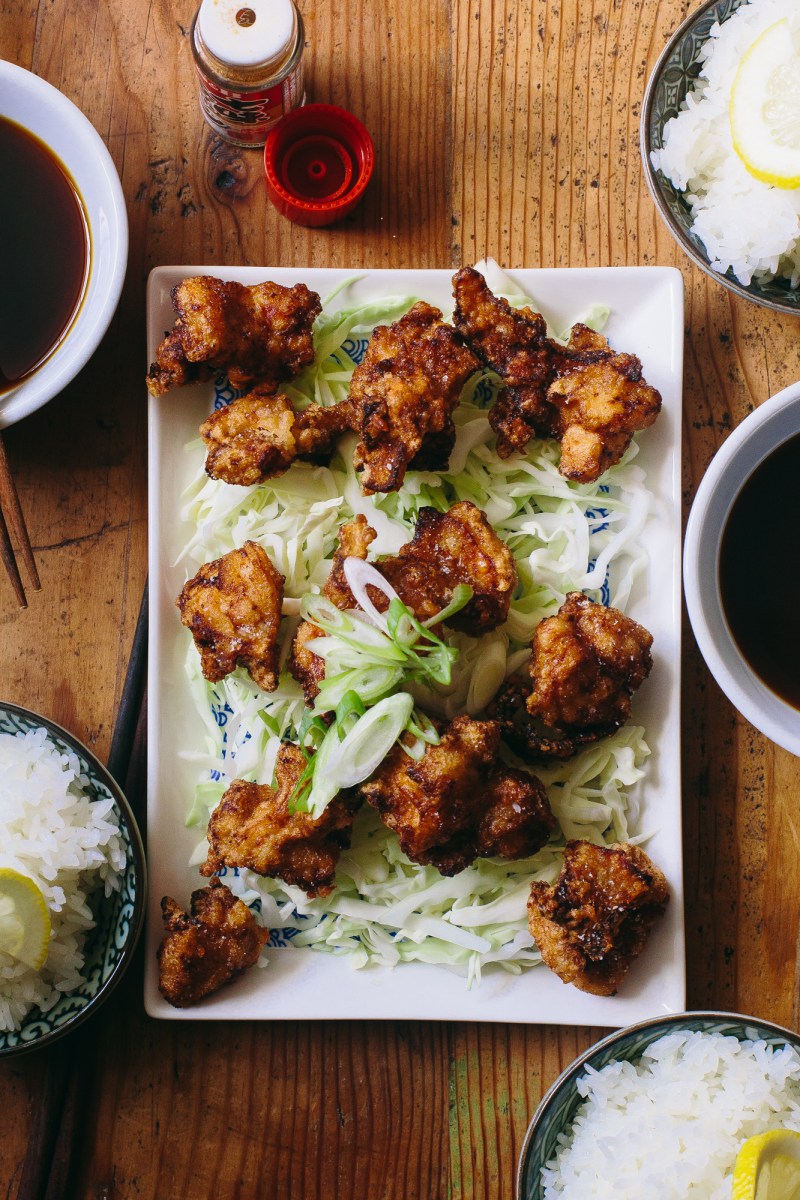
Over the years, I’ve had a lot of people ask me to develop a recipe for Chicken Karaage. It just so happened that this past weekend I needed a break from developing recipes for my next cookbook, and I was craving fried chicken, so it felt like the perfect time to work on this fan favorite.

In Japanese, Karaage (唐揚げ) is not necessarily a direct translation of the dish, but rather the cooking method. The first kanji character, 唐, translates to “Tang Dynasty”, or more loosely, “China”, which suggests that this dish was influenced by Chinese cuisine. Chicken Karaage itself has only been recently popular in Japan, mostly over the past 50 years, but it was likely first developed during the Edo period (1603-1868).

The key to a crispy Karaage is to toss the chicken in potato starch to form a light coating right before you drop it in hot oil. I like to use lard when frying chicken, but I’ve heard some amazing things about Chicken Karaage fried in duck fat, so if you have any on hand, maybe try that instead. I like to pair my Karaage with a citrusy Ponzu dipping sauce, but many people also prefer Japanese (Kewpie) mayo.

Read Full Article