primal

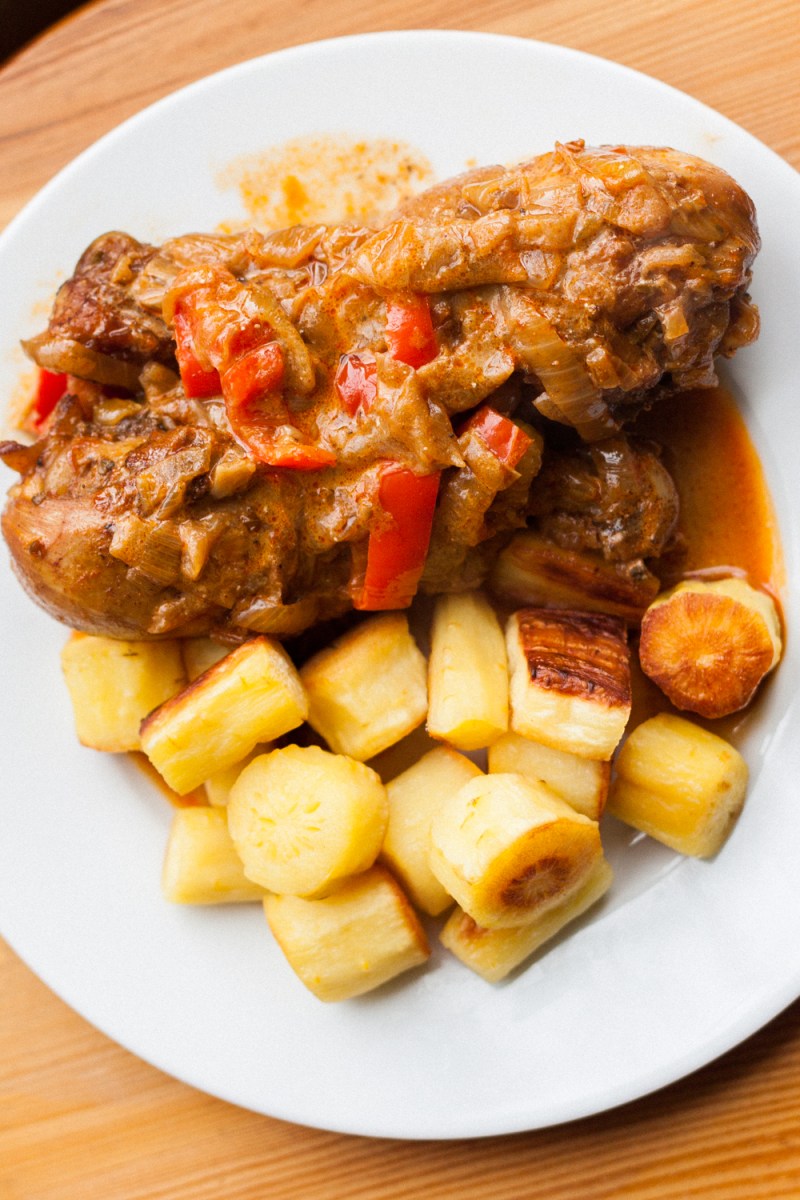
Chicken Paprikash is a famous Hungarian dish, known for its mellow flavor, mild sweetness, and tender chicken. Some might consider it a stew, and I’m not arguing that fact – honestly, it really doesn’t matter. This stuff just tastes good. This dish is commonly served with egg noodles or spätzle-like dumplings. I thought that my roasted parsnips would be a good substitution, and it worked; their crispy outside and slight-spongy inside were perfectly paired with the chicken’s creamy sauce.

Today’s recipe is somewhat of a joint venture with my friends Melissa and Nicole from mealpod.us. I love the concept of their site: they make a large batch of one dish in advance, and then freeze portions of it in their clever little “mealpods” for easy reheating. It allows them to eat healthy, regardless of how busy and frantic life gets. The only adjustment needed with my recipe to make it mealpod-friendly is to use boneless, skinless chicken thighs instead of bone-in thighs/drumsticks. I sent them this recipe a few weeks ago and they made a version of their own; it turned out great!

Read Full Article

Parsnips are a bit of an oddity here in the United States, and unfairly so. They have been staples of the European diet since the Roman times. They were brought to America back in the day by colonists, but they eventually became replaced by the white potato on American plates. Parsnips are a great source of carbohydrates, and add a rich, buttery, and slightly-sweet taste to the table.

Read Full Article

Lamb is a delicate but rewarding meat; while a lot can go wrong when cooking it, when you get it right it’s an unforgettable experience. US Wellness Meats recently sent me one of their rack of lamb split loin roasts, and honestly, it was a little intimidating. Not only is this one of the most tender parts of the lamb, it needed some initial carving/butchering as well. Since one of my goals of this site is to make cooking less intimidating, I was happy to have the opportunity to demystify this formidable cut of beast.

I went with a French-inspired preparation of the dish. I carved the rack into a rolled loin roast, and used the leftover bone pieces to make an on-the-spot broth while the roast marinated. This broth then served as a base for my mint/parsley/mustard sauce.

Read Full Article

NOTE: An updated version of this recipe appears in my cookbook, The Ancestral Table.

Growing up with the Standard American Diet (otherwise known as SAD), I became accustomed to certain tastes. One of my favorite random meals was Salisbury steak TV dinners – something about that squishy meat and savory broth really hit the spot for me. So I decided to re-create this dish, but instead of squishy, breadcrumb-filled beef, I used some of the best ground beef I’ve ever tasted – US Wellness Meats’ 75% lean ground beef (by the way, their 25lb. bulk pack is on sale until 10PM CST on Saturday, March 3rd!). It tasted just as good as it looks.

Interestingly enough, Salisbury steak was first developed in the late 19th century by Dr. J H Salisbury as a low-carb, weight-loss dish. Similar dishes are popular worldwide, especially in Japan (hanbāgu steak) and Russian (котлета).

Read Full Article

For Thanksgiving last year, I roasted/smoked our turkey. It turned out so crispy and delicious that lately I’ve been smoking our chickens using the same method. This recipe isn’t terribly different from that turkey post, but I wanted to make sure it had its own dedicated post so that visitors can quickly find it.

I did a little experimenting and found that the combination of lemon and dill – traditionally used in baked salmon – creates a tangy, fresh tasting bird. Because I smoked this chicken during our January Whole30 Challenge, I tried rubbing clarified butter all over the chicken instead of regular butter – I found it easy to work with (the butter quickly became solid again once in contact with the chicken skin), and it produced a golden protective outer “shell” around the chicken, leaving the meat inside perfectly succulent.

Read Full Article

During the month of January, my wife and I did the Whole30 challenge. The challenge is very similar to our current diet, but without any dairy, white potatoes, white rice, or sweeteners like honey and maple syrup. I felt great all month, but I did struggle with maintaining my weight (I’m a pretty skinny guy). In order to keep up a good amount of carbs, I spent a lot of time eating carb-heavy foods like sweet potatoes, parsnips, sun-dried tomatoes, squash, and plantains.

Of all of those foods, grilled plantains may have been my favorite. They were dead simple to make, and have distinct tastes depending on how ripe the fruits are. Green plantains have a dry, starchy texture and mild taste, while yellow and black plantains are sweeter and less starchy. While fried plantain chips seem to be the standard way to eat plantains in the Paleo world, I wanted to try out grilled plantains (admittedly, it was because I was grilling a lot anyway and I figured, why dirty another dish?).

Read Full Article

NOTE: An updated version of this recipe appears in my cookbook, The Ancestral Table.

Although flanken-cut short ribs (sometimes called L.A. or English cut ribs) are more commonly found in Korean restaurants today, every so often you’ll find that a chef that prepares kalbi (galbi, 갈비) in the traditional way – by using a full length of rib that’s filleted in layers. This traditional cut is called wang galbi/kalbi, which is literally translated as “king ribs”.

My most recent box of goodies from US Wellness Meats included a package of their delicious beef short ribs. This beautiful one-pound rack was the perfect opportunity to make some “king ribs” of my own.

Read Full Article

NOTE: An updated version of this recipe appears in my cookbook, The Ancestral Table.

Poi is a Polynesian staple food, typically made with mashed taro root. However, it’s a little-known fact that the Hawaiian people also made poi from sweet potato and breadfruit. Given the fact that taro root is relatively hard to come by here in Maryland, we regularly make sweet potato poi to stave off our Hawaiian-food cravings. To bring in a little extra island flavor, I add a little coconut milk to the poi, which gives it a taste similar to haupia (a Hawaiian coconut dessert). Its creamy texture and sweet taste are perfect accompaniments to my kalua pig recipe.

Read Full Article

Edit: the giveaway is now closed! Congratulations to Maia Low who is the big winner!

You may have seen my recent recipes featuring some delicious meats from US Wellness Meats (including my liver and caramelized onions and honey and citrus glazed ham recipes). You may also have been salivating from the awesome looking meat and dreamed of making some of your own. Luckily for you, I am teaming up with US Wellness Meats to make your dreams a reality: we’re giving away a $100 gift certificate to their site!

And while a free $100 worth of meat sounds great, I have an even better proposal. How about you treat this $100 as a “grass-fed buffer” – in other words, calculate what you pay for the mediocre (and possibly toxic) meat that you can find at your local supermarket, and then use the $100 certificate to offset the cost of buying this delicious, healthy grass-fed beef. For example, let’s say you regularly pay $4/lb for ground beef at your supermarket. US Wellness Meats’ awesome 75/25 ground beef currently costs $6.45/lb. This means that if you win the giveaway, you could buy THIRTY EIGHT POUNDS of grass-fed ground beef for the same price as the same amount of conventional ground beef, and have money to spare even after paying their reasonable $7.50 handling fee (shipping on their site is free)! Just an idea – you can spend the $100 how you’d like, but that’s what I would do!

Here’s how to enter the giveaway (first one is required, second is optional):

1. Subscribe to the US Wellness Meats newsletter and leave a comment on this post letting me know you did it.
2. “Like” The Domestic Man facebook page and leave a comment on this post letting me know you did it.

If you do both options, I’ll give you two entries into the giveaway! You can tell me that you did both options in one comment instead of two. The giveaway ends midnight Saturday, February 11th, and I will select a winner using a random number generator sometime thereafter. Good luck!

Fine print: Giveaway for US residents only – US Wellness Meats is not able to ship internationally because of customs issues.

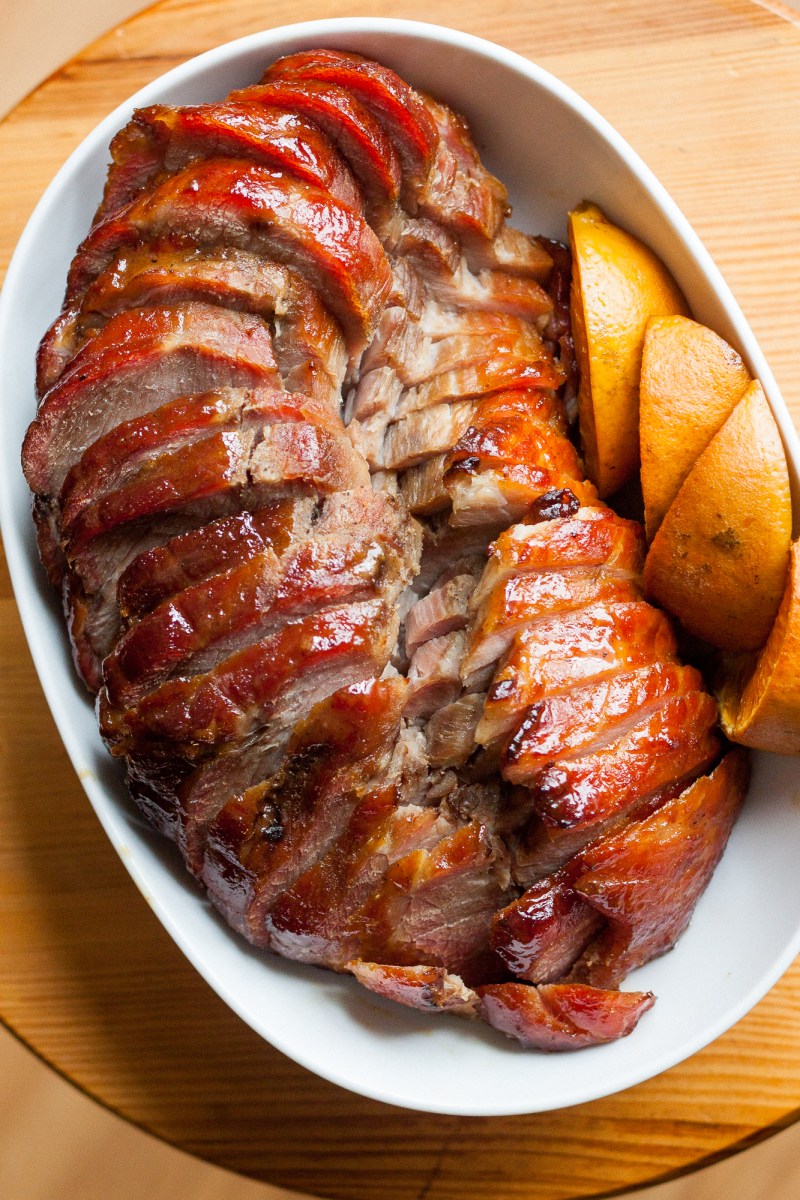
Ham seems like a simple hunk of meat. All you have to do is buy a cured, pre-sliced ham and warm it up in the oven. Unfortunately, while this is the easiest (and most common) way to get some ham in your belly, it’s not the healthiest option. Your everyday pre-cooked ham is loaded with sugar and nitrates.

I’ve been meaning to tackle an uncured ham for a while, so imagine my delight when US Wellness Meats asked me to write up a recipe for their petite ham. This smoked ham is both sugar and nitrate free, using compassionate certified pork. Its size is also perfect for our family of three – 2.5 lbs of porcine goodness. There was plenty for us to eat, and a good amount of leftovers to boot. For those of you using a cured and/or a spiral-cut ham, don’t worry – this recipe works just fine for them as well.

Read Full Article