
soup

I wanted to come up with a special Easter dish this year, but I quickly realized that I couldn’t use your standard Easter meal ideas; I’ve already posted recipes for ham and lamb roasts this year. Instead, I settled on a traditional Polish Easter Soup called Żurek (also often referred to as Biały Barszcz – “White Borscht”). This soup uses a combination of pork (kielbasa sausage, ham, or in our case, bacon), boiled eggs, and veggies in a slightly sour and creamy (hence the “white”) broth.

There are quite a few challenges with creating a grain-free version of this soup. First of all, the soup is traditionally made by soaking and fermenting/souring rye bread as a soup starter. Instead, we’re going to create a “sour” taste by using another popular method – horseradish and sour cream. Żurek is also traditionally served in a rye bread bowl or with large chunks of rye bread as an accompaniment. We’re just going to omit that whole rye bread part; it didn’t make this soup any less delicious!

Read Full Article

NOTE: An updated version of this recipe appears in my cookbook, The Ancestral Table.

Chowders get their name from the French word “chaudière” (kettle, pot), which in turn is derived from the Latin “caldāria” (cauldron). There’s quite a rivalry regarding the white, creamy New England Clam Chowder and the clear, tomato-based Manhattan Clam Chowder – in fact, a bill was introduced into the Maine legislature in 1939 attempting to make it illegal to add tomatoes to clam chowder.

Here’s another interesting fact – it wasn’t until the Second Vatican Council during the 1960s that Catholics were permitted to eat meat on Fridays (the abstinence period has been reduced to Lent now). To provide a seafood option to Catholics, restaurants across the country served clam chowder on Fridays, and the tradition remains today.

Creating a hearty, traditional wheat-free chowder is quite a challenge, since they are usually thickened with flour or soup crackers. Using starchy russet potatoes would naturally thicken the chowder, but also leave you with disintegrated potatoes. And then it struck me: I can cook the chowder using sturdier red potatoes, and thicken it with potato starch – leaving us with the best of both worlds.

Read Full Article

NOTE: An updated version of this recipe appears in my cookbook, The Ancestral Table.

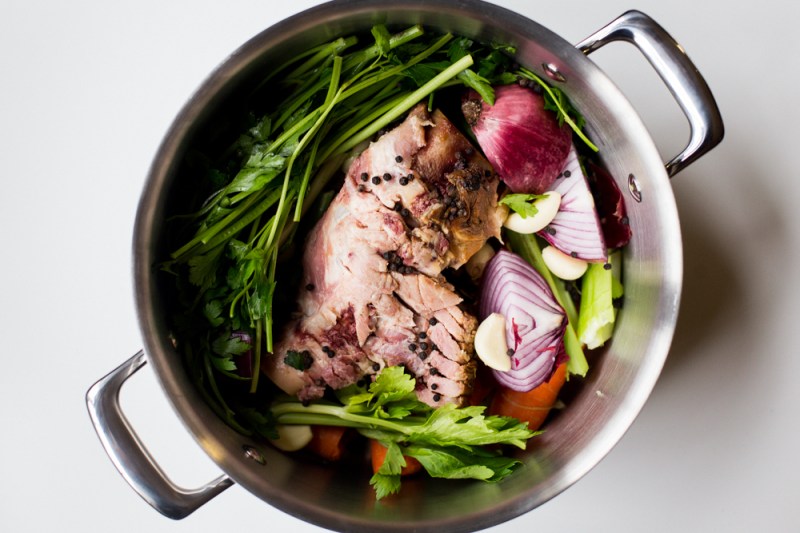
I decided to make a pork stock using our Easter Day ham – what else am I going to do with a huge ham bone? Although bean soups are usually the best and easiest use of ham stock, I may use it to steam some greens, make jambalaya, or a bean-free soup. Regardless of what I end up making with it, here’s how to make your own ham stock.

Read Full Article

This is an update to a recipe I posted earlier, but with dashi (broth) made from scratch in order to reduce our MSG intake.

This dish has become our go-to easy lunch on the weekends, when we’re running around the house doing chores. Most of the “cooking” involves letting things soak or simmer, so with some agile timer-setting you can make this dish with minimal effort.

Read Full Article

I spent some time in Prague last year and was introduced to česnečka (pronounced “chesnechka”), which is a simple garlic and potato soup.

I found that the soup tasted best with a mixture of my homemade beef stock, beef broth, and water. If you don’t have access to all three (my guess is you have easy access to one), improvise as needed.

Read Full Article

NOTE: An updated version of this recipe appears in my cookbook, The Ancestral Table.

Many stores or butcher shops have beef marrow bones on the cheap, which make a dense and highly nutritious stock and excellent soup base. Although I’ve made my own stock using oxtails I’ve been wanting to try my hand at other soups, so marrow bones seemed like the best starting spot.

Before we dive into this recipe, let’s have a quick culinary lesson. “Stock” refers to a liquid that’s made from simmering bones, and “broth” is made from meat. You can use both, and as far as I know that’s still referred to as “stock”. Now that we have that cleared up, let’s make some food.

Read Full Article