2 – Soups & Stews

Over this past weekend, I was scheduled to appear at the latest Perfect Health Retreat in Wilmington, North Carolina as a guest chef. I had a whole day’s worth of recipes planned for the 20+ attendees and staff members, most of them based on traditional Indonesian or Malaysian dishes. I was very excited, and had even devoted the previous weekend to practicing and tweaking the recipes to get everything perfect. And then life struck. My son Oliver started feeling very sick last weekend, likely a gift from one of his pre-school classmates, and by Tuesday I was feeling the full brunt of some relentless flu symptoms.

So I spent last week and this past weekend drifting in and out of a feverish state, catching up on several seasons’ worth of Archer and Portlandia episodes, and trying to find new ways of incorporating bone broth into my diet (hint: developing recipes while under the influence of flu medicine is never a good idea). I’m happy to report that Oliver and I are both on the mend, but unfortunately I missed out on my opportunity to cook at the retreat. So that these recipes don’t disappear from memory, I wanted to share two of them with you this week.

The first recipe is Sayur Bening Bayam, a clear Indonesian soup made with a variety of vegetables, but always includes spinach (and often corn – see my note below the recipe). I chose this soup as one of my dishes because it’s dead simple to make and serves as an appetizer in the most literal sense – its simple tastes both satisfy and whet the appetite for a main course.
Read Full Article

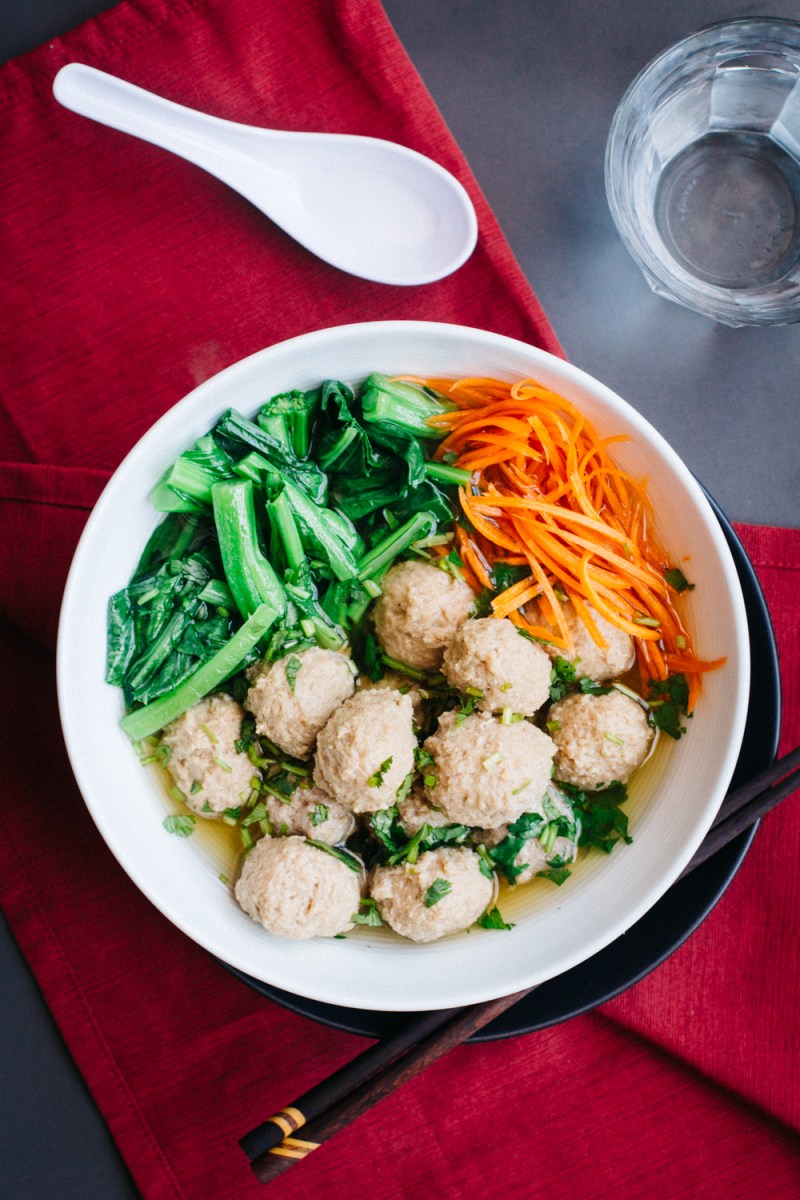
Last month I had the pleasure of contributing to Melissa Joulwan’s awesome meatball recipe collection, “March Meatball Madness.” My dish, Bakso, is one of my favorite ways to eat ground meat. Be sure to check out the rest of March Meatball Madness on her blog, The Clothes Make the Girl!

Bakso is an Indonesian beef ball similar to Chinese or Vietnamese beef balls. Like all Asian beef balls, they are dense yet spongy, with a texture similar to fishcake. The key component of this texture is pulverizing the meat into a paste, often described as surimi, wherein its proteins are broken down. I like this spongy texture, and it’s a great alternative to your typical uses for ground beef.

It’s commonly believed that Bakso was first brought to Indonesia by Chinese immigrants. Bakso vendors can be found on most busy Indonesian city streets. Recently, there has been a health stigma against Bakso vendors, since additives such as Borax and MSG are commonly found in the beef balls or broth they’re served in. But in their natural form – as found in this recipe – Bakso is both delicious and healthy. The only modification I made from typical Bakso recipes is that I omitted the bit of sugar that is usually added to the balls to enhance their flavor.

Read Full Article

Callaloo is a Caribbean dish that originated in Africa. It is typically made with amaranth leaves (aptly called callaloo in the West Indies), taro leaves (dasheen), or water spinach; since these plants are somewhat hard to find in the United States, spinach is a common replacement stateside. There are many variations of this dish, and my recipe follows the Trinidadian version, which includes coconut milk and okra. In the Caribbean, Callaloo is often served as a side dish, but when I make it, it almost always turns into a main course. I’m not the type of guy that craves vegetables often, or vegetable soups for that matter, and I crave this dish. A lot.

I think I could eat my weight in Callaloo. I don’t know what it is about this dish that makes me go crazy about it. For one thing, I feel like a superhero after I eat it – like I’ve consumed a week’s worth of vegetables in one sitting. It’s also ridiculously delicious, and carries a unique flavor despite using fairly common ingredients. The only ingredient in here we don’t eat regularly is okra, since my wife isn’t a fan of okra’s slimy texture; luckily, the texture is cleverly masked in this dish.

Read Full Article

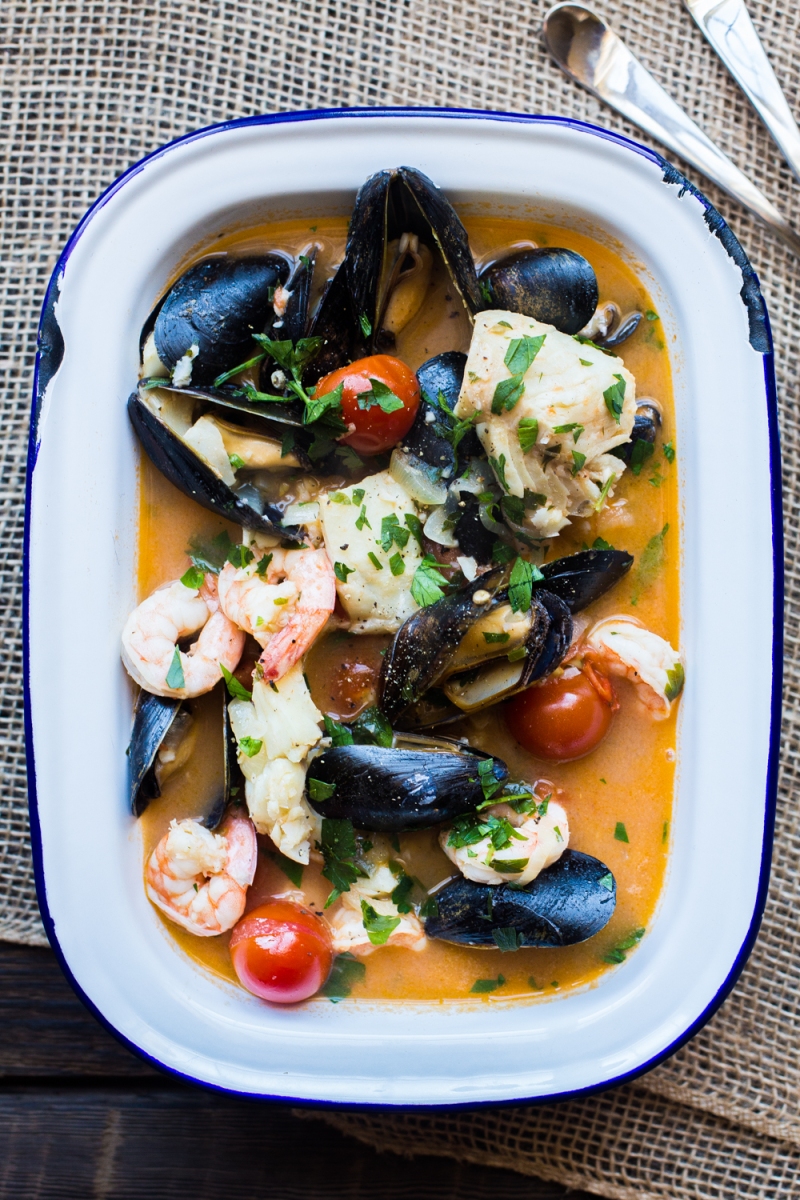
Bouillabaisse is a traditional Provençal (Southeast France) stew, typically made with fish and shellfish. Although it was originally made with rockfish, today it’s also made with all sorts of different seafood. For this recipe in particular, I decided to go with lobster and mussels; I like the idea of pairing two foods that are at opposite ends of the price spectrum (lobster = rare & elegant, mussels = common & unglamorous). This dish is paired with my lobster stock recipe, so be sure to check that out since you’ll need some stock. Putting this dish together – stock and all – is actually a fairly quick experience: in about 90 minutes you’ll have a recipe that will have your dinner guests swooning.

Don’t let the assumed costs of buying lobster deter you. If available in your area, live lobsters are surprising affordable when compared to the going rate at a seafood restaurant. And really, sometimes you can’t put a price tag on eating a rich, classic meal in the comfort of your own home.

Also, don’t forget that I’m hosting a giveaway this week; click here for a chance to win two live 1.5 lb lobsters from lobster.com ($65 value)! The giveaway is limited to continental US residents and ends midnight, Saturday, Feb 8th, 2014. Good luck!

Read Full Article

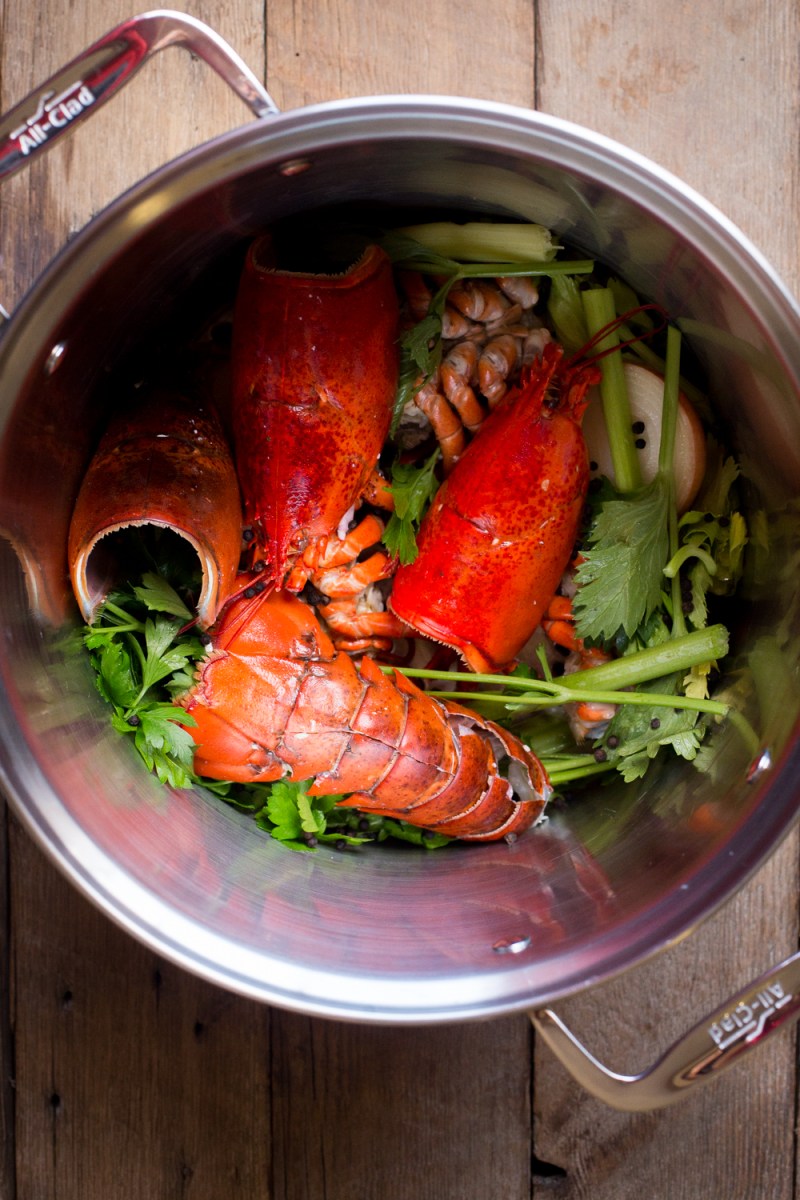
Phew! January has come and gone, which means that my tradition of sharing only Whole30 recipes during the month is over. While I think that Whole30 recipes are easy to make and fun to work with, I miss cooking with alcohol the most each January. So let’s dive right into February with an easy, tasty recipe that can be used in many different ways – lobster stock. Most people associate stock with long, boring hours of slow-cooking. The opposite is true with lobster (and all shellfish) stock, as it’s just a matter of sautéing vegetables and the shells, then adding water and wine, and cooking until it’s super delicious (about 45 minutes).

The folks at Lobster.com were kind enough to donate a lobster for my stock recipe. They ship overnight to the continental US, and it was quite an experience to receive a package in the mail that contains a live, breathing animal; not only was it alive, but it was the most lively lobster I’ve ever worked with! I par-boiled the lobster (instructions in the recipe below) so that I could use its shell for stock, and its meat for a Lobster and Mussel Bouillabaisse. I bought a couple lobster shells from my local grocer to add to this recipe and I was amazed at how thick and hearty the Lobster.com shell was compared to what I usually buy!

I was also able to arrange a giveaway through Lobster.com: two 1.5 lb live lobsters, delivered to your door ($65 value)! To enter, click here to enter via Rafflecopter. The giveaway is limited to continental US residents and ends midnight, Saturday, Feb 8th, 2014. Good luck! Okay, let’s move on to the recipe.

Read Full Article

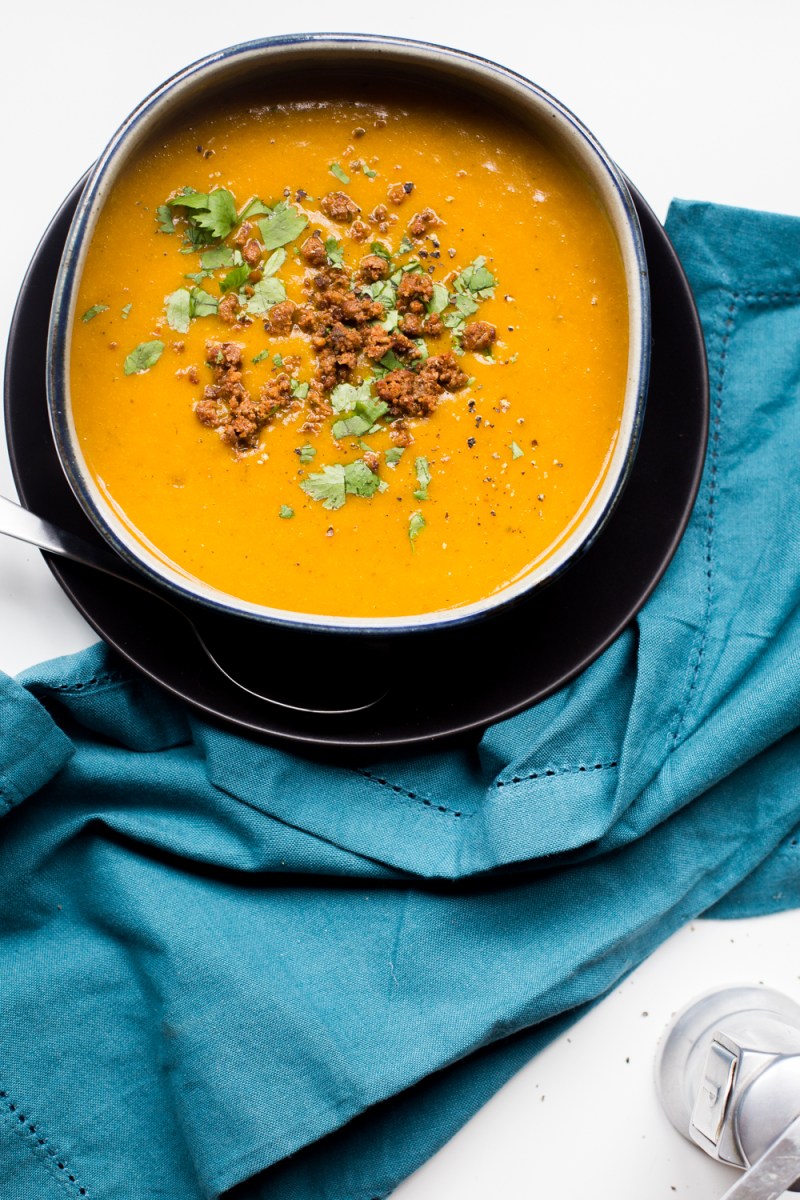
I figure it’s safe to post a pumpkin recipe now. For a while there (all of October and November) I thought I was going to drown in pumpkin-flavored products. Is it just me, or are they becoming more and more prominent every year? Regardless, pumpkin soup is a hearty, warming way to enjoy the cold months of fall and winter, and I didn’t want to let spring hit me before sharing this recipe.

Like many foods we enjoy today, pumpkins are a product of the New World, and entered Europe in the 15th century. Most foods introduced during that time took a while to gain momentum in Europe – sometimes hundreds of years – but not the pumpkin. Because they resembled gourds and squashes common in the Old World, pumpkins were readily adopted and prized for their robust flavor and easy cultivation. It was quickly made into various soups, and mixed with honey and spices as early as the 17th century – a precursor to pumpkin pie.

For today’s recipe I wanted to keep pumpkin closer to its place of origin – North America – so I decided to focus on a Mexican soup commonly referred to as Sopa de Calabaza, often flavored with cumin and chorizo sausage. I really like the cyclical nature of this dish. Cumin was first cultivated in India and introduced to the Americas by the Portuguese and Spanish. Chorizo is the best of both worlds: Old World sausage flavored with paprika made by New World peppers, and later re-introduced to the Americas. So this dish is the product of the unique culinary marriage of these two continents and cultures.

While pre-roasting a whole pumpkin inevitably lends more depth of flavor, using canned pumpkin puree drastically cuts down on your cooking time and effectively turns this dish into a 30-minute meal. Read Full Article

Brudet is a fish stew from Croatia, similar to an Italian Brodetto or Greek Bourdeto. All three are based on the Venetian word brodeto (“broth”). The recipes for each dish are similar; in fact, if you ever find yourself traveling along the Adriatic coast and see a similarly-named dish on a restaurant menu, you can probably bet it’s going to be a delicious fish stew cooked in a tomato base.

While there is a lot of variation to this dish, I like the Croatian version because it is an easy and unassuming approach to making soup. Marinate some fish for a while, then throw everything together at the proper time; it’s a true one-pot dish. Traditionally this dish is made with a mixture of fishes, to include eel, rockling, or coral trout; since they’re hard to come by, I think any firm white fish should be okay. I used cod. Adding shrimp and mussels also gives the stew a more rich and satisfying flavor.

Read Full Article

Mohinga is a Burmese rice noodle soup not unlike many other rice noodles soups found in Southeast Asia, like Pho and Laksa. Mohinga is unique in that it uses a catfish soup stock and it’s typically served for breakfast.

There are many variations of this dish out there, but the most common versions usually include chickpea flour (which I omitted since it’s legume-based) and banana tree stem (which I wasn’t able to find in my area). The fish used to make the stock is often pan fried and added to the soup upon serving. To replace the chickpea flour and pan-fried fish, I used crushed up fish and rice fritters, which was my recipe from last week. It ended up being a very good decision.

Read Full Article

Alright, people. You must have known this recipe was coming sooner or later. For the past year or so I have been playing around with nourishing soups (recent examples are here and here), so I thought it was time to tackle the mother of them all: Menudo. This tripe soup is often considered the ultimate hangover cure, similar to many bone broth soups found worldwide.

In Northern Mexico, Menudo is cooked with hominy, which is a form of corn that has been soaked in an alkaline solution. This process (called nixtamalization) removes the hull and germ from the kernel, effectively removing most of corn’s toxic anti-nutrients and making it more digestible. This process has been around since at least 1500 BCE, when people in present-day Mexico and Guatemala would soak their corn in water mixed with wood ash. If you do decide to use hominy in your recipe, be sure to get the organic stuff to ensure it isn’t made with GMO corn. But definitely feel free to omit the hominy and still consider the recipe authentic: it is also called Pancita in some regions, and from what I can tell Pancita also doesn’t usually include hominy.

Read Full Article

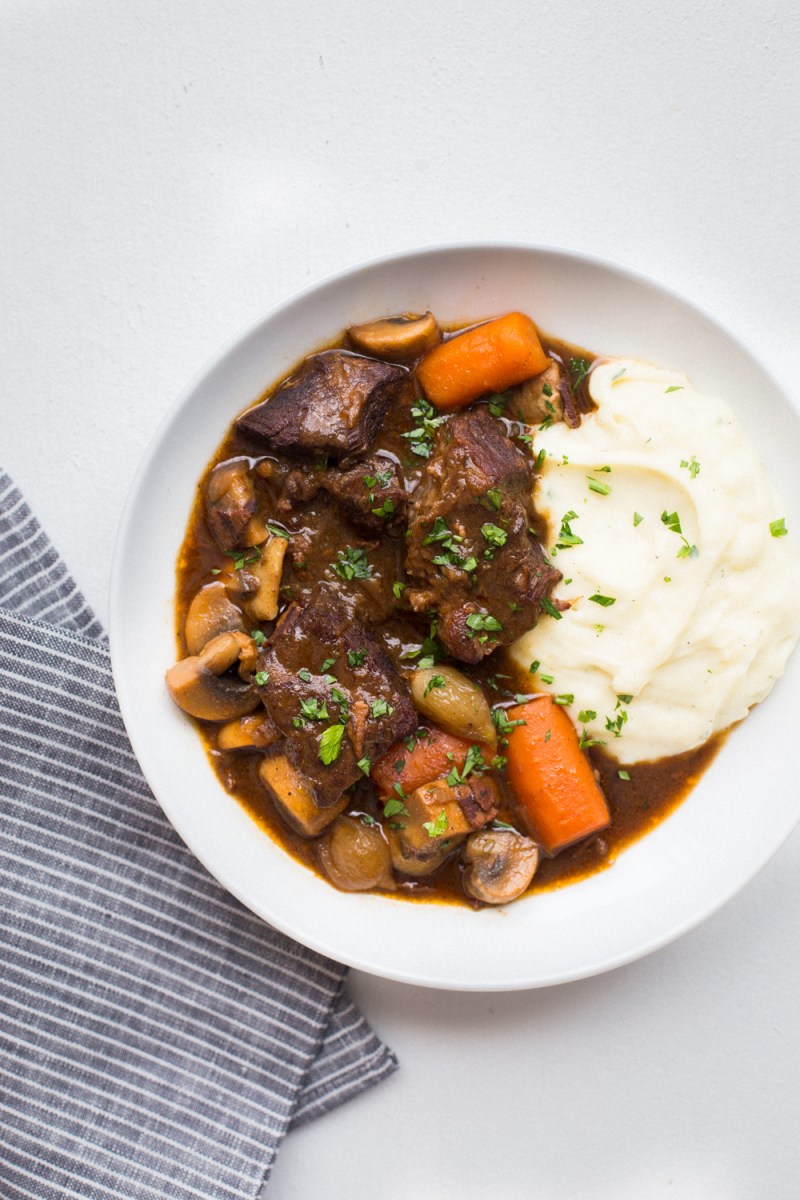
Some long-term readers may remember that I posted a Beef Bourguignon recipe about this time last year. While it tasted great, I wasn’t happy with some of the steps in the recipe, and I was really unhappy with the pictures. So this past weekend I put my thinking cap on and tackled the dish from scratch, without consulting my old recipe at all. I’m happy to report that I made some pretty big improvements to my old recipe and cut out a couple unnecessary steps along the way. To avoid confusion, I’ve now happily removed my old, obsolete recipe.

Beef Bourguignon is a dish that originates from the Burgundy region of Eastern France. It’s widely accepted that this dish started as a peasant’s recipe, possibly as far back as the Middle Ages, as a way to slow-cook tough cuts of meat. However, it’s not mentioned in cookbooks until the early 20th century, when it was refined into the staple haute cuisine dish it’s generally regarded as today. Most people associate this dish with Julia Child, as her recipe in Mastering the Art of French Cooking is a timeless classic.

This dish is fairly true to the authentic recipes available today, and not terribly unlike Julia’s original recipe. Generally, this dish is cooked with bacon since lean/tough meats were typically used and adding bacon gave this dish some rich fattiness. I’ve also found that fattier cuts turn out really good as well. My personal touches include dusting the beef pieces in rice flour before browning (Julia browned the beef alone, then added flour and roasted the beef for a little while in the oven, turning the beef once halfway through – quite an involved step!). I also decided to keep the pot on the stovetop instead of transferring it to the oven; to me, this better mimics the open-fire method of cooking that birthed this dish, and it doesn’t alienate home chefs that don’t have a dutch oven yet. If you’re rice-free, never fear – while the addition of rice flour helps thicken the sauce and adds a little body to the broth, it’s not a show stopper.

Read Full Article