3 – Vegetables

NOTE: An updated version of this recipe appears in my cookbook, The Ancestral Table.

Kabees El Lift is a popular Lebanese dish, often served as a lighter side to heavy meat dishes. The dish sports a vibrant pink color, which is made by adding beets to the turnips as they ferment. Fermented foods are great for adding natural probiotics into your diet. And, as Paul Jaminet points out, there is evidence of fermented foods like kimchi helping against autoimmune diseases and allergies. Plus they’re tasty.

I’m not sure how long this dish has been around, but I do know that turnips have been around for a long, long time; the Romans talked about them, and some of their original names were in Greek, which suggests they were eaten in Ancient Greece. Beets have been around just as long, although early forms were only the beet greens, and the bulbous root was developed/cultivated later.
Read Full Article

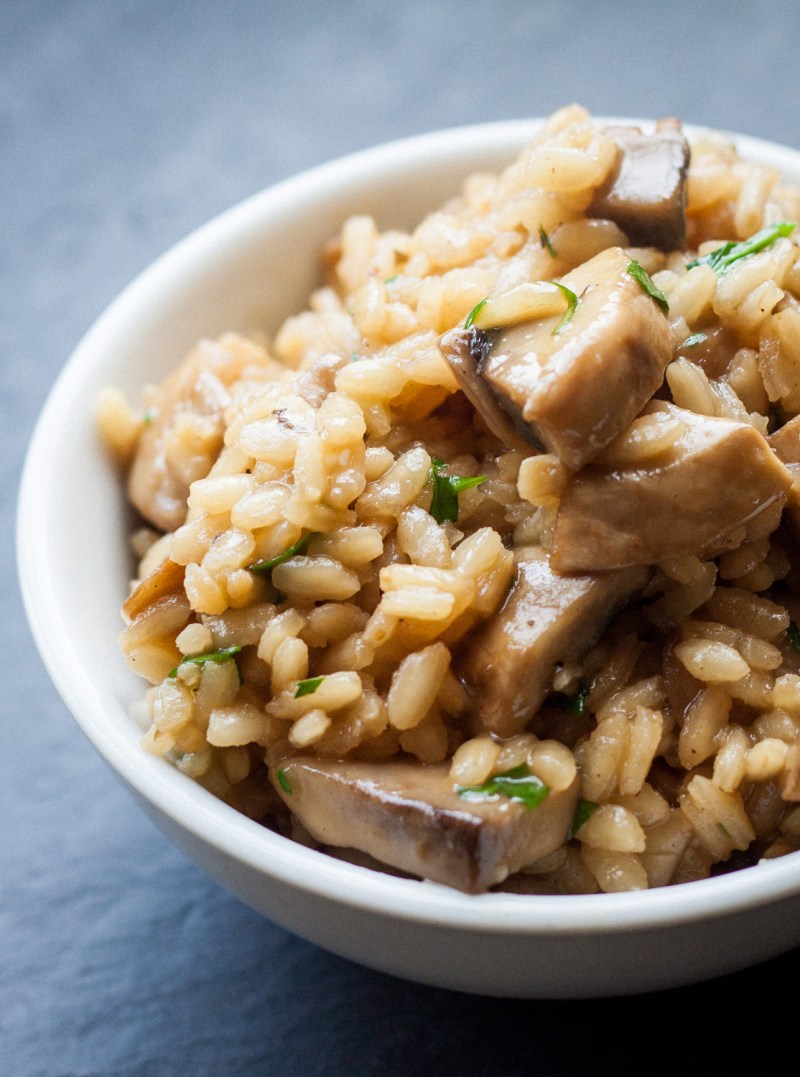
For Thanksgiving this year, we decided to make a traditional side dish instead of trying to invent something new that is in line with our dietary restrictions. What we settled on is not a traditional dish for Thanksgiving by any means, but it’s a traditional one nonetheless!

Risotto is a dish first served in Italy in the 16th century, when rice was first introduced from neighboring Mediterranean cuisines, and gained popularity in Milan. Risotto was served in the United States in the 1800s, but didn’t get popular until after WWII (along with pizza). The 1980s are also a time when this dish became really popular and faddish in the US.

Read Full Article

NOTE: An updated version of this recipe appears in my cookbook, The Ancestral Table.

Gnocchi are a type of dumpling most often made with potatoes, and like many Italian dishes, there is a lot of variability to the dish. It’s commonly believed that gnocchi have been around since the Roman times, and that they actually came from the Middle East. It’s unclear whether the word gnocchi comes from nocchio (a knot in wood) or from nocca (knuckle). The addition of potatoes is relatively new, since they came over to Europe in the 15th century; semolina was widely used before then, and still used in some recipes today.

My version of the little dudes is very simple, and similar to many mass-produced variations of the dish. Sure, you could add all sorts of neat stuff like herbs or spinach, but I prefer to leave my gnocchi as a blank canvas for other tastes/sauces.

Read Full Article

NOTE: An updated version of this recipe appears in my cookbook, The Ancestral Table.

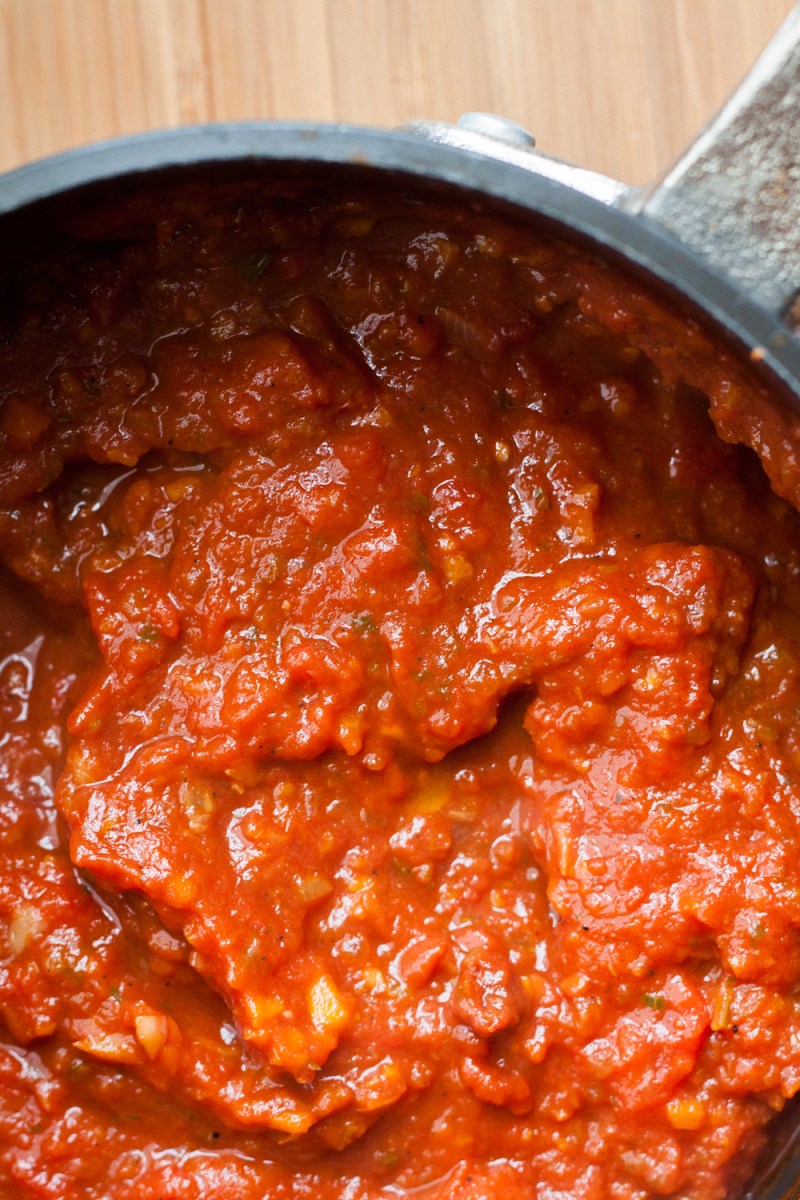
Have you looked at the ingredients of canned tomato/spaghetti sauces lately? You’d think they would be very simple, but surprisingly they have some hidden and unnecessary ingredients. Even Trader Joe’s organic marinara sauce has soybean oil in it, as well as parmesan cheese; I don’t find the cheese offensive per se, but does it have to be in there? So, I decided it was time to share an easy, tasty sauce of my own, which you can use as the foundation to any tomato-based sauce.

Although tomatoes arrived in Europe from the New World in the 16th century, tomato-based sauces didn’t start appearing on record until the 1790s. There is a staggering amount of variation to this seemingly simple sauce, with names to boot: In the US, marinara can mean just a tomato-based sauce, but in Italy it often refers to a seafood dish. The term tomato sauce also refers to any tomato-based sauce, except in the UK, Australia, New Zealand, and South Africa, where it refers to ketchup (pasta sauce is the proper term there). Neapolitan is a meatless tomato sauce, linked to southern Italy. A ragù is a tomato sauce with meat (often referred to as bolognese sauce outside of Italy). Finally, call me old-fashioned, but I just like to call it spaghetti sauce.

Read Full Article

Today’s recipe is unique in that it’s basically a combination of two traditional dishes: Chicken Long Rice (Hawaiian) and Japchae (잡채, Korean). They’re both very similar, and in making either dish Paleo-friendly, they both just kinda mixed into this one dish you see above. Although it doesn’t have an official name, don’t worry: it tastes great!

Chicken Long Rice is a Hawaiian luau food that consists of chicken broth, mung bean starch noodles, chicken, and green onions. It was brought to the islands by Chinese immigrant workers in the 19th century, and is now integrated into Hawaiian cuisine.

Japchae is a Korean dish that is traced back to the 17th century, which traditionally was made with vegetables and mushrooms (Japchae literally means “a mixture of vegetables”), and sometimes with beef. Since the 20th century, sweet potato noodles (dangmyeon, 당면) have been a major part of the dish.

Read Full Article

Yuca (cassava) is a starchy, tuberous root that originated in South America, most likely Brazil, and has probably been cultivated for 12,000 years. Today, Africa consumes the most yuca, with Nigeria being the world’s largest producer of the root. When dried, it becomes tapioca. Quite a handy root, eh?

The easiest (and possibly tastiest) way to prepare a yuca root is dead simple: all it takes is a quick boil and a little time with some quality coconut oil.

Read Full Article

As summer hits (it’s 102 degrees as I type this!), no one’s really in the mood to cook an extravagant creation. I get that. That’s why I have simple, easy recipes like my little eggplant pizzas to get through the scorching days. There’s not a whole lot to this recipe, but it’s the perfect little distraction that seems to be most appealing when we don’t want to spend a lot of time in the kitchen.

In general I don’t like using the oven while it’s hot out, but these little babies cook up relatively fast so I don’t mind them so much.

Read Full Article

Bangers and mash is a traditional English dish and the quintessential “pub food”; it can be made for large groups of people at once with relative ease. This isn’t your standard bangers and mash dish since it’s typically served with beef or pork sausage and mashed potatoes, and I’m being crazy and using lamb sausage and colcannon. Regardless, this dish still has the same desired effect: it’s a hearty, savory dish that really hits the spot on a rainy day.

A perfect sausage for this dish was Lava Lake Lamb’s Rosemary and Garlic Sausage, which had a rich sausage flavor but was only slightly “lamby” in taste – in the end it was an excellent pairing of this savory sausage and the mild, buttery colcannon.

Read Full Article

NOTE: An updated version of this recipe appears in my cookbook, The Ancestral Table.

Although there are variations of potato/kale combos found all over Europe, I’m inclined to believe that the Irish variation, colcannon, is grandaddy of them all. First of all, the Irish basically own the creative rights to cabbage. The Romans introduced cabbage to most of Europe back in the day, except that when they got to Ireland it was already there! By tracing the word for cabbage linguistically, it appears that cabbage has been a part of the Irish (well, Celt at the time) diet since the Iron age. Potatoes weren’t introduced to Europe until the 16th Century, with the Irish and French being the first to really embrace them, and so colcannon came about sometime thereafter.

Although colcannon is treated as a St. Patrick’s Day dish here in the US, it’s traditionally a Halloween dish in Ireland. Some families would put a plate of colcannon outside their front door with a large chunk of butter in the middle to feed ghosts/fairies that were passing by. It also was closely related to marriage divination, in that trinkets (wedding rings, coins) would be hidden in the colcannon and the girl that found the trinket would be the next to marry.

Read Full Article

It might sound crazy, but you can totally make lettuce chips. Google it. It’s a thing!

Lettuce chips have a distinct taste to them – they retain a hint of bitterness, and just about melt in your mouth. They’re impossibly delicate so you’ll probably end up eating them all in one sitting instead of trying to store them without crushing everything. My technique for cooking them involved a quick bake in the oven, but I bet you could get the same effect with a food dehydrator for a longer period of time.

Read Full Article