4 – Red Meat

Today’s recipe is one that long-time The Domestic Man readers will recognize, a couple times over. I first tackled the dish in 2012, and again in 2013; and then in 2014, during a spurt of creativity, I went back and thoroughly researched the dish, including the individual histories of every ingredient used in the dish (you can find that post here).

I think this dish is the perfect introduction to my new blogging approach, wherein I post recipes from my upcoming cookbook instead of trying to balance my time between maintaining the blog with new recipes while secretly testing new dishes for the book. As you’ll learn in future posts, my new book will continue the path I’ve been forging for the past seven years now, by focusing on traditional and historically-appropriate dishes. I feel that these dishes taste the best, as they’re a reflection of hundred (if not thousands) of years spent cooking in front of a fire.

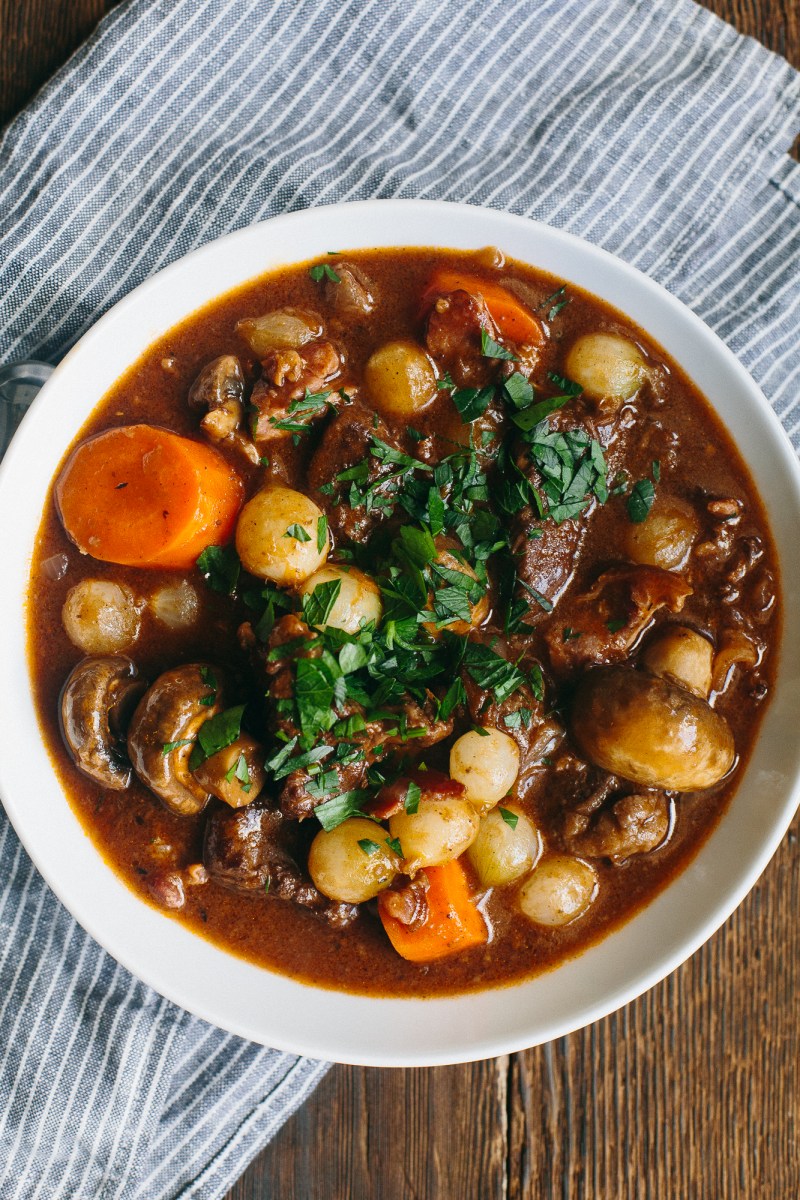
It’s hard to top Boeuf Bourguignon when it comes to flavor. As if the decadent flavors of butter, red wine, stock, and tender beef aren’t enough, we up the ante by starting with bacon. I’ve made a few improvements to this dish over the years, like separating the beef from the bones ahead of time so that you can fish the bones out easily at the end. It’s not a quick recipe, nor should it be, but it makes six portions and freezes like a dream.

Read Full Article

I’m not sure what it is about 2017, but I’ve really appreciated ground meat more than usual. Much like last month’s Beef Tinaktak, I appreciate the ease and brevity that comes from these quick meals, both done in less than 30 minutes.

Today’s recipe for Keema Matar is a North Indian and Pakistani dish characterized by mincemeat (typically lamb or goat) and peas. The word “Keema” (mincemeat) appears to have a universal origin; in addition to being the same word in Hindi (क़ीमा), Punjabi (ਕ਼ੀਮਾ), and Urdu (قیمہ), similar words can be found throughout Europe and Asia, like the Greek κιμάς (kimás), Turkish kıyma, and Armenian ղեյմա (gyemah). This has led scholars to believe that the Greek “kimas” and English “mince” may share the same origin, from the Proto-Indo-European *(e)mey-, a word that translates to “small, little”, and eventually led to our modern words like “minute”, “diminish”, and “minimum”. Others believe that the Greek “kimas” is derived from the Ancient Greek κόμμα (komma), which translates to “piece, that which is cut off”, and which later became our modern word for “comma”. Isn’t language fun?

While many diners may not recall experiencing Keema Matar as an entrée, they’ve likely seen it before, used as a common filling for everybody’s favorite Indian savory pastry, the mighty samosa.

Read Full Article

I’ve been to the small Pacific island of Guam about a dozen times in my life, but never for long – usually I was disembarking from a US Navy ship and headed to the airport, on my way back home. There were a few moments when I was lucky enough to spend a day or two on the island before catching a flight, relaxing by the beach and reveling in the novelty of not having to wear a uniform 24/7. Regrettably, though, I never got a chance to enjoy a homestyle meal while in Guam. To be fair, the last time I was there was well over 10 years ago, in the dark period before smartphone apps like Yelp–at the time, my food explorations usually just consisted of eating wherever was within walking distance.

I think the fact that I missed out on some of Guam’s homestyle cuisine is what draws me towards one of Guam’s signature comfort foods, and today’s recipe, Beef Tinaktak. In essence, this dish is like a taste of what could have been, had I the opportunity to enjoy a home-cooked meal there. Beef Tinaktak’s pairing of ground beef, tomatoes, green beans, and coconut milk sounds a little strange on paper, but the resulting flavor is anything but; it’s immediately comforting, while wholly unique.

Read Full Article

We’re in the thick of stew season here in the US; this is the time of year where I like to spend my lazy weekend afternoons filling the house with the smells of simmering meat and winter vegetables. Unfortunately for stew season, but fortunately for us, our little part of Florida is still experiencing warm weather: as I type this, it’s 74F outside right now. Understandably, I’ve had a hard time getting into the winter stew spirit, as warm weather calls for warm-weather food.

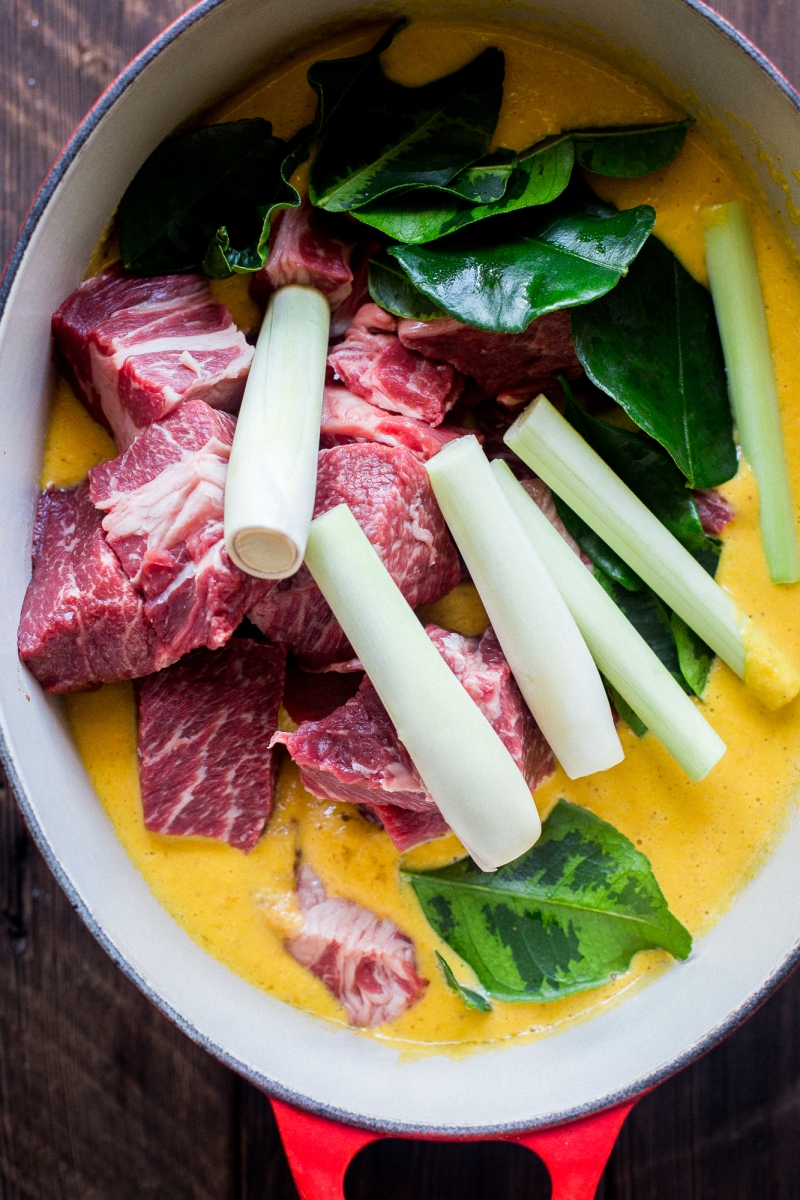
So this past weekend I decided to mix both worlds, combining the comforts of cooking a stew and the flavors of an exotic dish. Today’s recipe for Curried Beef Stew doesn’t quite have a distinct origin, and its flavor is equal parts Indonesian Beef Rendang and Japanese Curry (the latter’s recipe is found in my debut cookbook, The Ancestral Table): earthy, hearty, and exceptionally rich.

In developing this dish, I wanted to appeal to many audiences. The recipe is Whole30-friendly, to be used as a resource for those who are starting their New Year off with some squeaky-clean eating. Included at the bottom of the recipe are also instructions for those of you who were recently gifted an Instant Pot electric pressure cooker, or are dusting it off after a period of neglect. Finally, I was careful to choose ingredients that are readily available at any grocery store – no need to hunt down particular items across several different markets.

Quick note as you are grocery shopping: there are two bell peppers in this recipe – one in the paste, and another in the stew itself!

Read Full Article

Scouse is a form of stew popular in Northern Europe. The English word scouse is a shortened form of lobscouse, taken from similar words like the Norwegian lapskaus, Swedish lapskojs, and Danish labskovs. The dish, which likely originated in the Baltic, is a traditional sailor’s stew consisting of salted meat or fish and thickened with ship’s biscuits. Today, the word is closely related to the port city of Liverpool, to the point where inhabitants of Liverpool are colloquially called “Scousers”.

In my research, I focused on the modern Liverpool interpretation of Scouse, and quickly found that there is a certain pride in preparing what’s known today as a “proper Scouse”. A proper Scouse, it seems, is low on ingredients, indicative of the dish’s humble origins. Today, the dish is prepared with lamb neck, onion, carrots, and potato – and not much else. In keeping with this tradition, I kept the ingredients list to a minimum; no fancy parsley here. This dish is typically served with pickled cabbage or beets, so grab those when you’re at the market, too.

My main purpose in creating and sharing this recipe was to treat it as an exercise in restraint, relying only on salt and pepper to perfect the stew’s subtle profile. To round out the flavor, many will serve HP Sauce with the finished stew (HP Sauce is a UK-based brown sauce that is like a cross between ketchup and Worcestershire sauce). As a concession, I flavored my stew with Worcestershire near the end, for those of us without access to this condiment.

Read Full Article

Like I mentioned last week, I’m on travel for work – right now I’m enjoying sunny (but a little chilly) Naples, Italy. And just like last week, I’m using today’s post as an opportunity to share a favorite recipe from one of my cookbooks; this time I’m sharing one from my debut, The Ancestral Table. From the book:

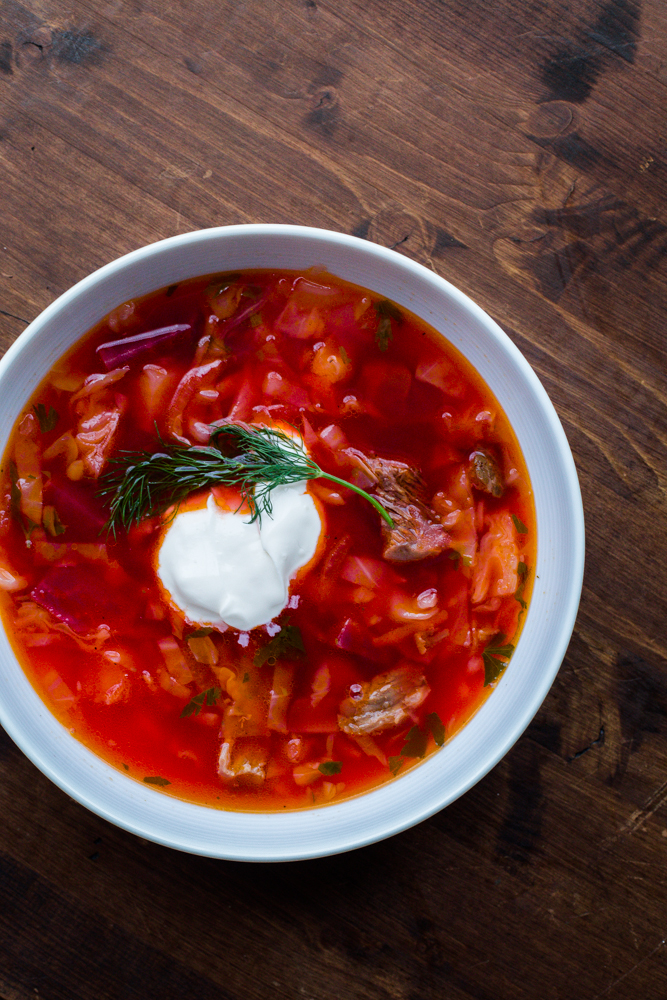
Borscht (Борщ) is a hearty soup most commonly associated with Russia, Poland, and Ukraine. Its name likely comes from the Slavic name for hogweed (Borschevik), which was often used to flavor soups. Although potatoes were a later addition, the foundation of borscht as we know it today dates back at least to the 9th century. This recipe is the popular Russian version, which is served hot and with meat. To cut down on the cooking time, you could make this soup with premade broth, or even make it vegetarian by using just water. Instructions for each variation are provided below.

Read Full Article

A couple months back, I posted my first sous vide recipe, this Sous Vide Salmon. Since then I’ve been enjoying this new technique as a unique way to cook food, especially lean meats, with precise results. A recent favorite has been sous vide steak, as it cooks the steak to an even internal temperature and only requires a quick sear to improve its outer texture.

I own and enjoy this Oliso SmartHub sous vide oven, which doubles as an induction cooktop for searing (and it boils water super quickly). There are plenty of other sous vide options out there, and I’ve heard great things about this Anova Bluetooth precision cooker (which is significantly cheaper than my Oliso setup, but requires you to use your own pot, and doesn’t double as an induction cooktop).

Flat iron steak comes from the cow’s shoulder, in the same region as cuts labeled as “top blade”. It is cut against the grain, well-marbled, and considered a cheaper steak cut because it quickly becomes tough when cooked beyond medium doneness; this is where a sous-vide cooking method really shines, since we can cook to a precise temperature. For today’s recipe, we’ll cook the steaks to 128F, followed by a sear which will likely raise the internal temperature to ~130F, just a hair under the definition of medium-rare.

Read Full Article

It’s been a while since I shared a recipe from one of my cookbooks, and now seems like a perfect time to share one of my favorites from Paleo Takeout: Gyudon! It has nothing to do with the fact that I’m super busy with work stuff right now, promise.

Gyudon, a donburi (rice bowl) dish, first became popular in the 1800s as Japan westernized and started eating more beef. Today, this dish is associated with quick meals. Nearly every Gyudon shop in Japan serves this dish with complimentary Miso Soup.

Read Full Article

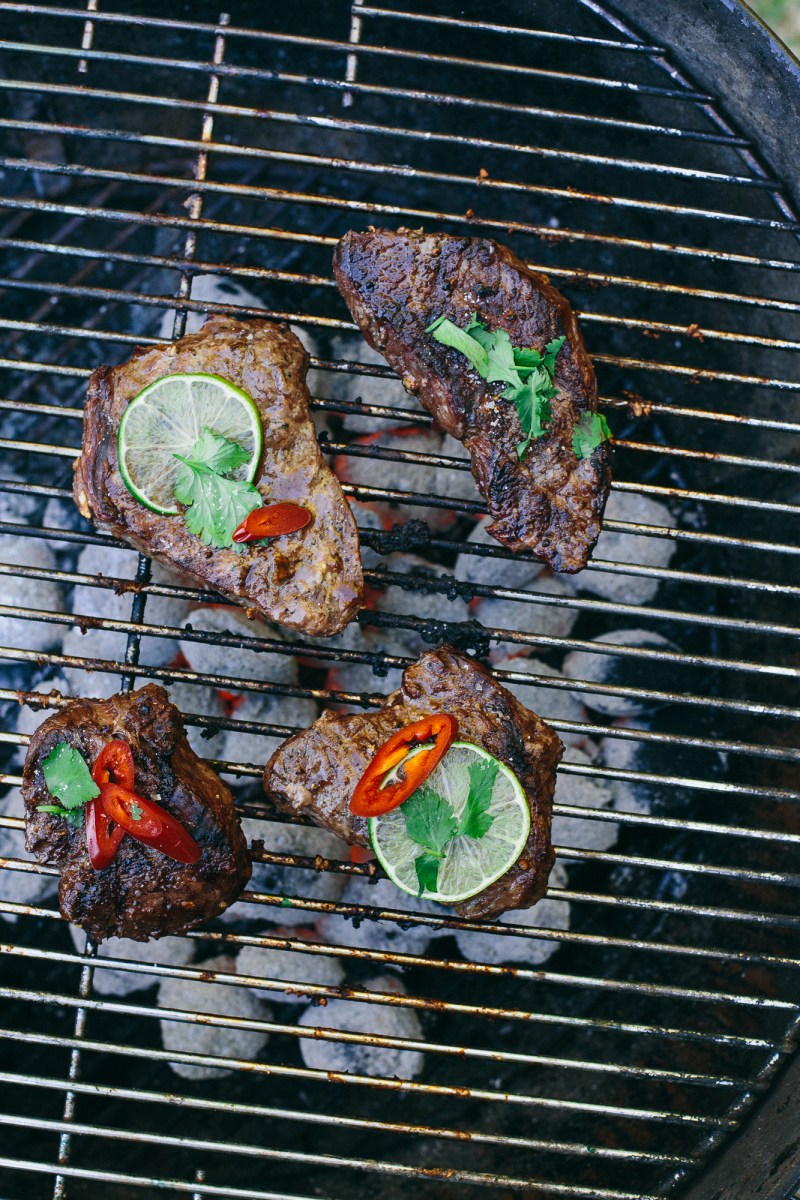
Pulehu is a Hawaiian cooking method, which translates to “roast over hot embers”. This method was traditionally used for items like breadfruit, but today it’s most associated with steak, typically seasoned simply with ginger, garlic, salt, pepper, and a bit of sugar.

If you haven’t already, I encourage you to read my short history on beef in Hawaii, at the start of my recent Pipikaula recipe post. If you’ve already read it, cool, let’s pulehu some steaks.

Read Full Article

I’m often asked what is my favorite dish to prepare; it basically comes with the territory in this line of work. While it’s hard to choose a favorite, Beef Rendang often comes to mind – there’s truly no taste like it.

Rendang is a dry curry that originated among the Minangkabau people of West Sumatra and later spread throughout Indonesia and Malaysia. Its age is unknown, but historians have traced its origin as far back as 500 years. There are three recognized forms of rendang in Minangkabau culture, each depending on the cooking time: a pale, lightly cooked curry known as gulai; a browned but still liquid curry called kalio; and a rich, dry, dark brown dish called rendang, the version prepared in this recipe. In other countries, most notably Malaysia and the Netherlands, the rendang most often served is closer to kalio. While its extended cooking time can be a test of patience, it’s well worth the wait; the aroma and overwhelming richness of rendang are unforgettable.

I first published a rendang recipe nearly four years ago, and it’s made some slight but significant changes since then. Earlier this year I made a batch, and took the photo you see above – it quickly became one of my favorite photos of the year, and so I figured it was a good excuse to share the updated recipe. For the past year or two, this has been the version we’ve been making at home, as it has fewer steps and comes together very quickly.

Read Full Article