
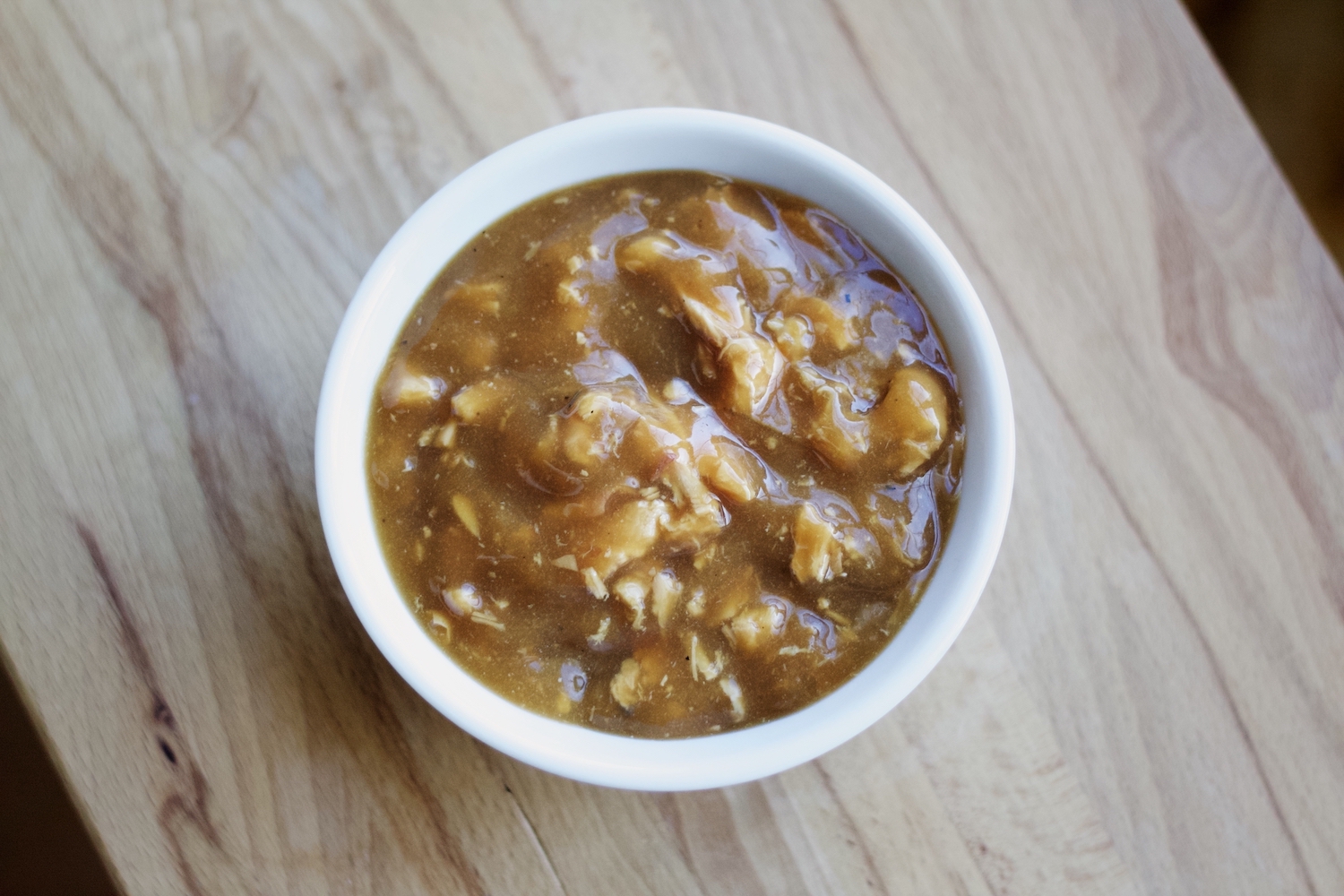
Creating a turkey gravy is pretty easy. Essentially, you just use all the stuff that comes from cooking a turkey. The only real trick is get the taste right. Luckily, you’ve got me to figure that part out for you.
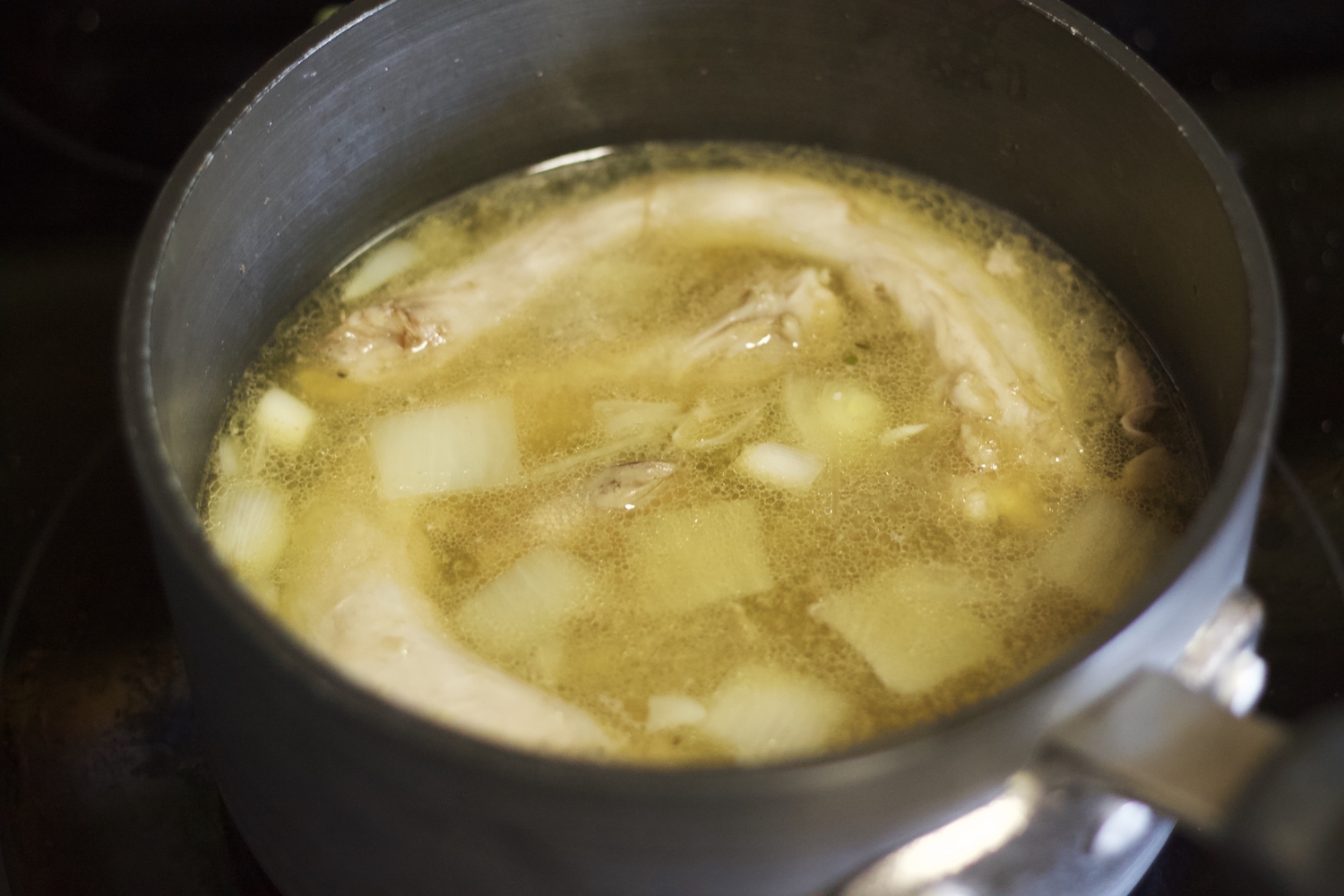
Creating a turkey gravy is pretty easy. Essentially, you just use all the stuff that comes from cooking a turkey. The only real trick is get the taste right. Luckily, you’ve got me to figure that part out for you.

Note: I’ve tweaked this recipe over the years, and HERE is my definitive method/recipe.
For Thanksgiving this year I tried my hand at roasting a turkey on the grill. The resulting bird was crispy on the outside and juicy and tender on the inside, and only took a few minutes longer than roasting it in the oven. Also, adding woods chips imparts an authentic smokey flavor that really made the turkey stand out on the Thanksgiving table. Lastly, it frees up the oven for other endeavors!
Also, when grilling a turkey (or roasting it in the oven, for that matter), you want to use a v-rack (often called a roasting rack). We just started using one recently and it’s amazing how evenly it cooks the bird, since it allows air to circulate around the entire turkey. Depending on how your grill plates run, though, the v-rack may fall through the plates; to prevent this, put the v-rack on a grill pan.

NOTE: An updated version of this recipe appears in my cookbook, The Ancestral Table.
Japanese curry is a relative new dish to the country – it was introduced by the British in the 19th century, who in turn picked it up from India. Today, curry houses are everywhere in Japan, and for good reason; the irresistible sauce is mild and slightly sweet compared to other curries found worldwide, and is often served with any combination of stewed or fried meats which keep this dish surprisingly versatile.
I remember the first time I went to a local Asian grocery store shortly after deciding to go mostly-grain-free last year, and my utter disappointment when looking at the ingredients list of those handy Japanese curry blocks. You see, one of the pivotal ingredients in all of those blocks is wheat – which makes sense given the thick and creamy consistency that’s unique to Japanese curry. But fear not, dear reader, because I’ve been working on a gluten-free Japanese curry for the past year and I think I’ve got it figured out.

Grilling chicken is a time-consuming process; often, it takes upwards of two hours to cook a whole chicken. This process creates a crispy and juicy bird in just 30 minutes (minus brining time!).

NOTE: An updated version of this recipe appears in my cookbook, The Ancestral Table.
Loco moco is a Hawaiian dish and popular breakfast meal on the islands. It’s the ultimate breakfast meal prior to a big workday, consisting of rice, a hamburger patty, fried eggs, and brown gravy. Its unique mix of ingredients create a distinct taste that I’ve been missing lately, so I decided to whip one up the other day.

NOTE: An updated version of this recipe appears in my cookbook, The Ancestral Table.
As I mentioned in an earlier post, summer is a difficult time to write new recipes. We’ve spent a lot of this summer traveling or entertaining guests; when we are home, I usually prefer to grill something, and most of my grilling recipes are already on this site.
However, this has also been a good time for me to try out healthier versions of pre-Paleo dishes, like teriyaki chicken. I grew up in Washington state, where you’ll find an abundance of Asian restaurants selling “teriyaki chicken” – likely influenced by traditional Japanese teriyaki sauce, which is made with soy sauce, cooking wine, and sugar or honey. Hawaii has a similar dish, simply called “BBQ chicken”. Traditionally, the sauce is boiled down and thickened before marinating the meat, but it’s often too long of a prep to cap onto an already long marinating process (2-4 hours). Here’s how I make it at home.

Saimin is a dish unique to Hawaii, and a marriage of the many cultures found on the islands. Chinese egg noodles are served in a Japanese broth with garnishes taken from Chinese (char siu), Japanese (fish cake), Filipino (adobo), Korean (won bok cabbage), and Portuguese (sausage) cuisine. My favorite saimin in Hawaii is found at Shiro’s Saimin Haven, which features 70+ variations of the dish (my favorite is “dodonpa” – 10 garnishes!). Likewise, fried saimin is a stir-fried version of the soup, and is also popular in many saimin shops. It’s a refreshing break from noodle soups and your everyday lo mein-style dishes. Unfortunately, saimin noodles are made with wheat.
To remedy this, I settled on sweet potato-based noodles, which as far as I know are a Korean invention. They are made with just sweet potato starch and water, and are similar to glass/bean noodles used in dishes like chicken long rice.

Split chicken breasts don’t get any respect. They’re a lot cheaper per pound than boneless, skinless breasts (granted, they weigh more) plus their bones give them a natural grilling “rack” to use, resulting in a better tasting cut of meat. I decided to try out a method of grilling split breasts that I had read about, and here are the results.
As I mentioned in an earlier post, I prefer to brine chicken if I’m going to grill it, in order to retain as much liquid as possible. Although it definitely makes the chicken more juicy, it does take a little bit of preparation. I think it’s worth it.

Although breakfast is my least favorite meal to eat, I definitely like to prepare it. For a couple years I worked at a restaurant that served breakfast, and learned a couple cool dishes. The one you see above we called a “hobo” , which may not be the most politically correct term out there for it. Luckily, the chances of offending a homeless person is pretty low, since I assume that most homeless people a) don’t have access to the internet and b) don’t visit this site when they do get online.
A hobo is probably called that because it’s made by throwing a bunch of ingredients into a single pan. As far as I know, it always contains eggs, cheese, and potatoes, and some sort of meat. I like making this dish because it’s an easy way to get rid of leftover meat, as well as ingesting a good amount of healthy coconut oil.

I’ve got two issues with beer can chicken. First of all, I’ve decided to only drink beer on special occasions, and it’s wasteful to pour out a beer/soda can and fill it with wine or cider (let alone buying a six pack of canned beer just for the purpose of roasting chickens).
Secondly, taking the beer can out of a cooked chicken is a pain in the butt. Luckily, one simple kitchen tool solves all of my problems: this two-in-one vertical chicken roaster from Williams-Sonoma. This heavy duty dish allows you to roast one or two chickens using any liquid you’d like, with a lower tray that allows you to roast vegetables at the same time (and be basted in the chickens’ falling liquid). The roaster sells for $50 and I think it’s totally worth it.
 The Domestic Man