

This year we upgraded our gas grill, so I’ve been thinking of new ways to grill food. I decided to incorporate grilling into chicken korma, resulting in a creamy, delicate sauce with textured chicken chunks.
This year we upgraded our gas grill, so I’ve been thinking of new ways to grill food. I decided to incorporate grilling into chicken korma, resulting in a creamy, delicate sauce with textured chicken chunks.

I don’t write about breakfast much but I thought I should do a real quick post on my typical starting meal.
On weekdays, I generally focus on three items that I take to work: meat, cheese, and fruit. Breakfast is the only time of day that I actively eat fruit, one or two pieces a day. I tend to eat applesauce, berries, plum, or kiwi. The meat is generally four slices of uncured lunchmeat (usually from Applegate Farms), beef jerky, smoked or canned salmon, or a can of sardines. Cheese is usually Kerrygold grass-fed Dubliner or Blarney cheese, or Trader Joe’s grass-fed cheddar.
Weekends is usually the same combination but only one piece of fruit max, with eggs and bacon added. Often I skip the cheese as well. I’m not a big fan of mixing eggs with other ingredients, so I don’t usually make omelets or those crazy Paleo concoctions you’ve probably seen floating around the internet. Sometimes we’ll make something with potatoes, and very rarely we take a stab at gluten-free pancakes (usually to disastrous result). Fried rice for breakfast is pretty tasty, too, and nothing beats spam musubi every once in a while.
That’s basically it. What do you eat for breakfast?

Man, I had the hardest time finding a chicken cordon bleu recipe in my French cookbooks. Turns out that this dish isn’t French at all; it was created in the US and we added the “cordon bleu” to make it sound awesome. And in that respect, it totally worked.
The challenge with making a grain-free chicken cordon bleu lies in its crispy outer crust, which is usually achieved through flour and bread crumbs. I experimented a bit and found that a combination of coconut flour and potato starch worked best: the coconut flour surprisingly doesn’t leave any sweet/coconuty flavor behind, and the potato starch creates a crisp, delicate shell around the chicken.

Baking chicken breasts in the oven seems like a foolproof method, but often results in dry, bland meat. Here’s a simple baked chicken recipe with minimal involvement.

This is a recipe borrowed from my father-in-law, who often uses breakfast foods as the base of his fried rice. I thought I would take it a step further and make this a breakfast-centric dish, while also retaining the bacon grease to fry the rice.
I should mention that although I use the word “wok” in this recipe, we actually use a Calphalon 12″ Chicken Fryer which has a larger bottom and can fry more food at once.

image courtesy of Nourishing our Children
While planning a yakitori night for sometime in the future I ran across this picture. Yikes!
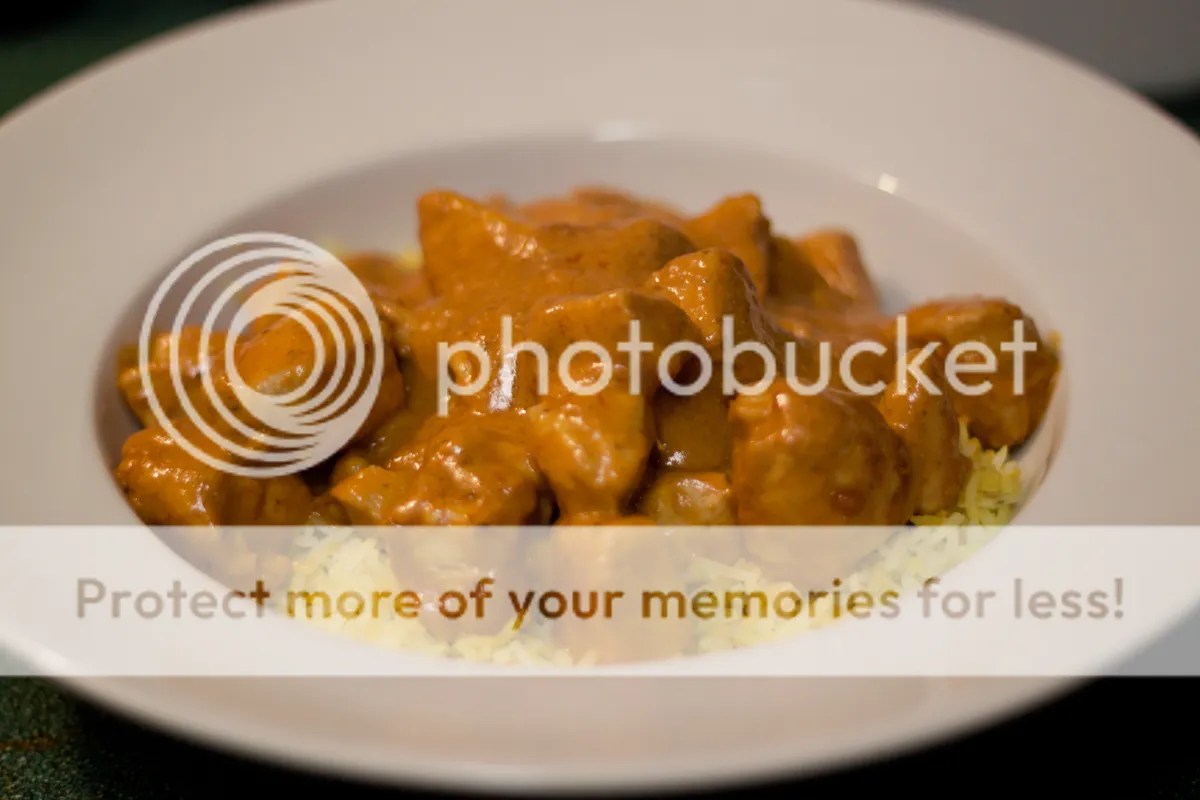
One of the most common curries you’ll find in Indian restaurants here in the US is chicken tikka masala, a creamy, tomato-based sauce with slow-roasted chicken chunks. Being that it’s so popular, it’s easy to find pre-made sauces in most grocery stores; after putting several through their paces, I’ve settled on a quick, foolproof chicken tikka masala for an easy weeknight dinner.
One of the more interesting facts about this dish is that its place of origin is under dispute; there’s a good chance that it was invented in either India or England.

Making a white-sauce pasta dish from scratch is one of my favorite cooking activities. There are several variations to this meal – with or without pesto, egg yolks, wine, etc – but this is its most basic form, and a great starting point.
This recipe calls for rice pasta, but if you’re not Paleo(ish) like me, you can use regular pasta. I’ve found that although most people associate alfredo sauce with fettuccine, mixing up the pasta shapes can really add some variety to the dish as well.

I’ve dreamt about opening my own restaurant for over ten years now. I’ve wanted it to be a tiny little place that I would open later in life, when I already have a steady retirement paycheck and no desire to make it a “career”. I’ve always imagined that the fare would be a mix of American, Latin American, Italian and Asian cuisine – basically the 10 best dishes that I have made over my lifetime. After making the jump to gluten-free/Paleo, I’ve been feeling like my restaurant dreams are far-fetched: how could I make American food without potato, Latin American food without tortillas, Italian without pasta, or Asian without rice? Last night I sat down and put together a dish that made me think that I just might be able to start a Paleo-friendly restaurant someday – while fooling the non-Paleos (let’s just call them “muggles”) into liking it.

Bacon was a hot commodity in my house growing up – four siblings can do that to a family. I fondly remember watching anxiously as my mother cooked the bacon and we fought over who was getting the next slice. We were told that we couldn’t eat too much, because bacon was bad for us. And that’s how it was back in the day, during the height of the saturated fat craze. Now things are turning on their head and experts are starting to believe that carbs/sugar, not fat, are what causes all those heart problems that we unfairly pinned on poor bacon. And it makes sense. If the human race evolved over the course of millions of years eating mostly meat, how would it be that newly-introduced products like grain and sugar are better for us?
 The Domestic Man