8 – Side Dishes

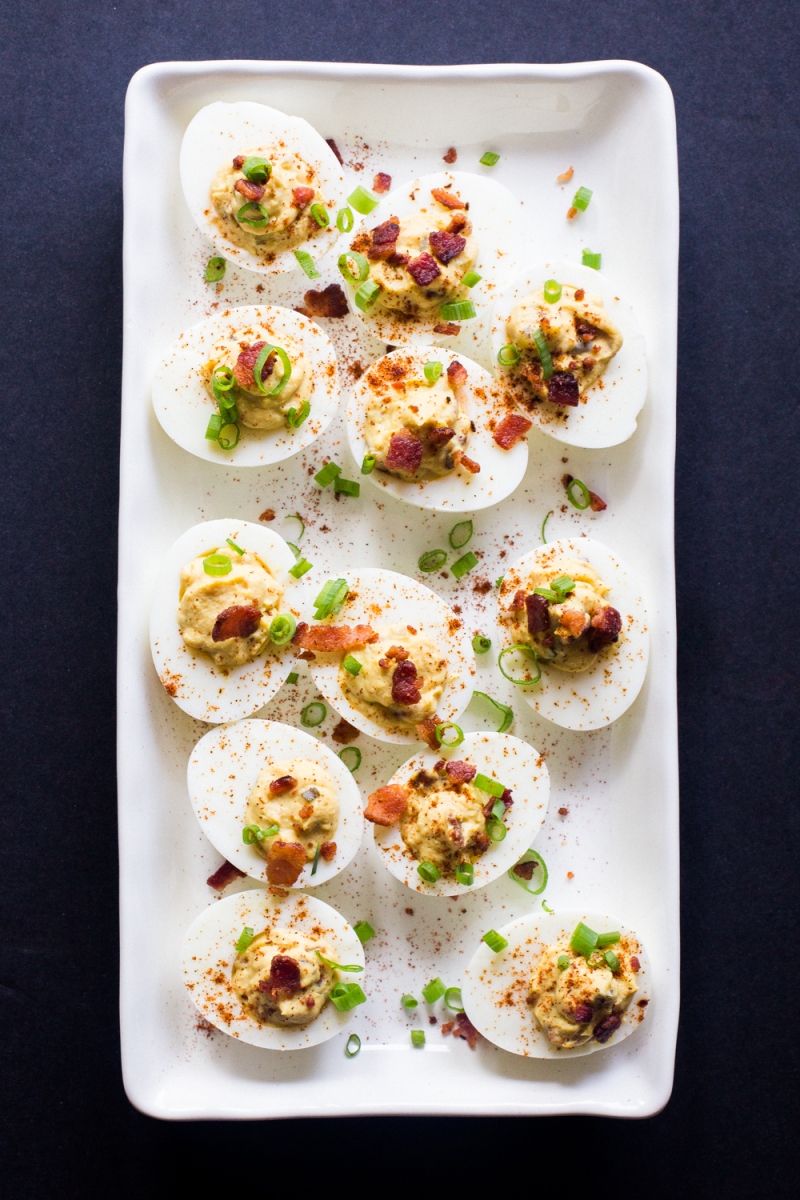
Parties are the worst, right? All those new people to meet, the inevitable bad music that appears on the stereo, and figuring out what food to bring. Luckily, this week’s recipe will solve two party-related issues: bringing food and breaking the ice (there’s really no fix for bad music). You see, not only are these classically-prepared deviled eggs delicious, but they are a fun party trick, too.

While the name deviled eggs might lead you to think of something wicked, there is no association between this dish and Beelzebub. The term deviled first appeared in England in the 18th century, in reference to dishes that were highly seasoned (usually with mustard and black pepper). So while many folks will use the terms “stuffed eggs”, “dressed eggs”, or “angel eggs” to remove any perceived evil from this popular appetizer, there is none to be found. But this fact got me thinking – what if I could add a bit of mischief to these eggs?

So here’s the trick: place a random amount of Tabasco between the white and yolk of the deviled egg, then let the other party attendees guess how many drops of Tabasco are hidden within each egg they choose.

By the way, the concept of eating eggs before a meal is not new. In Ancient Rome, eggs were part of gustatio (the world’s first word for appetizer), and were so commonplace that a popular saying soon appeared: “ab ova usque ad mala”, which translates to “from eggs to apples”, or from the beginning to the end (apples were served as post-meal treats).
Read Full Article

Local friends: I’ll be having a talk, cooking demo, and book signing in a couple weeks – for more info, see the bottom of this post.

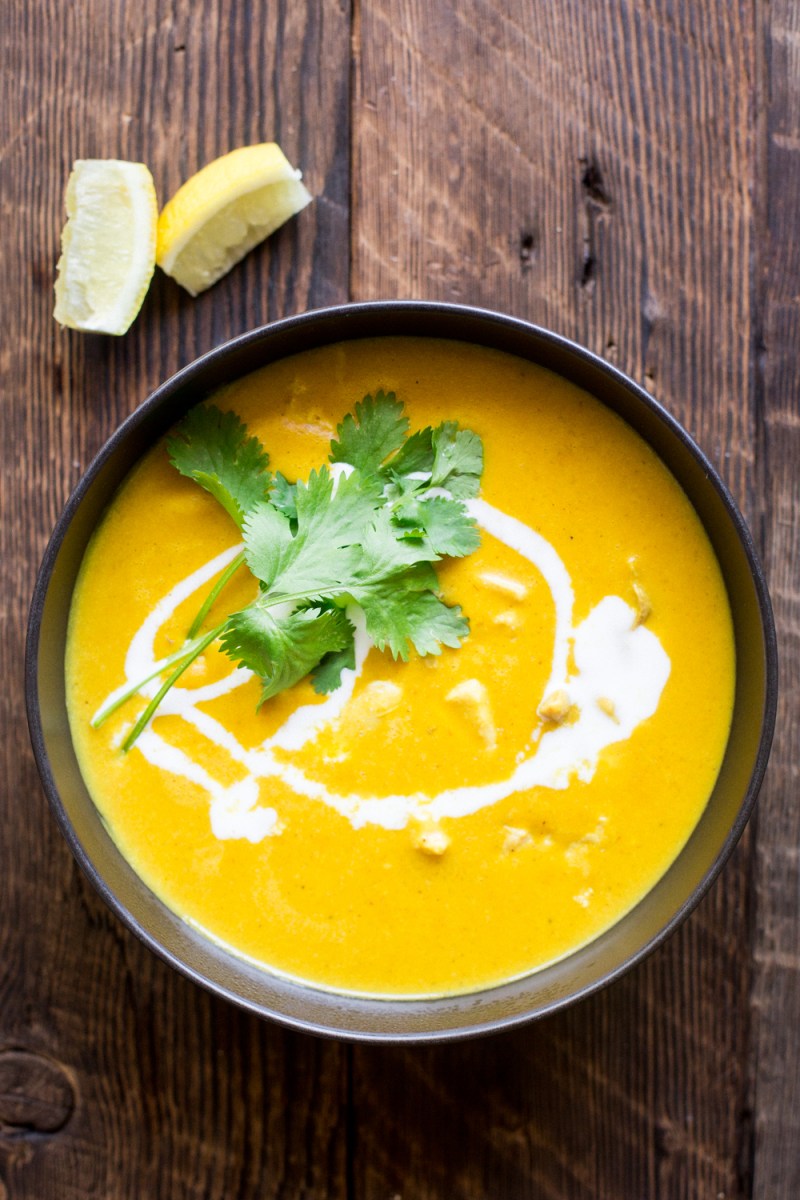
This little soup has made quite a journey over its lifetime. It was traditionally a sauce served over rice in its native India, but British colonials returning to England from travels abroad in the 19th century sought to recreate the dish at home. It eventually evolved into a mildly-flavored soup and spread as far as Australia, and there are now hundreds of variations of the dish.

While coconut milk was likely the original ingredient used to add richness to the soup, cream eventually took over in the UK. Personally, I like the exotic notes that coconut milk provides, so I reverted this dish back to its roots. This soup is typically thickened by adding rice and blending it with the other ingredients, but if you’re rice-free, don’t worry about it, the soup will still have a fairly hearty thickness to it thanks to the soup’s blended sweet potato.

One of my favorite aspects of this dish is that it imparts a slightly exotic flavor while using common ingredients (much like another favorite, Sukuma Wiki). Lastly, one fun fact: the name mulligatawny is derived from the Tamil (Southern Indian) words மிளகு தண்ணீர் (mullaga and thanni), which translate to “pepper water”.

Read Full Article

A few weeks back, my friend Stacy from Paleo Parents sent a text to me and our mutual friend, Jennifer from Predominantly Paleo, that went something like this: “Hey, I want to recreate this Red Robin Banzai Burger that I’ve loved for years and we should do a collaborative project because you two are pretty cool.” I liked the idea of teaming up with some other bloggers for something new, and I’m always game for recreating particular flavors (I did write a book of restaurant recreations, after all). So I jumped into the game.

While most folks associate Red Robin with burgers, they have an impressive selection of salads as well. This Caeser-dressed and fire-grilled salad, affectionately called “Insane Romaine”, is a favorite of mine, and I thought this was a great opportunity to recreate their dish plus finally try my hand at a homemade Caesar salad dressing.

Once we had our project in mind, we started talking to Chosen Foods, who recently debuted their avocado oil-based mayonnaise, and decided to take the collaboration one step further: we all featured the mayo in our recipes, too. Be sure to check the bottom of this post for the other two dishes included in our Red Robin recreation progressive dinner: the aforementioned Banzai Burgers plus some crispy fries and “Campfire Sauce”.

Read Full Article

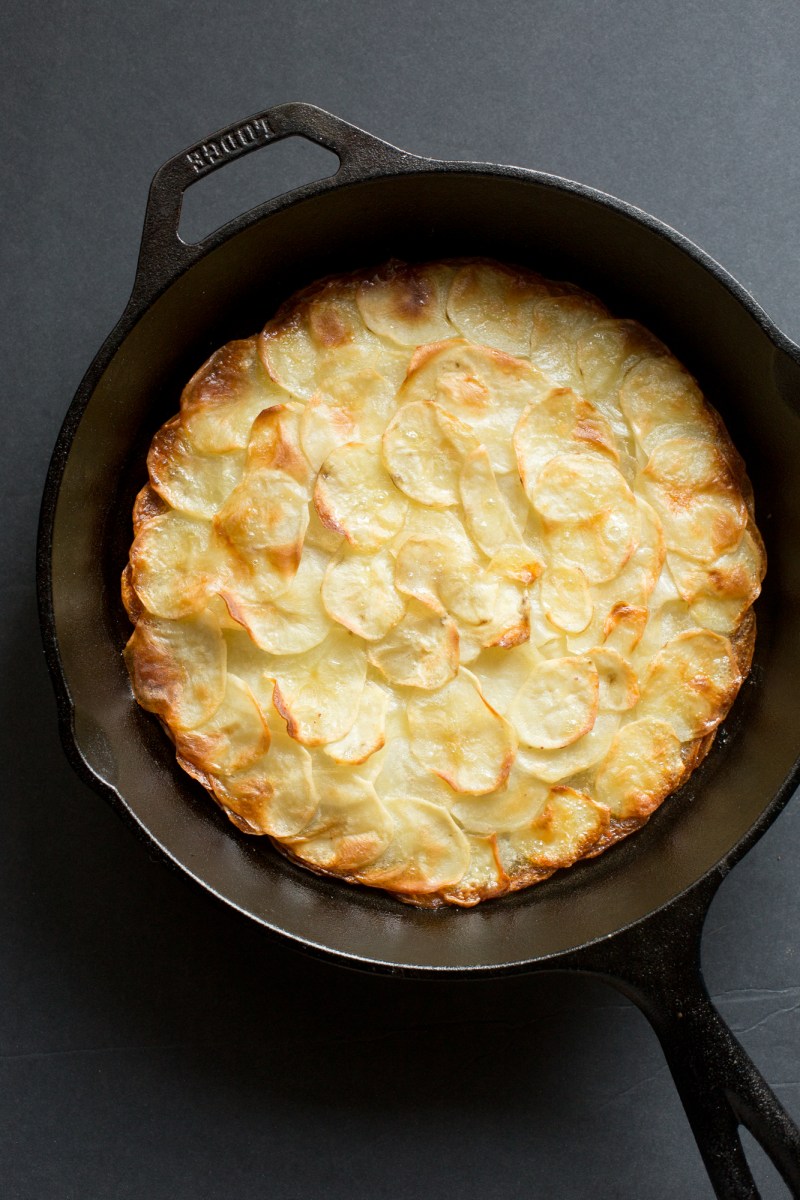
Pommes Anna is a famous French preparation of white potatoes, borne in the mid 19th century. The story goes that the dish was named after Anna Deslions, a well-known Parisian courtesan, who frequented Café Anglais where chef Adolphe Dugléré invented the dish to honor her (and the wealthy clientele that she brought into the popular restaurant).

The idea of naming food after celebrities appears to be a time-honored tradition. Some examples: Beef Wellington was named after the Duke of Wellington (in celebration of his victory during the Battle of Waterloo in 1815), Pizza Margherita was named after Queen Margherita, Beef Carpaccio is named in honor of painter Vittore Carpaccio (who worked with vibrant reds), and who could forget the Arnold Palmer?

At other times, the food itself turns folks into celebrities: Caesar salad is not named after Julius Caesar but Caesar Cardini, an Italian immigrant who invented the salad in 1924 while living in Tijuana, Mexico; and nachos are purportedly the invention of Ignacio Anaya, a boy who in 1943 whipped up the dish to feed some hungry soldiers in Piedras Negras, Mexico.

Read Full Article

I met the folks behind Otto’s Cassava Flour while attending the Paleo f(x) conference in April, and during our chat, they challenged me to make a pizza crust using their flour. Never one to turn a challenge down, I accepted, and here’s what I came up with. I found that a combination of their flour, tapioca starch, and potato starch created a pizza crust that is light and crisp, and still a little chewy like my original pizza crust.

Cassava flour differs from tapioca starch, despite the fact that they come from the same plant. While tapioca starch is the extracted starch from the root of the yuca plant, cassava flour is peeled and baked yuca root, so it retains the plant’s fiber as well as the starch. Tapioca starch behaves like cornstarch, but cassava flour adds body to dishes, mimicking wheat flour in dishes like this tortilla recipe from Forks and Beans.

Read Full Article

Tuna Casserole is one of America’s most divisive meals; some love the idea of recapturing treasured childhood moments spent digging into this comforting dish, while others wouldn’t touch it with a ten-foot pole. I think there are enough folks in the first camp to provide me a steady stream of requests for a health-minded adaptation over the years, so here we are.

Initially, I couldn’t fathom why people were asking me to recreate Tuna Casserole – the dish I grew up with was made with egg noodles, and pasta is a no-go on the Paleo diet (well…I’m okay with rice pasta, but I digress). Turns out there is a segment of the population that feels a true Tuna Casserole is made with potatoes instead of noodles; once I got word of this concept, throwing the rest of the casserole together was cake.

As with a couple other recipes this month (see: exhibit 1 and exhibit 2), I was approached by Sharp to create dishes using their Convection Microwave, and this casserole seemed like a good fit; the microwave’s convection oven function worked like a charm. One advantage I discovered while making this dish in the microwave was that I could soften the onion in the microwave itself instead of dirtying an extra pan; I used the bottom roasting element to act as a conventional stovetop, then switched it to the convection oven setting and baked the rest of the dish. If you don’t own the microwave (yet?), I’ve provided conventional stovetop and oven instructions below.

I’ve also teamed up with Sharp to give away one of the microwaves that I’ve been using during these cooking adventures. See the bottom of this post for directions on how to enter.

Read Full Article

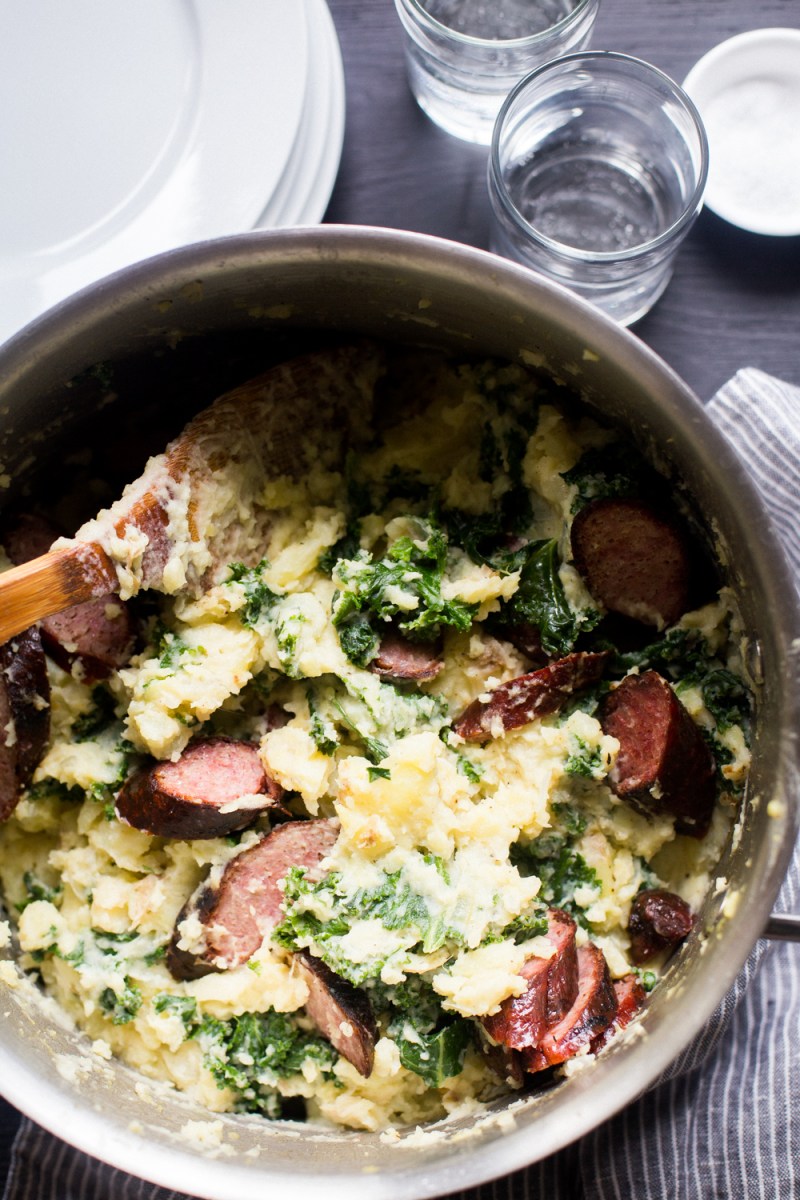
Boerenkool Stamppot is a Dutch dish of mashed potatoes (“stomped pot”) mixed with kale. There are sometimes other vegetables mixed into Stamppot, like sauerkraut or endive, but as the Dutch say, “Boerenkool is het nieuwe zwart” (Kale is the new black). Note: they probably don’t actually say that! Either way, it’s worth it to incorporate the most nutrient dense vegetable on the planet into the dish.

Stamppot is typically served with a mild smoked sausage called rookworst, either sliced and mixed into the dish like in my pictures, or served on top of the vegetables. It’s all going to get mixed up in your stomach anyway, so feel free to arrange it as you please.

Here’s something really exciting about the photo you see above – I live-broadcasted my photography session! I started using the Periscope app (available on iOS and Android), which lets you livestream just about anything you want, and people can re-watch the broadcast for the next 24 hours. Think of it like a spontaneous YouTube. I think I’ll be using it on the weekends while photographing or cooking my recipes for the blog; it’s a neat way to interact with you folks (you can send chat messages to me while I’m working). Join me if you’re interested – my username is, predictably, thedomesticman.

Oh! And some more cool news. My presentation from Paleo f(x) 2014 was officially released on YouTube. Honestly, I had forgotten all about it so it was a neat surprise to see it appear online yesterday. Click here to watch me talk about six ways to improve the quality of Paleo-minded cooking; the talk is called “Our Great-Grandparents Were Totally Paleo: Six Suggestions for Improving Paleo Cuisine by Following Traditional and Gourmet Culinary Practices” (what a mouthful!). I’ve also embedded it at the bottom of this post.

Read Full Article

I was recently approached by Sharp to try out their new convection microwave as part of a challenge to rethink the way we cook with microwaves. Initially, I kept thinking about those disastrous microwave cookbooks from the 1980s and 1990s (this one might be the best example of all time), but after a bit of reading I decided to take them up on the offer. After all, if the telephone can radically change over the course of 10 years, and the Instant Pot can change how we look at pressure cookers, shouldn’t a microwave make some leaps and bounds as well?

I must have been living under a rock, because apparently microwaves can do all sorts of cool things today, and this model is no exception. At its core, this device serves three functions: 1) a standard microwave, 2) a convection oven, and 3) a roaster (with heating elements both on the bottom and top of the microwave). And because the microwave is much smaller than a traditional oven, it preheats much more quickly (it took me five and half minutes to pre-heat it to 400F). I envision this microwave to be an ideal solution for those without the space for a typical oven or as a secondary oven when you have lots of items to bake at once (Thanksgiving comes to mind).

To test the microwave, I decided to try it out on a very standard, traditional recipe: roasted brussels sprouts (with bacon, of course). I first baked the bacon at a convection setting, then roasted the brussels sprouts in the rendered bacon fat using the roaster setting. It worked like a charm – the food cooked evenly and easily, with a texture which is about the opposite of what you’d expect from a microwave (crispy and browned). I also provided conventional (oven) instructions for this recipe below.

The microwave also combines Sharp’s cooking functions to allow you to try different ways of heating food. For example, I reheated the leftover brussels sprouts with a combination of 50% microwave power and 50% roaster (top heating element) and they came out both hot and crispy – not your typical microwave re-heating experience.

I’ll be posting a couple more recipes using this microwave over the course of the next month, so let me know in the comments if you have any questions or anything you’d like me to address in a future recipe.

Read Full Article

You’ve heard of Samosas, right? They’re those triangle-shaped savory pastries served in Indian and Central Asian restaurants. They’re a surprisingly ancient dish, first mentioned in the Middle East (under the name Sambosa) during the 10th century before eventually making their way across Central Asia, the Indian subcontinent, and even Southeast Asia. They’re practically everywhere today – you can even find them pretty easily in South Africa, as Indian cuisine started to influence British colonial food culture.

I loved Samosas in my pre-Paleo days, and I’ve been wanting to tackle them for a while. The problem is, well, pastry. I tend not to fiddle with baked goods and leave them up to the masters (see: Jenni Hulet and her book, My Paleo Patisserie). So after a bit of brainstorming, I settled on the idea of Samosa-flavored mashed potatoes. I like this idea because, heck, most people are probably eating mashed potatoes anyway, so why not kick them up a notch in terms of flavor and vegetable count.

Read Full Article

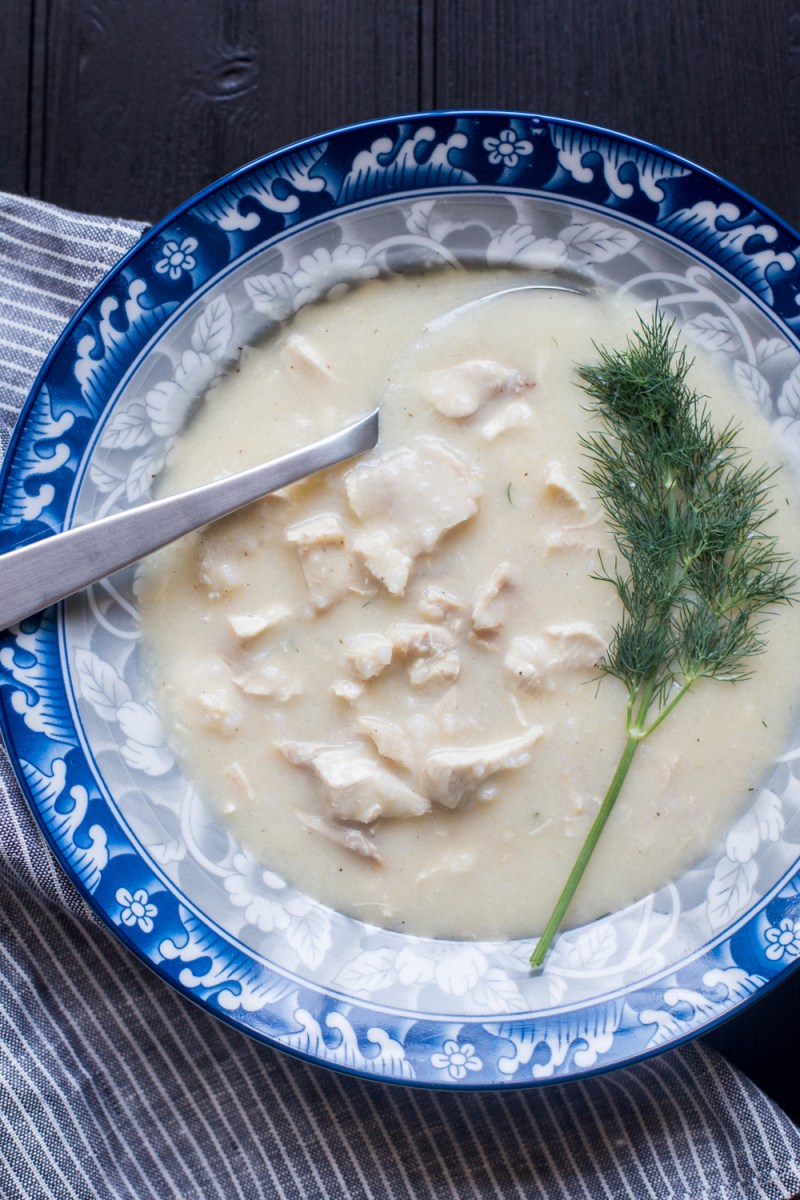
Avgolemeno is a Mediterranean sauce and soup, most commonly associated with Greece. As a sauce, it’s often served with Dolma or used as a vegetable dip. But if you ask me, it really shines the most as a mild and comforting soup, and that’s why I’m sharing this recipe with you today. It features egg yolks and lemon juice which enrich and enliven the soup, and some fresh dill brings it all together to give it a distinct and just slightly exotic flavor.

I’m a big fan of taking my time when making recipes. After all, cooking is one of my main sources of relaxation (second only to reading cheesy sci-fi). But I realize that’s not always the case for folks, so I’m trying something new today; below you’ll find a “short version” of the recipe that can be made in 20 minutes, as well as the traditional 2-hour version. Let me know what you think. If you like it, I’ll try to incorporate more variety into my recipe posts (kind of like how I’ve been adding pressure-cooker versions to some recipes).

Read Full Article