8 – Side Dishes

It’s funny, but up until recently I assumed there was already a ketchup recipe on my blog. I didn’t discover its absence until I developed Thursday’s recipe (hint: it rhymes with “beet oaf”), when I couldn’t find my recipe online. At first I was confused, and thought the search function of my blog was definitely broken. So…sorry about that, and here you go.

The history of ketchup is pretty awesome. It all started with garum, an ancient fish sauce first used by the Ancient Greeks and later the Romans. It reached Asia some 2,000 years ago via trade routes, and became a staple in many Asian countries, particularly Vietnam (where they later perfected the sauce using anchovies). Vietnamese fish sauce as we know it today entered China about 500 years ago, and the Chinese (particularly those in the Southeast providence of Fujian) spread it around the rest of Asia. The Fujian word for fish sauce? You guessed it, ketchup. In fact, many Asian languages today still use a form of the word “ketchup” to refer to sauces; a common example is the Indonesian word kecap (pronounced “keh-chap”), a catch-all term for fermented sauces.

When Europeans arrived in Asia in the 1600s, they were enamored with fish sauce (they’d long forgotten about garum) and took it back to Europe. Many variations of ketchup existed in Europe for hundreds of years, the most popular being walnut ketchup and mushroom ketchup (the practice of using fish eventually died out). It wasn’t until the 1800s that people started adding tomatoes to the sauce, and H. J. Heinz took it to a new level in 1904 when his company figured out a way to bottle and preserve the sauce using natural ingredients (the mid 1800s were full of horror stories about deadly batches of ketchup made with stuff like boric acid and coal tar). Heinz was also one of the first to add copious amounts of sugar to the sauce.

My recipe still maintains the sweet and sour taste we’ve all come to expect from ketchup, but throws a historical twist in for good measure: a bit of fish sauce.
Read Full Article

Last weekend, I did a couple book signings with my friends Sarah Ballantyne (The Paleo Mom) and Stacy Toth (of Paleo Parents). It was a lot of fun. On Saturday night, Sarah and Stacy slept over at our house, so I offered to make dinner for them; Sarah and Stacy follow a modified version of the Autoimmune Protocol (a more restrictive version of the Paleo diet meant to reverse autoimmunity, see this post or Sarah’s book for more info), so I knew I had my work cut out for me. How do you treat your friends (and food bloggers at that) to a delicious meal with a limited cupboard to work with?

For the main course I made a modified version of my Beef Rendang recipe, where I subbed some butternut squash puree for the bell and chili peppers, and used mace instead of nutmeg. I think the squash added a good amount of body to the dish; it turned out well. I served it with cauliflower rice sautéed in coconut milk, turmeric, cinnamon, and raisins – also good.

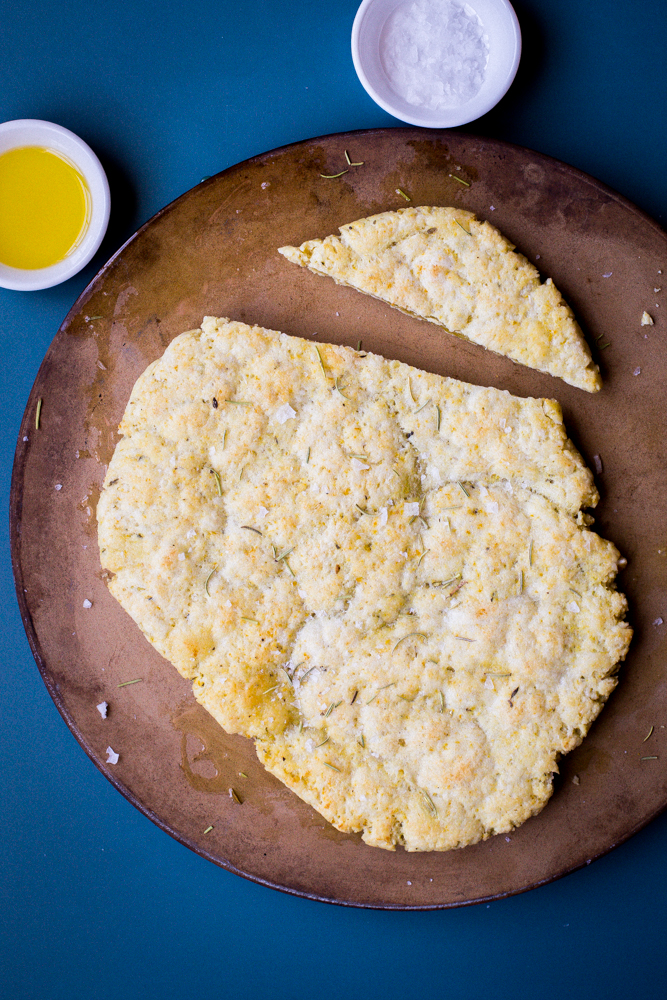
But I wanted to add another texture to the dish, so I tried out a more savory version of my pizza crust recipe, made AIP-friendly by eliminating the dairy and egg typically used in the recipe. I couldn’t have been happier with the results – the bread was nice and crisp, and adding nutritional yeast imparted a rich, buttery taste.

Read Full Article

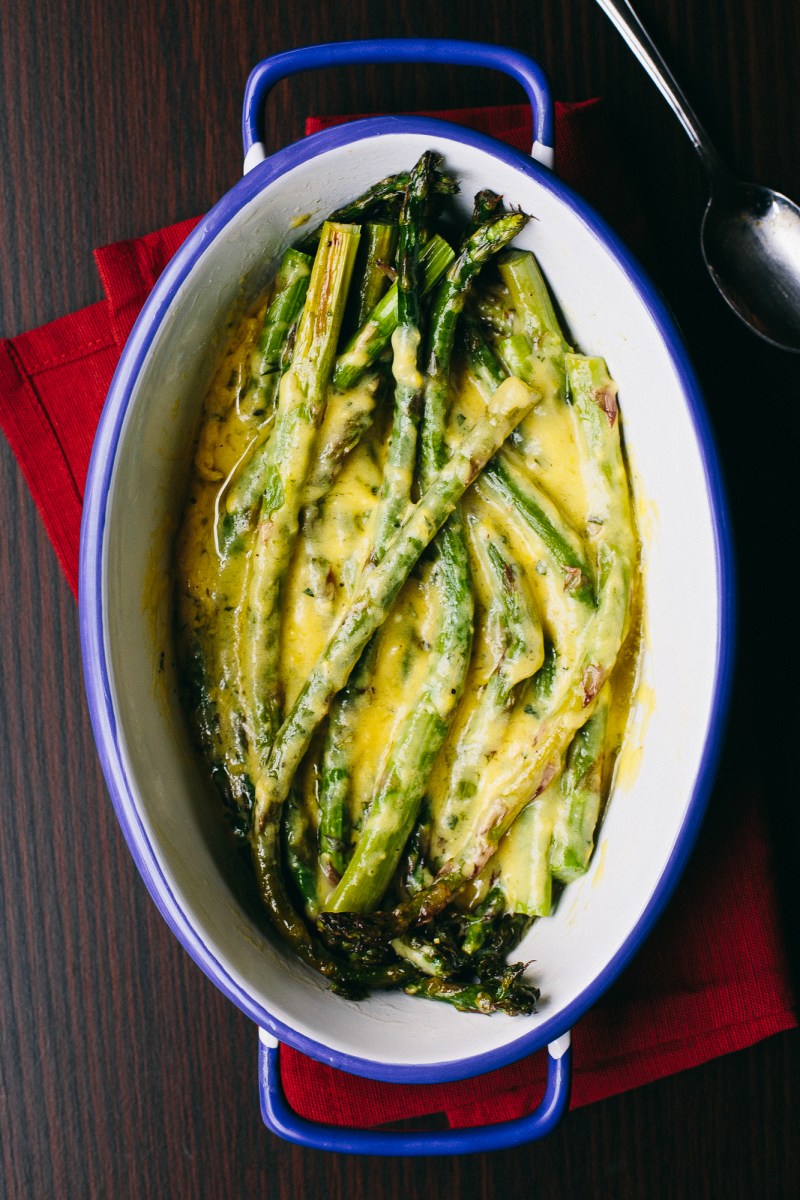
Roasted asparagus is no big deal, right? To roast asparagus, you basically just roast asparagus – not really worthy of a dedicated blog post. But pair this under-appreciated vegetable with a traditional Béarnaise sauce and you’ve got something spectacular. It’s funny what a few egg yolks and some butter can do.

Asparagus is an ancient vegetable, found in records dating back 5,000 years. In fact, an asparagus recipe appears in the oldest surviving cookbook (Apicuius, 4th century AD). While widely used by the Greeks and Romans, it nearly disappeared after the fall of the Roman Empire, only to be reintroduced in the late Middle Ages by the French.

Béarnaise sauce is relatively modern, first developed in the 19th century. It is often associated with Hollandaise sauce, as it employs a similar technique of emulsifying fat (butter) in egg yolks and acid. While Hollandaise is made with lemon juice, a Béarnaise is made with an herb-infused vinegar reduction. The sauce has nothing to do with bears, or the capital of Switzerland (Bern), but rather is named after Béarn, a former province in southwest France. Fun fact: d’Artagnan (one of the main characters in The Three Musketeers) was from Béarn.

My friends at Pacific Merchants donated this Enamour dish for my recipe, which was pretty cool of them. Enamel-coated stoneware is very sturdy and versatile, and this dish is a thing of beauty. It can be used for baking and broiling, but in this case I used it as a serving dish. They are also offering 25% off purchases on their site for my readers, valid March 4-12, 2014! Use code DomesticMan at checkout.

Read Full Article

A few years ago I spent a winter in Bavaria, the Southeastern state in Germany. One of my favorite dishes there was Blaukraut, a simple simmered red cabbage. The dish has three different names in Germany – Blaukraut (“blue cabbage”) in the South, Rotkraut (“red cabbage”) in Central Germany, and Rotkohl (also “red cabbage” – kohl is a Northern word for kraut).

It’s believed that the different names stemmed from the fact that the cabbage can take on different colors depending on the acidity of the soil it was grown in and its method of preparation. Some contend that the variation comes from the fact that there wasn’t a German word for the color purple until after the cabbage had been introduced. Since red cabbage has a tendency to turn a blueish color when cooked, adding acid (in this case, apple cider vinegar) helps retain its redness.

Read Full Article

Boniato (also called batata or tropical sweet potato) is a white, starchy, and dry version of the common sweet potato. It’s popular in Florida and the Caribbean, but well-known throughout the Americas and some of Europe (Spain in particular). It was cultivated as far back as 1,000 years ago in Central and South America. Its skin is red-to-purple in color, and has white flesh. As far as I can tell, it is nearly identical to the Japanese sweet potato in terms of appearance and taste; considering the fact that sweet potatoes were a late addition to Japan (around the 17th century), I’d guess that the differences between the two is minimal. I’ve also seen identical sweet potatoes labeled as Korean sweet potatoes here in Maryland.

Taste-wise, boniato is like a cross between a white potato and sweet potato. If you’re missing the consistency of white potatoes but react poorly to them, this is the dish for you.

Preparing boniato is easy. Because the potato is naturally creamy, you only need to add a little cream to them to get a truly decadent flavor. If you’re dairy-free, they’re still surprisingly creamy when made with only chicken broth.

Read Full Article

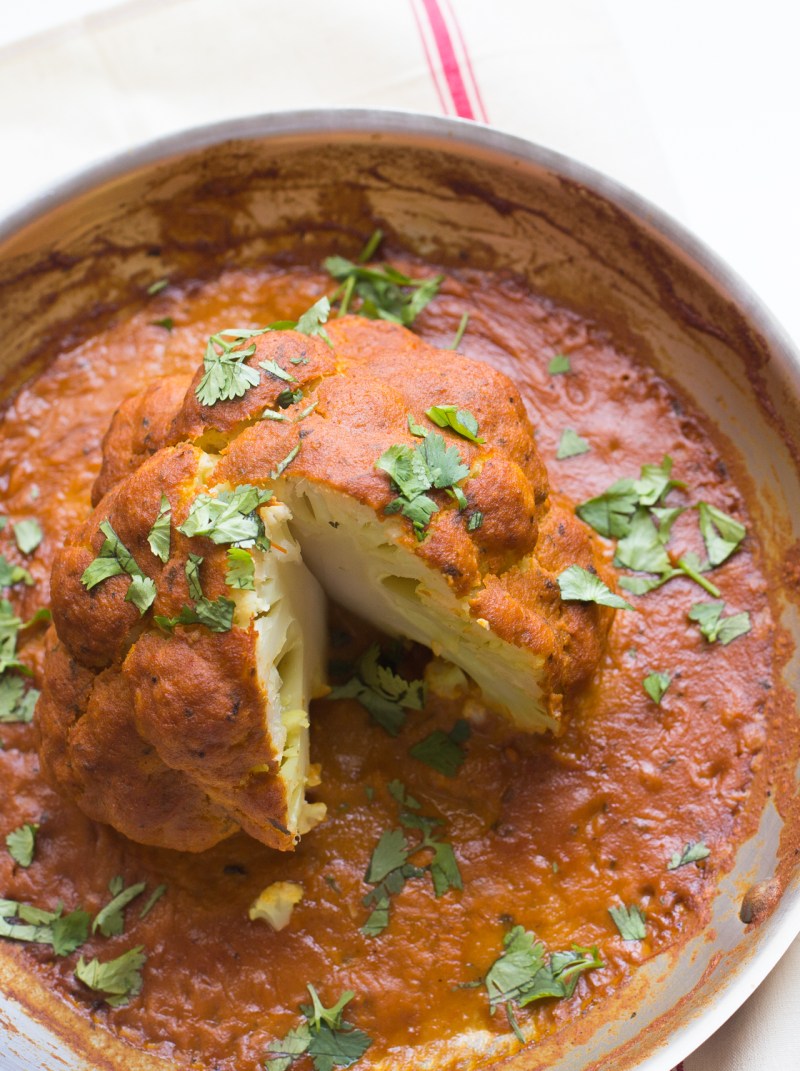
Gobhi Musallam is a roasted cauliflower dish from the Uttar Pradesh region of Northern India. While the origin of the dish itself is hard to trace, the origin of cauliflower isn’t. Cauliflower is a direct descendant of wild cabbage, and a close cousin to broccoli. Although it was known in Europe during the Middle Ages, it disappeared until sometime in the 17th Century, when Italy reintroduced it to the rest of Europe. Surprisingly, the Italians probably got cauliflower from the Middle East and Asia, who had likely acquired it from Europe during the Middle Ages. I think it’s pretty cool that cauliflower disappeared from its place of origin, only to be re-introduced by another culture.

We love this dish for several reasons. First of all, it’s an easy dish to put together: parboil the cauliflower, whip up a sauce, combine the two and roast in the oven. It’s a very impressive dish to serve to guests, and slicing/serving the cauliflower is a memorable experience. Lastly, and maybe most importantly, Gobhi Musallam is absolutely delicious and an interesting way to enjoy cauliflower.

Read Full Article

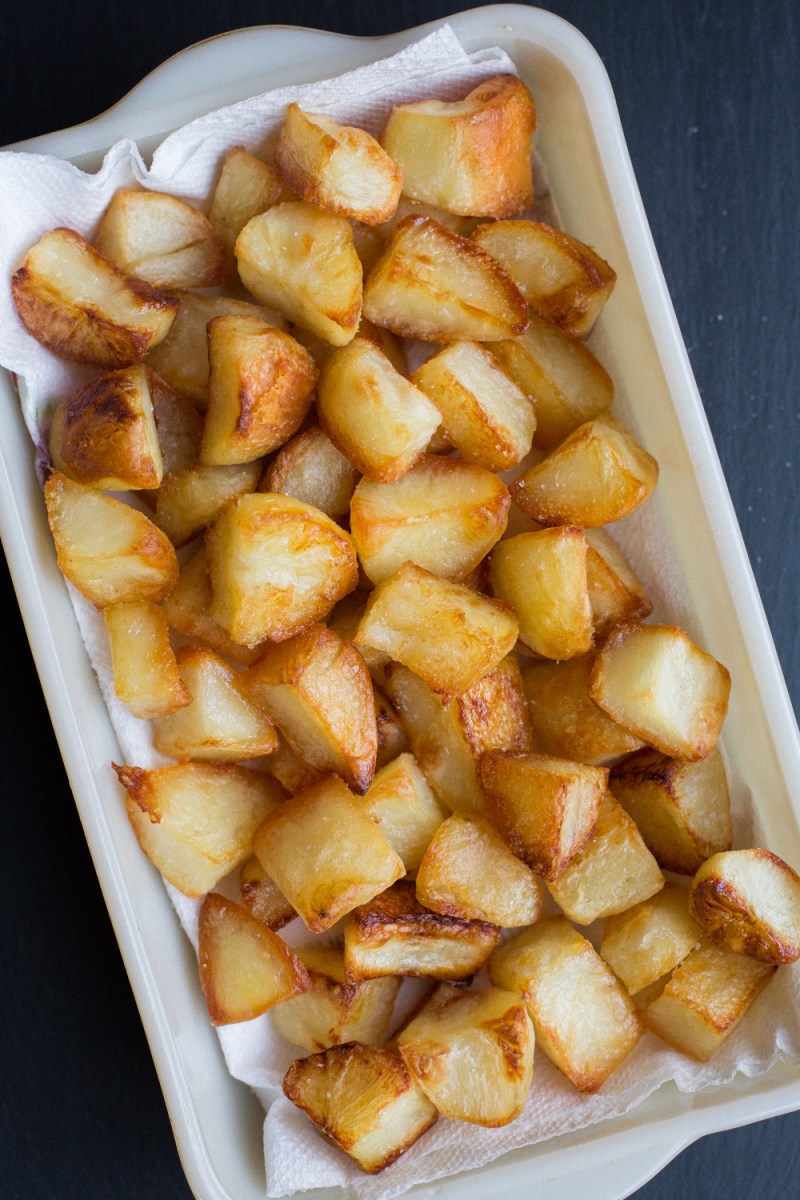
This week’s recipe is very simple, and is actually a setup for next week’s recipe. At the same time, this recipe also carries a mandate: you should be cooking with duck fat. Not only does it have an excellent nutritional profile, it is an ideal roasting fat. Potatoes in particular really shine when cooked in duck fat.

Ducks have been consumed since prehistory, but the Chinese were the first to domesticate them, over 3,000 years ago. It may surprise you but nearly all domesticated ducks, including the white Pekin duck which is the most commonly-consumed duck, are descended from Mallard ducks. The only exception is the Muscovy duck, which is a native of Central America, and has recently been gaining ground as a domesticated duck raised for food. Ducks have a thick layer of fat between their muscles and skin, to help them stay buoyant. Up until the 1900s, duck breast was more often than not served rare, something that most people nowadays (myself included) would have a hard time stomaching.

Read Full Article

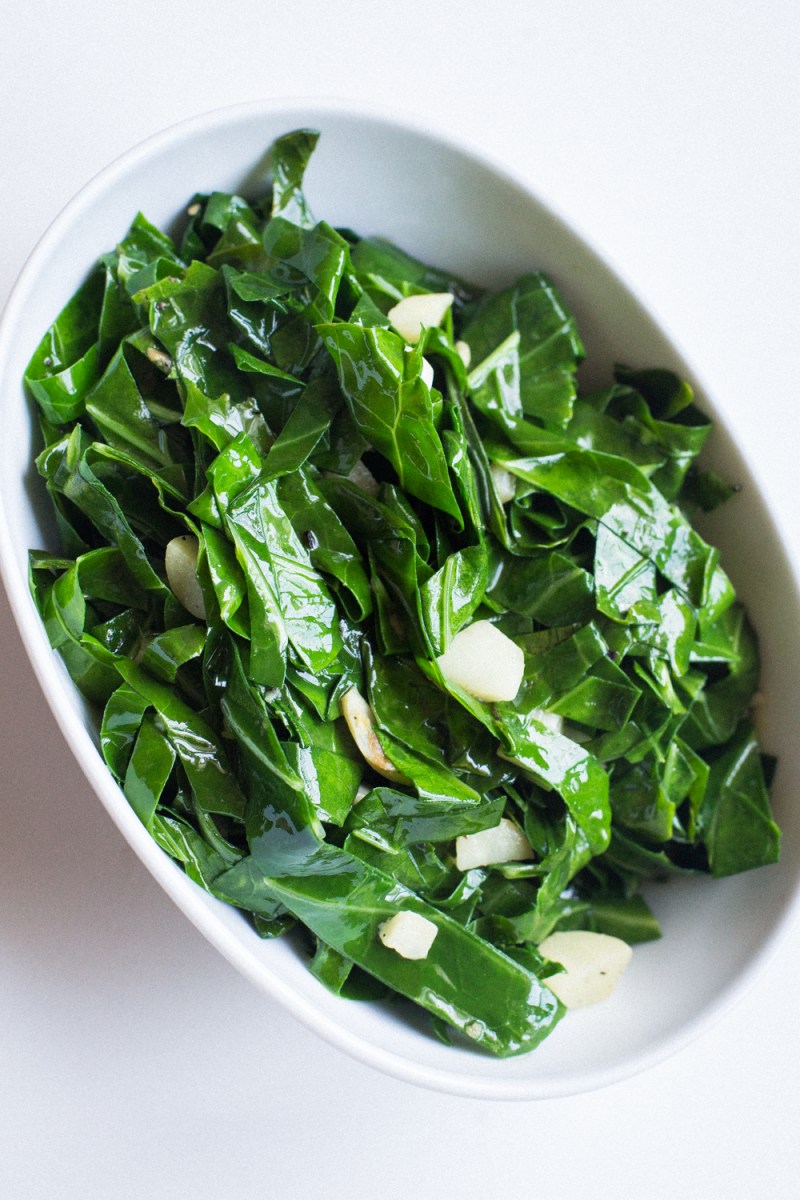
Although the common consensus is that collard greens originated in the Mediterranean, they gained their most widespread popularity in Africa (see my Sukuma Wiki recipe). It is assumed that collards made it to most of the Americas via African slaves. In Brazil, it’s a different story, as collard greens were likely introduced via Portugal, where it has been a staple veggie for hundreds of years (as evidenced by my Caldo Verde recipe). Today, collards are served often in Brazil, usually as an accompaniment to fish or beef.

Today’s recipe is a collaboration with my friend Alex Boake, who stayed at our house for a few days before heading off to Ancestral Health Symposium with us. She’s going to post an illustrated version of this recipe on her blog later this week, so bookmark her site! We’ll be knocking out a couple other illustrated recipes in the near future as well, so this is just the tip of the illustrated Paleo recipe iceberg. Update: Here is Alex’s post!

Read Full Article

Mankind has been dealing with leftover rice for a long time. While some common uses for old rice are fried rice and congee (rice porridge), rice cakes are also a great way to clean out the fridge. Many variations of rice cakes are made using leftover rice that’s pressed together and steamed or pan-fried. When ingredients are mixed into the rice cake, they often take on a different name, fritter.

In putting together this recipe, I looked to create a dish that has an ideal macronutrient ratio (40% fat, 30% protein, 30% carb), which I achieved by mixing in fish and an egg yolk, and pan-frying them in coconut oil. They came out great, and I plan on using this recipe as a baseline for future creations.

Read Full Article

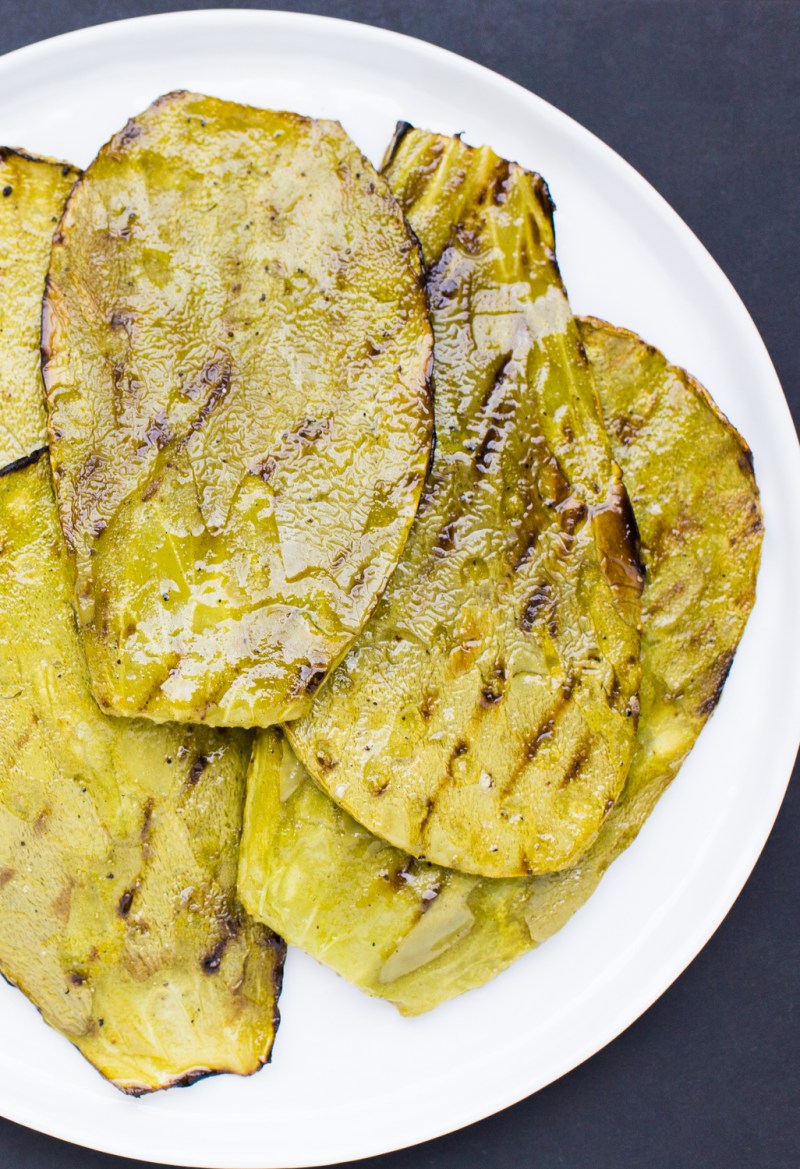
With spring upon us, I’ve been looking to expand my grilling options. The idea of cooking and eating a cactus might sound intimidating, but the reality is much simpler than you’d think. All you have to do is scrape off their thorns, and grill them – it’s that easy.

Nopales are the paddles of oputina (prickly pear) cactus, commonly found in Mexico. They are a common vegetable in Mexico, and taste a little like green beans, but slightly more acidic. They are a great addition to grilled meat dishes, or tasty just on their own. They are also often sliced/diced and served with eggs or in salads.

Read Full Article