Food

NOTE: An updated version of this recipe appears in my cookbook, The Ancestral Table.

Chowders get their name from the French word “chaudière” (kettle, pot), which in turn is derived from the Latin “caldāria” (cauldron). There’s quite a rivalry regarding the white, creamy New England Clam Chowder and the clear, tomato-based Manhattan Clam Chowder – in fact, a bill was introduced into the Maine legislature in 1939 attempting to make it illegal to add tomatoes to clam chowder.

Here’s another interesting fact – it wasn’t until the Second Vatican Council during the 1960s that Catholics were permitted to eat meat on Fridays (the abstinence period has been reduced to Lent now). To provide a seafood option to Catholics, restaurants across the country served clam chowder on Fridays, and the tradition remains today.

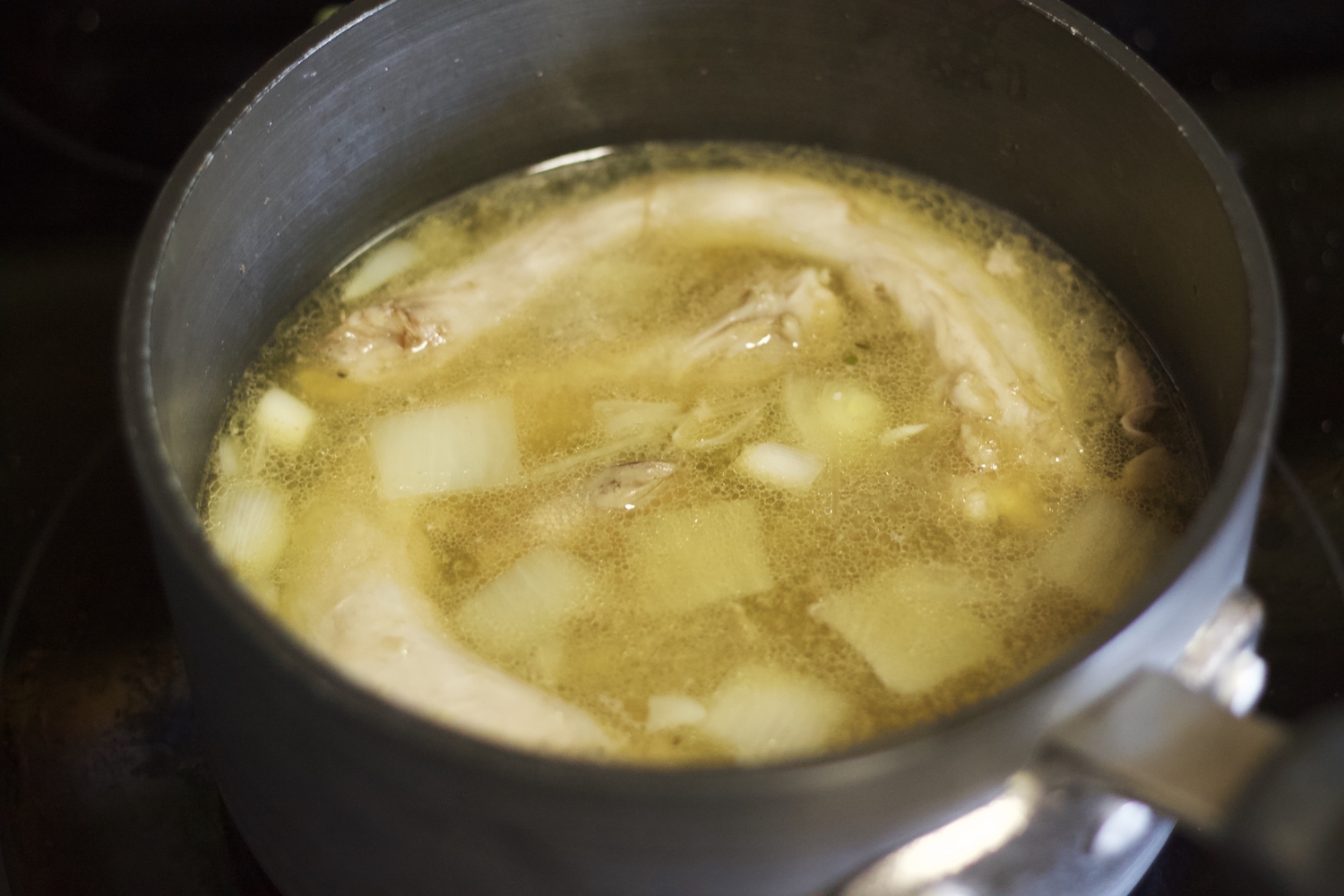
Creating a hearty, traditional wheat-free chowder is quite a challenge, since they are usually thickened with flour or soup crackers. Using starchy russet potatoes would naturally thicken the chowder, but also leave you with disintegrated potatoes. And then it struck me: I can cook the chowder using sturdier red potatoes, and thicken it with potato starch – leaving us with the best of both worlds.

Read Full Article

It’s probably pretty hard to track all of the food-related recommendations I make on my site, so I set up an Amazon.com store that you can use to easily peruse my favorite cookware, gadgets, ingredients, and cookbooks. I’ll be updating it as time goes on, so be sure to check back often – I made a handy little link to the store on the right-hand side of the site.

Keep in mind that while I totally recommend all of the products in my store, you may find better prices for many of the items locally (especially the food items). The cookware, gadgets, and books are priced pretty competitively though.

Good luck and happy shopping!

Note: I’ve tweaked this recipe over the years, and HERE is my definitive method/recipe.

For Thanksgiving this year I tried my hand at roasting a turkey on the grill. The resulting bird was crispy on the outside and juicy and tender on the inside, and only took a few minutes longer than roasting it in the oven. Also, adding woods chips imparts an authentic smokey flavor that really made the turkey stand out on the Thanksgiving table. Lastly, it frees up the oven for other endeavors!

Also, when grilling a turkey (or roasting it in the oven, for that matter), you want to use a v-rack (often called a roasting rack). We just started using one recently and it’s amazing how evenly it cooks the bird, since it allows air to circulate around the entire turkey. Depending on how your grill plates run, though, the v-rack may fall through the plates; to prevent this, put the v-rack on a grill pan.

Read Full Article

Here in the United States, mussels have a bad reputation as being a “lesser” shellfish. I happen to disagree. True, they may have a less intense flavor than clams or oysters, and they sure like to turn into a rubbery / chewy mess with a quickness, but with the right amount of care you can make something remarkable. And to top it all off, mussels can be found for relatively cheap compared to their more popular cousins.

This preparation is a Provençal (SE coast of France) dish. The “à la marinière” part of this dish translates to “mariner’s style”, which is when shellfish is prepared with white wine and herbs. Although the white wine really enhances the mussels’ taste, I like to think that it’s the butter and cream that really do the trick. Either way, you’re in for a treat.

Read Full Article

For me (and probably many others), smothered pork chops remind me of being a kid. It is a generally easy way to make sure pork chops are both cooked thoroughly and not too tough or chewy, and many houses across America have their own variation. Unfortunately, too many of those recipes rely heavily on instant soup packets and/or cans, which are loaded with sodium, unhealthy oils, and wheat. In response, I set out to make a healthy alternative without compromising on taste. Here’s how it turned out.

Read Full Article

NOTE: An updated version of this recipe appears in my cookbook, The Ancestral Table.

Japanese curry is a relative new dish to the country – it was introduced by the British in the 19th century, who in turn picked it up from India. Today, curry houses are everywhere in Japan, and for good reason; the irresistible sauce is mild and slightly sweet compared to other curries found worldwide, and is often served with any combination of stewed or fried meats which keep this dish surprisingly versatile.

I remember the first time I went to a local Asian grocery store shortly after deciding to go mostly-grain-free last year, and my utter disappointment when looking at the ingredients list of those handy Japanese curry blocks. You see, one of the pivotal ingredients in all of those blocks is wheat – which makes sense given the thick and creamy consistency that’s unique to Japanese curry. But fear not, dear reader, because I’ve been working on a gluten-free Japanese curry for the past year and I think I’ve got it figured out.

Read Full Article

Meatballs are a deceptively tricky dish. It looks like you’d just ball up some ground beef and be done with it, but in fact it takes a good bit of work to get meatballs that aren’t super-dense cannonballs. I experimented a little to find a good mix-in to keep the meatballs moist and light, and when it comes down to it, nothing beats bread. Luckily, Udi’s Gluten-Free White Sandwich Bread is both consistent with our diet and perfect for this dish.

Read Full Article