Page 20 of 55

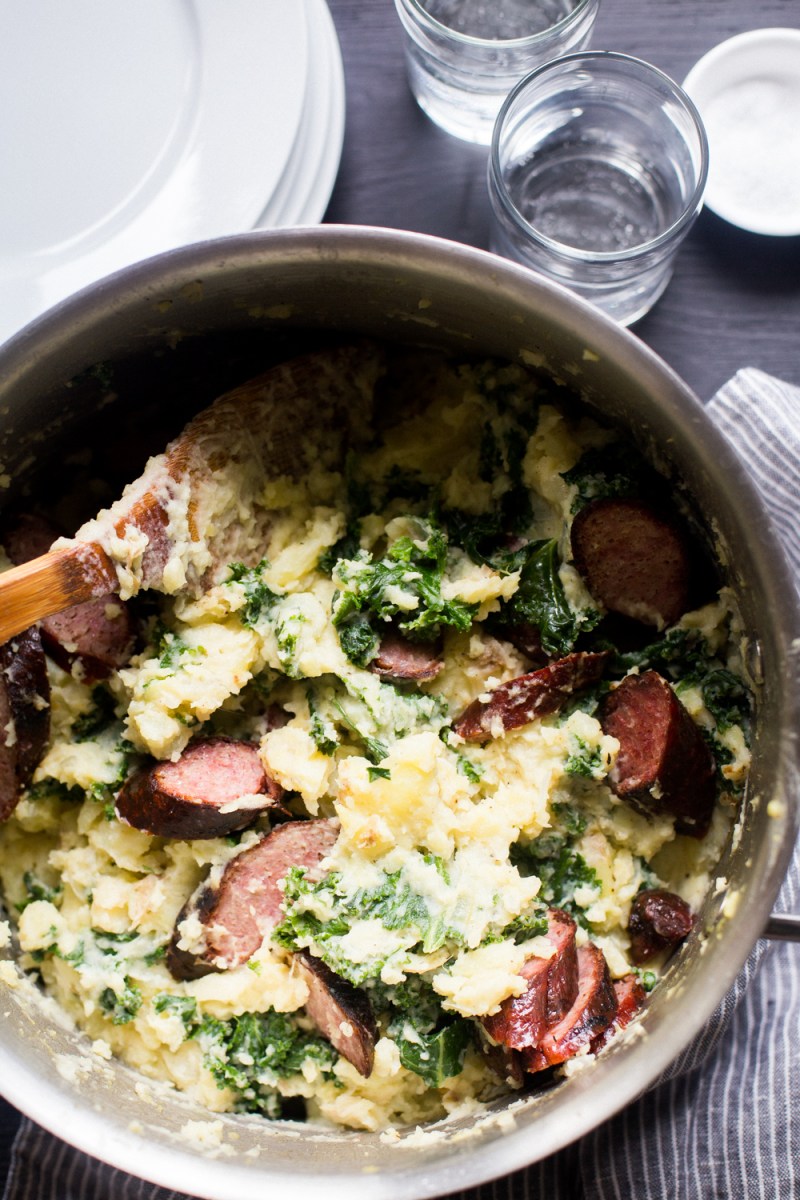
Boerenkool Stamppot is a Dutch dish of mashed potatoes (“stomped pot”) mixed with kale. There are sometimes other vegetables mixed into Stamppot, like sauerkraut or endive, but as the Dutch say, “Boerenkool is het nieuwe zwart” (Kale is the new black). Note: they probably don’t actually say that! Either way, it’s worth it to incorporate the most nutrient dense vegetable on the planet into the dish.

Stamppot is typically served with a mild smoked sausage called rookworst, either sliced and mixed into the dish like in my pictures, or served on top of the vegetables. It’s all going to get mixed up in your stomach anyway, so feel free to arrange it as you please.

Here’s something really exciting about the photo you see above – I live-broadcasted my photography session! I started using the Periscope app (available on iOS and Android), which lets you livestream just about anything you want, and people can re-watch the broadcast for the next 24 hours. Think of it like a spontaneous YouTube. I think I’ll be using it on the weekends while photographing or cooking my recipes for the blog; it’s a neat way to interact with you folks (you can send chat messages to me while I’m working). Join me if you’re interested – my username is, predictably, thedomesticman.

Oh! And some more cool news. My presentation from Paleo f(x) 2014 was officially released on YouTube. Honestly, I had forgotten all about it so it was a neat surprise to see it appear online yesterday. Click here to watch me talk about six ways to improve the quality of Paleo-minded cooking; the talk is called “Our Great-Grandparents Were Totally Paleo: Six Suggestions for Improving Paleo Cuisine by Following Traditional and Gourmet Culinary Practices” (what a mouthful!). I’ve also embedded it at the bottom of this post.

Read Full Article

I was recently approached by Sharp to try out their new convection microwave as part of a challenge to rethink the way we cook with microwaves. Initially, I kept thinking about those disastrous microwave cookbooks from the 1980s and 1990s (this one might be the best example of all time), but after a bit of reading I decided to take them up on the offer. After all, if the telephone can radically change over the course of 10 years, and the Instant Pot can change how we look at pressure cookers, shouldn’t a microwave make some leaps and bounds as well?

I must have been living under a rock, because apparently microwaves can do all sorts of cool things today, and this model is no exception. At its core, this device serves three functions: 1) a standard microwave, 2) a convection oven, and 3) a roaster (with heating elements both on the bottom and top of the microwave). And because the microwave is much smaller than a traditional oven, it preheats much more quickly (it took me five and half minutes to pre-heat it to 400F). I envision this microwave to be an ideal solution for those without the space for a typical oven or as a secondary oven when you have lots of items to bake at once (Thanksgiving comes to mind).

To test the microwave, I decided to try it out on a very standard, traditional recipe: roasted brussels sprouts (with bacon, of course). I first baked the bacon at a convection setting, then roasted the brussels sprouts in the rendered bacon fat using the roaster setting. It worked like a charm – the food cooked evenly and easily, with a texture which is about the opposite of what you’d expect from a microwave (crispy and browned). I also provided conventional (oven) instructions for this recipe below.

The microwave also combines Sharp’s cooking functions to allow you to try different ways of heating food. For example, I reheated the leftover brussels sprouts with a combination of 50% microwave power and 50% roaster (top heating element) and they came out both hot and crispy – not your typical microwave re-heating experience.

I’ll be posting a couple more recipes using this microwave over the course of the next month, so let me know in the comments if you have any questions or anything you’d like me to address in a future recipe.

Read Full Article

Things are really moving with my next cookbook, Paleo Takeout: Restaurant Favorites without the Junk. For starters, the book finished printing last week, and my publisher overnighted a copy to me so I could be one of the first to check it out. I’m very happy with the finished product, and I think you’ll love it too! I’m in the middle of scheduling a summer book tour, and I’ll be sure to share the dates as soon as I have everything arranged – if you haven’t already, be sure to sign up for my brand new newsletter, where I’ll be sharing news and recipes in one convenient little email package.

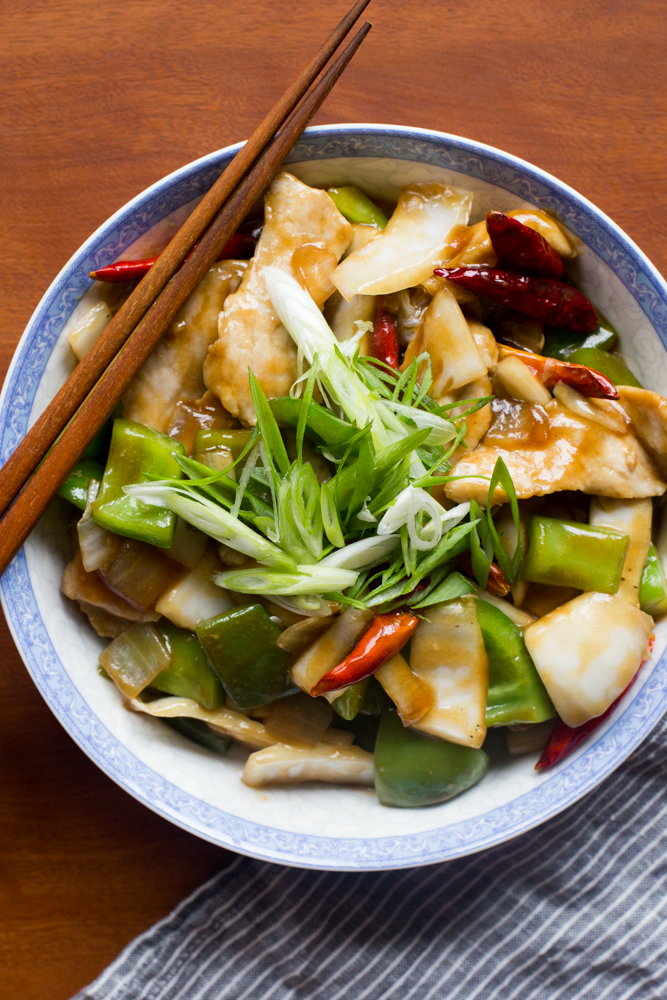
For this week’s recipe, I wanted to highlight some of the techniques and ingredients that you’ll find in the book, to set the stage for when it releases on June 23rd. This Twice-Cooked Pork dish uses a technique common to Chinese-American takeout restaurants called velveting, where lean meat is thinly sliced, marinated in a starch mixture, then blanched and drained before being added to a stir-fry. Have you ever had some Beef & Broccoli with steak pieces that are super soft and tender? That’s velveting at work.

While this method isn’t absolutely required for any of the recipes for the book, it’s a fun technique that really adds a tasty dynamic to your Asian-inspired dishes. I also tend to start my velveted meat as the first part of the cooking process, so that I can chop my veggies and prepare my stir-fry sauce while the meat is tenderizing – the timing tends to flow naturally that way.

In terms of ingredients, I used this recipe in particular to highlight rice cooking wine (sometimes labeled as Chinese cooking wine or just rice wine) and Sichuan chili peppers (those are the whole dried peppers you’ll find in dishes like General Tso’s Chicken), since both are commonly used in Chinese-American dishes. Similarly, arrowroot starch is commonly used in Paleo Takeout to create a thickening slurry; both potato starch and tapioca starch can be used in a pinch, but I’ve found that arrowroot best mimics the thickening properties of cornstarch.

For a full list of uncommon pantry ingredients that are found in Paleo Takeout, be sure to check out my online shopping guide that lists the ingredients plus how often they appear in the book. Additionally, I’ve set up a similar guide for tools that I used in writing the book.

Read Full Article

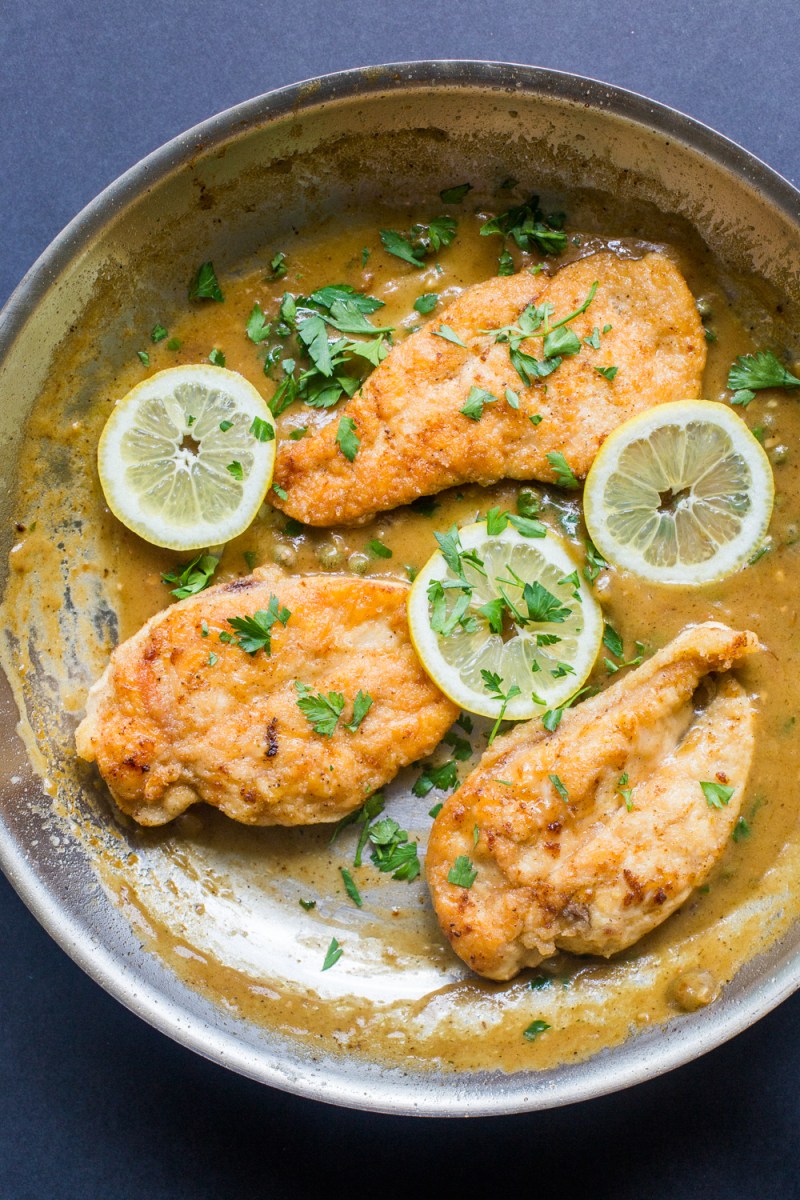
Confession time: a couple weeks ago, when a reader requested that I make this dish, I had to look it up because I had never heard of it. Somehow, I had inadvertently avoided Chicken Piccata my whole life. Although truth be told, I rarely visit Italian restaurants any longer since bread, pasta, and pizza all contain that pesky (but delicious) protein, gluten. And after that, what’s left at your typical Italian-American restaurant – salad? Regardless, I did a bit of research on the dish, and here we are.

The origin of this dish isn’t confirmed, but most believe it to be of American design, most likely by Italian-American immigrants during the 1930s. In Italy, Piccatas today are commonly made with veal, but here in the US, chicken prevails. The cutlets are breaded and pan-fried, and then a sauce is made with the drippings. It’s a simple technique made remarkable by its combination of flavors – wine, broth, lemon juice, and capers.

Read Full Article

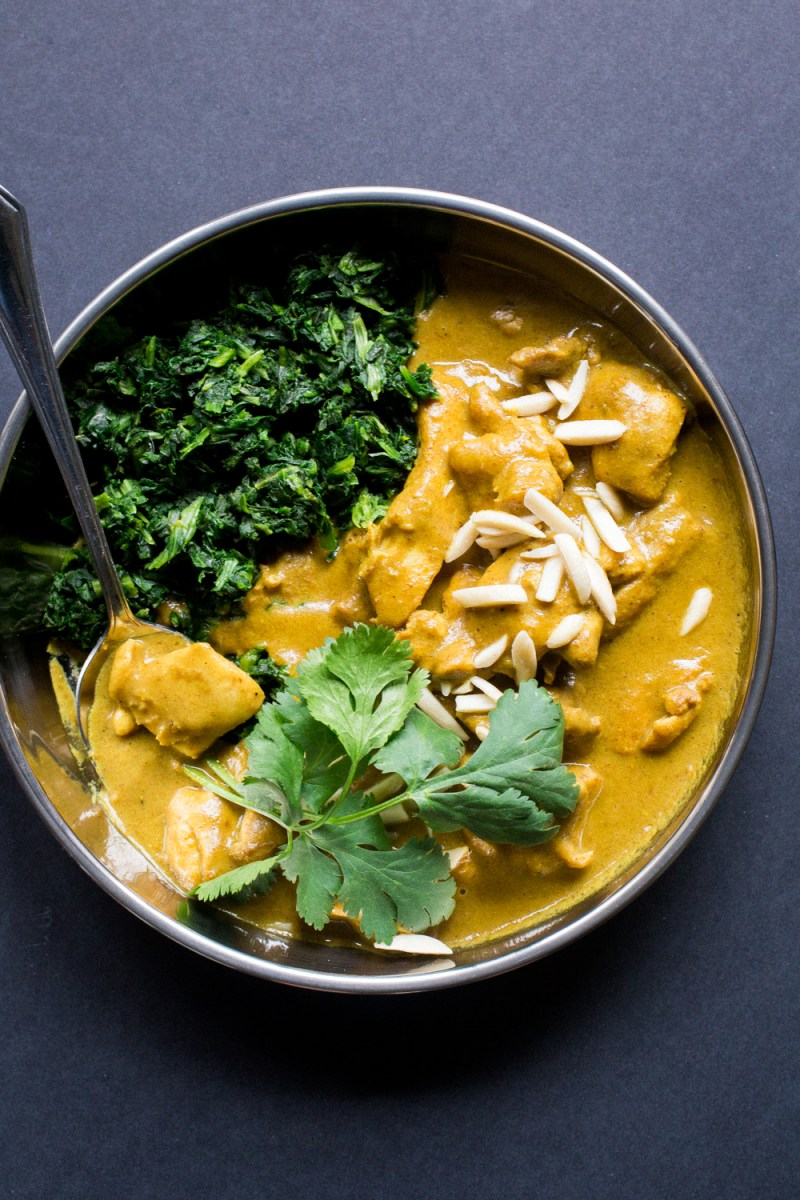
In my new office here in Pensacola Florida, we have an interesting combination of Navy families. Two of my co-workers have spouses they met while stationed in England, and another met his wife while serving in Canada. I’ll often ask them what new dishes they’d like for me to bring into work, as they typically (and unknowingly) are my tasting judges. The question inevitably gets passed to their spouses, and all too often I hear complaints that there are “no good curries” to be found in our town. This Chicken Korma recipe is the result of those conversations.

“Korma” comes from the Urdu word ḳormā, which means to braise. This dish, as with other braised dishes like Rogan Josh, is characteristic of Moghul cuisine, which was first introduced to Northern India by the Mughal Empire in the 16th Century; the Mughal were a predominantly Muslim people of Turko-Mongol descent (some claimed to be direct descendants of Genghis Khan).

There is a lot of variation to kormas, but the underlying theme includes a slow braise in a rich, mildly-spicy curry sauce, often flavored with yogurt or heavy cream. For this recipe in particular, I kept it relatively dairy-free (what’s a recipe without butter or ghee?) and used a bit of lemon juice to impart the tanginess you’d expect from using yogurt.

Read Full Article

Last month I had the opportunity to visit Avery Island, Louisiana, the home of Tabasco. Each year the company selects a group of bloggers to visit their island (which is actually a salt dome surrounded by bayou). In turn, the bloggers are asked to write about their experience and create some recipes using Tabasco sauces. Since I was probably going to make some recipes using Tabasco this year anyway, it was an easy decision to join the event.

I’ve always valued Tabasco sauces for their short ingredients list (the original red pepper sauce contains just three ingredients – peppers, vinegar, and salt), and their ability to add a complex flavor to any dish; I feel that acidity is a tragically underutilized dynamic in most kitchens, and Tabasco has acidity in spades. But until this trip I never realized how much care Tabasco puts into each bottle, which you’ll see in my pictures below the recipe. But first, the food.

It’s coming into flounder season here in Florida, and it is easy to find in my area right now. The fish are caught using a spear (called a “gig”), typically at night, much in the same way that frogs are traditionally caught. A favorite preparation for flounder is to simply pan-fry them in Cajun seasoning (often used interchangeably with the term “blackening seasoning”); since I was already making the seasoning from scratch, I figured this is also an opportunity to incorporate it into one of my other favorite dishes from this area, Étouffée.

Étouffée translates to “smothered” from French, which indicates that the main ingredient (often crawfish, but in this case, shrimp) is smothered in a thick sauce of broth and vegetables. Might as well add some bacon to it for good measure, because bacon.

Read Full Article

You’ve heard of Samosas, right? They’re those triangle-shaped savory pastries served in Indian and Central Asian restaurants. They’re a surprisingly ancient dish, first mentioned in the Middle East (under the name Sambosa) during the 10th century before eventually making their way across Central Asia, the Indian subcontinent, and even Southeast Asia. They’re practically everywhere today – you can even find them pretty easily in South Africa, as Indian cuisine started to influence British colonial food culture.

I loved Samosas in my pre-Paleo days, and I’ve been wanting to tackle them for a while. The problem is, well, pastry. I tend not to fiddle with baked goods and leave them up to the masters (see: Jenni Hulet and her book, My Paleo Patisserie). So after a bit of brainstorming, I settled on the idea of Samosa-flavored mashed potatoes. I like this idea because, heck, most people are probably eating mashed potatoes anyway, so why not kick them up a notch in terms of flavor and vegetable count.

Read Full Article

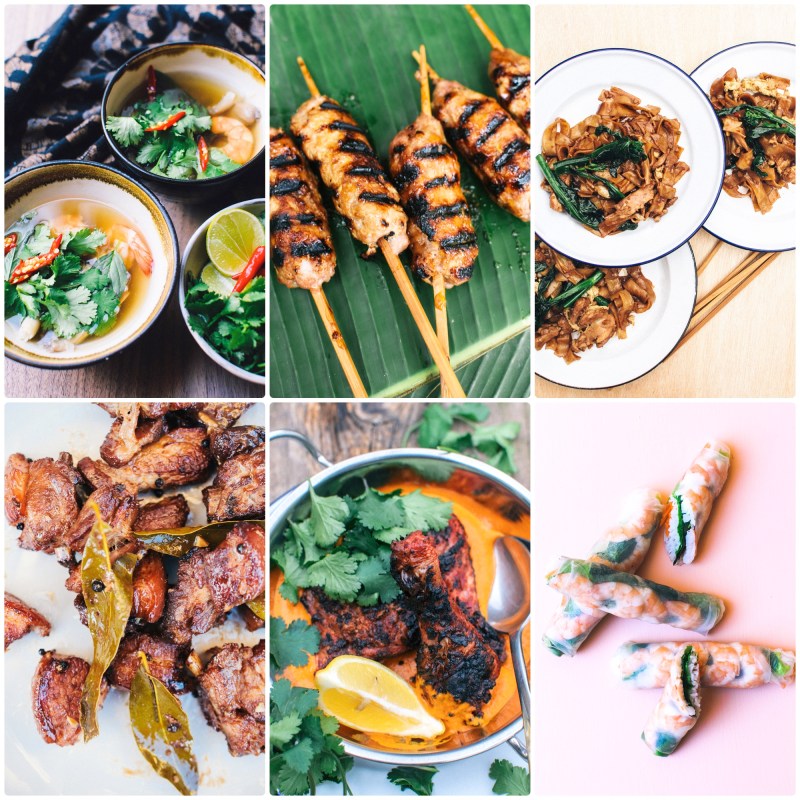
Folks, I have some great news for you – Paleo Takeout was sent to the printer last night! In celebration, I’m totally going to buck a few trends here. Instead of teasing you with snippets of the book, only showing off the very best dishes, I’m just going to let you see the whole shebang right now! This is the actual visual index taken straight from the book. I’m confident that once you see this full recipe list, complete with the picture for each recipe, you’re going to flip a lid.

Bear in mind that many of these recipes have variations and sub-recipes listed for them. For example, the combination of techniques, rubs, and sauces for the wings yields 20 different experiences! Similarly, there are 8 different types of ramen in this book. All told, there are over 200 recipes in Paleo Takeout – how awesome is that? Read on to see everything that is included in the book when it releases on June 23rd.

Read Full Article

Chile Colorado (sometimes spelled Chili Colorado) is a Mexican dish featuring a red sauce and tender pieces of beef.

There is a lot of excessive naming in the world of chile peppers. For example, the primary chile used in this dish, the New Mexico chile, is often called a Chile Colorado in Mexico; it’s not due to a poor grasp of American geography, but because the names once denoted their place of origin. Similarly, the Anaheim chile, which is a milder version of the New Mexico chile, is so named. The Spanish word Colorado also can mean “red”, so who knows. Granted, each of these peppers have subtle differences in flavor, but it all makes for a confusing shopping experience.

To give the sauce its best flavor, I found that blending a fresh jalapeño into the sauce adds a tangy dynamic. If possible, use a ripe red jalapeño, also known as a Fresno chile (see! confusion!) instead of a green one, as the former will have an earthier taste; but it’s not a deal breaker.

Read Full Article

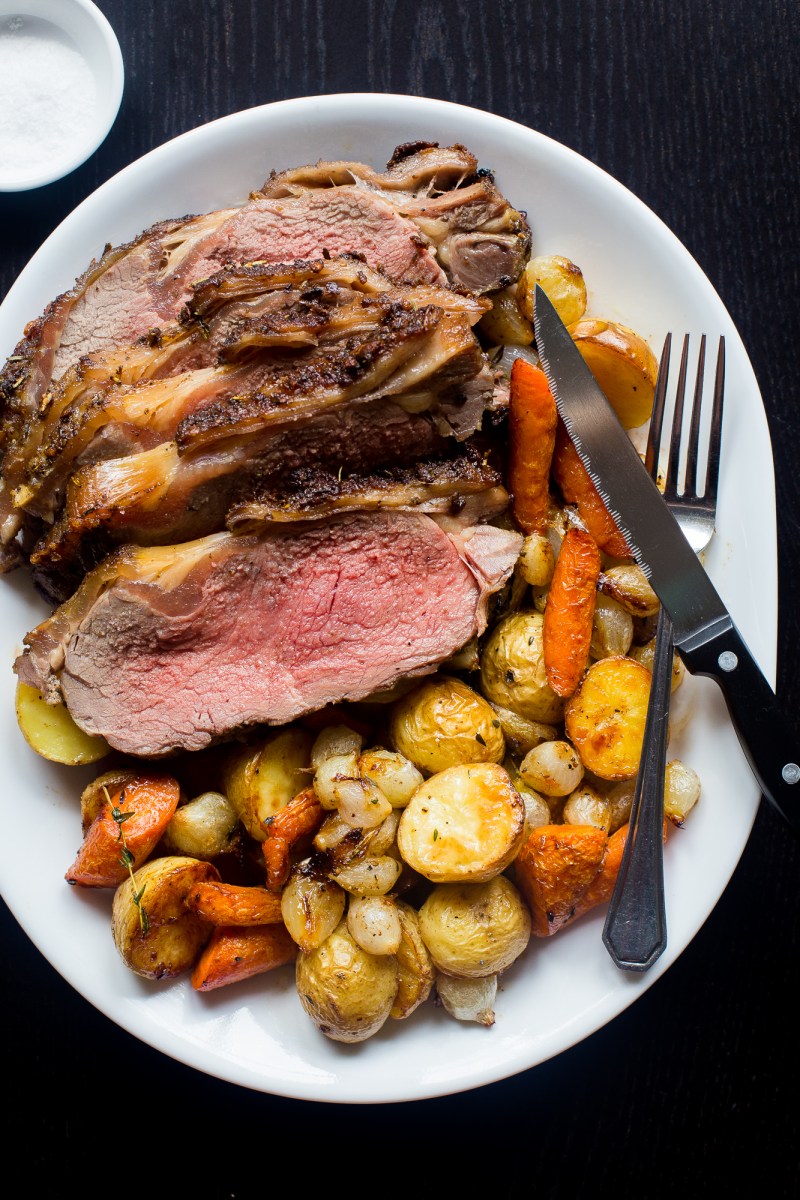
The NY strip loin, sometimes called loin roast or top loin, is a cut taken from the top of the cow’s short loin. The short loin is located near the spine, past the ribs but before the tenderloin and round. This is a crowded area of the cow in terms of butchery, as the porterhouse and tenderloin also come from this section. In fact, this strip loin is basically an uncut series of NY strip steaks. Confused yet? Don’t worry, you don’t need to know how to break down a cow in order to cook up this delicious specimen.

We’re going to roast this loin in a method similar to my most popular post, this Perfect Eye of Round. We’ll blast the roast at 500F to create a nice crust, then reduce heat to 250F until it’s medium-rare.

Not one to leave a job half done, I also roasted some veggies with the strip loin. In duck fat. Naturally. To quote one of my favorite Navy war-era posters, “We Can Do No Otherwise.

Read Full Article