Page 43 of 55

NOTE: An updated version of this recipe appears in my cookbook, The Ancestral Table.

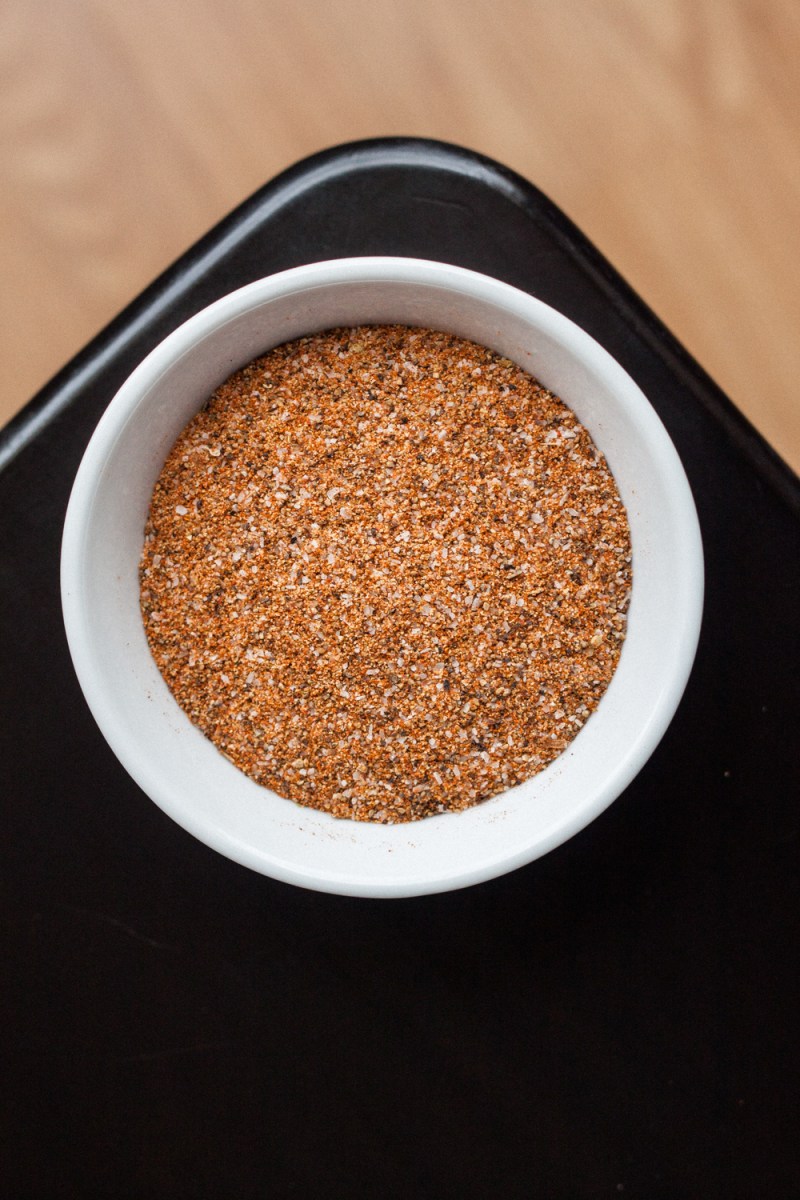
If you’ve taken a look at the ingredients list of your favorite barbecue rub, you may have been surprised to see that many commercially-available rubs have some form of sugar in them. There are definitely sugar-free rubs to be found, but wouldn’t it be better to just make some of your own?

This recipe is courtesy of my friend Jeremy, who has his own Kansas City Barbeque Society competition team, SeaDog BBQ. This rub has a nice, even taste with a hint of spice thanks to its use of chipotle powder.

Yields about 3/4 cup.

Read Full Article

Gyro meat, often referred to as doner or shawarma meat, is simply meat roasted on a rotating vertical spit and shaved off. Most Mediterranean and Middle-Eastern countries have some variation of this dish as a common street food. Depending on where you’re getting it, the meat can be made of lamb, beef, goat, chicken or a combination of meats. It’s one of my favorite meats of all time, and one that’s not easily replicated at home without a rotisserie setup. Lava Lake Lamb was gracious enough to send me some ground lamb recently, so I thought it was time to try and figure out how to make it on my own.

I spent a lot of time researching how to make authentic gyro meat at home, and in the end I found that Alton Brown’s approach was just about perfect. It involves processing the meat to make a thick paste, which is then stored for a couple hours before being cooked on the grill using a rotisserie or in the oven using a meatloaf pan. I went with the meatloaf pan variation with just a few adjustments, and it was awesome.

Read Full Article

In the US, tzatziki is associated with Greek food (most especially as a sauce served with gyros), but the name comes from the Turkish side dish called cacık which features the same ingredients but is diluted with water. Although you can find it commercially (we especially like Hannah’s version), it’s a fairly easy sauce to whip up on your own using ingredients you might already have in the fridge.

Read Full Article

NOTE: An updated version of this recipe appears in my cookbook, The Ancestral Table.

While I usually eat a combination of meat (homemade jerky, smoked salmon, sardines, or uncured deli meat) and fruit (berries, banana) for breakfast during the workweek, on weekends I tend to gravitate towards your typical eggs/bacon breakfasts. Unfortunately, this guy gets tired of eggs fairly quickly, even after trying every just about every egg preparation under the sun. Then last week a friend turned me onto the dish you see above, huevos haminados.

This egg dish is popular in Jewish communities in the Middle East and the Mediterranean, and served at Passover Seders (a ritual feast that marks the beginning of Passover). The dish’s Latin-based name might throw you off, but that’s a reflection of its origin in Medieval Spain. There are several variations online, which include boiling the eggs in onion skins and coffee, or simmering in a crock pot for seven hours. I decided to go with an even easier approach – you just throw the eggs in an oven for five hours.

While the egg shells stay mostly white, the egg whites become a rich brown color and the eggs develop a nutty, roasted taste. There’s even a hint of meatiness in there that’s hard to describe. Either way, it’s a dead-simple dish that is worth a try!

Read Full Article

Last week I participated in the first-ever Highbrow Cook Off, hosted by Highbrow Paleo (an online collection of citizen scientists, researchers, nutritionists, exercise physiologists, book readers, comedians, modern homesteaders, political analysts, hunters and huntresses, foragers, eaters of guts – eyeballs – and insects, devoted followers of OakOy and culinary explorers).

The rules were simple:
– only use the ingredients outlined
– use of pre-approved pantry items is unlimited
– only use minimal processing, and minimal kitchen equipment, as outlined
– keep track of how much you spend on the ingredients
– will not use more than 3 kitchen gadgets/utensils, and nothing powered except the oven or stove top

For this first iteration, the incorporated ingredients were kale, mushrooms, onions, eggs, and a tuber. After a little deliberation, I settled on the idea of a baked sweet potato, with the veggies/eggs as toppings. Turned out beautifully! I was so happy with the results I thought that I should share it here as well. Total cost of the meal was about $2.

Read Full Article

I wanted to come up with a special Easter dish this year, but I quickly realized that I couldn’t use your standard Easter meal ideas; I’ve already posted recipes for ham and lamb roasts this year. Instead, I settled on a traditional Polish Easter Soup called Żurek (also often referred to as Biały Barszcz – “White Borscht”). This soup uses a combination of pork (kielbasa sausage, ham, or in our case, bacon), boiled eggs, and veggies in a slightly sour and creamy (hence the “white”) broth.

There are quite a few challenges with creating a grain-free version of this soup. First of all, the soup is traditionally made by soaking and fermenting/souring rye bread as a soup starter. Instead, we’re going to create a “sour” taste by using another popular method – horseradish and sour cream. Żurek is also traditionally served in a rye bread bowl or with large chunks of rye bread as an accompaniment. We’re just going to omit that whole rye bread part; it didn’t make this soup any less delicious!

Read Full Article

NOTE: An updated version of this recipe appears in my cookbook, The Ancestral Table.

There are four main benefits to making your own homemade stock:

1. It saves you money, especially if you use leftover chicken parts. As you’ll see in this recipe, even buying chicken parts specifically for stock is still cheaper than buying commercially-available stock.
2. You get to control the taste of the broth, especially how much salt goes into it – which in my case is NONE. I prefer to add salt to my dishes as I cook them, without having to worry about how salty my broth is going to make my dish.
3. You can make it as concentrated as you’d like, which helps you save valuable freezer/fridge space.
4. You have control over where the chicken comes from, and how it was processed, by purchasing your birds/parts from a local farm or from online vendors.

For this recipe, I used chicken parts from U.S. Wellness Meats; specifically, chicken backs and necks. I used these parts because they have lots of bones, which house a lot of nutrients that are imparted into the broth. U.S. Wellness Meats were out of chicken feet at the time of my order, so I got some locally. These are great because they are full of bones and collagen, which create a rich, flavorful, and gelatinous broth. Other options for chicken parts are leftover chicken carcasses (store them in the freezer after roasting a chicken, until you have a few ready to go), or whole stewing hens (older chickens that are too tough to eat using quick-cooking methods).

Read Full Article

NOTE: An updated version of this recipe appears in my cookbook, The Ancestral Table.

US Wellness Meats recently sent me a package of their grass-fed bison stew meat, and I jumped on the opportunity to make a traditional hearty stew. Rather than settle on the all-too-common crockpot stew (nothing against those), I opted to make this stew the traditional way – browned meat, sautéed onions, simmering wine-and-stock broth, and incrementally-added ingredients – to make sure the final product was both decadent and perfectly-crafted. That might sound like a lot of work, but it really isn’t – this is a dish that can easily be completed in a few hours.

Although the American bison is often referred to as a buffalo, it is only a distant relative of the true buffalo (like the Asian water buffalo). Its closest relative is the European bison, also known as a wisent. Its meat is usually leaner than beef, high in iron, and sweeter-tasting. Because of its leanness, I find that it’s best served in slow-cooked meals like this stew, as hamburgers, or as a grilled meat (like shish-kabobs) served medium-rare.

If you don’t have bison meat on hand, never fear – this stew tastes just as great with beef or lamb stew meat!

Read Full Article

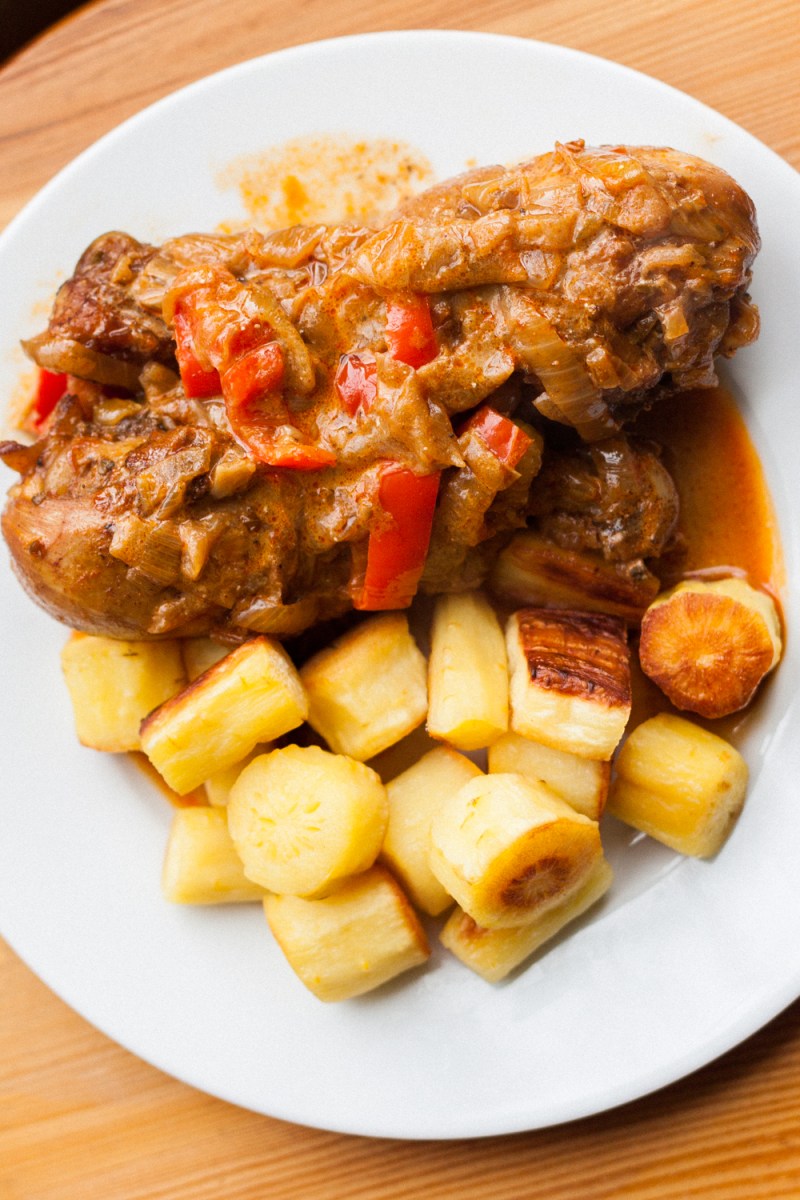
Chicken Paprikash is a famous Hungarian dish, known for its mellow flavor, mild sweetness, and tender chicken. Some might consider it a stew, and I’m not arguing that fact – honestly, it really doesn’t matter. This stuff just tastes good. This dish is commonly served with egg noodles or spätzle-like dumplings. I thought that my roasted parsnips would be a good substitution, and it worked; their crispy outside and slight-spongy inside were perfectly paired with the chicken’s creamy sauce.

Today’s recipe is somewhat of a joint venture with my friends Melissa and Nicole from mealpod.us. I love the concept of their site: they make a large batch of one dish in advance, and then freeze portions of it in their clever little “mealpods” for easy reheating. It allows them to eat healthy, regardless of how busy and frantic life gets. The only adjustment needed with my recipe to make it mealpod-friendly is to use boneless, skinless chicken thighs instead of bone-in thighs/drumsticks. I sent them this recipe a few weeks ago and they made a version of their own; it turned out great!

Read Full Article

Parsnips are a bit of an oddity here in the United States, and unfairly so. They have been staples of the European diet since the Roman times. They were brought to America back in the day by colonists, but they eventually became replaced by the white potato on American plates. Parsnips are a great source of carbohydrates, and add a rich, buttery, and slightly-sweet taste to the table.

Read Full Article