Page 45 of 55

Yesterday I posted my own recipe for one of Alex Boake’s awesome illustrations. I was really happy with the results.

Additionally, I’ve got a little secret: in writing up one of her creations, I secretly coerced her into making an illustration of one of my recipes. She decided to take on my kalbi recipe, and her piece is probably the coolest thing on the entire internet right now. Head over to her blog to check out her post about my recipe.

Have you been to Alex Boake’s blog yet? It’s pretty awesome. She complements each of her unique recipes with beautiful illustrations in place of photos, and each illustration carries a great sense of motion and impeccable placement. After a bit of gushing about her work, she offered to do a recipe swap – wherein she makes one of my dishes and draws it, and I make one of her dishes and take pictures of it. I thought it was a great idea.

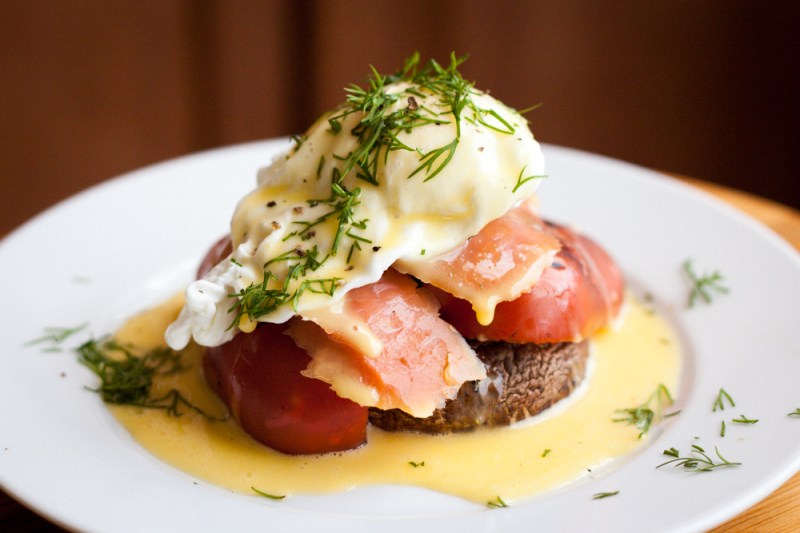
I decided to try and tackle her Smoked Salmon Eggs Benedict recipe (also known as Eggs Atlantic, Eggs Hemingway, and Eggs Royale). I thought it was a fun gourmet dish to try for a weekend brunch, and I liked the idea of using a portabella mushroom cap to replace the standard english muffin typically found in this dish. The red bell pepper also adds a hint of sweetness not normally found in the dish, which was great. I only made one adjustment to her original recipe, and that was to add a little white vinegar to the water I used to poach my eggs – a trick I learned while working at a breakfast restaurant many years ago – the acidity helps to make sure the eggs don’t break apart during the poaching process.

Read Full Article

Liver and onions. You really can’t say the former without saying the latter, at least here in the United States. Surprisingly, I had a hard time finding anyone that’d even try and tackle beef liver in many of my cookbooks. Instead, I had to scour the internet for something palatable. Your typical online liver and onions recipe calls for sautéing the liver for a few minutes on each side, and then throwing some onions on top to simmer until they’re cooked through. While that does effectively mix the onion flavor with the liver, it also can easily result in a gray, overcooked and dry liver.

US Wellness Meats recently sent me a package of their beef liver to make a recipe for their site; the liver comes from grass-fed, antibiotic-free, non-added hormone cows. As far as organs go, it was beautiful! I thought this was the perfect time to try a liver recipe I’ve been cooking up in my head for a while now. The process uses a combination of sautéed liver, caramelized onions, and crispy bacon to create a textured and slightly complicated taste from a dead simple ingredients list. I think it turned out pretty well.

Read Full Article

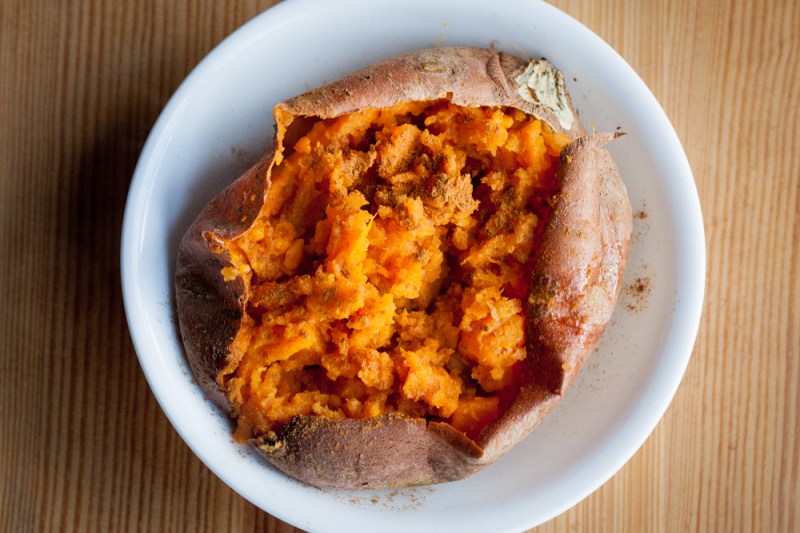
This may fall under the no-brainer category, but I thought I would explain how we bake our sweet potatoes here at the house. It’s one of our simplest recipes, and the only thing it needs is about 45 minutes of cooking time to ensure you get that perfect potato. Additionally, we like to take five seconds out of our busy day and add a little cinnamon to our potatoes, which gives just a twinge of complexity to the taste.

Here’s a couple neat facts about sweet potatoes. Sweet potatoes originated in Central/South America. Papua New Guinea eats the most sweet potatoes per capita, with 500kg per person annually. North Carolina supplies most of the sweet potatoes we find in US markets. They’re only distant cousins to the white potato, despite sharing the same name. They’re also pretty distantly related to yams (which originated in Africa), even though here in the US we often (incorrectly) label our sweet potatoes as “yams”.

Read Full Article


image courtesy of Warner Bros.

Note: this was written in January 2012. Check out my three-year recap post here.

Last month was the one-year anniversary of my switch to a modified Paleo diet (which = Paleo + white rice and some dairy). At the six-month mark I made this post with some lessons I’d learned; while many of these tips still ring true (although we haven’t had ice cream for some time now), I thought I’d add a few more.

Read Full Article

NOTE: An updated version of this recipe appears in my cookbook, The Ancestral Table.

Eye of round is a pretty intimidating piece of beef. It’s an extremely lean cut taken from the hindquarters of the cow, which gets a lot of exercise. To be honest, I usually just use the eye of round roast to make jerky (along with london broil, which is also from the same area of the cow) because making steaks and roasts with this part of the cow is usually always a gamble.

The other day I stumbled upon a recipe that seemed both crazy and intriguing; you roast the meat at a high temperature for a while, and then you turn off the oven and leave it in there for 2 1/2 hours. The end result is something like prime rib – a dark, crusty outside with a juicy, pink, tender inside. Honestly, it makes this fairly inexpensive cut of meat taste about 100x better than what you paid for. I may never cook an eye of round roast any other way for the rest of my life!

Read Full Article

NOTE: An updated version of this recipe appears in my cookbook, The Ancestral Table.

Satay is a dish that originated in Indonesia, and can be found in many Asian restaurants as an appetizer. It’s basically meat on a stick, so it has a universal appeal. Making an authentic satay dish is easy, provided you have access to the ingredients (galangal, turmeric, and lemongrass in particular).

Read Full Article

NOTE: An updated version of this recipe appears in my cookbook, The Ancestral Table.

Satay sauce is primarily a dipping sauce in the United States, but it takes on a different role in Southeast Asia, where it originated; in addition to being a dipping sauce, it is used as a general purpose condiment to provide depth to dishes, and is the pivotal ingredient in many dishes such as gado-gado in Indonesia. In Australia, it’s a flavor you can have added to kebabs (to delicious effect, I might add), and is used as a condiment in many parts of Europe as well.

Because peanuts are not Paleo-friendly, I replaced the peanuts with a combination of walnuts, almonds, and macadamia nuts. Surprisingly, you can’t really tell that there aren’t any peanuts in this sauce – it’s the combination of shrimp paste, garlic, coconut milk, and palm sugar that really give this sauce its signature taste. If you have no restrictions on peanuts, I made no other substitution so you can just throw them back into the mix.

Read Full Article

Note: an updated version of this recipe is here.

Beef stroganoff (бефстроганов) is a Russian dish that dates back to the 19th century. The dish became popular here in the US after World War II, when Russian immigrants and American soldiers returning from war brought it stateside.

Historically, the dish was served in a sauce made primarily of mustard and sour cream. Other variations include a little tomato paste for zing. Here in the US, it’s generally served with onion and mushrooms as well; it turns out that a little of everything is what tastes the best.

Read Full Article