cooking

People say nice things about companies all the time, and I’m always leery of endorsements. After all, companies are just big, hulking, impersonal machines, right? While it’s probably easy or convenient to say that The Ancestral Table is solely the result of my own hard work over the years, the truth is that my cookbook wouldn’t have been possible without the support of many people, chief among them my friends at US Wellness Meats. I realize that sounds a little extreme, so hear me out.

Two years ago, I sent them an email asking if they were interested in partnering for some recipes. This was my first time putting myself (and this blog) out there like that, and I felt sheepish writing such an assuming email – after all, at the time I had only a few hundred Facebook “likes” and a regular readership of around 50 people. But the USWM team saw something they liked in my little site, and sent me a box of various meats to work with; they also added me as their April 2012 Featured Chef, and my website took off from there. I attribute the turning point of this blog – from something I was writing for mostly myself to what it is today – to their support in early 2012.

Read Full Article

I know, it’s totally unfair of me to be writing about how people like my book when it won’t release until Tuesday! I’m a big jerk. But I wanted to take a minute and thank the people that have helped to bring some attention to The Ancestral Table during these past couple of weeks, and to share some of their impressions of the book. Without further ado, let’s dig in.

Read Full Article

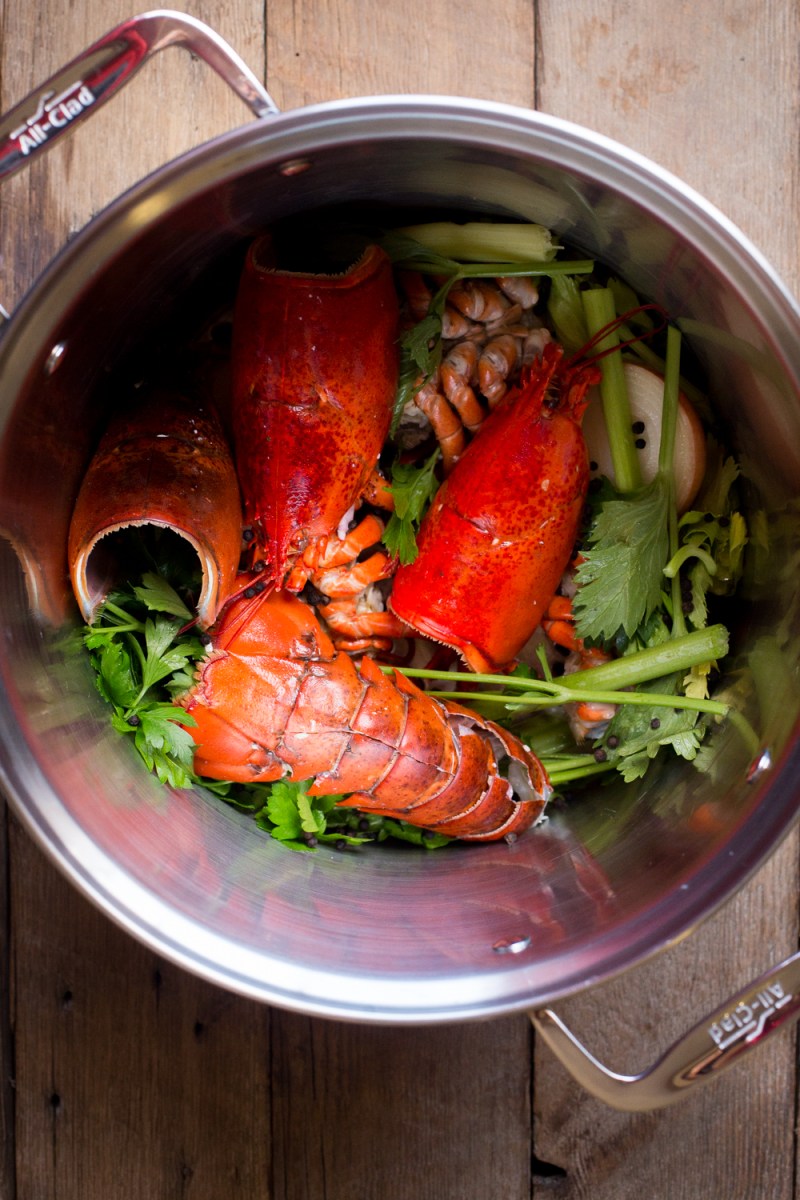
Bouillabaisse is a traditional Provençal (Southeast France) stew, typically made with fish and shellfish. Although it was originally made with rockfish, today it’s also made with all sorts of different seafood. For this recipe in particular, I decided to go with lobster and mussels; I like the idea of pairing two foods that are at opposite ends of the price spectrum (lobster = rare & elegant, mussels = common & unglamorous). This dish is paired with my lobster stock recipe, so be sure to check that out since you’ll need some stock. Putting this dish together – stock and all – is actually a fairly quick experience: in about 90 minutes you’ll have a recipe that will have your dinner guests swooning.

Don’t let the assumed costs of buying lobster deter you. If available in your area, live lobsters are surprising affordable when compared to the going rate at a seafood restaurant. And really, sometimes you can’t put a price tag on eating a rich, classic meal in the comfort of your own home.

Also, don’t forget that I’m hosting a giveaway this week; click here for a chance to win two live 1.5 lb lobsters from lobster.com ($65 value)! The giveaway is limited to continental US residents and ends midnight, Saturday, Feb 8th, 2014. Good luck!

Read Full Article

Phew! January has come and gone, which means that my tradition of sharing only Whole30 recipes during the month is over. While I think that Whole30 recipes are easy to make and fun to work with, I miss cooking with alcohol the most each January. So let’s dive right into February with an easy, tasty recipe that can be used in many different ways – lobster stock. Most people associate stock with long, boring hours of slow-cooking. The opposite is true with lobster (and all shellfish) stock, as it’s just a matter of sautéing vegetables and the shells, then adding water and wine, and cooking until it’s super delicious (about 45 minutes).

The folks at Lobster.com were kind enough to donate a lobster for my stock recipe. They ship overnight to the continental US, and it was quite an experience to receive a package in the mail that contains a live, breathing animal; not only was it alive, but it was the most lively lobster I’ve ever worked with! I par-boiled the lobster (instructions in the recipe below) so that I could use its shell for stock, and its meat for a Lobster and Mussel Bouillabaisse. I bought a couple lobster shells from my local grocer to add to this recipe and I was amazed at how thick and hearty the Lobster.com shell was compared to what I usually buy!

I was also able to arrange a giveaway through Lobster.com: two 1.5 lb live lobsters, delivered to your door ($65 value)! To enter, click here to enter via Rafflecopter. The giveaway is limited to continental US residents and ends midnight, Saturday, Feb 8th, 2014. Good luck! Okay, let’s move on to the recipe.

Read Full Article

I think it’d be really fun if you cooked through The Ancestral Table, and I’d love to follow you on your journey. I wrote this book with that very idea in mind, and for two specific kinds of people. First, for anyone that is looking to try out a more healthful way of eating, this might be the tastiest way to go about it. Secondly, for anyone that’s been eating a Paleo-style diet for a while and is looking to either 1) try out some new dishes or 2) ramp up their skills in the kitchen, I think this is also a great solution.

I’m not saying that you have to exclusively cook every meal straight out of this book (after all, there are only a couple breakfast recipes in here), but I have a feeling that most people (and their tastebuds!) will benefit from cooking frequently out of my little tome.

It would be awesome if you shared your progress as you cook your way through The Ancestral Table. Please send me emails, upload pictures to my Facebook page, tag me on Instagram. Or simply use my nifty little hashtag, #theancestraltable, so that I can find it.

To kickstart your new adventure, I wanted to provide you with a list of items (tools and ingredients) that you’ll need in order to tackle most of these recipes. That way, when the book releases on February 11th you can jump right in.
Read Full Article

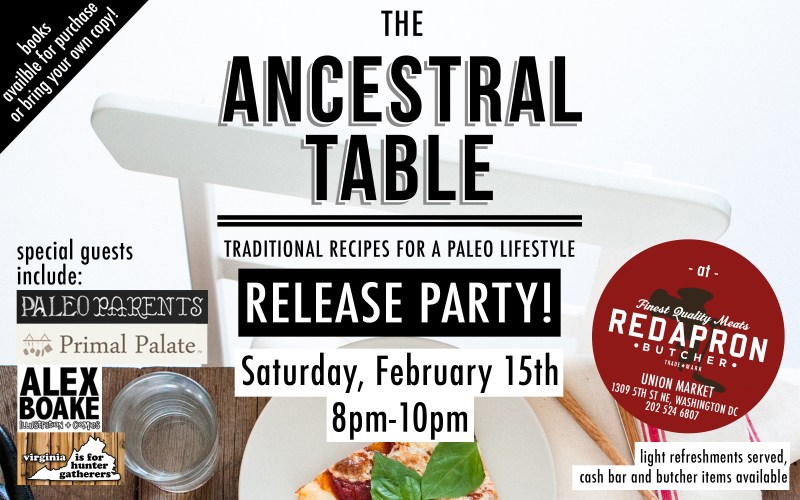
I’m happy to announce that I’ll be hosting a release party for The Ancestral Table: Traditional Recipes for a Paleo Lifestyle in just two weeks! Come celebrate, and bring your copy of the book to get signed! One of my favorite DC bookstores (Politics & Prose) will also be selling copies of book during the event (signed, of course).

Red Apron Butcher has been kind enough to host the event, keeping their lights on an extra two hours so we can enjoy the party exclusively. Light refreshments will be served, including Suet (Tallow) Fries with Rosemary and Garlic Confit, Pork Rinds with Lard Dip, and more! A cash bar (stocked with your favorite wine, beer, and hard cider) and butchery (charcuterie, lard, and broth) will be available.

Details:
Saturday, February 15th, 8pm-10pm
Red Apron Butcher (Union Square)
1309 5th St NE, Washington DC, 20002

Come meet some of your favorite Paleo bloggers, including Bill & Hayley from Primal Palate, Matt & Stacy from Paleo Parents, Alex Boake, and Brent & Heather from Virginia is for Hunter-Gatherers. More friends and bloggers are joining every day, so check back often!

Entry is free, but please RSVP as soon as possible so that I can get a proper headcount (we don’t want to run out of food!). Don’t miss out – free grub and great company!

See you there!

P.S. I just wrote a guest post for my good friend Michelle (Nom Nom Paleo): 8 Things You Didn’t Know About Russ Crandall’s The Ancestral Table. Check it out!

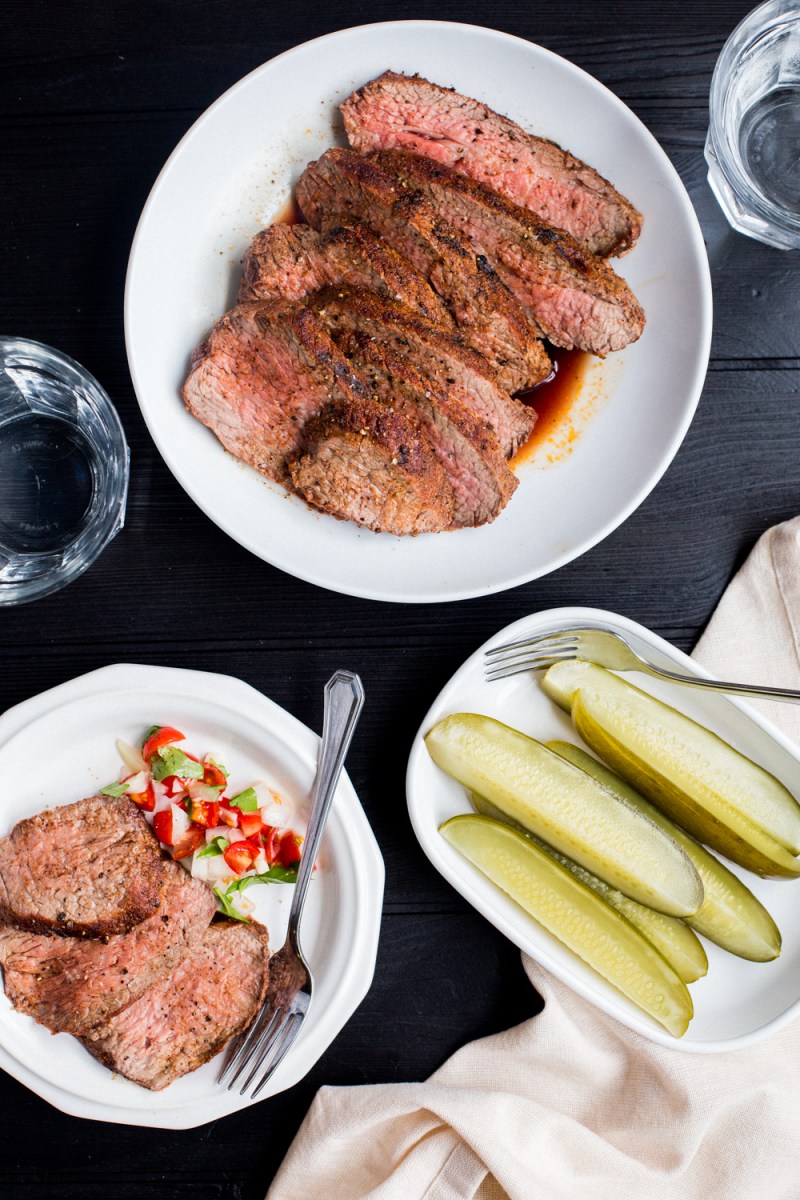
Santa Maria Tri-Tip Steak is a specialty of Santa Maria, California, which lies about 100 miles northwest of Los Angeles. Tri-tip is taken from the bottom sirloin of the cow, and is often cut into steaks and sold as “sirloin steak” (a tougher version of the prized “top sirloin steak”). When sold whole, as is used in this recipe, it can weigh up to 4 pounds. This lean, moderately tough, and economical cut of meat fares best when cooked only to medium-rare or medium.

The key to making a good Santa Maria Tri-Tip is cooking it so that it has a crusty outside and tender, juicy inside. There are different ways to achieve this result; in Santa Maria, chefs often use a grill that can be adjusted up and down, so as to develop a crust and then pull it away from the fire to prevent burning.

My method is similar. We’re going to only heat one side of the grill, indirectly roast it until it reaches a certain temperature, then place it directly over the fire to create a tasty crust at the end. The end result is a dead simple recipe that always makes for a tasty experience.

Read Full Article

This past week I did a guest recipe on PaleoParents.com, and I wanted to share the recipe with you folks too. This is actually an update of an old recipe that I decided to re-shoot because I was unsatisfied with the recipe’s photos. It’s amazing to see how much my photography has changed over the past three years; sometimes it’s hard to see the forest for the trees. For comparison’s sake, I’ve included the old picture at the bottom of this post. Although I’m posting all Whole30 recipes all month, this recipe isn’t technically Whole30 because it uses white wine; but it’s a guest post, so it’s exempt, right??

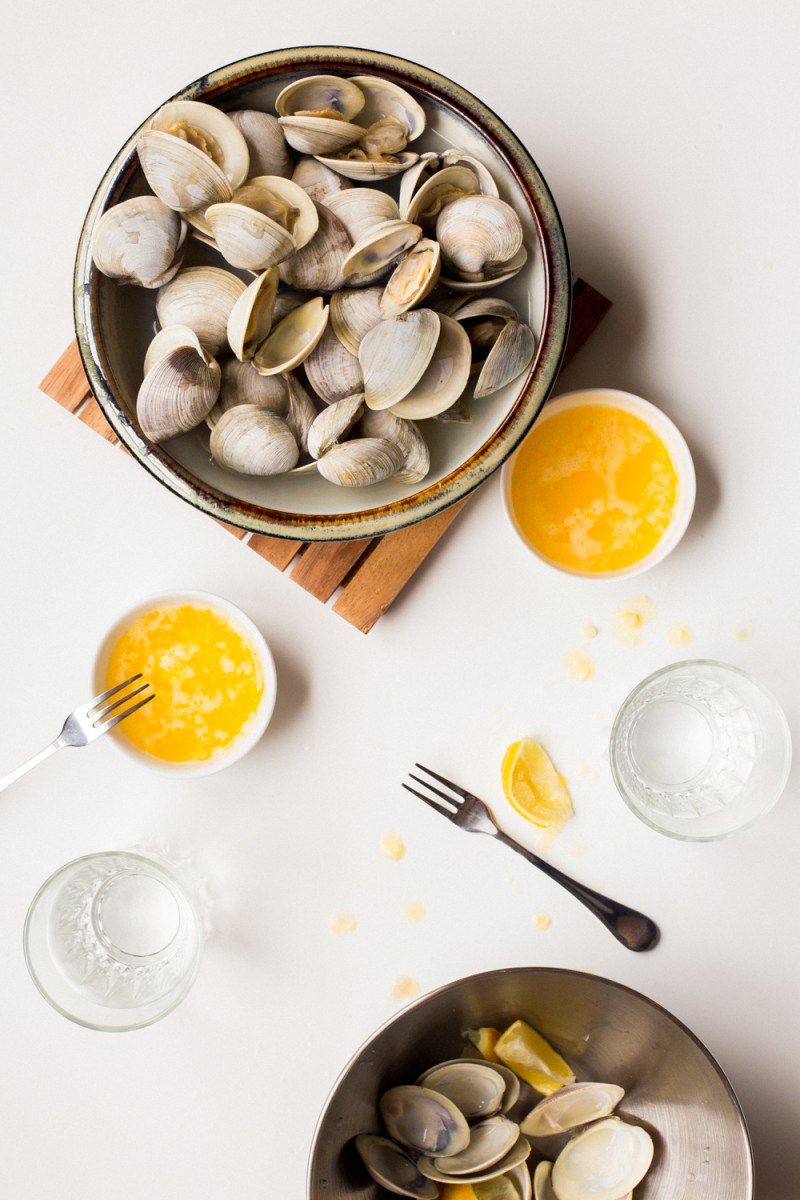
Lately, I’ve been on a personal quest to turn more people on to seafood. Besides the fact that it’s both delicious and full of nutrients, it can often be dead-simple to prepare. Take this recipe, for example, which requires only 15 minutes from start to finish – 5 minutes to scrub the clams, 5 minutes to prep the melted butter, and 5 minutes to steam the clams. Cooking clams at home is also much more economical than ordering them at a restaurant; you can often find and steam clams yourself for a fraction of the cost you’d pay out in town.

Clams in particular are especially nutritious. Pound-for-pound, they have more iron than beef liver, and they’re high in Vitamin B12, Vitamin A, calcium, selenium and potassium. They are an excellent source of protein, and are especially healthful when considering that they have Omega-3 fatty acids and a much lower contamination profile than other ocean-based sources of Omega-3 (like salmon). Have I convinced you yet?

Unlike other seafood, farm-raised clams (and mussels) are preferred over wild-caught clams; they are raised on ropes suspended above the sea floor, which makes them less gritty than wild clams dredged from the ocean floor. Dredging can also damage the ocean’s ecosystem.

Read Full Article

With early copies of The Ancestral Table making their way into the hands of media and reviewers this week and next, I’ve been getting a little reflective lately. More than once during some recent marathon email sessions, I’ve had to remind myself of why I wrote this book in the first place (hint: it wasn’t to get more emails). After sitting down to think about it more than a few times, I thought you might be interested to hear why I wrote my cookbook.

Read Full Article

I’m a big fan of Thai curries, and Green Curry is one of my favorites. It’s been a couple years since I tackled my last Thai curry (Panang Curry), so I thought it was time to share another recipe. Like in my Panang Curry recipe, this recipe is a template for you to adjust as you see fit; directions on how to change the protein or add vegetables are provided below the recipe.

The Thai word for Green Curry (แกงเขียวหวาน) actually translates to “Sweet Green Curry”, but that doesn’t imply that this dish is sweet. Instead, “sweet green” means “light green” in Thai.

While the idea of making curry from scratch may be initially daunting, nothing could be further from the truth. My curry paste has quite a few ingredients, but all you do is basically throw them all together and purée; the paste will keep for a month in the fridge (or several months in the freezer) and there’s enough paste to make three curries. Making the actual curry is even easier – it’s a 20-minute meal, if not less.

Read Full Article