dinner

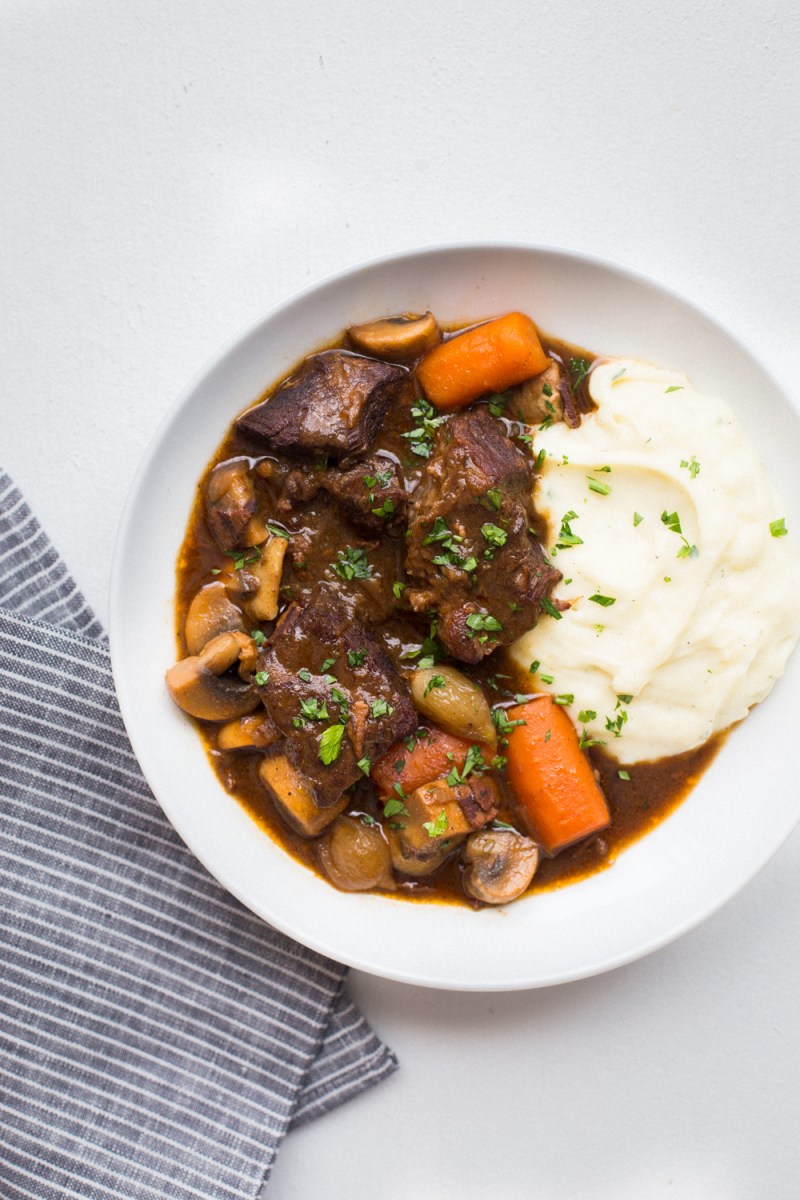
Some long-term readers may remember that I posted a Beef Bourguignon recipe about this time last year. While it tasted great, I wasn’t happy with some of the steps in the recipe, and I was really unhappy with the pictures. So this past weekend I put my thinking cap on and tackled the dish from scratch, without consulting my old recipe at all. I’m happy to report that I made some pretty big improvements to my old recipe and cut out a couple unnecessary steps along the way. To avoid confusion, I’ve now happily removed my old, obsolete recipe.

Beef Bourguignon is a dish that originates from the Burgundy region of Eastern France. It’s widely accepted that this dish started as a peasant’s recipe, possibly as far back as the Middle Ages, as a way to slow-cook tough cuts of meat. However, it’s not mentioned in cookbooks until the early 20th century, when it was refined into the staple haute cuisine dish it’s generally regarded as today. Most people associate this dish with Julia Child, as her recipe in Mastering the Art of French Cooking is a timeless classic.

This dish is fairly true to the authentic recipes available today, and not terribly unlike Julia’s original recipe. Generally, this dish is cooked with bacon since lean/tough meats were typically used and adding bacon gave this dish some rich fattiness. I’ve also found that fattier cuts turn out really good as well. My personal touches include dusting the beef pieces in rice flour before browning (Julia browned the beef alone, then added flour and roasted the beef for a little while in the oven, turning the beef once halfway through – quite an involved step!). I also decided to keep the pot on the stovetop instead of transferring it to the oven; to me, this better mimics the open-fire method of cooking that birthed this dish, and it doesn’t alienate home chefs that don’t have a dutch oven yet. If you’re rice-free, never fear – while the addition of rice flour helps thicken the sauce and adds a little body to the broth, it’s not a show stopper.

Read Full Article

Because of their heavy use, beef cheeks are super lean and tough. While this doesn’t sound like a fun cut of meat to cook, when braised the results are remarkable: with a little liquid, heat, and time, one cheek magically transforms into a dense, succulent, and immensely satisfying meal for two.

A traditional French-style braise in broth, red wine, mirepoix veggies, and a few sprigs of fresh herbs help to bring a full flavor to the meat. But after several hours in the oven I felt like I needed to add something to liven the dish up; so I worked out a new favorite invention of mine, anchovy butter.

Read Full Article

I don’t know about you guys, but after our longer-than-expected winter I’ve been in on a month-long grilling bender. And though I love to come up with tasty marinades for my grilling adventures (Exhibit A: Izgara Bonfile), sometimes I just want a tasty creation that’s also quick to make. The solution is pretty easy, really: you just throw a salsa on top of an otherwise basic grilled steak!

This salsa is inspired by Insalata Caprese, a fresh salad originating from the island of Capri in the early 20th century. It’s traditionally made with tomatoes, fresh mozzarella cheese, oregano, and arugula, but over time most people have substituted the oregano and arugula with fresh basil. We Americans are even weirder in that we also like to add balsamic vinegar as well. For my salsa I decided to keep a little balsamic vinegar and also add a bit of lemon juice to provide some acidity and sourness without an overpowering vinegar taste.

Read Full Article

With our extended winter this year (spring is finally springing in our neck of the woods this week!), I found myself craving comfort foods to help me get over the cold-weather blues. And for that very same reason, I decided to focus on an American classic for this week’s recipe – one that some might consider a quintessential comfort food. Believe it or not, it’s very hard to find any sort of origin or history around the combination of sausage, peppers and onion. It’s a staple food of Fenway Park, so it must be a Boston thing, right? But others associate it with NYC, and still more with Chicago. All I can say with certainty is that it’s of Italian-American descent, with fairly deep roots, and an easy way to make a quick delicious meal.

The word “sausage” originally comes from the Latin word salsus, which means “salted.” There is evidence of it being enjoyed in Italy as much as 2,000 years ago. That it has a long culinary existence isn’t so surprising; sausage is a perfect way of making sure every bit of the animal is used, and deliciously so. Here in the US, the words “Italian sausage” imply a seasoning based on fennel seeds and anise, and can be sold as either mild or spicy.

Read Full Article

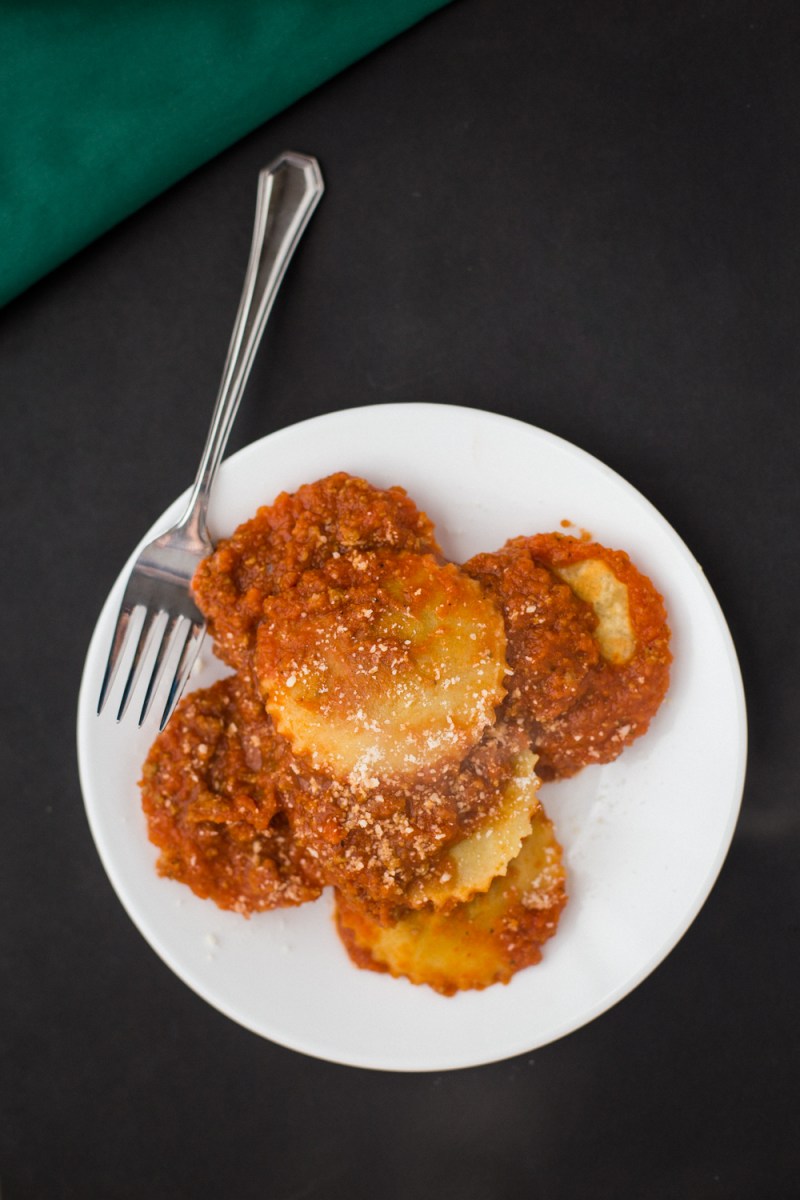
When removing gluten from my diet a couple years ago, one dish I assumed I would never taste again was ravioli. Seriously, how could I pull that one off without flour? I’m sure it could be done, but it would take weeks, even months, of trial and error. I love ravioli, but frankly, not enough to put myself through that kind of ordeal. Luckily, a moment of genius struck me when trying to figure out something unique to make with my most recent batch of Cappello’s Gluten/Grain Free lasagna sheets. They did all the hard work for me; I just had to put everything together.

Ravioli has been written about since the 1300s, so logic dictates that it’s been around longer than that. It probably took a while to get the attention of the scribes, right? There are countless variations of ravioli, but since this was my first time making it in years, I wanted to style it after my childhood favorite – Chef Boyardee beef ravioli!

Read Full Article

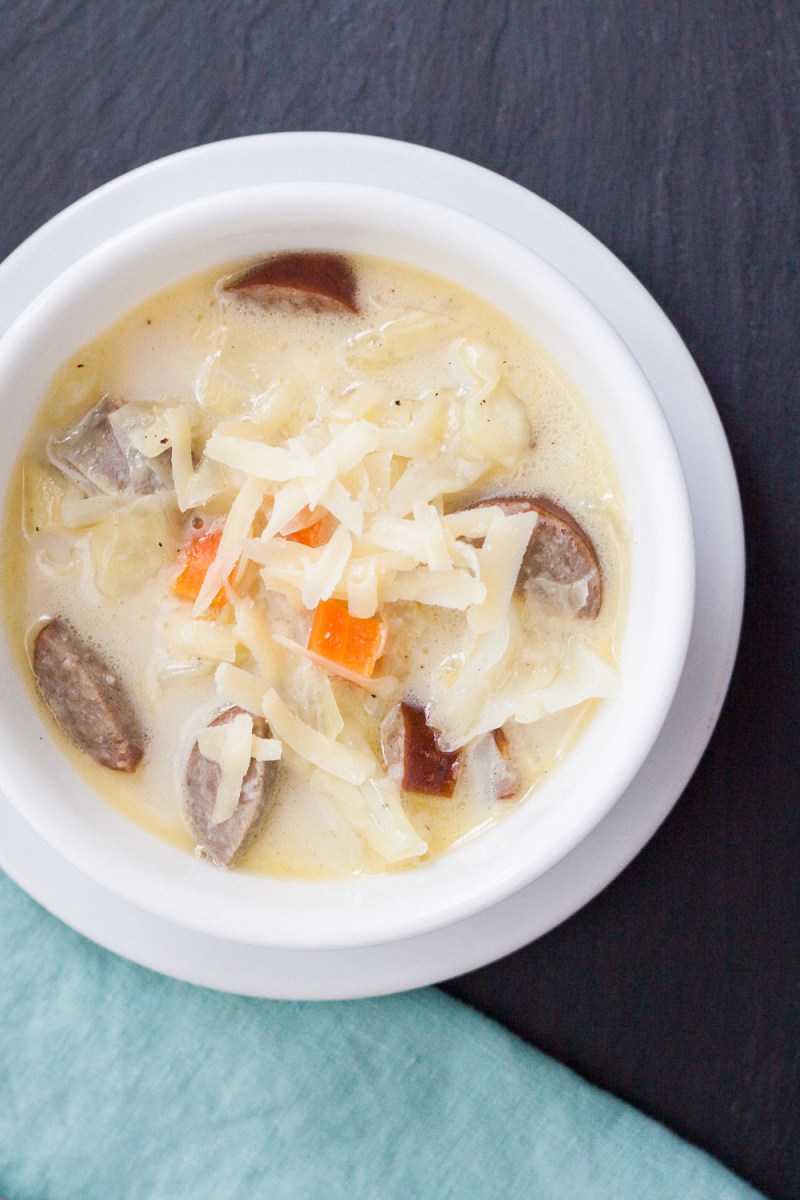
Ah, bratwurst. The German sausage has been around for a long time – the oldest recorded recipe is from the 15th Century, but it is mentioned in earlier texts. Germany (and Eastern Europe) in particular happened to be the perfect place to develop the sausages over time, because the cold winters and Northern winds were perfect conditions for testing out this cured meat. Historically, it’s also an excellent way to get nutrients into your system, as the sausages were full of parts that would have otherwise gone to waste (including some organ meats!).

Chowders made with bratwurst are popular in the United States, particularly in the Upper Midwest, but they are often full of beer and cheddar. Those aren’t bad things, mind you! But still, I wanted to make a recipe that captured the spirit and richness of those delicious chowders, but with some cleaner ingredients. Turns out a combination of chicken broth, cream, and a little aged cheddar did the trick nicely. I love this chowder in particular because it doesn’t take long to cook – about 45 minutes from start to finish – another benefit of cooking with sausage!

Read Full Article

Shirred eggs, more commonly known as baked eggs, are eggs that are baked in a flat-bottom dish. Although they are traditionally prepared with minimal ingredients, my variation is a little different in that I like to use cupcake pans and layer a host of ingredients into a cup lined with ham or other form of cured meat. I like the idea of building your whole breakfast at once.

These baked eggs are a great way to treat guests that come over for brunch, or everybody’s favorite meal, “breakfast for dinner.”

Read Full Article

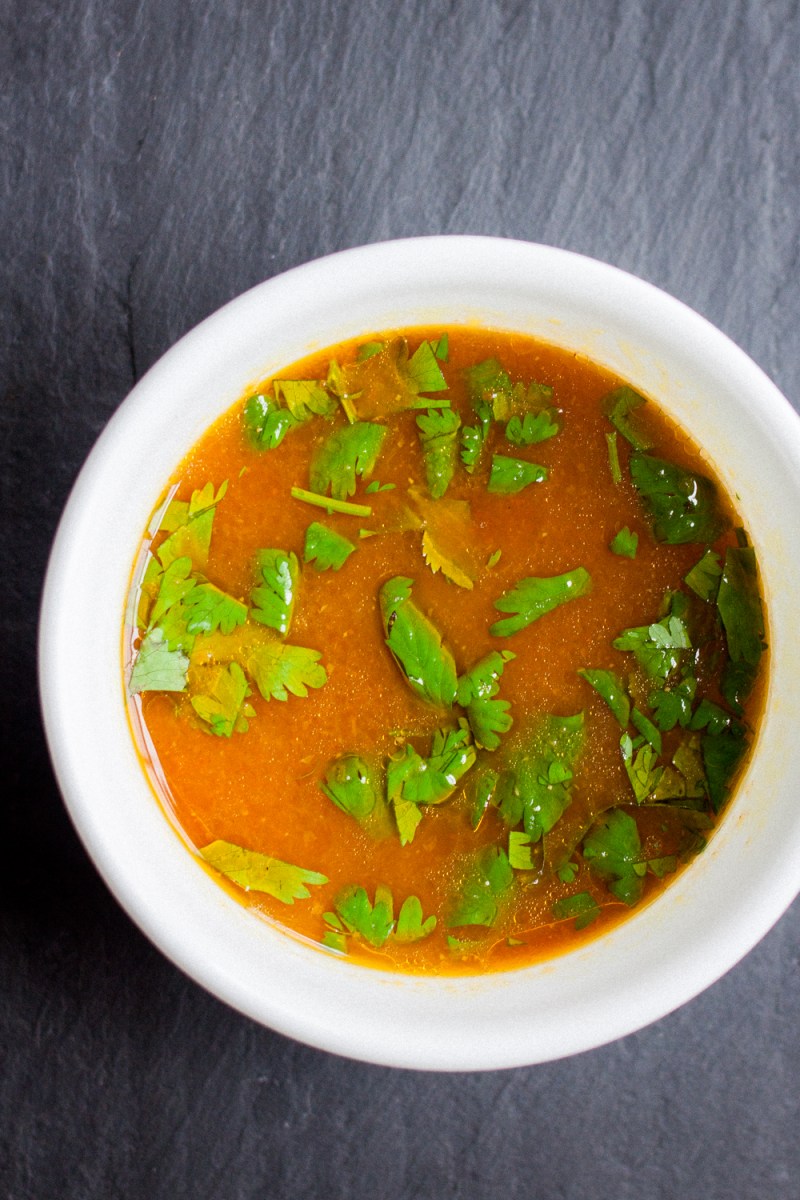
Attukal Paya (sometimes spelled as Aattukaal Paya or just Paya) is a hearty soup made with lamb, sheep, or goat feet served in South India. What fascinates me about this dish is that it’s often served for breakfast – initially this sounded strange to me, but the more I thought about it, the more it made sense; why not start your day out with some nutritious bone broth soup?

I also love the idea of throwing together a bunch of ingredients at night and waking up to breakfast already made!

Read Full Article

NOTE: An updated version of this recipe appears in my cookbook, The Ancestral Table.

A tagine is a type of slow-cooked Moroccan stew, which gets it name from the pot it is usually cooked in, also named tagine (طاجين). It is often spelled as tajine as well. A typical tagine is made with cheaper cuts of lamb or beef, like shoulder or shank, but can also be used with chicken and seafood. Seasonal fruits like dates, raisins, and apricots are often used, as well as honey and preserved lemons.

For this recipe, I decided to make a baseline lamb tagine dish – no frills or gimmicks, just a simple template for you to follow. Feel free to experiment with tastes, especially different veggies (potatoes and olives add an interesting dynamic) and meats as you see fit. Since preserved lemons aren’t the easiest thing in the world to find (although making them yourself seems pretty easy), using chopped lemon rind works almost as well, and it’s what I usually use at home. Lastly, while tagines are very pretty looking, that’s a lot of cookware just for one type of dish – my trusty Le Creuset dutch oven worked out beautifully, as always.

Also, don’t forget that I am hosting a $50 gift card giveaway for Lava Lake Lamb this week! I used their delicious lamb shoulder for this recipe, and I can’t say enough good stuff about how well it turned out.

Read Full Article

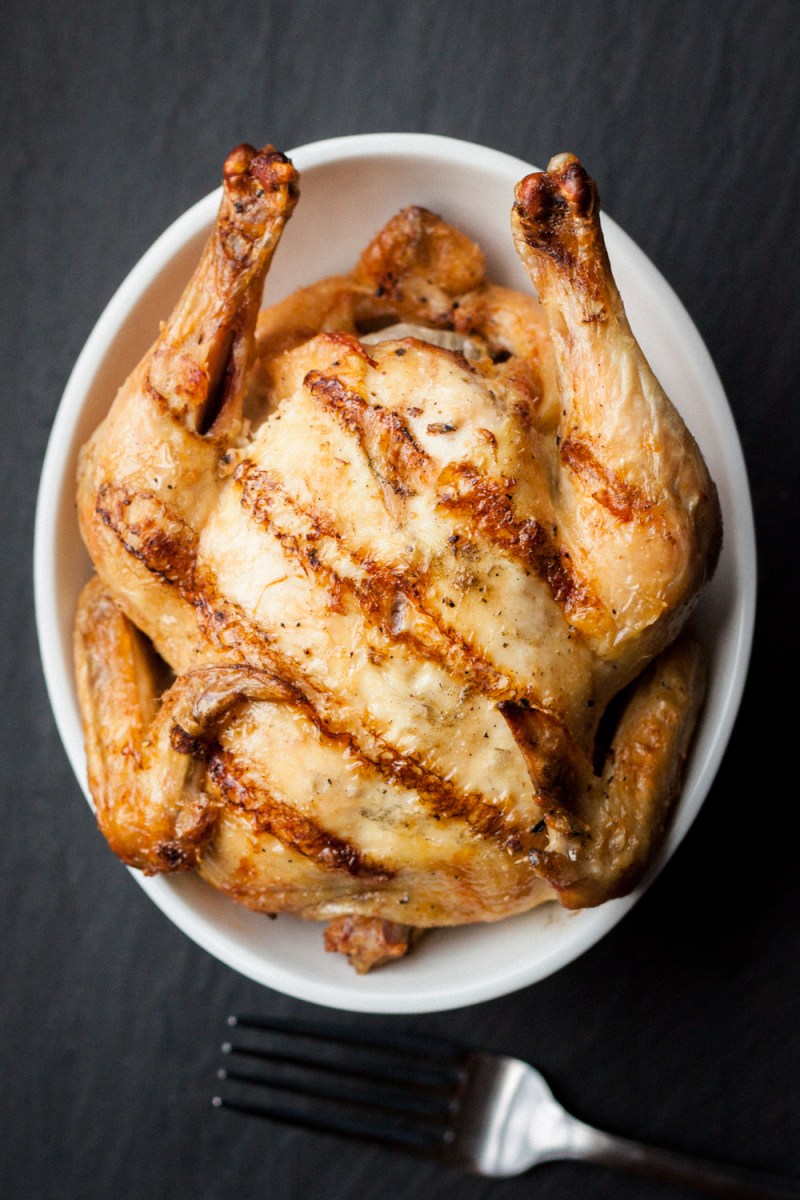
The Cornish hen, often referred to as a Cornish game hen or Rock Cornish hen, is a hybrid chicken first developed in the United States in the 1950s. Besides being much smaller than its predecessor (the Cornish-Rock chicken, which is the common “broiler” chicken worldwide), it also generally has a higher white-to-dark meat ratio than its big brothers. Some other interesting tidbits include the fact that the Cornish “game” hen is not a game bird at all, it can be either male or female, and it reaches maturity within 30 days.

I love cooking these little bird because they’re the perfect single-person meal. You get the best of everything! Both drumsticks, both wings, and both oysters. I also find cooking Cornish hens easy and stress-free, and they can be ready in much less time than a full-sized bird.

Read Full Article