gluten-free

Around this time last year, I contributed a series of recipes to Yahoo! Food, and it was a lot of fun. As part of some company restructures, however, the website shut down in February. One of my favorite recipes from my short time there was this New Brunswick-Style Potato Stuffing, so I’m sharing it with you folks this week, just in time to nudge it into your Thanksgiving meal planning. Here’s what I wrote about it last year:

Folks who follow the Paleo diet sometimes get the short stick. For example: croissants. While solutions like “meatzas” (a pizza with a meat crust) might work in some contexts, there just isn’t a good way to create a flaky, lightly-textured pastry using nut flours, or heaven forbid, meat. Similarly, a traditional Thanksgiving stuffing (or “dressing” – more on that in a bit) is difficult to replicate. Typical Paleo reinterpretations feature (yep, you guessed it) meat, and sometimes nuts and dried fruit. All those things sound just fine, thank you very much, but not very reminiscent of stuffing.

Stuffing, as we commonly think of it, is a strange mix between crispy and fluffy, and is often overwhelmingly savory; this taste sensation expertly complements tart cranberry sauce, creamy mashed potatoes, rich gravy, and (hopefully) juicy turkey. So when conceiving a grain-free, Paleo-friendly stuffing, my mind kept returning to fried potatoes – crisp on the outside, fluffy on the inside. I almost ran to my local library to do some research, but then I remembered about Google, and discovered that there already exists a potato-based stuffing, just in a seldom-visited cranny of the world (New Brunswick, Canada).

New Brunswick-style potato stuffing is characterized by two concepts: potatoes, and the use of savory (also known as “summer savory”). Savory is a defining seasoning in Atlantic Canada, and is used in most poultry seasonings in the same way that we Yanks use sage. We’re going to use a combination of both savory and sage, to make everyone happy. New Brunswick-style stuffing also typically uses bread slices in addition to the potatoes, but we’ll go ahead and ignore that fact since this is a Paleo recipe.

To get the perfect potato texture, we’re going to par-boil the potatoes to remove some of their starch and to soften them up; that way we can just blast the potatoes over a relatively high heat to crisp them up without worrying about whether they’re done on the inside. We’ll be frying them in duck fat, because it’s delicious, but lard, coconut oil, or any other high-heat oil will work just fine. In a separate pan, we’ll prepare the rest of the dish, then combine the two just before serving (otherwise, the potatoes would get mushy).

One last note: there actually is a distinction between stuffing and dressing, although the distinction is mostly ignored. Stuffing is, by definition, a dressing that is placed inside of a turkey, while dressing is not. Personally, I grew up calling it “stuffing”, regardless of its location in relation to a bird, so we’ll stick with that for this recipe.

Read Full Article

A couple months back, I posted my first sous vide recipe, this Sous Vide Salmon. Since then I’ve been enjoying this new technique as a unique way to cook food, especially lean meats, with precise results. A recent favorite has been sous vide steak, as it cooks the steak to an even internal temperature and only requires a quick sear to improve its outer texture.

I own and enjoy this Oliso SmartHub sous vide oven, which doubles as an induction cooktop for searing (and it boils water super quickly). There are plenty of other sous vide options out there, and I’ve heard great things about this Anova Bluetooth precision cooker (which is significantly cheaper than my Oliso setup, but requires you to use your own pot, and doesn’t double as an induction cooktop).

Flat iron steak comes from the cow’s shoulder, in the same region as cuts labeled as “top blade”. It is cut against the grain, well-marbled, and considered a cheaper steak cut because it quickly becomes tough when cooked beyond medium doneness; this is where a sous-vide cooking method really shines, since we can cook to a precise temperature. For today’s recipe, we’ll cook the steaks to 128F, followed by a sear which will likely raise the internal temperature to ~130F, just a hair under the definition of medium-rare.

Read Full Article

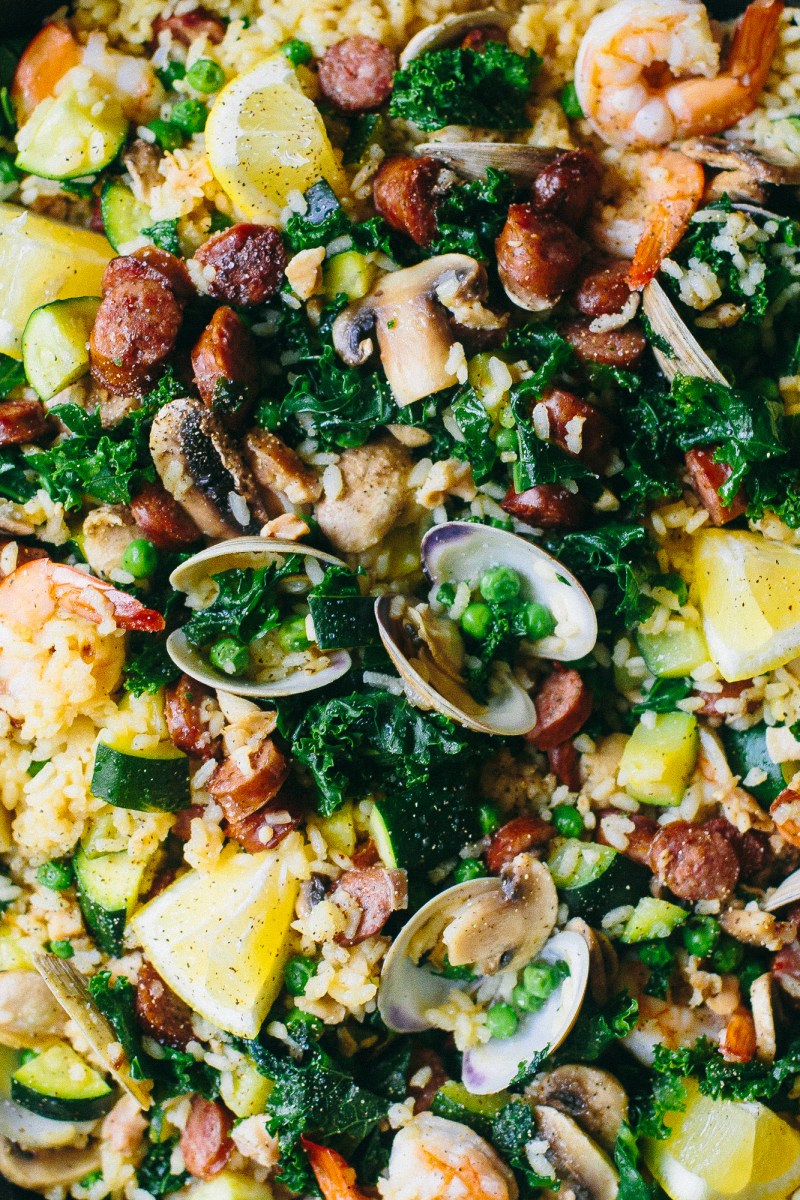
Paella is one of my favorite dishes to prepare at home – like fried rice or risotto, it’s an excellent way to clean out the vegetable bin. Moreover, it’s one of my favorite examples how the judicious use of white rice can in fact be very health-promoting; while rice gets a bum rap for being fairly devoid of nutrients, I think it’s just fine in the context of the broth, seafood, and vegetables used in this recipe.

This dish was a standout recipe in my first cookbook, The Ancestral Table, and here’s what I wrote about it:

Paella is a dish from Valencia, along Spain’s eastern coast. Rice was a product of Moorish influence and was a staple in Spain by the 15th century. Paella developed over the years as people began to add combinations of meats and vegetables. While water vole was one of the first meats used in paella, today’s Valencian paella includes rabbit, chicken, snails, and beans; seafood paella is equally popular and is considered a traditional dish along the Valencian coast.

Using an appropriate type of rice is important, as many varieties were specially bred to absorb liquid without losing texture. Calasparra and bomba rices are preferred and are available from gourmet food suppliers and online. Arborio, a common risotto rice, fares pretty well. In a pinch, plain calrose rice will get the job done. Paella is best made over an open flame and is traditionally prepared outdoors.

Read Full Article

Quick language lesson: jeon means “pancake” in Korean. This term is associated with a variety of pancakes, from kimchi to kale pancakes. Today’s recipe, Pajeon, stands as the basis for many further layers of the Korean pancake underground; its most popular descendent is Haemul Pajeon, or seafood scallion pancake, which is featured in Paleo Takeout. While the seafood variation is a family favorite, I also appreciate the simplicity and ease of this simple Pajeon.

Speaking of simple and easy, did you guys hear that Melissa Joulwan is releasing a third cookbook, Well Fed Weeknights, on November 1st? She just announced it yesterday, and I’m super excited about it – 128 complete meals (proteins, veggies, fats, and garnishes) ready in 45 minutes. I sent out an email to my newsletter list yesterday morning with more details, which you can read here (it includes a recipe from the book, plus a link to Mel’s free 70-page PDF sampler of the book!).

Read Full Article

I’m relatively new to the sous vide world, but it’s something that has always intrigued me. Sous-vide cooking involves placing food items in a sealed plastic bag and immersing the bag in a water bath for an extended time, set at a specific temperature, to evenly cook the food. This method was first popularized in the 1960s, as a method of cooking foie gras (fattened goose liver) to the desired temperature without losing any liquid in the process. It’s become very popular over the past 10 years; in fact, the barbacoa, steak, and carnitas served at Chipotle are all prepared using the sous vide method in a central location before being shipped to their restaurants.

It sounds daunting to dive into a new cooking method, especially one that has precise temperature and time requirements, but more tools are coming to market to make sous vide a breeze. Case in point is the Oliso Induction Smart Hub, which the company recently sent me to try. This device comes in two parts: an induction cooktop, which heats food efficiently (and super quickly) using magnetic induction, and the sous vide Smart Top, which sets atop the induction cooktop. I like this concept since the induction cooktop can be used in a variety of ways, independent of the sous vide oven; I use it to rapidly boil water without heating up the whole house, or to fry up a couple eggs in just a few seconds.

There’s a whole world to sous vide, with all sorts of charts and graphs (or as one of my favorite bands–Grandaddy–would say, “Chartsengrafs“), but I wanted to present a simple recipe to help folks dip their toes into this new adventure. Salmon is an ideal choice, since it’s very easy to tell when fish has been improperly cooked, and this method guarantees perfect texture every time.

Read Full Article

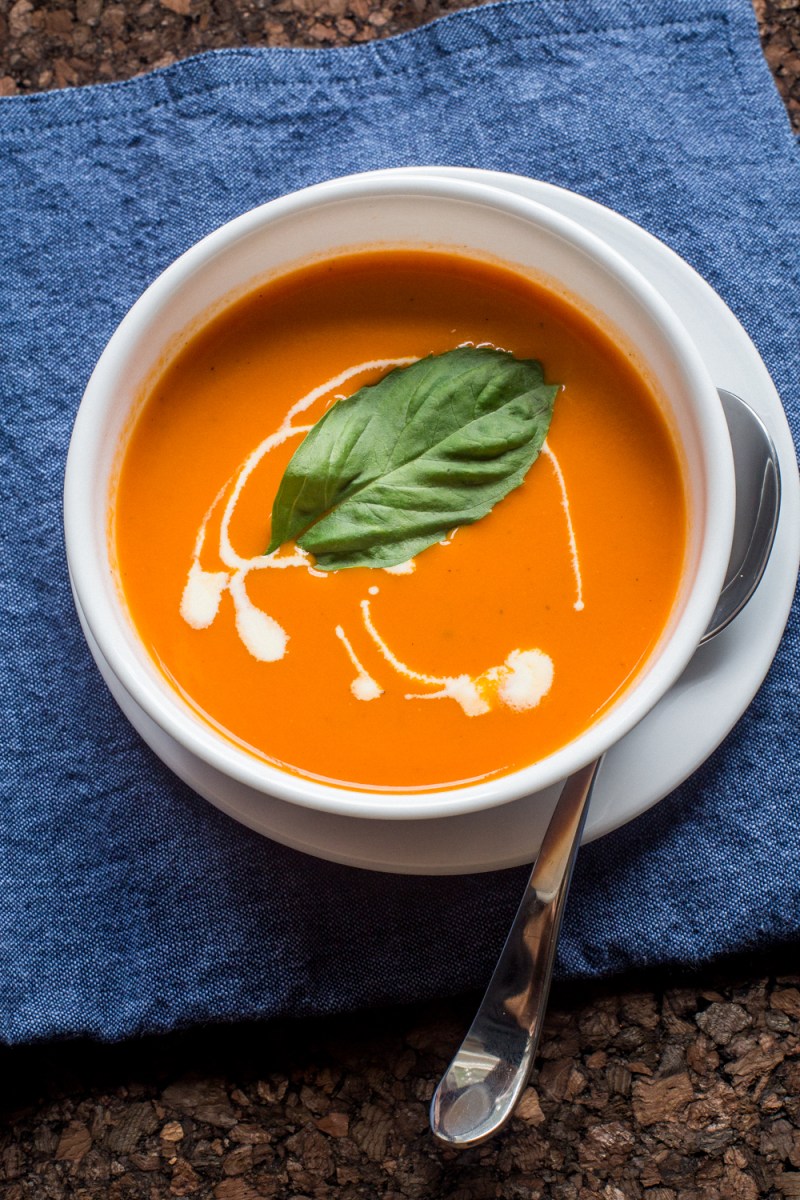
We’re in the thick of tomato season (June to September in the US), which means it’s time to share one of my favorite simple soups.

Tomato soup is a common comfort food here in the US, and has a similar association in many western countries; Poland, I’ve found, is particularly fond of the soup, as it is the first thing young chefs learn to make (a quick Google search of “Zupa Pomidorowa” yields 1.5 million results).

Tomatoes are relatively new to the Western palate; first imported from Mexico to Europe by Spanish explorers, they were initially considered poisonous and used as ornamentals. In 1789, Thomas Jefferson introduced them to the United States – he was Secretary of State at the time, which leads one to wish all Secretaries of State were judged by the deliciousness of foods imported during their tenure. In the US, tomatoes were not commonly eaten until the 1830s, and the first record of tomato soup was written by famous American author Maria Parloa in 1872. Joseph Campbell’s condensed tomato soup cemented its comfort-food status in 1897.

The English word tomato is on loan from the Spanish tomate, which was lifted from the Nahuatl (Aztec) word tomatl. The first tomatoes were probably yellow, which makes sense when considering the other common word for the savory fruit, derived from the Italian pomodoro – a pairing of pomo ‎(“apple”) +‎ d’oro ‎(“golden”).

This soup takes about an hour to make with fresh tomatoes, slightly faster when using canned tomatoes, and significantly quicker with the help of my favorite kitchen appliance, the Instant Pot electric pressure cooker (instructions for each method below).

Read Full Article

Mee Kati (หมี่กะทิ) is a noodle dish that is popular in Thailand (and some parts of Laos); thin rice noodles are steeped in coconut milk, giving them a creamy flavor that is distinct from their more popular cousins, Pad Thai and Pad See Ew.

Mee Kati is often sold by street vendors, where they use food coloring to give the noodles a pink hue. It’s a very unique visual experience, but one we’re going to forgo in this recipe (feel free to add about 1/2 tsp beet powder to the coconut milk broth in step #3 if you’re up for it).

Some usual Thai suspects are on hand in this recipe, to include limes, chiles, shrimp paste, and tamarind–but a more uncommon addition is soybean paste; either red miso paste or Korean doenjang will work nicely.

Read Full Article

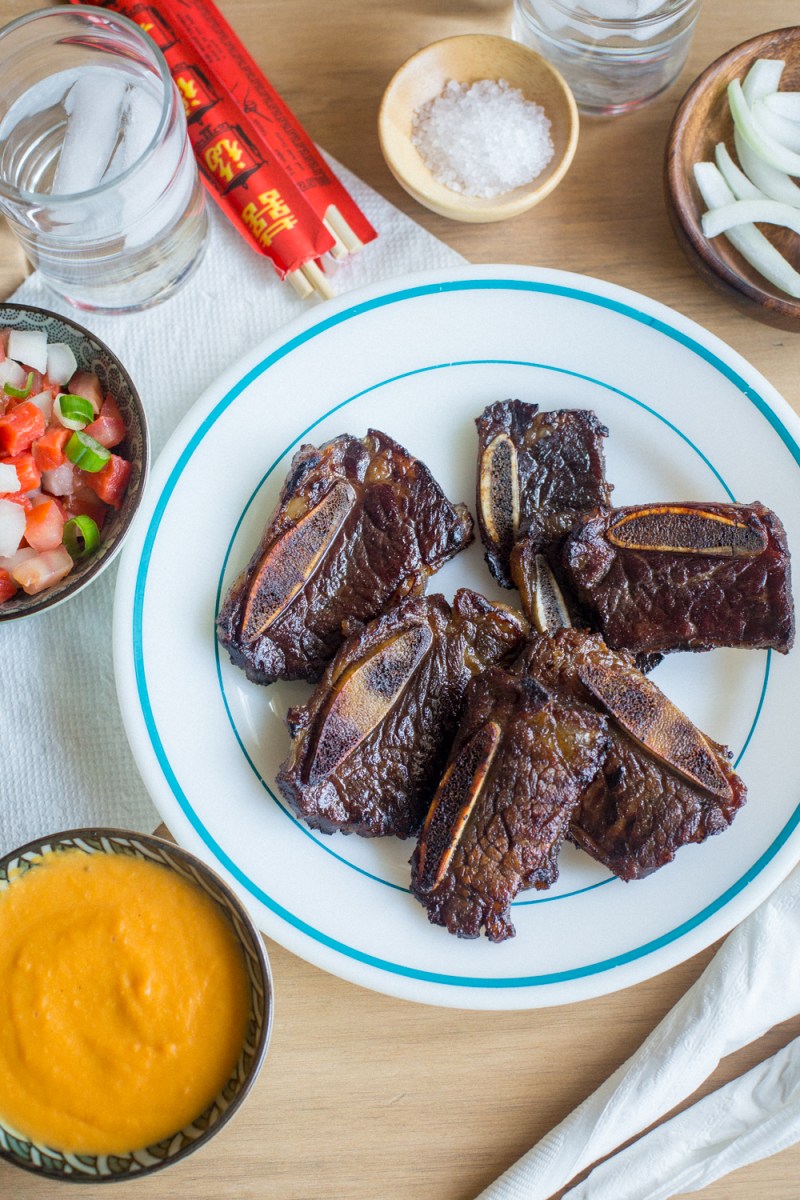
Pipikaula, like many dishes in Hawaii, is the result of several cultures colliding. First, let’s talk about how beef became part of the Hawaiian diet, since cows are not native to the islands. In 1793, famous British Navy explorer George Vancouver gifted King Kamehameha I (the chief who first united the Hawaiian islands) a bull and five cows; the king placed a kapu (Hawaiian taboo) on the hunting of these cattle and their descendants that lasted through 1830; by 1845 there were an estimated 25,000 feral cattle on the big island of Hawaii.

John Palmer Parker, an American who allegedly first arrived in Hawaii in 1809 by jumping off of a ship (there’s probably a good story there), quickly gained the favor of King Kamehameha I upon his infamous arrival. In 1815, after a bit of travel, he returned to Hawaii with a state-of-the-art American musket; the king gave him the honor of hunting the first cattle in Hawaii. Over the next 20 years, he helped to thin the number of feral cattle on the island, and was gifted some land as compensation. Parker founded Parker Ranch in 1847, one of the oldest and largest ranches in the United States, with 250,000 acres that remain today.

To help manage livestock, Parker brought in cowboys (Vaqueros) from present-day California (Mexico at the time); these cowboys were called Paniolo (a Hawaiian pronunciation of the word “Español“), and the name sticks today. The Paniolos would dry strips of beef in the sun, to chew on while driving cattle; this food was eventually named Pipikaula (literally “beef rope”). To flavor the beef, they would use soy sauce, as it was locally available thanks to Chinese and Japanese immigrants.

So that’s how Pipikaula came to be, through a joining of Hawaiian, British, American, Mexican, Chinese, and Japanese cultures. Today, Pipikaula is served in Hawaiian restaurants and sometimes at luaus. It is commonly dried in wire boxes in the sun, or by hanging it to dry, then broiled or pan-fried before serving. The recipe that I’m sharing today is modeled after my wife’s favorite Hawaiian restaurant, Helena’s Hawaiian Food, on N. King Street in Honolulu. For efficiency’s sake, we’ll dry the beef in an oven and pan-fry it to a crisp.

Read Full Article

Bubble and Squeak is a traditional English dish, served as a hash of leftover roasted vegetables. It can be made from a variety of vegetables, but potatoes and cabbage are almost always included; it can be served at any meal, and is a common accompaniment to a full English breakfast. This dish was first mentioned in the 1800s, but really fell into its own as a way of elongating meals during World War II, when food rationing was common.

The name “bubble and squeak” refers to the name that the vegetables make as they fry in the pan. There are some similarly fun names for other dishes that share the same technique, like Panackelty (NE England) and Rumbledethumps (Scotland).

Prepared traditionally, Bubble and Squeak is kind of tragic, because that means you could only enjoy it on those rare occasions when you have leftover roasted vegetables in the fridge. As a solution, the recipe below is written using fresh vegetables – you roast the vegetables while you boil the potatoes, then toss them all together for the final, beautiful creation. Of course, if you have leftover vegetables, this recipe will work, too; just skip directly to step #3.

Read Full Article

You know, I really thought I was done with soup for a while. The weather has been nice and warm down here in the Florida panhandle, balmy in just the right way – never so cold that a light jacket won’t do the trick, and never too hot for pants. But then last week I visited my old stomping grounds in Maryland, and the weather was distinctly cooler; in other words, it was soup weather.

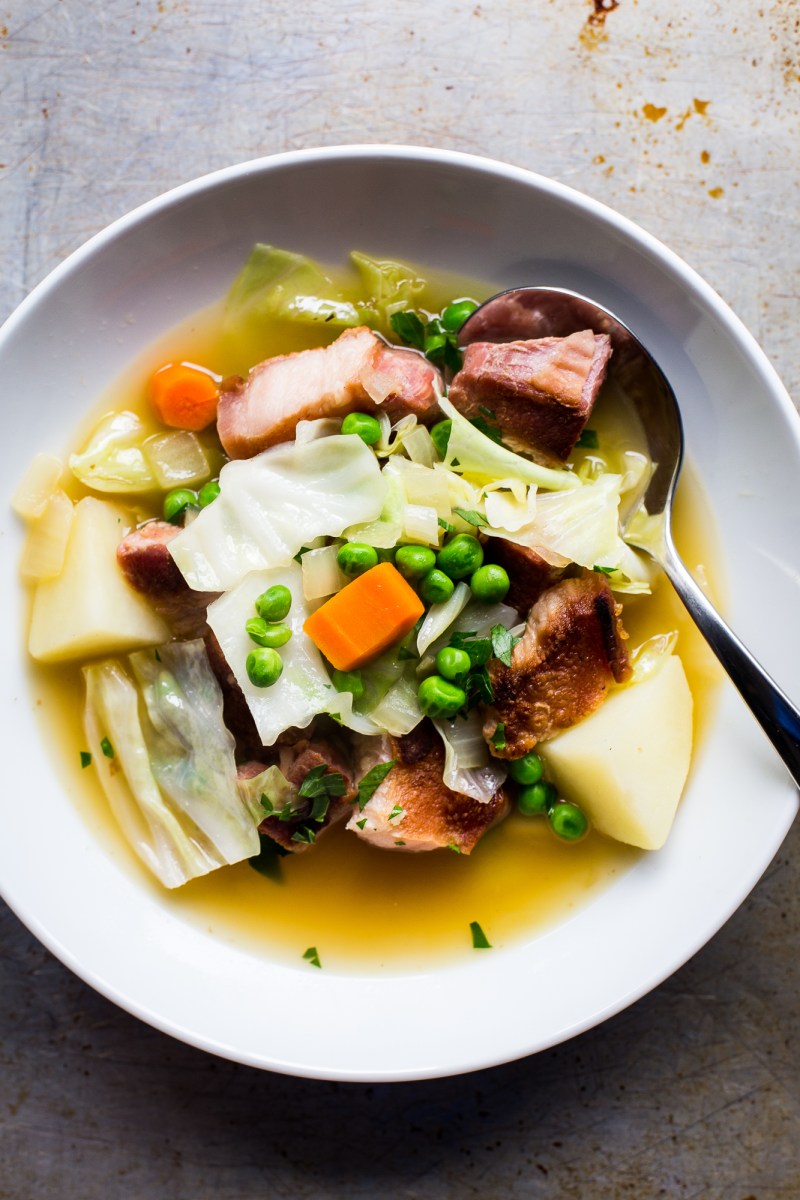
Garbure is a peasant’s soup originally from the Aquitaine (southwest) region of France; its defining ingredients include cabbage, meat (typically ham or duck), and seasonal vegetables like beans or peas. The consistency of the soup varies – some are nice and thick thanks to copious beans or chunks of bread (a good Garbure, I’ve read, should allow to spoon to stick up on its own), while others let cabbage provide the soup’s body.

My recipe takes cues from the second idea of Garbure, partly because I don’t typically cook with beans or chunks of delicious French bread (yep, there are definitely drawbacks to a Paleo-minded lifestyle), but also because I really enjoy cabbage soup.

Read Full Article