gluten free

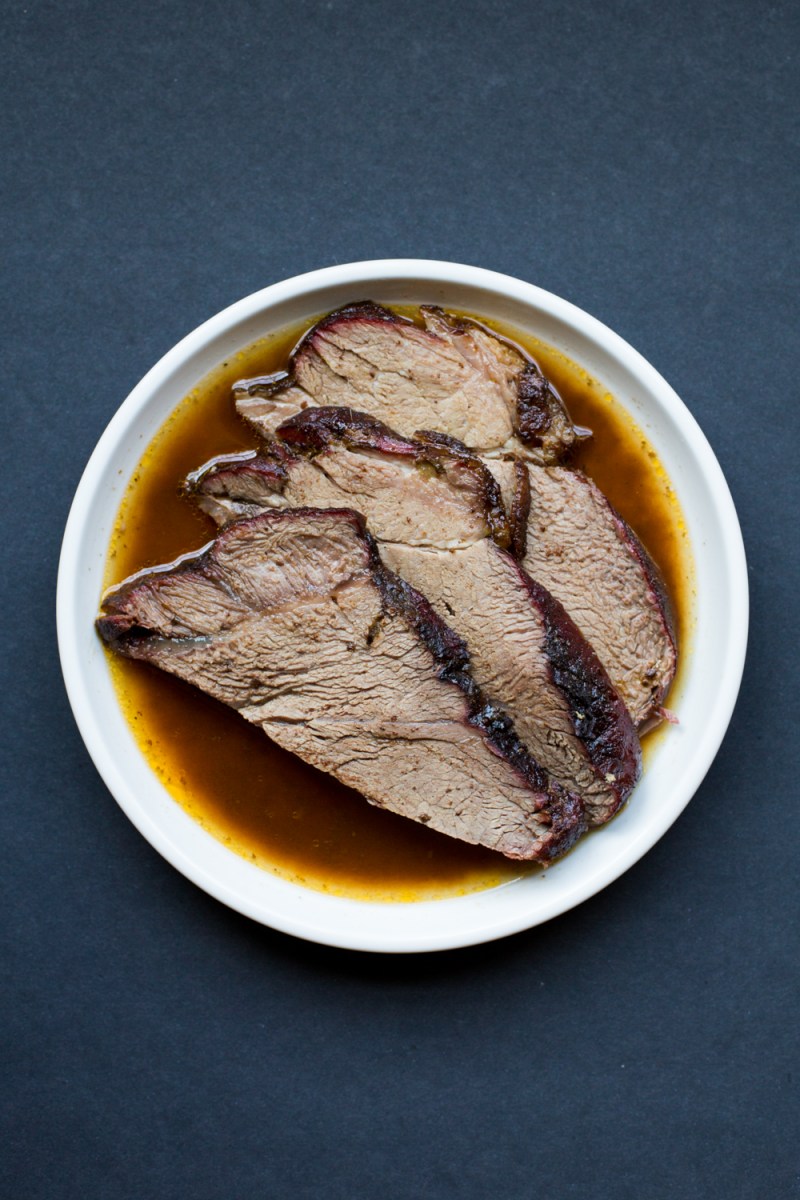
My friends at US Wellness Meats recently sent me a cut of beef I’d never seen before. The heart of shoulder roast, sometimes called the heart of clod or cross-rib roast, is a center cut roast taken from the shoulder, similar to chuck roast. Typically I would oven-braise a shoulder roast in order to break down its connective tissue. But heating an oven for several hours doesn’t sound like a good time to me right now considering that we’re in the heat of summer; so I did what any sensible American would do with a big chunk of meat in July – I barbecued it.

This recipe is not unlike the Barbecue Brisket recipe in my book, just cooked at a slightly lower temperature; the lower temperature drags the cooking process out a bit, but results in a more evenly tender roast. Feel free to use this recipe for brisket as well.

Read Full Article

Last month, I wrote about how I wanted to take my blog in a new direction by visiting and writing about food producers around the world, in order to better understand how the food we eat gets onto our plates. Off the bat, I knew that one of my first destinations needed to be where the whole “food” thing starts. At a farm.

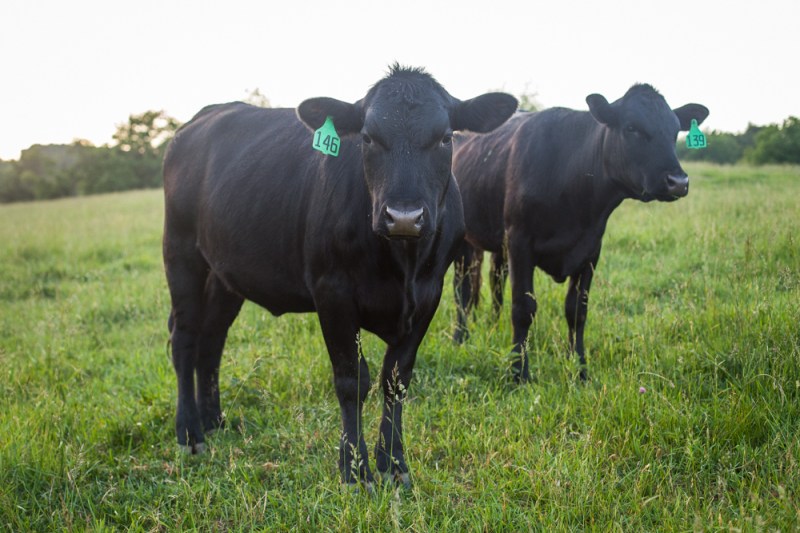
Choosing a farm to visit was easy. Last summer I met David Maren, founding farmer and general manager of Tendergrass Farms, and we quickly became friends through our mutual love of languages and our mutual disdain for our country’s rampant, negligent farming practices. We’ve also been working together over this past year; he sends me samples of food to cook and eat, and I take pictures of that same food for his website. It’s a pretty sweet deal for both parties, hearkening back to humanity’s bartering days: he gets free photography and my family gets free food.

David’s small farm is located near Floyd, VA (about 4 hours from us), so we made the drive down a couple weekends ago to check out and talk about his company. Here is what I found out.

Read Full Article

Chicken Kiev is a Ukrainian dish, possibly influenced by the French roulade (I’m a big fan of roulades – check out my German Rouladen recipe). This dish is characterized by rolling herbed butter into chicken cutlets. To me, this is an ideal meal; chicken breasts tend to be bland without some added fat or spices, and Chicken Kiev has both in spades. To make the butter easier to roll, my recipe calls for freezing the butter for 30 minutes before rolling – it makes a huge difference.

As a Russian linguist and teacher in my day job, I would be remiss if I didn’t talk about the spelling of the word “Kiev” in my recipe. The Ukrainian government officially changed the romanized spelling of their capital city’s name to Kyiv in 1995, mostly due to the fact that Kiev is the Russian pronunciation of the word. But in truth, Kiev is the original, Old East Slavic pronunciation of the city (technically it’d be spelled Kyev today). I think it’ll be interesting to see how the world spells and pronounces the word for this important city in the future – especially given the amount of attention this corner of the world has received recently. Personally, I like Kiev, but not as a slight to the Ukrainian people or government; I’m just a fan of Old East Slavic.

Read Full Article

PNW friends! I’ll be appearing in Portland, Seattle, and Vancouver BC next month, signing books with Sarah Ballantyne and Mickey Trescott! More info on my events page.

Peas are an ancient food, eaten seasonally during the Paleolithic era. They were also one of the first cultivated plants, first grown in Western Asia about 8,000 years ago, and spreading to nearly every major culture from there. Today, there are many reasons to enjoy peas. They are very economical, and frozen sweet peas are one of the cleanest vegetables even when raised conventionally. They’re also very practical, since grabbing a handful of frozen peas from the freezer couldn’t be simpler. This soup is a great example of how convenient the little green guys are; start to finish, you can be enjoying this delicious and deeply flavorful meal in 25 minutes.

The word pea has an interesting origin; it was originally written as pease in English (taken from the ancient Greek pisum), which referred to both the singular and plural forms of peas. People confused the word pease with peas, incorrectly thinking it was plural, and later formed the singular word pea, which eventually became the norm around the 1650s. Pease still exists in some contexts, such as in pease pudding, or the children’s song “Pease Porridge Hot”.

Referring to thick fog as “pea soup” has been around for about 200 years, first used to describe the fog in London.

There is some controversy as to whether peas are “Paleo” since they are legumes. Like green beans, peas are the result of cultivation, and were selectively bred to reduce their toxicity, to the point where they can be eaten (and enjoyed) in their raw state. Theoretically legumes should be avoided, but I’m not one to follow food rules based solely on theory (see: my support of one of those pesky “grain” things, white rice). Personally, until the science definitively proves otherwise, my personal take is that they’re fine. Obviously, if you react poorly to them (or any other food, for that matter), you may want to rethink this approach.

Read Full Article

It’s hard to believe, but my cookbook, The Ancestral Table, has been out for nearly four months. I keep finding myself surprised whenever someone tells me they have and enjoy my book; for some reason I keep assuming that only our little family regularly uses it as a reference. So I thought it would be fun to take a week off from my regular recipes and share one from The Ancestral Table, as a gentle reminder to myself that there are other people out there who could use these recipes.

Deciding on a dish to share was really easy; we make this roasted chicken recipe at least once every two weeks. Simply put, it’s one of the easiest chicken recipes you’ll find, and it’s deliciously crispy and juicy. Cooking the bird directly in a skillet also makes it a cinch to whip the drippings into a flavorful gravy. Finally, we like to throw the bones and carcass into our electric pressure cooker for a couple hours to make some tasty and calcium-rich broth.

I’m also giving away a copy of my book this week, signed by me and Paul Jaminet (who wrote the foreword of my book). There are only a few copies like this one, so be sure to enter to win (instructions at the bottom of this post).

Read Full Article

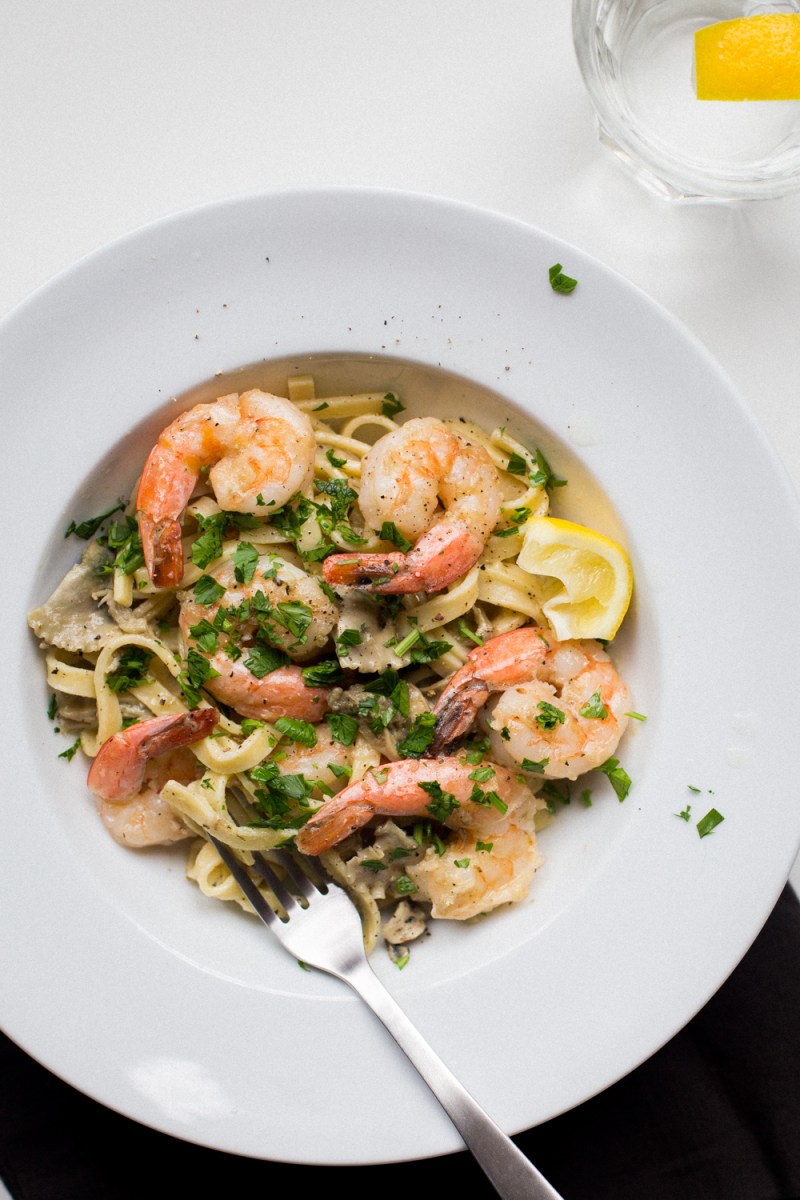
Many years ago, pasta cooked with seafood was my solution when I wanted something that tasted great without spending much time in the kitchen. Pasta cooks quickly and is delicious; seafood cooks even more quickly and is even more delicious. It’s almost like cheating in the way that you can have a memorable meal in a manner of minutes.

While pasta is rarely on our dinner table these days, we still miss the convenience of a quick Italian-style dinner. So from time to time I’ll whip something up with zucchini noodles or rice-based pasta. When we’re looking for a special treat, we’ll use Cappello’s grain-free fettuccine, which is made using just five ingredients: almond flour, cage-free eggs, tapioca flour, xanthan gum, and sea salt. Although this recipe in particular was made with Cappello’s pasta, directions for all three pasta types are provided below.

Read Full Article

My second recipe of the week also comes from Southeast Asia, this time from Malaysia. Sambal Terung is a roasted eggplant dish, covered in sambal (a spicy chili-based condiment). Like Tuesday’s recipe, this is a dish that comes together easily and would allow me to focus on the main dish of the night (in this case, I was going to make Beef Rendang). I personally like this dish because it carries a deep, exotic flavor with minimal hands-on time; you’ll mostly spend your time soaking and roasting the eggplants.

Sambal has its origins on Java island in Indonesia, traditionally made with 75-90% chiles and a few other ingredients (shrimp paste, salt) added for depth of flavor. The sauce spread to other countries, most notably Malaysia and the rest of Southeast Asia (I have a theory that Sriracha is a product of sambal influence, but it’s hard to say for sure); it also made its way into Europe due to the Dutch colonization of Indonesia in the 17th century and beyond.

Eggplant was first grown in the Indian subcontinent, and spread both East and West from there. It reached China around 500AD, and was wildly popular in the Mediterranean starting in the Middle Ages and continuing today. It wasn’t accepted in Europe until later, around the 17th century, as it was originally considered by Europeans to be poisonous. Because of its widespread use in early history, the words for eggplant itself are all over the place, with no one single root spreading to each language (unlike something like “tomato”, whose origin is easier to trace). This is why you’ll see a myriad of names for eggplant; even English has several words for the vegetable (aubergine being the British variant, borrowed from Arabic, and the Caribbean often refers to eggplant as melongene, also of Arabic influence).

Read Full Article

Over this past weekend, I was scheduled to appear at the latest Perfect Health Retreat in Wilmington, North Carolina as a guest chef. I had a whole day’s worth of recipes planned for the 20+ attendees and staff members, most of them based on traditional Indonesian or Malaysian dishes. I was very excited, and had even devoted the previous weekend to practicing and tweaking the recipes to get everything perfect. And then life struck. My son Oliver started feeling very sick last weekend, likely a gift from one of his pre-school classmates, and by Tuesday I was feeling the full brunt of some relentless flu symptoms.

So I spent last week and this past weekend drifting in and out of a feverish state, catching up on several seasons’ worth of Archer and Portlandia episodes, and trying to find new ways of incorporating bone broth into my diet (hint: developing recipes while under the influence of flu medicine is never a good idea). I’m happy to report that Oliver and I are both on the mend, but unfortunately I missed out on my opportunity to cook at the retreat. So that these recipes don’t disappear from memory, I wanted to share two of them with you this week.

The first recipe is Sayur Bening Bayam, a clear Indonesian soup made with a variety of vegetables, but always includes spinach (and often corn – see my note below the recipe). I chose this soup as one of my dishes because it’s dead simple to make and serves as an appetizer in the most literal sense – its simple tastes both satisfy and whet the appetite for a main course.

Read Full Article

Spring has totally sprung here in Maryland. The temperatures are nice and warm most days, and we’re getting daily rain showers – perfect for new grass but not so great for taking our new dog for a walk. Oh yeah, we got a new dog. I’m not sure why we didn’t earlier; having a dog around has basically doubled my time outside, guaranteeing that I go on daily walks and hiking on the weekends.

Roasting a leg of lamb is a spring tradition in many cultures, particularly surrounding Easter and Passover. While roasting a leg of lamb may sound intimidating, it’s one of the easiest roasts to get right. The meat is naturally tender, so no marinating is required – in fact, marinating is often discouraged since adding acid would denature the tender meat.

As my friend Chef Schneller (who I met while touring the Culinary Institute of America last year) points out, the term “spring lamb” refers to a lamb born in the spring and eaten in the summer. Lambs sold in the early spring are typically from a particular breed (English Dorset) that are born in the fall, milk-fed through the winter, and feed on young grass before slaughter. Generally, a lamb is around six months old when slaughtered, although any sheep under a year old is classified as lamb.

Read Full Article

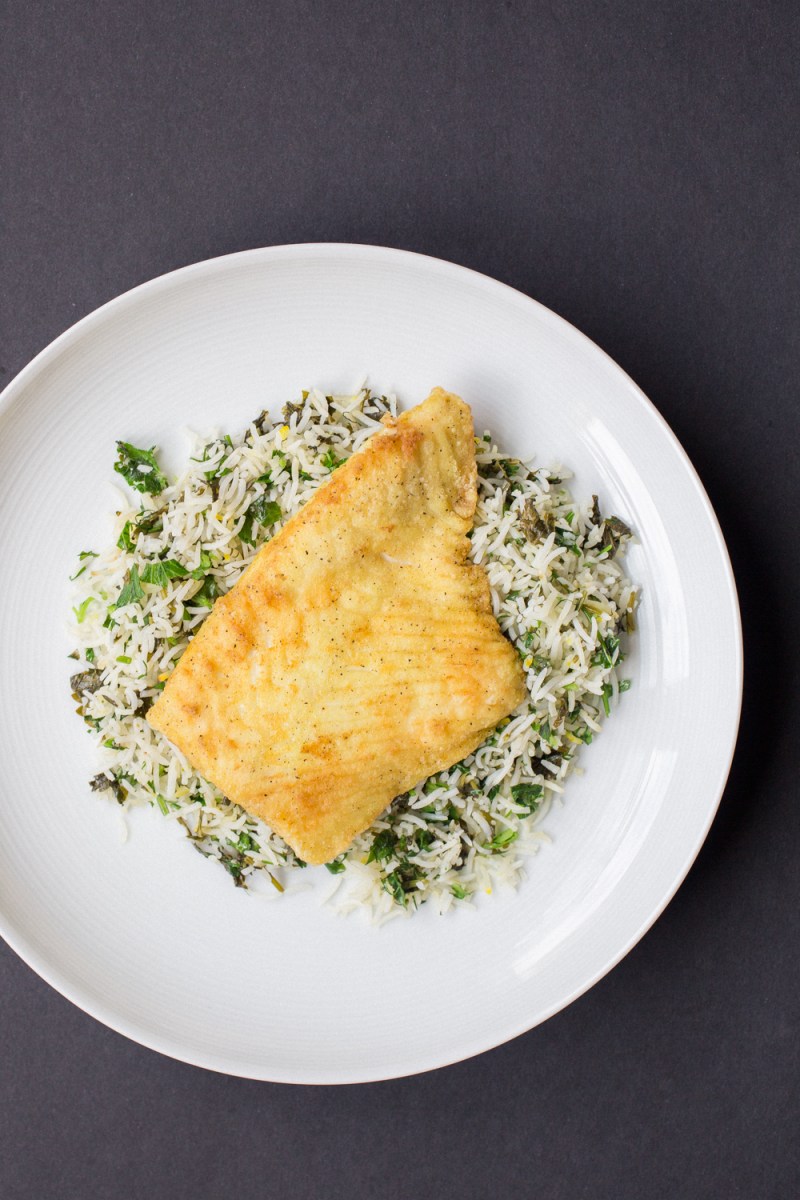
Sabzi Polo is a traditional Persian herbed rice pilaf. There are several different ways to cook rice in Persian cuisine, but Polo (parboiled and steamed) is the most popular. This dish in particular is eaten during the Persian New Year (Nowruz, late March) and served with white fish. The type of white fish varies from rare local fish like Caspian kutum to something more accessible, like halibut or tilapia.

Rice is a critical food source in modern day Iran, and has a long history in the region; it was first introduced from South Asia around 1000 BC, and has been grown in northern Iran ever since. It’s also commonly believed that rice entered Europe via Ancient Persia.

It’s exciting to see that white rice is gaining more acceptance in the Paleo community. I started adding white rice to my version of the Paleo diet in early 2011 (here is an old post about it) and it’s definitely had a positive impact on my overall wellness. I explain many of my reasons for eating rice in my book, but the long story short is that it’s an ancient, delicious, satisfying, and neutral starch (it has fewer toxins than many foods we consider Paleo, like coconut and almonds – reference) whose glycemic load is easily tempered by eating low-glycemic varieties (basmati rice in particular is lower (28) than regular white rice (43) – reference). When eaten as part of a whole meal with added fats and acids, its glycemic index is even further diminished (reference). There are still people that have digestive issues with rice, but for everyone else, it may warrant a place on your dinner table.

Sabzi Polo is an excellent example of an optimal way of eating rice, since it’s paired with a huge amount of herbs – much more than your typical dish – and considering Mathieu Lalonde’s AHS 2012 talk where he found that herbs and spices are second only to organ meats in terms of nutrient density, it’s always good to eat lots of herbs.

This recipe is part of a collaboration with my friend Naz of Cinnamon Eats – after having several discussions about Persian rice dishes, we decided to each write up a recipe to highlight the varied and delicious choices available in Persian cuisine. Be sure to check out her half of the collaboration: Zereshk Polo (Persian Barberry Rice).

Read Full Article