gluten free

NOTE: An updated version of this recipe appears in my cookbook, The Ancestral Table.

I love collard greens. They may be my favorite green food – well, second to mint chocolate chip ice cream, at least. They’ve been in use for at least 2,000 years; the ancient Greeks cultivated them along with kale.

I typically simmer my collard greens with some sort of smoked pork (usually bacon or smoked ham hocks), chicken broth, and apple cider vinegar, and it’s always delicious, although it can get a little boring. So a while back I consulted my buddy, the internet, to find another use for collard greens. During my search, I kept coming across the word Sukuma Wiki, the Swahili name for collard greens. Sukuma Wiki literally translates to “push/stretch the week” – collard greens are available year-round in East Africa, and are used to stretch meals out to last all week.

In the culinary world, Sukuma Wiki is a common name for a Kenyan dish of braised collard greens, usually prepared with ground meat, tomatoes, and onions. Turns out that this dish is dead easy to make, both in terms of time/preparation and ingredients. I was able to whip it up using stuff already in my pantry, and it’s always nice to find another use for ground beef. But the best part about this dish is its taste: it’s absolutely delicious, and has just a hint of exoticness to make it remarkable. One thing that sets this dish apart is that the collard greens are simply wilted down, and so they retain a slightly crunchy texture that really complements the ground beef.
Read Full Article

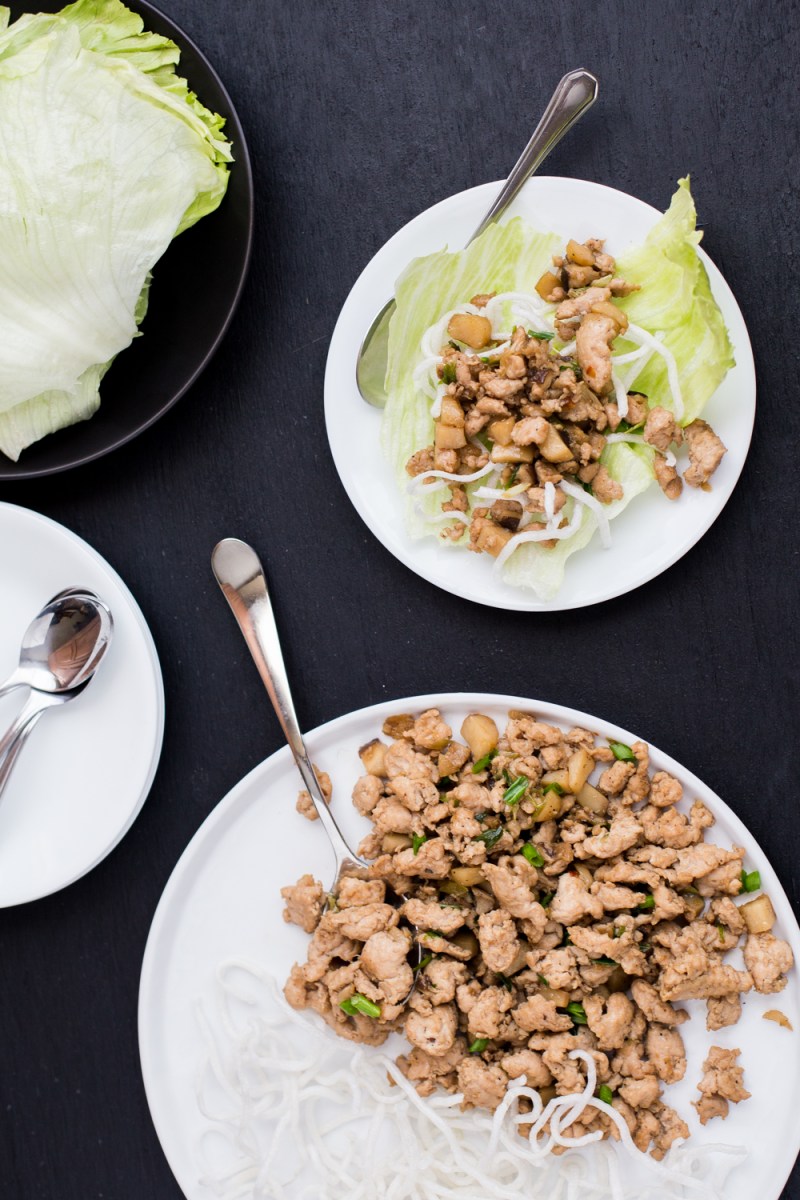
Last September we met up with our friends Matt and Stacy, the Paleo Parents, for dinner at P.F. Chang’s China Bistro, a popular Asian-themed chain restuarant here in the U.S. that sports a gluten-free menu. It was our first time visiting the restaurant, and Stacy strongly recommended (demanded?) that I try to re-create their famous Chicken Lettuce Wraps. Never one to turn a challenge down, I accepted, and then promptly forgot all about it.

But lucky for you, Stacy didn’t forget the promise I made that fateful day. In fact, she did one better, and corralled a bunch of Paleo-friendly bloggers together this week to re-create some favorite dishes from the restaurant chain. Here is a link to the round-up.

For my version I made a few minor adjustments. I used honey instead of what I assume is gobs of sugar (we taste-tested the original dish again last week and I was surprised by how sweet it was), and made fried noodle sticks using sweet potato noodles instead of rice or mung bean noodles, which I assume is what they use in the original recipe.

Read Full Article

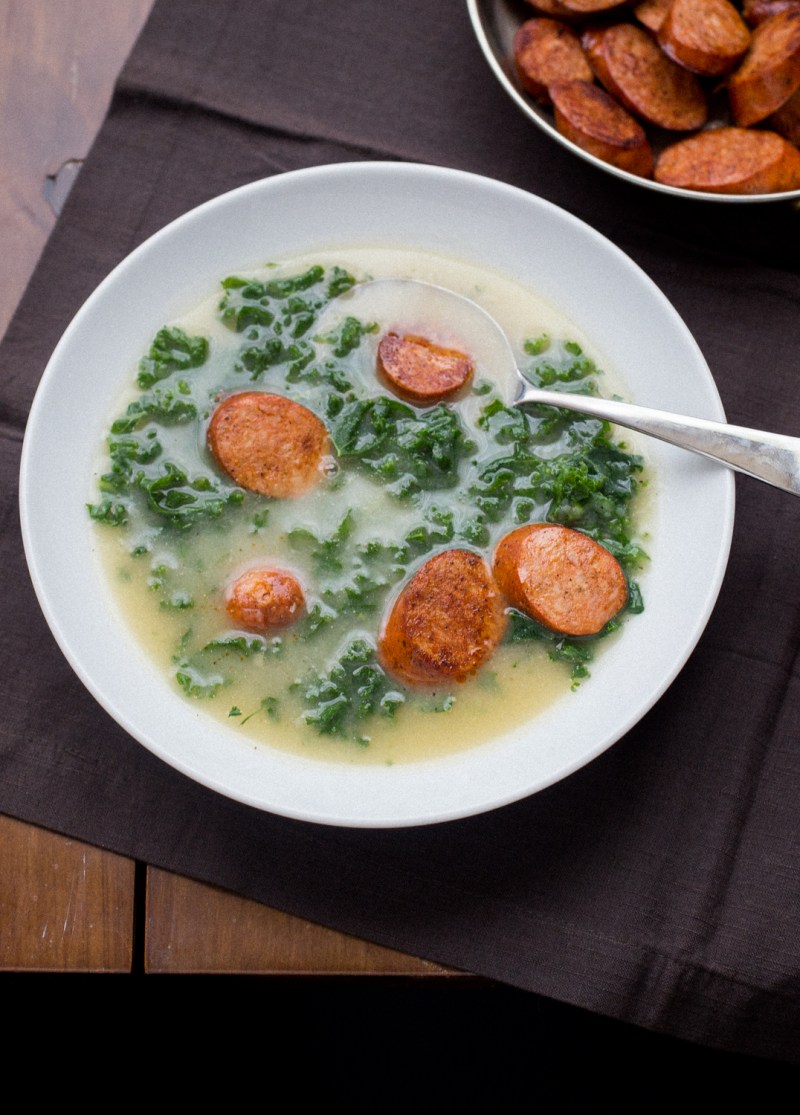
A few weeks ago, a reader suggested I try my hand at Caldo Verde (“green broth”), a traditional Portuguese soup that is often considered their national dish. It was the perfect recommendation – the soup’s use of simple, satisfying ingredients, plus the addition of slightly-spicy sausage, make it an ideal late spring / early summer meal.

Initially, the soup’s use of kale might seem out of place for a country that is geographically closer to Africa than the rest of Europe. But when you take into context the fact that the soup originates from Portugal’s northern Minho region, which was once under Roman and Celtic occupation and still retains some of that influence today, the culinary presence of a hearty cabbage like collard greens (or kale like in this recipe) makes sense. One of my favorite aspects of this dish is that it’s a perfect pauper’s meal: combine some very basic and always-available ingredients (water, onion, potatoes, cabbage) and add other items if and when they are available (broth, sausage).

Read Full Article

I have a feeling that if you asked a child what sweetbreads are, and then asked a chef, you’d get wildly varying answers. The word “sweetbread” first popped up in the 1500s, and it’s hard to tell what part of the animal they were referring to: historians generally agree that it’s likely the thymus gland or pancreas. Today, the word is often used for many small organs, from the sublingual gland to (gasp!) the testicle. Common sense assumes that these glands were eaten regularly throughout history, and was probably highly sought after due to their rarity (in relation to the rest of the food you get from an animal) and delicacy.

When my friends at US Wellness Meats offered to send me some of their lamb sweetbreads to try, I jumped at the opportunity; I hadn’t made them at home before, and I was up for a challenge. It turns out that they are relatively simple to make, they just take a little finesse and patience. To fill out the dish, I wanted to add something hearty and filling (cauliflower purée), something sweet (a pear reduction sauce), and a firm texture to make sure the dish didn’t turn out to “mushy” and to add a sharper taste to everything (spring greens tossed in balsamic vinaigrette). It all turned out beautifully.

Read Full Article

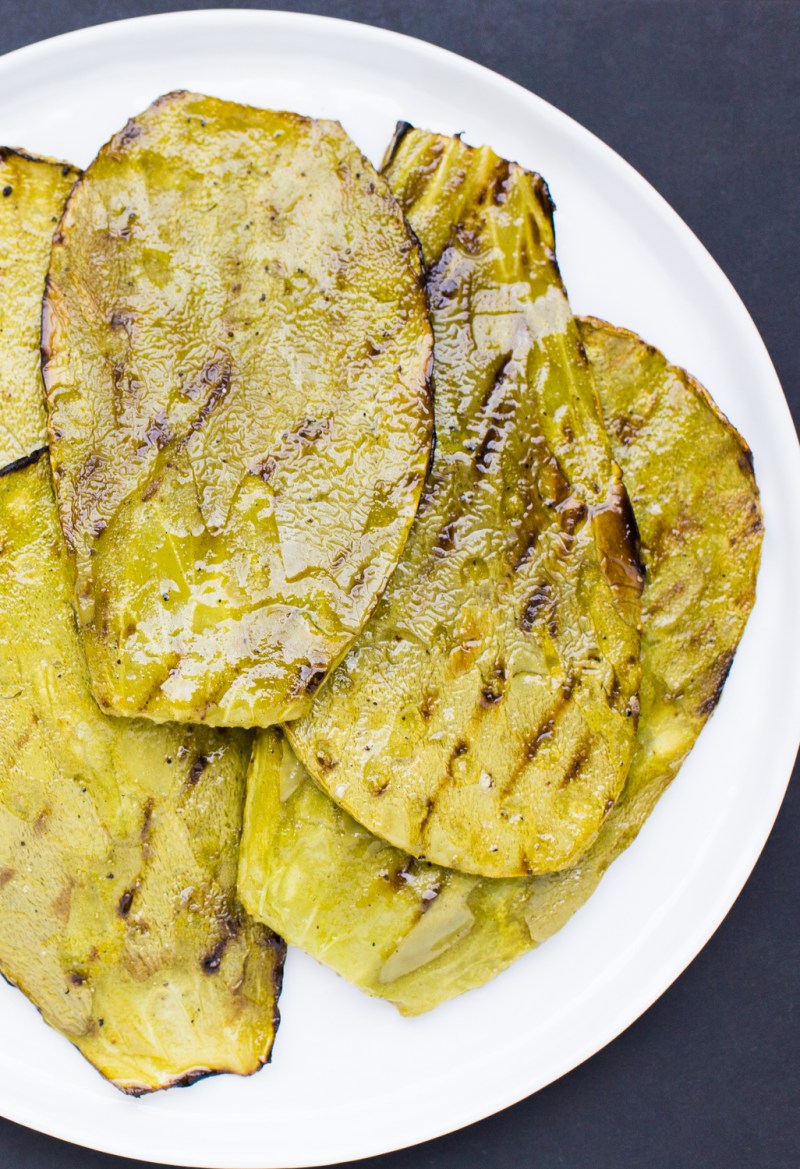
With spring upon us, I’ve been looking to expand my grilling options. The idea of cooking and eating a cactus might sound intimidating, but the reality is much simpler than you’d think. All you have to do is scrape off their thorns, and grill them – it’s that easy.

Nopales are the paddles of oputina (prickly pear) cactus, commonly found in Mexico. They are a common vegetable in Mexico, and taste a little like green beans, but slightly more acidic. They are a great addition to grilled meat dishes, or tasty just on their own. They are also often sliced/diced and served with eggs or in salads.

Read Full Article

While spending a few days in Austin last month, I basically dove head-first into Texas barbecue: the pickles, the vinegar-based cole slaw, and man, the brisket! I loved how a dry, blackened crust over their barbecued meats isn’t a bad thing, and how sauce is added according to individual taste, after plating. Even better, the barbecued meats are sold by the quarter pound, so each person gets to choose how much they want to eat. If that’s not the most American way of eating ever, I don’t know what is! These are all concepts that are relatively uncommon in our neck of the woods here in Maryland, so I decided to try my hand at some Texas-style barbecued beef the other day.

When choosing a meat to try, I decided to go the easy route with some boneless short ribs: they are a great size, and fatty enough that I was sure I didn’t need to worry about them drying out while cooking. Turns out I made a great choice – the short ribs were perfectly moist and tasty, and a great change of pace from our typical method of cooking short ribs (braising).

Read Full Article

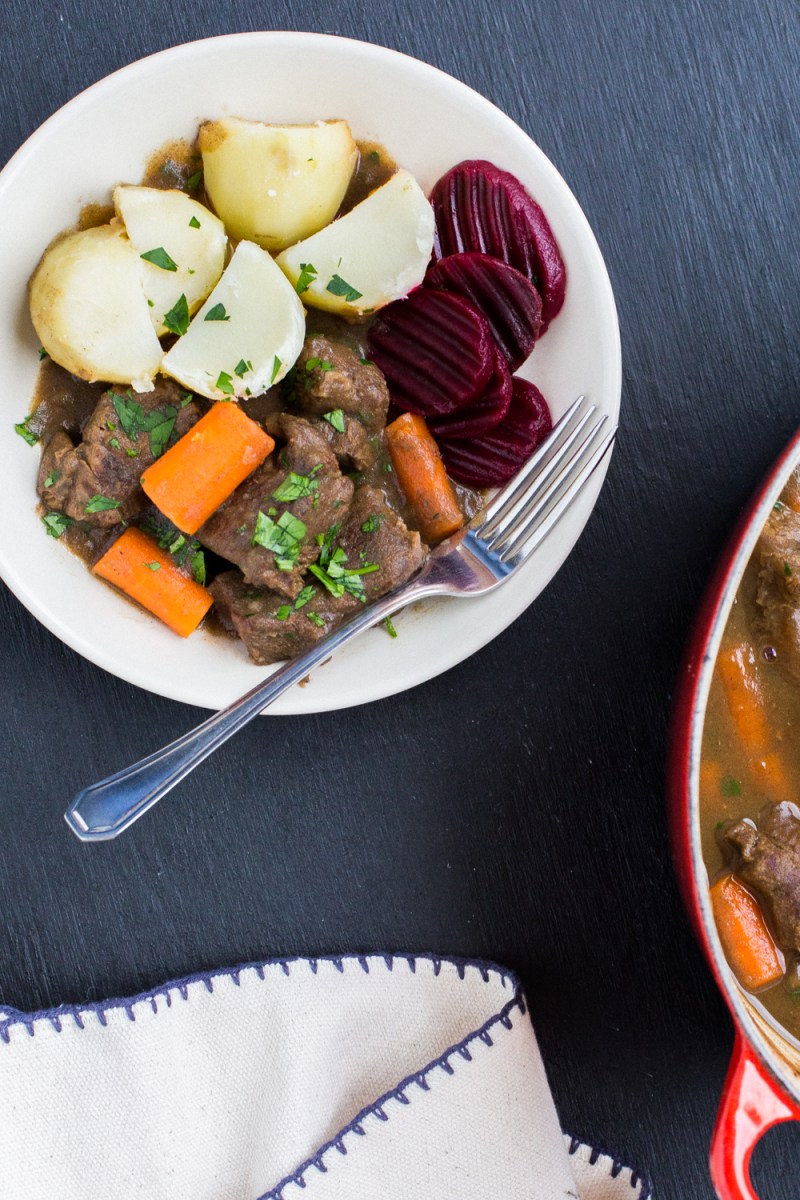
Kalops is a traditional Swedish stew, first recorded in the 18th century. The word kalops itself is a cognate with the English word collops, which simply means “a slice of meat” – there’s actually some dispute as to whether the Swedish or English word came first. Either way, this stew is very similar to many English stews, but with a few Scandinavian twists: its signature flavor comes from a healthy amount of allspice, and it is commonly served with pickled beets. When carrots are added, the dish is called Skånsk Kalops, referring to the Skåne region (which is in Southern Sweden – perhaps carrots grow most abundantly there?).

Kalops is most often prepared with chunks of beef, but reindeer or elk are used as well. Personally, I thought it would be neat to make it with bison chuck roast, which US Wellness Meats recently sent me to try. It was pretty awesome. Overall, I loved this stew, and its characteristic allspice-heavy flavor gave it a warm, hearty, and very distinct taste.

Read Full Article

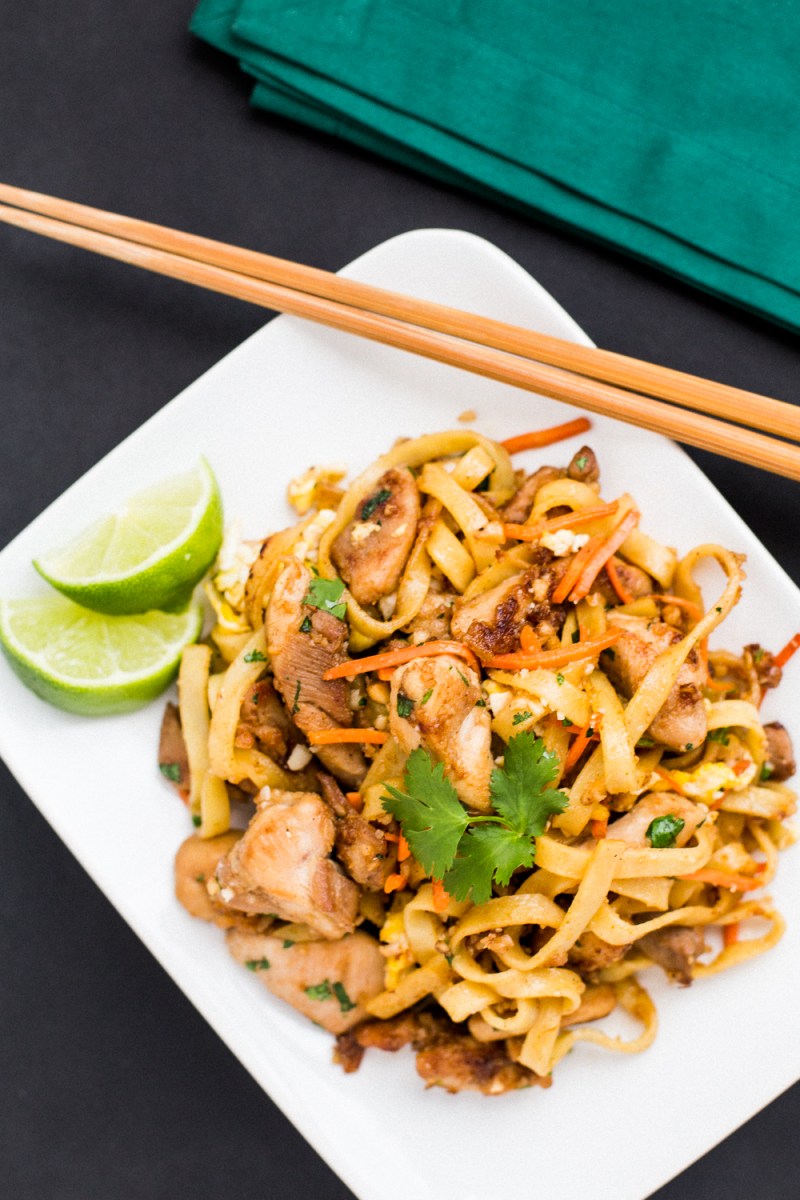
It’s somewhat surprising, but Pad Thai, despite being one of Thailand’s national dishes, is from Vietnam. Originally influenced by Chinese cuisine, the dish was relatively unknown in Thailand until the 20th century. It actually was part of a Thai government campaign in the 1940s to create a national dish that both reflected the Thai spirit and also increased rice noodle production to help propel their economy. There’s a really interesting history of the dish to be read here.

This recipe is a long time coming, and something we’ve been cooking for years. For a while I was content with pre-made sauces like Mae Ploy’s, but I was never happy with its high sugar content and the fact that it has MSG in it. So I decided to work out how to make it from scratch, and I couldn’t be happier with the resulting product. This is the real deal.

And to make things even more interesting, for this particular photo session I thought it would be neat to try out Cappello’s gluten-free, grain-free fettuccine noodles instead of our usual rice noodles, and I was surprised by how well they worked! Instructions on how to make them with traditional rice noodles and zucchini noodles are included as well.

Read Full Article

With our extended winter this year (spring is finally springing in our neck of the woods this week!), I found myself craving comfort foods to help me get over the cold-weather blues. And for that very same reason, I decided to focus on an American classic for this week’s recipe – one that some might consider a quintessential comfort food. Believe it or not, it’s very hard to find any sort of origin or history around the combination of sausage, peppers and onion. It’s a staple food of Fenway Park, so it must be a Boston thing, right? But others associate it with NYC, and still more with Chicago. All I can say with certainty is that it’s of Italian-American descent, with fairly deep roots, and an easy way to make a quick delicious meal.

The word “sausage” originally comes from the Latin word salsus, which means “salted.” There is evidence of it being enjoyed in Italy as much as 2,000 years ago. That it has a long culinary existence isn’t so surprising; sausage is a perfect way of making sure every bit of the animal is used, and deliciously so. Here in the US, the words “Italian sausage” imply a seasoning based on fennel seeds and anise, and can be sold as either mild or spicy.

Read Full Article

Who doesn’t love spinach? Besides kids, I mean. Actually, funny story, kids are more apt to eat vegetables if they watch Popeye. Personally, I despised it growing up, but now I love spinach in all forms – raw, blanched, or simmered (as in this recipe); it has a mild and unique taste with each preparation.

This recipe is modeled after the German dish Rahmspinat (“creamed spinach”), and it mostly true to the original except for the fact that this particular recipe is dairy-free. So I guess the more appropriate term for this dish would be Spinat. If you’d like to prepare it more true to the original dish, I’ve added instructions below!

Read Full Article