meat

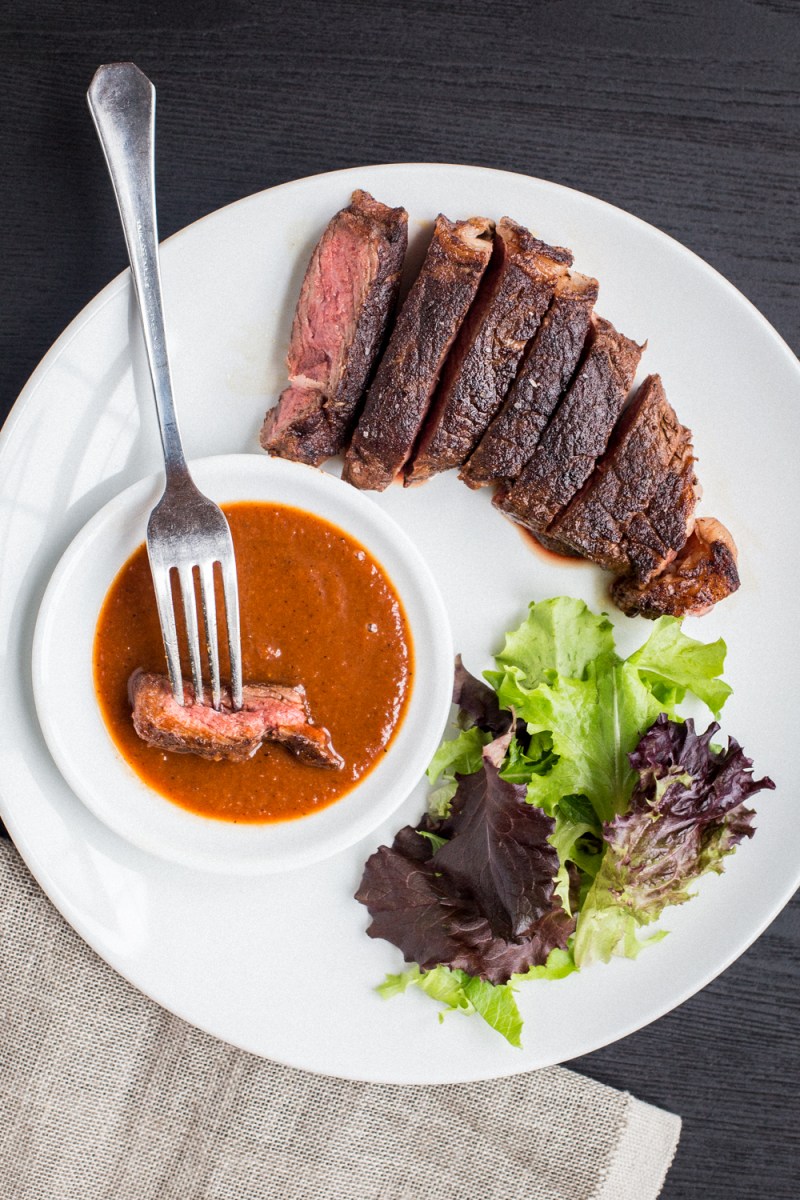
As the temperatures fall this month, I expect many people to be hesitant about going outside to grill food. Personally, we keep the grill outside and ready all year long, but I realize that not everyone feels that way (especially my Midwestern readers, whose winters are a little more significant than ours). So I thought it would be a good time to work on a solid, foolproof pan-seared steak recipe.

To be honest, we as a family don’t eat steak much, due to its high price point. But it’s an excellent celebratory meal, or for when you’re looking for a simple, developed taste without having to spend much time preparing your meal. Generally, steaks are made from the most tender cuts of the animal and cooked quickly; their tenderness comes from a lack of tough fibers and connective tissue found in the muscles that are more worked. Applying a light spice rub on a steak is ideal, and right before cooking, so that you have contrasting tastes of the crust and delicate interior. The combination of cacao, peppers, and salt go especially well with steak.
Read Full Article

Hey folks! Tonight at 7pm ET (4pm PT) I’ll be one of three home chefs participating in a live Google+ Hangout “Cookalong” with MasterChef Top 4 contestant Jessie Lysiak; be sure to tune in via the MasterChef Google+ page or FOX’s YouTube Channel to watch me in action! Thanks for the support!

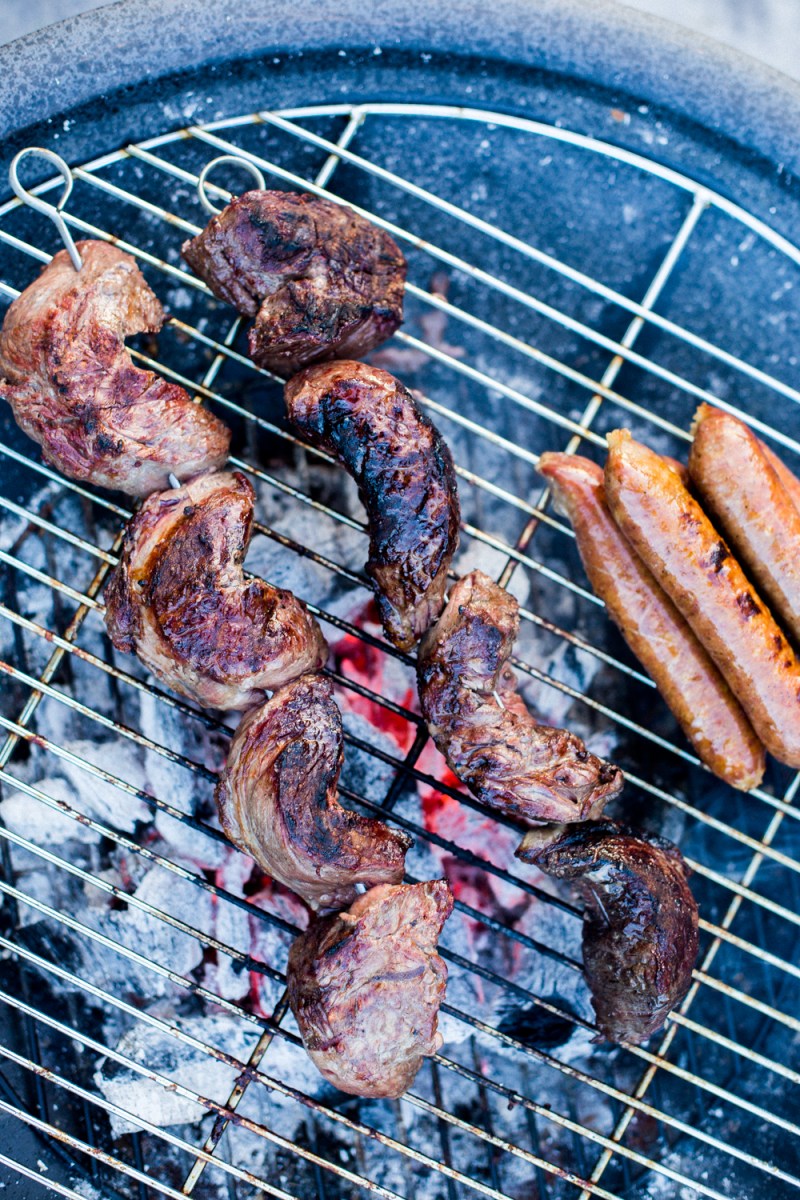
Most of the time, I really appreciate a well-marinated chunk of meat. Or something that’s been swimming in a fragrant sauce for a while. But every once in I while I like to bring dishes back to their basics – and this week’s recipe fits the bill nicely. Picanha (pronounced “Pee-cone-ya”) is about as simple as it can get: skewered rump cap roasted over an open fire, flavored with only sea salt. It’s a staple dish of Brazilian barbecue (churrasco) and one of the more prominent dishes from the region.

A rump cap is hard to find in many American butcher shops, as it’s often incorporated into the cut we call rump roast. If you’re lucky enough to find it in North America, the rump cap is usually identified by a thick layer of fat on one side which flavors the meat as it grills. As an alternative, we used a couple top sirloins from US Wellness Meats, which had a nice layer of fat on one side, mimicking the rump cap perfectly.

This week’s recipe, like last week’s Couve a Mineira, is part of a team-up recipe with my friend Alex Boake. Be sure to check out her illustrated version of this recipe!

Read Full Article

Greater Baltimore area residents: I’m speaking about food and nutrition at CrossFit Glen Burnie on Saturday, July 13th. More info is here.

Like most red-blooded American men, I have a special place in my heart for barbecue ribs. That’s probably pretty obvious, since I have no less than TEN ribs recipes on my site (my favorites are here and here) – that’s nearly 5% of all my recipes!

My taste in ribs has changed over the years, as well as my cooking method; originally I braised my ribs in apple juice and onions for a couple hours, then crisped them over a grill. While I still like ribs that way from time to time, I’ve come to better appreciate smoked ribs – those cooked over low temperatures for extended periods, gently nudged to perfection by wafting curls of smoking cinders.

The trouble is, despite all of my outdoor cooking adventures, I keep pushing off the idea of buying a charcoal grill or a smoker, the usual staples of tasty smoked ribs – my backyard patio only has so much real estate, and I don’t think Mrs. Domestic Man would appreciate more contraptions back there. So I’ve been diligently plugging away at making an easy, foolproof method for smoking ribs on a gas grill, and I’m ready to share the meats of my labor.

To demonstrate, I decided to use spare ribs, which is a cheaper cut of ribs, but they taste just fine to me when cooked properly. I also used a drip pan full of hard cider to flavor and moisten the ribs as they smoked (regular apple cider or water would do fine as well).

Read Full Article

While spending a few days in Austin last month, I basically dove head-first into Texas barbecue: the pickles, the vinegar-based cole slaw, and man, the brisket! I loved how a dry, blackened crust over their barbecued meats isn’t a bad thing, and how sauce is added according to individual taste, after plating. Even better, the barbecued meats are sold by the quarter pound, so each person gets to choose how much they want to eat. If that’s not the most American way of eating ever, I don’t know what is! These are all concepts that are relatively uncommon in our neck of the woods here in Maryland, so I decided to try my hand at some Texas-style barbecued beef the other day.

When choosing a meat to try, I decided to go the easy route with some boneless short ribs: they are a great size, and fatty enough that I was sure I didn’t need to worry about them drying out while cooking. Turns out I made a great choice – the short ribs were perfectly moist and tasty, and a great change of pace from our typical method of cooking short ribs (braising).

Read Full Article

NOTE: An updated version of this recipe appears in my cookbook, The Ancestral Table.

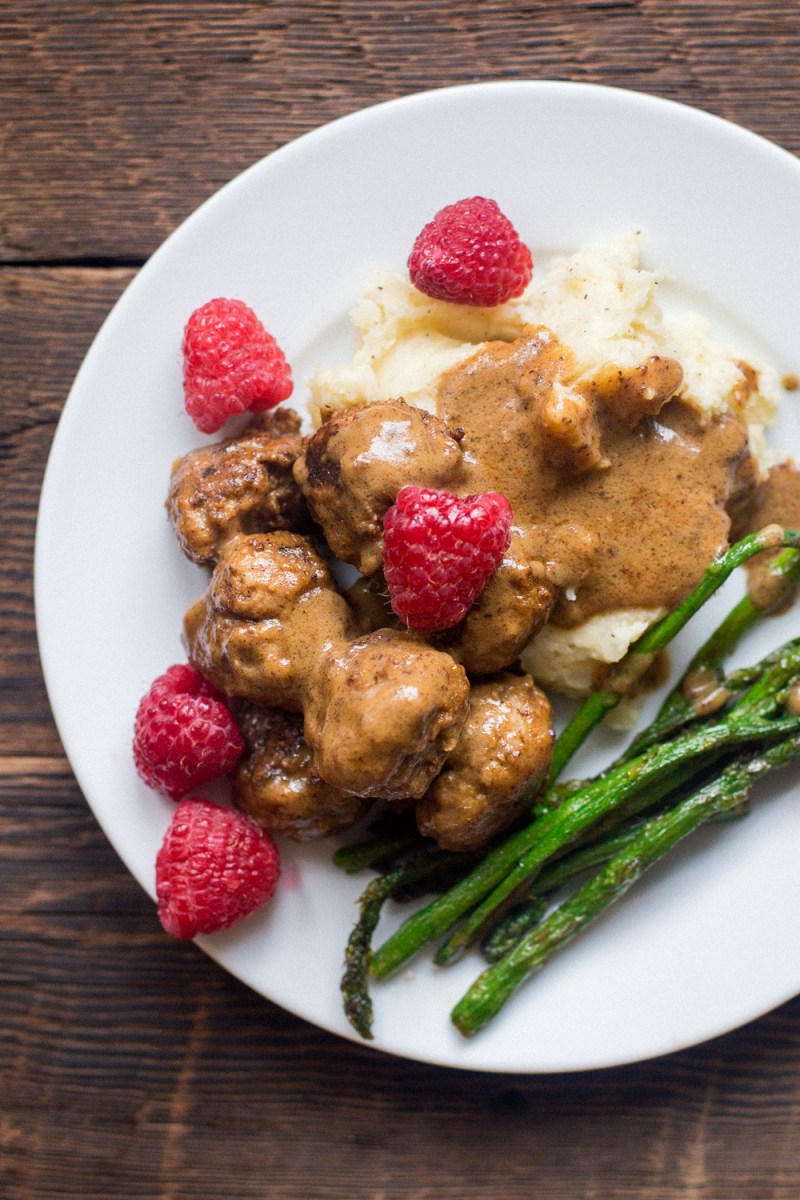
While meatballs have been around forever, the first written documentation of meatballs in Sweden appeared in the 18th century. Meatballs were likely an uncommon food in Sweden until the widespread use of meat-grinders; they later became standard Smörgåsbord (the original buffet!) fare. Scandinavian immigrants brought their meatballs to the United States, particularly the Midwest, during the 1920s. Swedish meatballs are unique in that they are pretty small and often served with a cream-based gravy.

Most Swedish meatballs are made using breadcrumbs (even IKEA’s!) so I set off to make a gluten-free version of the classic dish. It was surprisingly easy, with almond meal, cream, and egg yolk making a pretty hefty binder. I also found that in making the gravy, regular white rice flour (not sweet rice flour) created the best consistency.

Read Full Article

NOTE: An updated version of this recipe appears in my cookbook, The Ancestral Table.

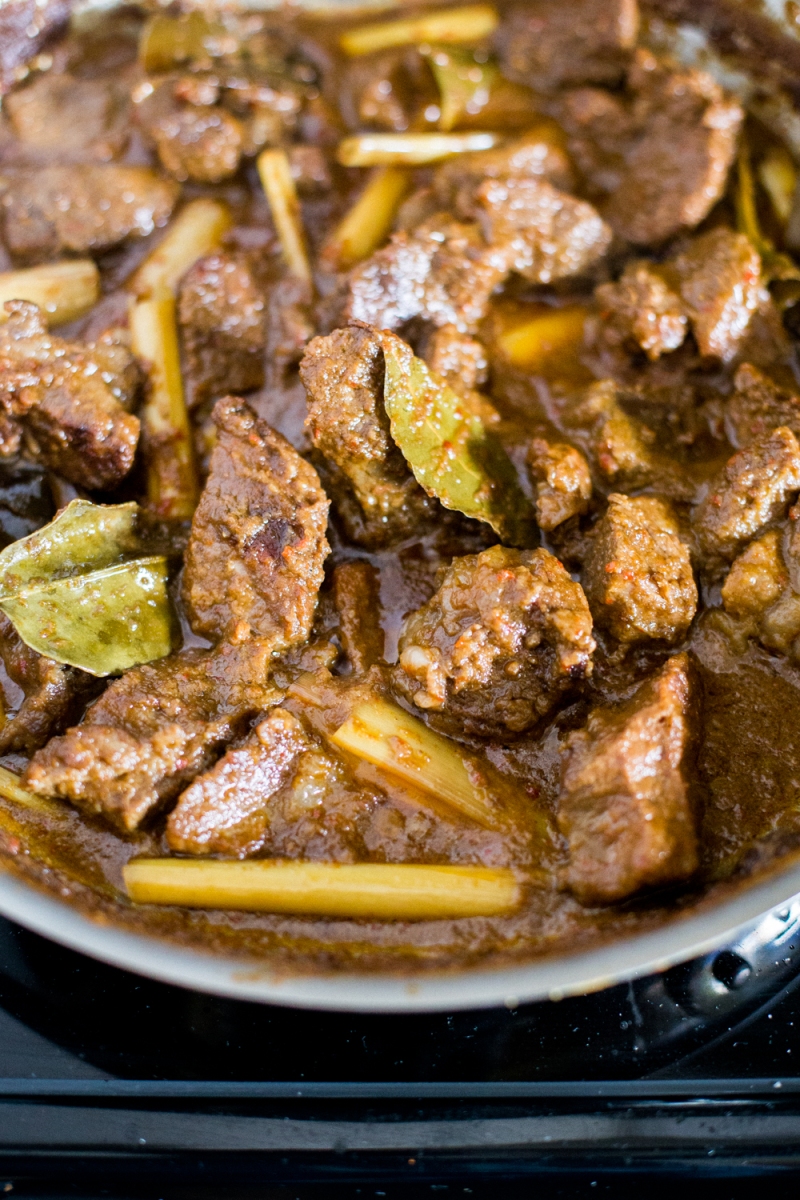
Rendang is a dry curry originating among the Minangkabau people of West Sumatra, and later spreading throughout Indonesia and Malaysia. It’s one of the most recognizable Southeast Asian dishes, with its distinct…well, ugliness and signature intensity. This “dry” method consists of simmering down coconut milk for several hours to intensify the flavors (and also preserve the meat, which was probably how the dish was started). The end result is a taste so significant that it can be downright overwhelming.

Rendang is usually made with beef, but it can sometimes be found using mutton or water buffalo. For this dish, I used a combination of TX Bar Organics’ delicious and lean stew meat, and a pound of fattier chuck roast. This allowed me to use the chuck roast’s rendered fat to brown the beef during the last stage of cooking.

Read Full Article

NOTE: An updated version of this recipe appears in my cookbook, The Ancestral Table.

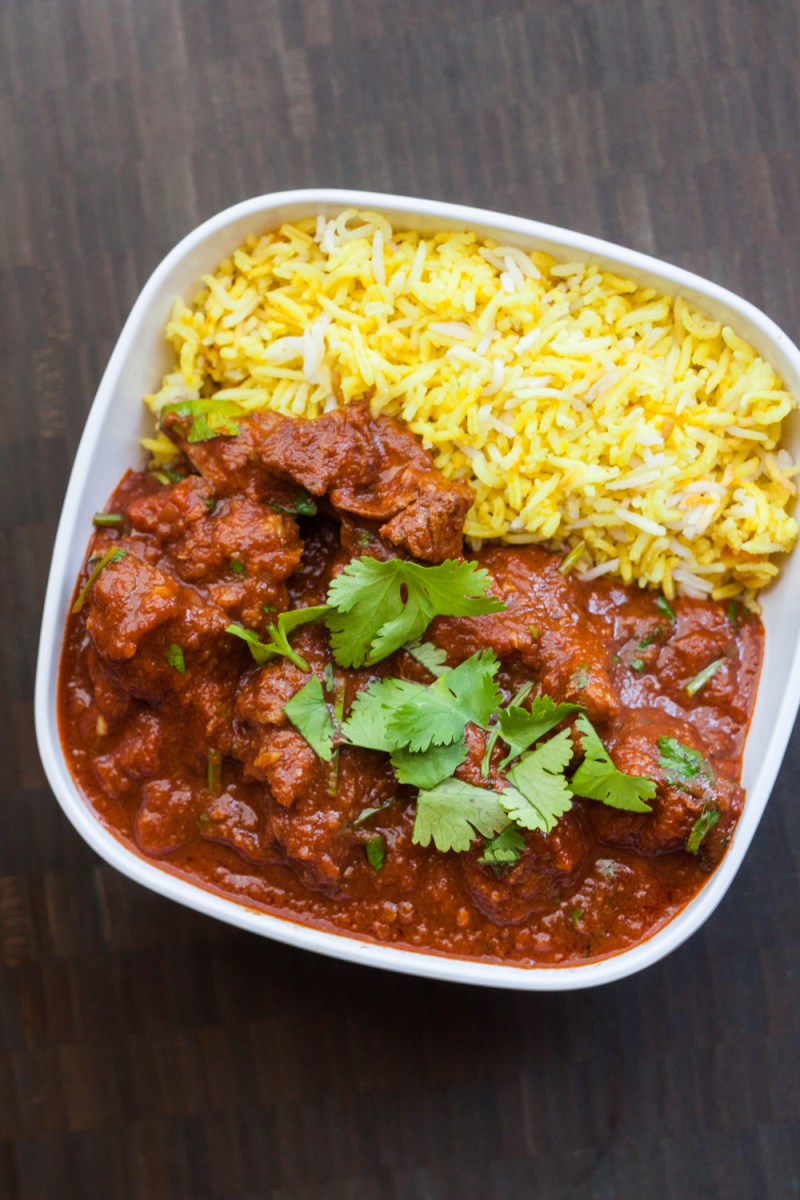
Rogan Josh is a popular Kashmiri dish that is believed to have originated in Persia before making its way to Northern India and beyond (in Persian, “rogan” means clarified butter and “josh” means hot or passionate). Its signature red color is historically the result of mild red Kashmiri chiles which were used in making this dish. Over the years, many restaurants started using tomatoes in the dish to bring about that red color easily. My recipe follows the more modern interpretation of the dish, mostly because you and I don’t have the money to travel to Kashmir for some chiles! Well, maybe you do, but I most certainly do not.

An excellent cut of lamb for this dish was the other half of Lava Lake Lamb’s beautiful lamb shoulder (the other half was used to make shashlik). This slightly-fatty cut imparted a ton of flavor into the dish, which just tasted better and better the longer it simmered.

I’m also happy to announce that this is my first recipe that features a printer-friendly version! I’ll be sure to do this with every recipe from now on, and as I get the spare time I will go back and make printer-friendly versions of all my recipes.

Read Full Article

Drumsticks are a great cut of chicken. My three-year-old son loves them, since they come with “handles” and he gets to eat with his hands. To celebrate these little legs I decided to write up a quick, foolproof recipe for grilling drumsticks.

They are also one of the easiest and most rewarding pieces of chicken to grill, because it’s hard to mess them up. Chicken breasts are great, but they have a very small window of juiciness, and will dry up quicker than a jackrabbit in a thunderstorm. Whole chickens are also fun to grill, but are best when brined, which can take some time and planning. Thighs are another good option, but let’s be honest here – they’re just not as fun as drumsticks.

Read Full Article

There’s an old saying: lamb is a meat best grilled. Okay, that may not be an old saying, but it should be. Something about lamb and direct heat go together really, really well. So when Lava Lake Lamb sent me some of their lamb sirloin for a recipe, I knew it was going directly on the grill.

This recipe uses a simple marinade that combines maple syrup and spicy brown mustard to complement the lamb’s natural deliciousness.

Read Full Article

Gyro meat, often referred to as doner or shawarma meat, is simply meat roasted on a rotating vertical spit and shaved off. Most Mediterranean and Middle-Eastern countries have some variation of this dish as a common street food. Depending on where you’re getting it, the meat can be made of lamb, beef, goat, chicken or a combination of meats. It’s one of my favorite meats of all time, and one that’s not easily replicated at home without a rotisserie setup. Lava Lake Lamb was gracious enough to send me some ground lamb recently, so I thought it was time to try and figure out how to make it on my own.

I spent a lot of time researching how to make authentic gyro meat at home, and in the end I found that Alton Brown’s approach was just about perfect. It involves processing the meat to make a thick paste, which is then stored for a couple hours before being cooked on the grill using a rotisserie or in the oven using a meatloaf pan. I went with the meatloaf pan variation with just a few adjustments, and it was awesome.

Read Full Article