

This year we upgraded our gas grill, so I’ve been thinking of new ways to grill food. I decided to incorporate grilling into chicken korma, resulting in a creamy, delicate sauce with textured chicken chunks.
This year we upgraded our gas grill, so I’ve been thinking of new ways to grill food. I decided to incorporate grilling into chicken korma, resulting in a creamy, delicate sauce with textured chicken chunks.

NOTE: An updated version of this recipe appears in my cookbook, The Ancestral Table.
Chances are you saw the picture above when you read my post about mac and cheese the other day. Maybe not. Either way, I think the picture is good enough to use twice.
This pulled pork recipe is very similar to my kalua pig recipe but with less salt and liquid smoke (and BBQ sauce). Like most slow-cooked meats, I think that less is more when it comes to ingredients, so I like the meat’s natural taste and the BBQ sauce do all the talking.

Satay is a dish that originated out of Indonesia. It’s basically just marinated, skewered, grilled pieces of meat. It’s most commonly found with chicken or beef, but like Japanese yakitori, you can find all sorts of weird varieties as well if you look hard enough. This is my shrimp version.
The most critical ingredient for this dish is turmeric, which gives the meat its yellow coloring. It’s somewhat hard to find but you’ll only need to get a small container, because a little bit goes a looong way.

This recipe is similar to my original ribs recipe, but with spare ribs instead of baby back ribs, and with more ingredients in the braising liquid. It resulted in a rich, complex meaty taste.
The first thing you’ll probably notice right off the bat is that spare ribs aren’t very nice looking. “Spare ribs” is a phrase used for the lower ribs, which aren’t particularly evenly cut. That’s the sacrifice one makes for getting cheaper ribs! The ribs I used in my recipe were pre-cut but you may have to cut them yourself. Also, spare ribs are usually home to a bunch of pieces of cartilage, which some people find unappealing; personally, I like to dig around the ribs and find them.

I don’t write about breakfast much but I thought I should do a real quick post on my typical starting meal.
On weekdays, I generally focus on three items that I take to work: meat, cheese, and fruit. Breakfast is the only time of day that I actively eat fruit, one or two pieces a day. I tend to eat applesauce, berries, plum, or kiwi. The meat is generally four slices of uncured lunchmeat (usually from Applegate Farms), beef jerky, smoked or canned salmon, or a can of sardines. Cheese is usually Kerrygold grass-fed Dubliner or Blarney cheese, or Trader Joe’s grass-fed cheddar.
Weekends is usually the same combination but only one piece of fruit max, with eggs and bacon added. Often I skip the cheese as well. I’m not a big fan of mixing eggs with other ingredients, so I don’t usually make omelets or those crazy Paleo concoctions you’ve probably seen floating around the internet. Sometimes we’ll make something with potatoes, and very rarely we take a stab at gluten-free pancakes (usually to disastrous result). Fried rice for breakfast is pretty tasty, too, and nothing beats spam musubi every once in a while.
That’s basically it. What do you eat for breakfast?

Man, I had the hardest time finding a chicken cordon bleu recipe in my French cookbooks. Turns out that this dish isn’t French at all; it was created in the US and we added the “cordon bleu” to make it sound awesome. And in that respect, it totally worked.
The challenge with making a grain-free chicken cordon bleu lies in its crispy outer crust, which is usually achieved through flour and bread crumbs. I experimented a bit and found that a combination of coconut flour and potato starch worked best: the coconut flour surprisingly doesn’t leave any sweet/coconuty flavor behind, and the potato starch creates a crisp, delicate shell around the chicken.

Mashed sweet potatoes have a distinctly different taste from your everyday mashed potatoes. Yep, you guessed it: they’re sweeter. They’re also much more delicate so they require a slightly different approach; namely, you steam them instead of boiling them.
For this recipe, I used three different sweet potatoes/yams, only because we had all three at the house. This recipe will work fine with almost any sweet tuber, although admittedly this dish looks pretty awesome with all three.

NOTE: An updated version of this recipe appears in my cookbook, The Ancestral Table.
What’s there not to love about pork belly? It’s basically just super thick slices of uncured bacon. I’ve seen this cut at our local Asian market for years but didn’t know how to prepare it until I stumbled upon this recipe at Rasa Malaysia, and decided to give it a shot. What resulted was an impressive-looking dish with a crispy, flavorful outside layer and a tender and delicious center.

NOTE: An updated version of this recipe appears in my cookbook, The Ancestral Table.
There are several types of chinese cabbage out there in the wide wide world (or your local supermarket), so let’s learn them real quick. Won bok (“napa” cabbage) is the large, football-shaped heads of cabbage that are used in making kimchee. Bok choy resembles celery but with large green leaves (as seen above). Lastly, choy sum is the inner core of bok choy, with narrow, green stalks. Now that the hard stuff is out of the way, here’s how to steam bok choy for an interesting and nutritious side dish.
NOTE: An updated version of this recipe appears in my cookbooks, The Ancestral Table and Paleo Takeout.
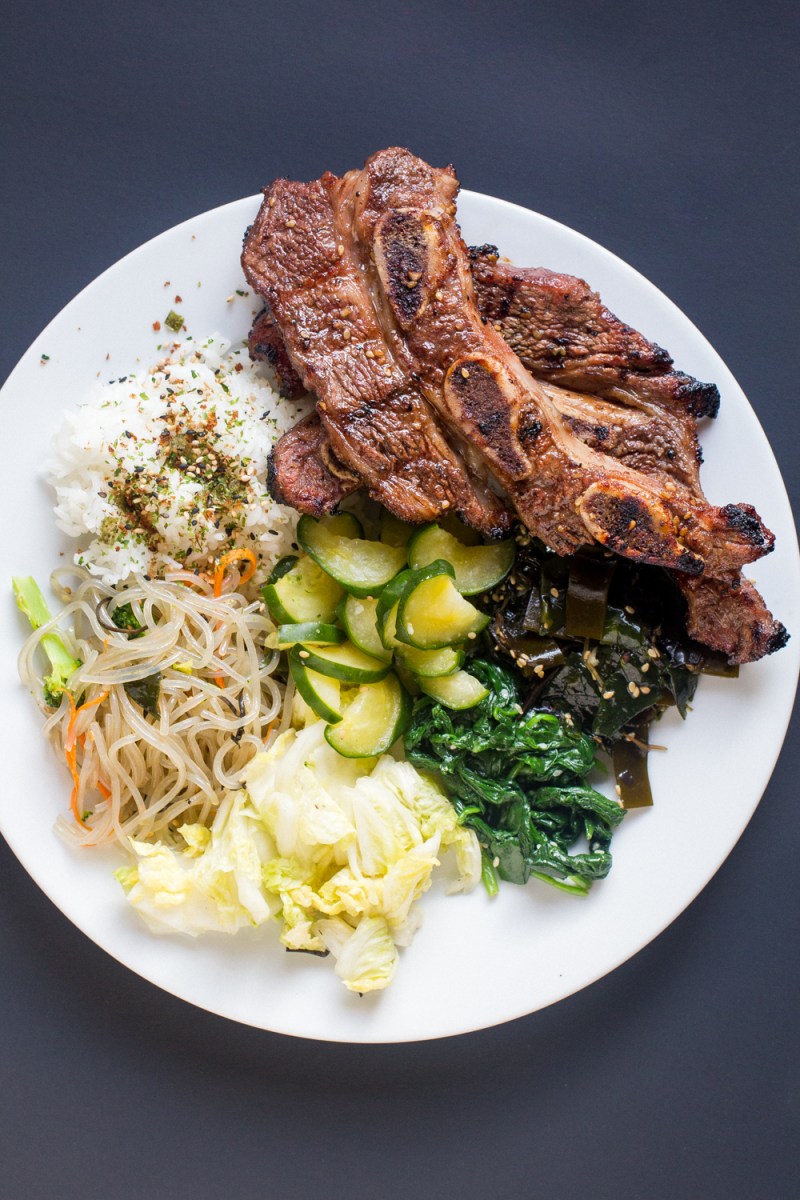
Kalbi (also known as Galbi) is one of my favorite meat dishes to grill at home. Unfortunately, all of the commercially-available marinades contain all sorts of nefarious ingredients, so I decided to try making the sauce from scratch. Luckily, it turned out to be really easy and tasted great.
This recipe calls for one Asian pear, but a regular golden pear, or even unsweetened applesauce, will do in a pinch.
 The Domestic Man