perfect health diet

NOTE: An updated version of this recipe appears in my cookbook, The Ancestral Table.

I love collard greens. They may be my favorite green food – well, second to mint chocolate chip ice cream, at least. They’ve been in use for at least 2,000 years; the ancient Greeks cultivated them along with kale.

I typically simmer my collard greens with some sort of smoked pork (usually bacon or smoked ham hocks), chicken broth, and apple cider vinegar, and it’s always delicious, although it can get a little boring. So a while back I consulted my buddy, the internet, to find another use for collard greens. During my search, I kept coming across the word Sukuma Wiki, the Swahili name for collard greens. Sukuma Wiki literally translates to “push/stretch the week” – collard greens are available year-round in East Africa, and are used to stretch meals out to last all week.

In the culinary world, Sukuma Wiki is a common name for a Kenyan dish of braised collard greens, usually prepared with ground meat, tomatoes, and onions. Turns out that this dish is dead easy to make, both in terms of time/preparation and ingredients. I was able to whip it up using stuff already in my pantry, and it’s always nice to find another use for ground beef. But the best part about this dish is its taste: it’s absolutely delicious, and has just a hint of exoticness to make it remarkable. One thing that sets this dish apart is that the collard greens are simply wilted down, and so they retain a slightly crunchy texture that really complements the ground beef.

Read Full Article

Because of their heavy use, beef cheeks are super lean and tough. While this doesn’t sound like a fun cut of meat to cook, when braised the results are remarkable: with a little liquid, heat, and time, one cheek magically transforms into a dense, succulent, and immensely satisfying meal for two.

A traditional French-style braise in broth, red wine, mirepoix veggies, and a few sprigs of fresh herbs help to bring a full flavor to the meat. But after several hours in the oven I felt like I needed to add something to liven the dish up; so I worked out a new favorite invention of mine, anchovy butter.

Read Full Article

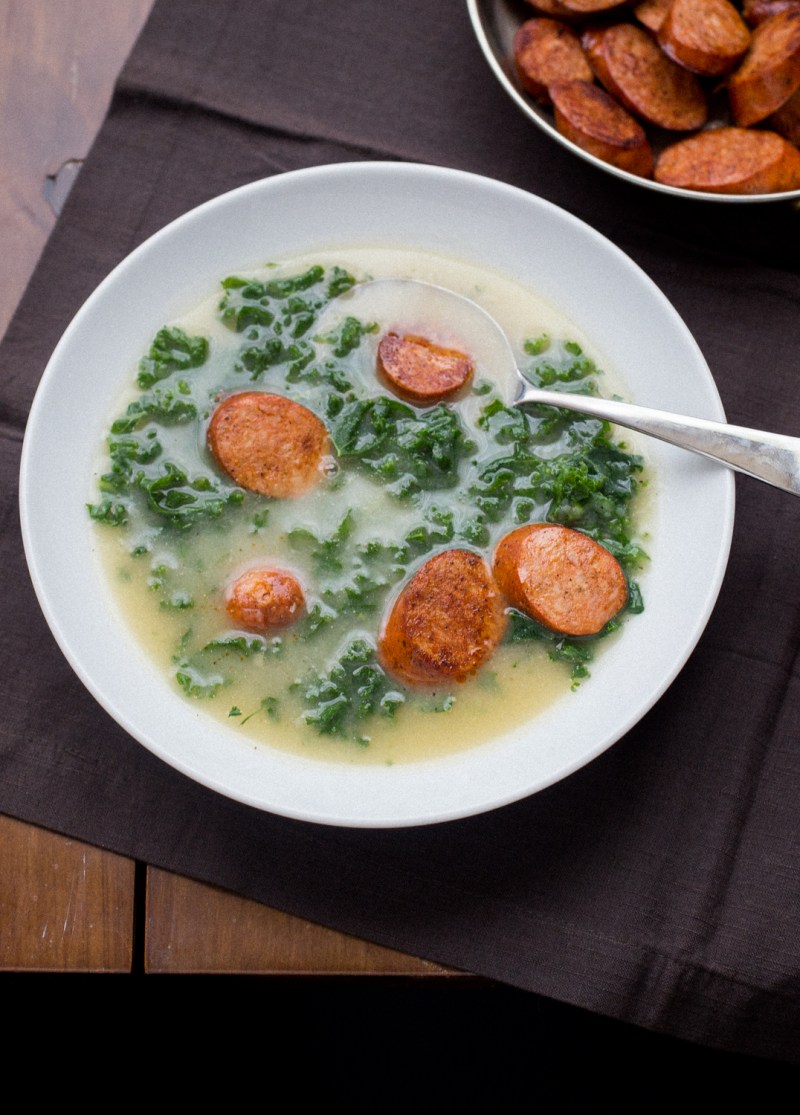
A few weeks ago, a reader suggested I try my hand at Caldo Verde (“green broth”), a traditional Portuguese soup that is often considered their national dish. It was the perfect recommendation – the soup’s use of simple, satisfying ingredients, plus the addition of slightly-spicy sausage, make it an ideal late spring / early summer meal.

Initially, the soup’s use of kale might seem out of place for a country that is geographically closer to Africa than the rest of Europe. But when you take into context the fact that the soup originates from Portugal’s northern Minho region, which was once under Roman and Celtic occupation and still retains some of that influence today, the culinary presence of a hearty cabbage like collard greens (or kale like in this recipe) makes sense. One of my favorite aspects of this dish is that it’s a perfect pauper’s meal: combine some very basic and always-available ingredients (water, onion, potatoes, cabbage) and add other items if and when they are available (broth, sausage).

Read Full Article

The word cutlet is a bit of a culinary mystery – everyone has their own interpretation of what it means. Throughout most of Europe, a cutlet is a thinly-sliced cut of meat (usually pork or veal) that is beaten, covered in breadcrumbs, and fried (think schnitzel). This is the same in the US, but they are mostly made with chicken breasts. The Japanese like to use pork (tonkatsu). Australia uses either chicken or lamb. Great Britain is a little different in that cutlets are usually not breaded.

And then there’s Russia. Somehow, as they trotted down the path of history, the Russians decided that котлет was a pretty good word for what we in the US would call a hamburger steak. Russian cutlets are a very common household dish, probably due to how easy they are to prepare. What’s funny is that they often eat cutlets between two slices of bread as a snack – which sounds a lot like a hamburger to me, although they are still called cutlets.

So at the end of the day, you could have three people walking down the street,

a) eating a Chick-Fil-A sandwich
b) eating a schnitzel sandwich (they exist!)
c) eating what basically looks like a hamburger

…and they’d all tell you they are eating cutlets.

So, after working on my Russian cutlets for a while, I decided to make a dish that is unique in that it would be fit to serve at a restaurant (which is ironic, because cutlets are rarely served in restaurants in Russia).

Read Full Article

Shirred eggs, more commonly known as baked eggs, are eggs that are baked in a flat-bottom dish. Although they are traditionally prepared with minimal ingredients, my variation is a little different in that I like to use cupcake pans and layer a host of ingredients into a cup lined with ham or other form of cured meat. I like the idea of building your whole breakfast at once.

These baked eggs are a great way to treat guests that come over for brunch, or everybody’s favorite meal, “breakfast for dinner.”

Read Full Article

Attukal Paya (sometimes spelled as Aattukaal Paya or just Paya) is a hearty soup made with lamb, sheep, or goat feet served in South India. What fascinates me about this dish is that it’s often served for breakfast – initially this sounded strange to me, but the more I thought about it, the more it made sense; why not start your day out with some nutritious bone broth soup?

I also love the idea of throwing together a bunch of ingredients at night and waking up to breakfast already made!

Read Full Article

Update: Please note that I’ve improved upon this recipe – check out the new version here. They are also featured in my second cookbook, Paleo Takeout.

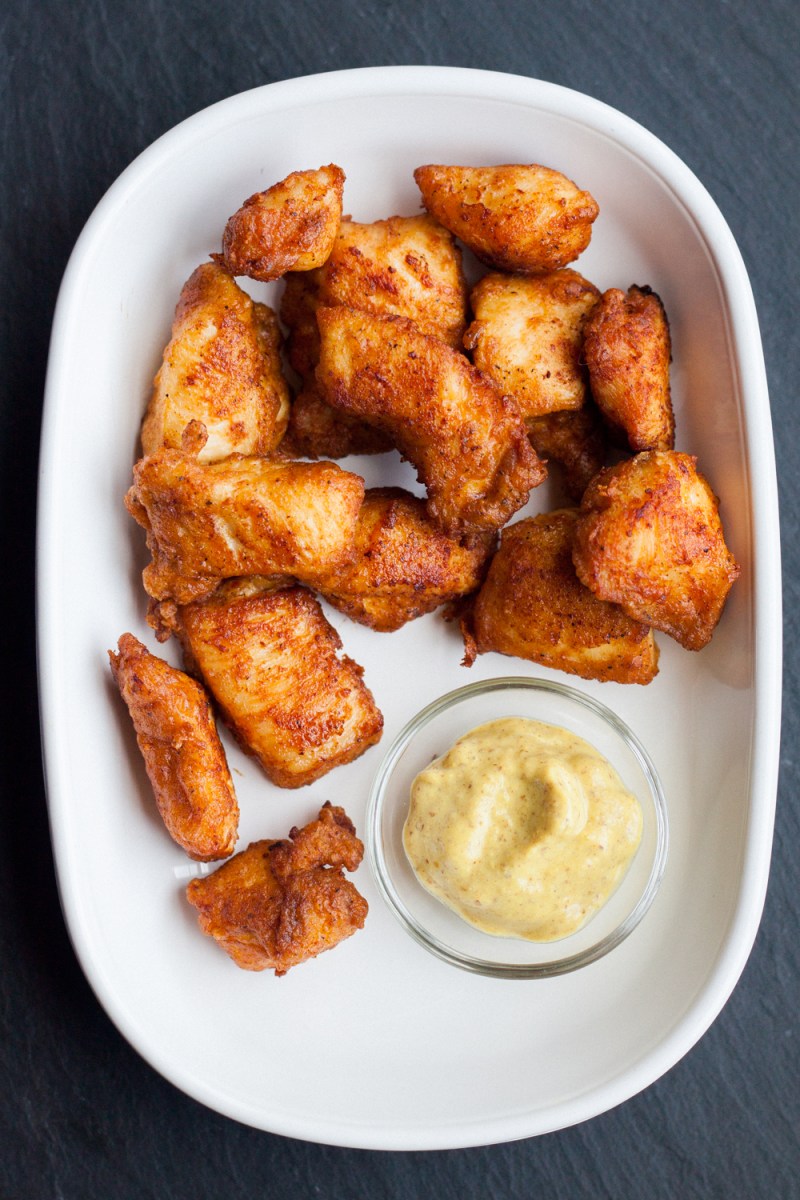
Over the past few weeks we’ve spent a fair amount of time out in town, shopping for gifts, and we have often found ourselves away from the house with no lunch plans. Chipotle is our emergency standby, but sometimes we’re tempted to grab Chick-fil-A since they’re everywhere (there are 30 of them within 20 miles of our house!). But as Melissa at Hunt.Gather.Love. points out, regardless of how you feel about Chick-fil-A’s stance on current social issues, the quality of their food alone should be enough to boycott the restaurant chain. For example, let’s take a look at the ingredients list for their nuggets:

100% natural whole breast filet, seasoning (salt, monosodium glutamate, sugar, spices, paprika), seasoned coater (enriched bleached flour [bleached wheat flour, malted barley flour, niacin, iron, thiamine mononitrate, riboflavin, folic acid], sugar, salt, monosodium glutamate, nonfat milk, leavening [baking soda, sodium aluminum phosphate, monocalcium phosphate], spice, soybean oil, color [paprika]), milk wash (water, egg, nonfat milk), peanut oil (fully refined peanut oil with TBHQ and citric acid added to preserve freshness and Dimethylpolysiloxane an anti-foaming agent added).

So I set out to recreate these chicken nuggets, and most importantly, reduce the ingredients list of this dish from 30+ ingredients down to 10 with minimal compromise on taste.

Read Full Article

My buddies at US Wellness Meats recently sent me a box of goodies to cook with, so for the next few weeks you’ll see some of their products popping up in my recipes. I couldn’t be happier – everything I’ve tried from this place is downright awesome.

When eyeing their Alaskan scallops, I knew some sort of pork needed to be paired with it, but I couldn’t decide. Bacon-wrapped scallops? Done to death. Sausage? Maybe. Both? Now we’re talking. So I whipped up one of my rare “thin-air” recipes – which are actually pretty hard for me to do, since I love recreating traditional recipes more than anything.

This dish only uses a few ingredients and seasonings on purpose – to hone in on the natural taste of the scallops, sausage, bacon, and kale. I also kept the portions a little small, so this dish is perfect for a light, tasty, and slightly messy lunch.

Read Full Article

NOTE: An updated version of this recipe appears in my cookbook, The Ancestral Table.

For a dairy free variation, check out my Flatbread recipe.

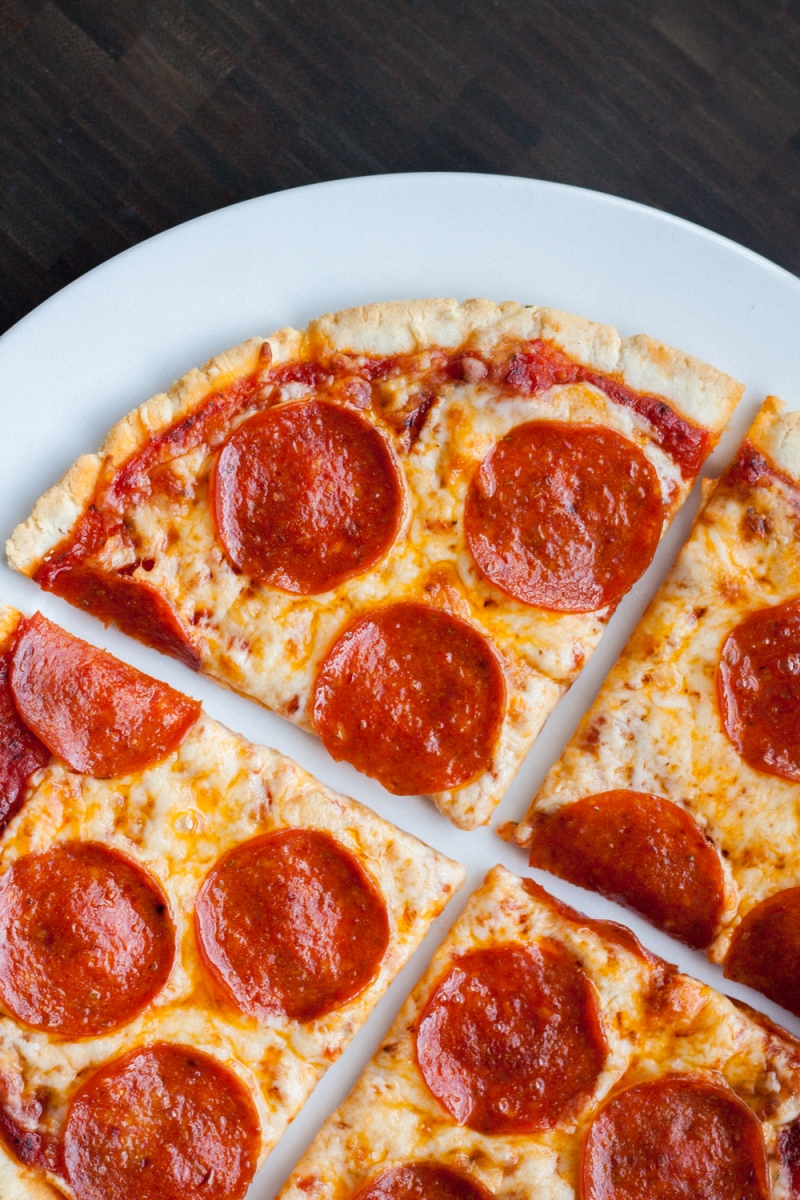
Like most residents of planet Earth, I’m pizza crazy. I’d like to say that my love affair started with those pesky Ninja Turtles, but I have a feeling that I was addicted well before the heroes in a half shell became popular. When adopting Paleo, I was probably worried about a lack of pizza the most, and after re-introducing dairy I tried all sorts of things, from frozen GF crusts to eggplant pizzas. Finally, I hunkered down and developed a gluten and grain free pizza crust of my own, and after several failed attempts, I’m happy to say that you will love this pizza.

Do I really need to provide a food history for pizza? Okay, since you asked so nicely. Pizza is a food first traced to Ancient Greece, when they took bread and covered it with oil and cheese (this is also the base for Pita bread). Italy is credited for adding tomatoes to pizza following their introduction from the New World in the 15th and 16th centuries. Interestingly, the combination of tomatoes and cheese wasn’t popular for hundreds of years, until the famous Pizza Margherita (tomatoes, cheese, and basil) incident – wherein the combination was served to Queen Margherita in 1889 to represent the Italian flag.

Pizzerias existed in the United States at the turn of the century, but it was only popular with Italian immigrants. Soldiers returning from the European campaign of World War II raved about pizza, and it became the sensation it is now almost overnight.

Read Full Article