
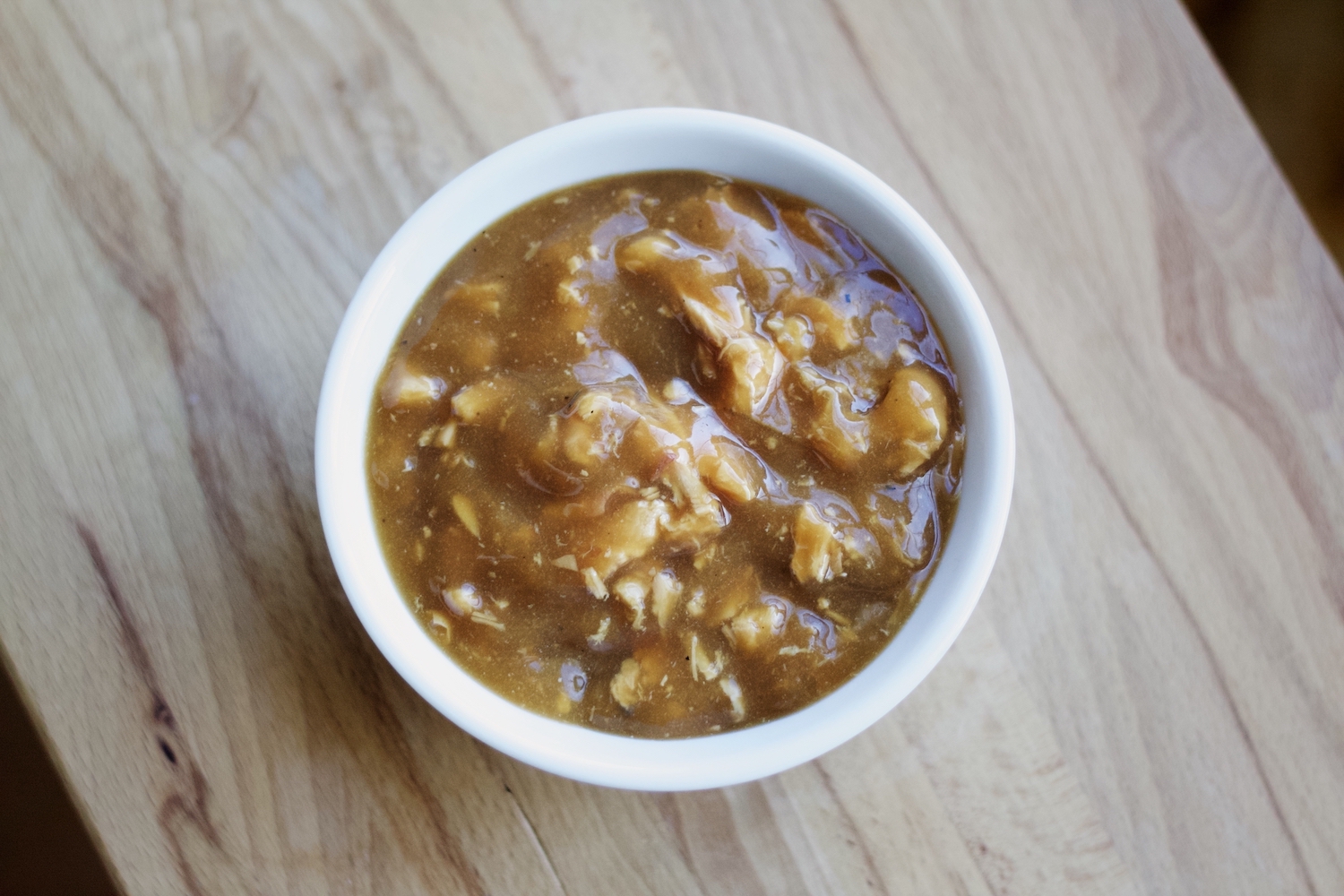
Creating a turkey gravy is pretty easy. Essentially, you just use all the stuff that comes from cooking a turkey. The only real trick is get the taste right. Luckily, you’ve got me to figure that part out for you.
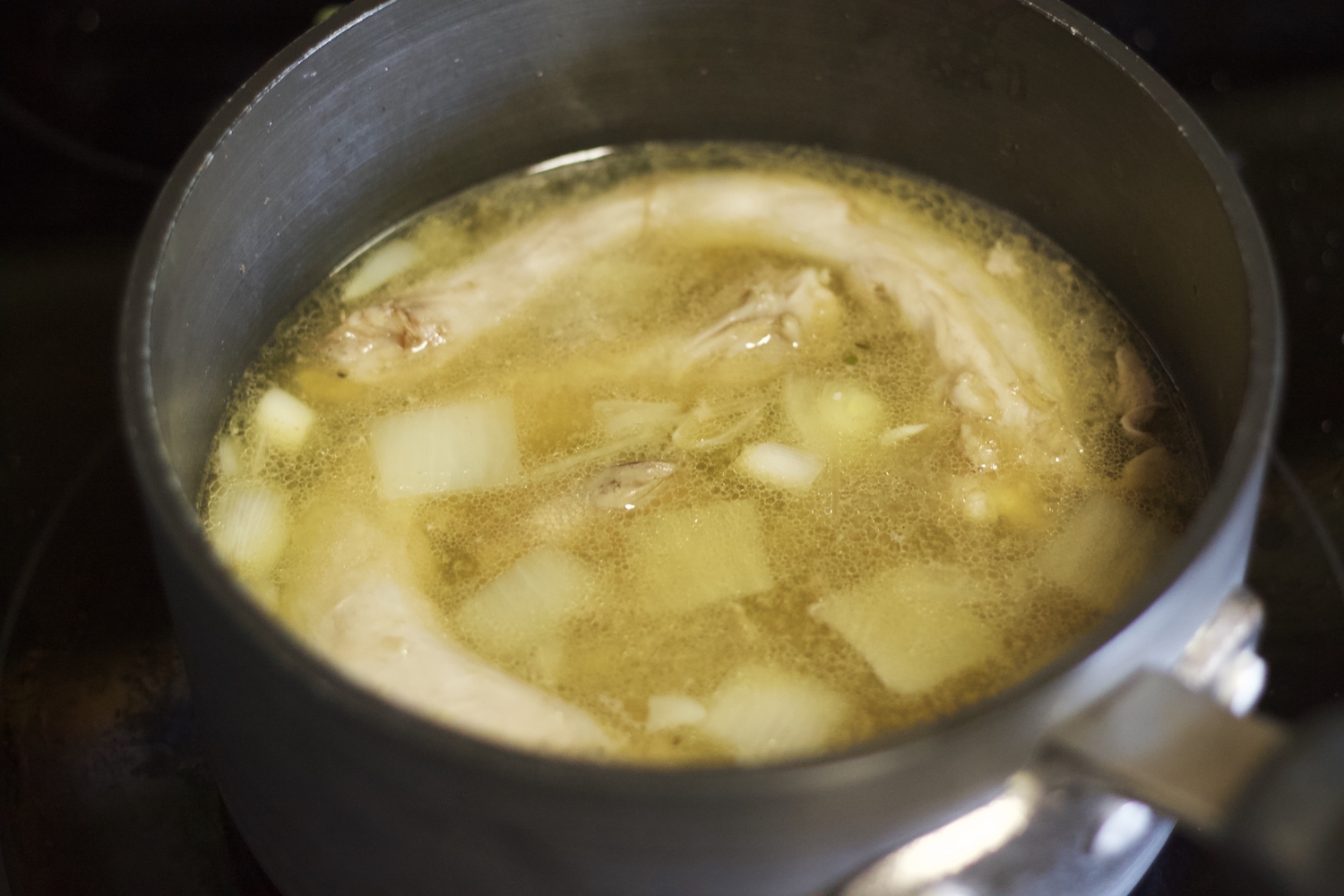
Creating a turkey gravy is pretty easy. Essentially, you just use all the stuff that comes from cooking a turkey. The only real trick is get the taste right. Luckily, you’ve got me to figure that part out for you.

Note: I’ve tweaked this recipe over the years, and HERE is my definitive method/recipe.
For Thanksgiving this year I tried my hand at roasting a turkey on the grill. The resulting bird was crispy on the outside and juicy and tender on the inside, and only took a few minutes longer than roasting it in the oven. Also, adding woods chips imparts an authentic smokey flavor that really made the turkey stand out on the Thanksgiving table. Lastly, it frees up the oven for other endeavors!
Also, when grilling a turkey (or roasting it in the oven, for that matter), you want to use a v-rack (often called a roasting rack). We just started using one recently and it’s amazing how evenly it cooks the bird, since it allows air to circulate around the entire turkey. Depending on how your grill plates run, though, the v-rack may fall through the plates; to prevent this, put the v-rack on a grill pan.

Here in the United States, mussels have a bad reputation as being a “lesser” shellfish. I happen to disagree. True, they may have a less intense flavor than clams or oysters, and they sure like to turn into a rubbery / chewy mess with a quickness, but with the right amount of care you can make something remarkable. And to top it all off, mussels can be found for relatively cheap compared to their more popular cousins.
This preparation is a Provençal (SE coast of France) dish. The “à la marinière” part of this dish translates to “mariner’s style”, which is when shellfish is prepared with white wine and herbs. Although the white wine really enhances the mussels’ taste, I like to think that it’s the butter and cream that really do the trick. Either way, you’re in for a treat.

For me (and probably many others), smothered pork chops remind me of being a kid. It is a generally easy way to make sure pork chops are both cooked thoroughly and not too tough or chewy, and many houses across America have their own variation. Unfortunately, too many of those recipes rely heavily on instant soup packets and/or cans, which are loaded with sodium, unhealthy oils, and wheat. In response, I set out to make a healthy alternative without compromising on taste. Here’s how it turned out.

NOTE: An updated version of this recipe appears in my cookbook, The Ancestral Table.
Japanese curry is a relative new dish to the country – it was introduced by the British in the 19th century, who in turn picked it up from India. Today, curry houses are everywhere in Japan, and for good reason; the irresistible sauce is mild and slightly sweet compared to other curries found worldwide, and is often served with any combination of stewed or fried meats which keep this dish surprisingly versatile.
I remember the first time I went to a local Asian grocery store shortly after deciding to go mostly-grain-free last year, and my utter disappointment when looking at the ingredients list of those handy Japanese curry blocks. You see, one of the pivotal ingredients in all of those blocks is wheat – which makes sense given the thick and creamy consistency that’s unique to Japanese curry. But fear not, dear reader, because I’ve been working on a gluten-free Japanese curry for the past year and I think I’ve got it figured out.

Grilling chicken is a time-consuming process; often, it takes upwards of two hours to cook a whole chicken. This process creates a crispy and juicy bird in just 30 minutes (minus brining time!).

You may remember one of my favorite recipes, my easy BBQ ribs. Well, since posting the recipe last year (and a revised version this March), I’ve been slowly honing this dish, and I’ve made enough changes that I figured I should write a quick amendment post.
The biggest change is that after cooking, I have been letting the ribs rest for about ten minutes, and then cutting each bone away from the rack using a pair of kitchen shears. This step makes for a much cleaner and fulfilling eating experience.
I’ve also found that adding peppercorns to the apple cider/white wine mixture in the first part of the cooking process really adds a depth to the meat’s taste.

NOTE: An updated version of this recipe appears in my cookbook, The Ancestral Table.
Loco moco is a Hawaiian dish and popular breakfast meal on the islands. It’s the ultimate breakfast meal prior to a big workday, consisting of rice, a hamburger patty, fried eggs, and brown gravy. Its unique mix of ingredients create a distinct taste that I’ve been missing lately, so I decided to whip one up the other day.

I’m starting to find that bringing constant, new content to this site during the summer months is going to be difficult. Not only is my family much busier, but I find myself falling back on the same, tried-and-true meals as the summer heat kicks in – and they almost all include grilling. Since many of the dishes I love to grill are already on the site, I’m caught in a bit of a predicament.
Luckily, we signed up for a vegetable CSA share through a local farm which means that we’ve been getting all sorts of unexpected and new veggies every week. This basically requires me to find out more about each vegetable we get, and to research recipes to boot. This is one such recipe, although the same method can be applied to traditional greens (collard, mustard, turnip, etc).

NOTE: An updated version of this recipe appears in my cookbook, The Ancestral Table.
Maryland crab cakes are a little different from what you may be used to. They’re made with a smidgen of bread crumbs (or sometimes crushed crackers) which give them a slightly spongy consistency, unlike many of the hard-packed crab cake balls I’ve seen elsewhere. Also, Maryland crab cakes don’t have any onions in them; they’re basically just huge piles of crab meat.
Here in Maryland crab cakes are either fried or broiled, and I prefer the broiled method. I’ve seen a lot of recipes which call for baking then broiling the crab cakes; however, the internal temperature of a crab cake should be 160 degrees, so this method doesn’t seem very practical. I imagine it’s hard to guess the perfect temperature while a crab cake is being broiled at 500 degrees. Instead, I’ve chosen to broil the crab cake first to get the right crispiness, then bake it until it reaches the right temperature.
Lastly, for the bread crumbs I used Udi’s gluten free bread, which is made with tapioca starch, rice flour, and potato starch. I lightly toasted two slices of bread (this is a great use for the heels) and then blended them in my Magic Bullet. Worked perfectly.
 The Domestic Man