recipe

Although my recipes principally follow a gluten-free, Paleo, Primal, and Perfect Health Diet framework, I often get requests to adapt my recipes for Whole30 and the Autoimmune Protocol (AIP). These two eating styles in particular are further restrictive in that the former is intended to reset your eating habits, while the latter is designed to heal and reverse autoimmune symptoms.

I’m familiar enough with both eating parameters that I was able to go through every recipe in Paleo Takeout and make individual adjustments to comply with those requirements while still preserving the spirit of each recipe. So if you’re trying out a Whole30 or healing from autoimmunity, feel free to use this guide as a means to enjoy my book. I’m very proud of this guide, as it took me nearly a month to compile everything, and I was able to retain 94% of the recipes for Whole30 and 80% for AIP, which is pretty awesome. Plus this is definitely my longest post ever, over 7,000 words! Substitutions are referenced in order of appearance in the recipe.

Other helpful links:


Read Full Article

Boerenkool Stamppot is a Dutch dish of mashed potatoes (“stomped pot”) mixed with kale. There are sometimes other vegetables mixed into Stamppot, like sauerkraut or endive, but as the Dutch say, “Boerenkool is het nieuwe zwart” (Kale is the new black). Note: they probably don’t actually say that! Either way, it’s worth it to incorporate the most nutrient dense vegetable on the planet into the dish.

Stamppot is typically served with a mild smoked sausage called rookworst, either sliced and mixed into the dish like in my pictures, or served on top of the vegetables. It’s all going to get mixed up in your stomach anyway, so feel free to arrange it as you please.

Here’s something really exciting about the photo you see above – I live-broadcasted my photography session! I started using the Periscope app (available on iOS and Android), which lets you livestream just about anything you want, and people can re-watch the broadcast for the next 24 hours. Think of it like a spontaneous YouTube. I think I’ll be using it on the weekends while photographing or cooking my recipes for the blog; it’s a neat way to interact with you folks (you can send chat messages to me while I’m working). Join me if you’re interested – my username is, predictably, thedomesticman.

Oh! And some more cool news. My presentation from Paleo f(x) 2014 was officially released on YouTube. Honestly, I had forgotten all about it so it was a neat surprise to see it appear online yesterday. Click here to watch me talk about six ways to improve the quality of Paleo-minded cooking; the talk is called “Our Great-Grandparents Were Totally Paleo: Six Suggestions for Improving Paleo Cuisine by Following Traditional and Gourmet Culinary Practices” (what a mouthful!). I’ve also embedded it at the bottom of this post.

Read Full Article

Things are really moving with my next cookbook, Paleo Takeout: Restaurant Favorites without the Junk. For starters, the book finished printing last week, and my publisher overnighted a copy to me so I could be one of the first to check it out. I’m very happy with the finished product, and I think you’ll love it too! I’m in the middle of scheduling a summer book tour, and I’ll be sure to share the dates as soon as I have everything arranged – if you haven’t already, be sure to sign up for my brand new newsletter, where I’ll be sharing news and recipes in one convenient little email package.

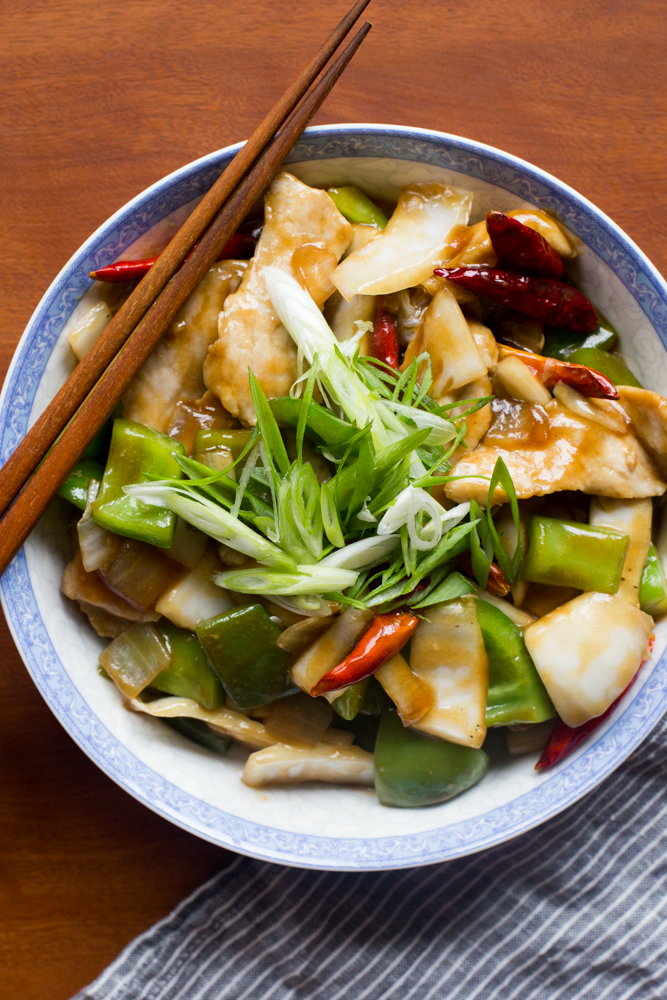
For this week’s recipe, I wanted to highlight some of the techniques and ingredients that you’ll find in the book, to set the stage for when it releases on June 23rd. This Twice-Cooked Pork dish uses a technique common to Chinese-American takeout restaurants called velveting, where lean meat is thinly sliced, marinated in a starch mixture, then blanched and drained before being added to a stir-fry. Have you ever had some Beef & Broccoli with steak pieces that are super soft and tender? That’s velveting at work.

While this method isn’t absolutely required for any of the recipes for the book, it’s a fun technique that really adds a tasty dynamic to your Asian-inspired dishes. I also tend to start my velveted meat as the first part of the cooking process, so that I can chop my veggies and prepare my stir-fry sauce while the meat is tenderizing – the timing tends to flow naturally that way.

In terms of ingredients, I used this recipe in particular to highlight rice cooking wine (sometimes labeled as Chinese cooking wine or just rice wine) and Sichuan chili peppers (those are the whole dried peppers you’ll find in dishes like General Tso’s Chicken), since both are commonly used in Chinese-American dishes. Similarly, arrowroot starch is commonly used in Paleo Takeout to create a thickening slurry; both potato starch and tapioca starch can be used in a pinch, but I’ve found that arrowroot best mimics the thickening properties of cornstarch.

For a full list of uncommon pantry ingredients that are found in Paleo Takeout, be sure to check out my online shopping guide that lists the ingredients plus how often they appear in the book. Additionally, I’ve set up a similar guide for tools that I used in writing the book.

Read Full Article

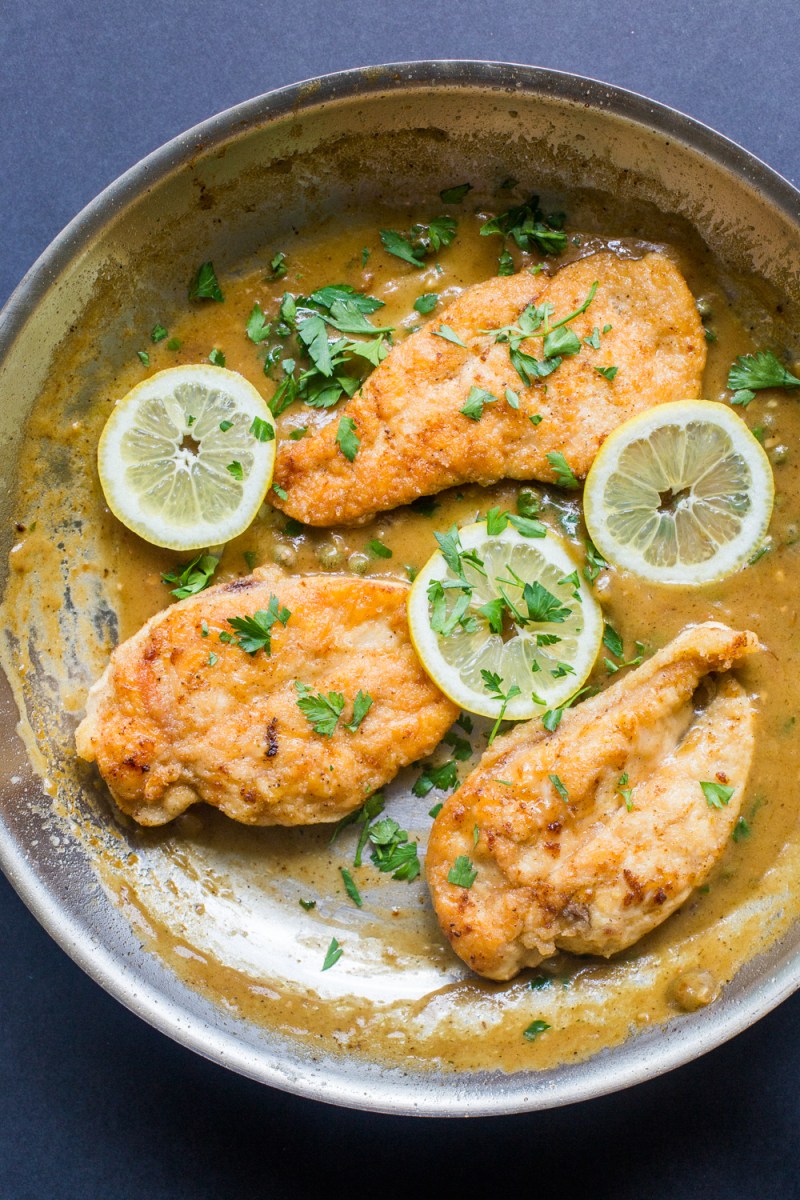
Confession time: a couple weeks ago, when a reader requested that I make this dish, I had to look it up because I had never heard of it. Somehow, I had inadvertently avoided Chicken Piccata my whole life. Although truth be told, I rarely visit Italian restaurants any longer since bread, pasta, and pizza all contain that pesky (but delicious) protein, gluten. And after that, what’s left at your typical Italian-American restaurant – salad? Regardless, I did a bit of research on the dish, and here we are.

The origin of this dish isn’t confirmed, but most believe it to be of American design, most likely by Italian-American immigrants during the 1930s. In Italy, Piccatas today are commonly made with veal, but here in the US, chicken prevails. The cutlets are breaded and pan-fried, and then a sauce is made with the drippings. It’s a simple technique made remarkable by its combination of flavors – wine, broth, lemon juice, and capers.

Read Full Article

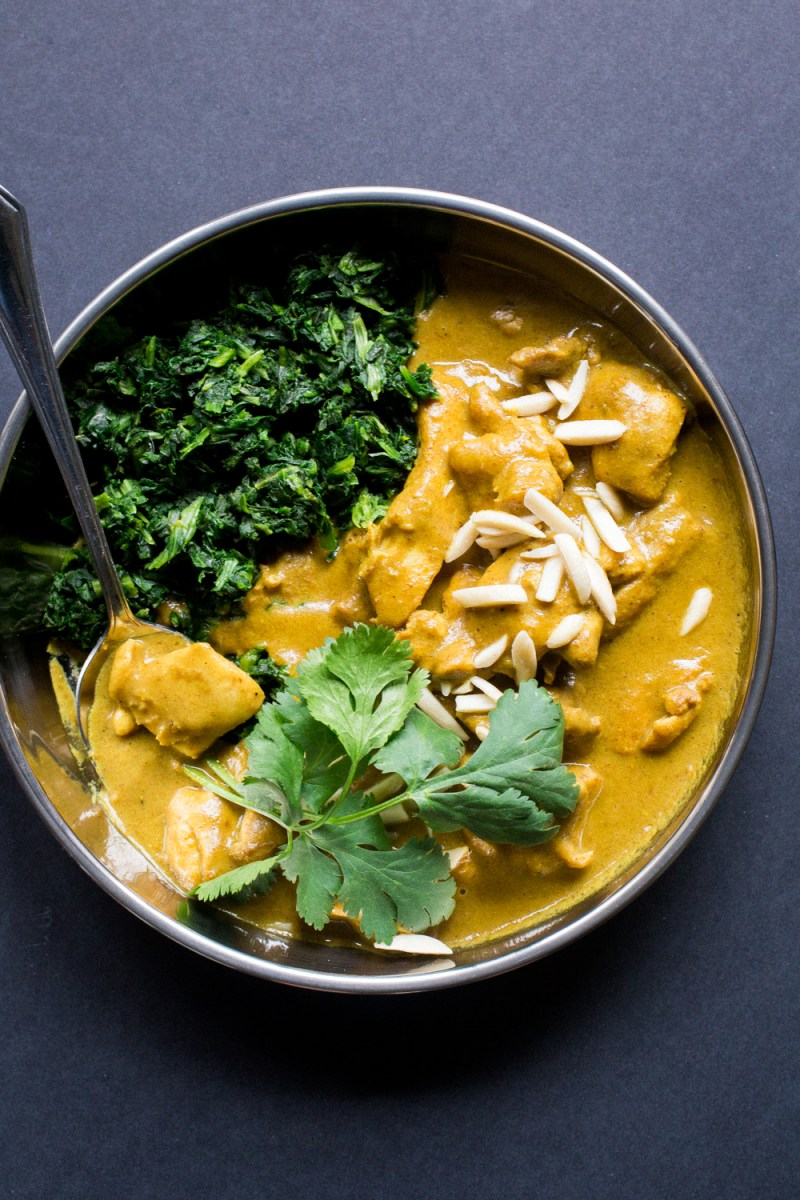
In my new office here in Pensacola Florida, we have an interesting combination of Navy families. Two of my co-workers have spouses they met while stationed in England, and another met his wife while serving in Canada. I’ll often ask them what new dishes they’d like for me to bring into work, as they typically (and unknowingly) are my tasting judges. The question inevitably gets passed to their spouses, and all too often I hear complaints that there are “no good curries” to be found in our town. This Chicken Korma recipe is the result of those conversations.

“Korma” comes from the Urdu word ḳormā, which means to braise. This dish, as with other braised dishes like Rogan Josh, is characteristic of Moghul cuisine, which was first introduced to Northern India by the Mughal Empire in the 16th Century; the Mughal were a predominantly Muslim people of Turko-Mongol descent (some claimed to be direct descendants of Genghis Khan).

There is a lot of variation to kormas, but the underlying theme includes a slow braise in a rich, mildly-spicy curry sauce, often flavored with yogurt or heavy cream. For this recipe in particular, I kept it relatively dairy-free (what’s a recipe without butter or ghee?) and used a bit of lemon juice to impart the tanginess you’d expect from using yogurt.

Read Full Article

Last month I had the opportunity to visit Avery Island, Louisiana, the home of Tabasco. Each year the company selects a group of bloggers to visit their island (which is actually a salt dome surrounded by bayou). In turn, the bloggers are asked to write about their experience and create some recipes using Tabasco sauces. Since I was probably going to make some recipes using Tabasco this year anyway, it was an easy decision to join the event.

I’ve always valued Tabasco sauces for their short ingredients list (the original red pepper sauce contains just three ingredients – peppers, vinegar, and salt), and their ability to add a complex flavor to any dish; I feel that acidity is a tragically underutilized dynamic in most kitchens, and Tabasco has acidity in spades. But until this trip I never realized how much care Tabasco puts into each bottle, which you’ll see in my pictures below the recipe. But first, the food.

It’s coming into flounder season here in Florida, and it is easy to find in my area right now. The fish are caught using a spear (called a “gig”), typically at night, much in the same way that frogs are traditionally caught. A favorite preparation for flounder is to simply pan-fry them in Cajun seasoning (often used interchangeably with the term “blackening seasoning”); since I was already making the seasoning from scratch, I figured this is also an opportunity to incorporate it into one of my other favorite dishes from this area, Étouffée.

Étouffée translates to “smothered” from French, which indicates that the main ingredient (often crawfish, but in this case, shrimp) is smothered in a thick sauce of broth and vegetables. Might as well add some bacon to it for good measure, because bacon.

Read Full Article

You’ve heard of Samosas, right? They’re those triangle-shaped savory pastries served in Indian and Central Asian restaurants. They’re a surprisingly ancient dish, first mentioned in the Middle East (under the name Sambosa) during the 10th century before eventually making their way across Central Asia, the Indian subcontinent, and even Southeast Asia. They’re practically everywhere today – you can even find them pretty easily in South Africa, as Indian cuisine started to influence British colonial food culture.

I loved Samosas in my pre-Paleo days, and I’ve been wanting to tackle them for a while. The problem is, well, pastry. I tend not to fiddle with baked goods and leave them up to the masters (see: Jenni Hulet and her book, My Paleo Patisserie). So after a bit of brainstorming, I settled on the idea of Samosa-flavored mashed potatoes. I like this idea because, heck, most people are probably eating mashed potatoes anyway, so why not kick them up a notch in terms of flavor and vegetable count.

Read Full Article

So, I’m apparently way behind on my blog posts, since I’m sharing a corned beef recipe a month after St. Patrick’s Day! Truth be told, I’ve been so busy traveling and working on Paleo Takeout that I didn’t have a chance to make this holiday meal until recently, but it turned out so well that I wanted to share it with you folks immediately. Part of why it worked like a charm is because of my handy Instant Pot electronic pressure cooker, which cut the cooking time of this dish down to just over 90 minutes.

The corned beef I used for this dish was this uncured corned beef brisket from US Wellness Meats. Because it is traditionally preserved (without the use of sodium nitrite), it doesn’t have the pink color that we’re accustomed to when we think of modern corned beef. But fear not – it tastes just as good as what you’d expect.

The term “corned beef”, as you have probably guessed, has nothing to do with corn. A logical conclusion would be that it is seasoned with peppercorns, but that’s not the case, either. The secret is that in medieval times, “corn” was a description of salt when in a large-grain form. So really, it just meant salted beef, which is a process that has been around for thousands of years. The specific term “corned beef” is traced as far back as the 11th century in Ireland (600 years after St. Patrick was around, by the way). The concept of eating corned beef and cabbage (sometimes referred to as New England Boiled Dinner) on St. Patrick’s Day is a mostly American concept; a more appropriate Irish dish to enjoy on St. Patrick’s Day would be Colcannon.

Read Full Article

First of all, great news: Paleo Takeout is now available for pre-order! Alright, back to the food.

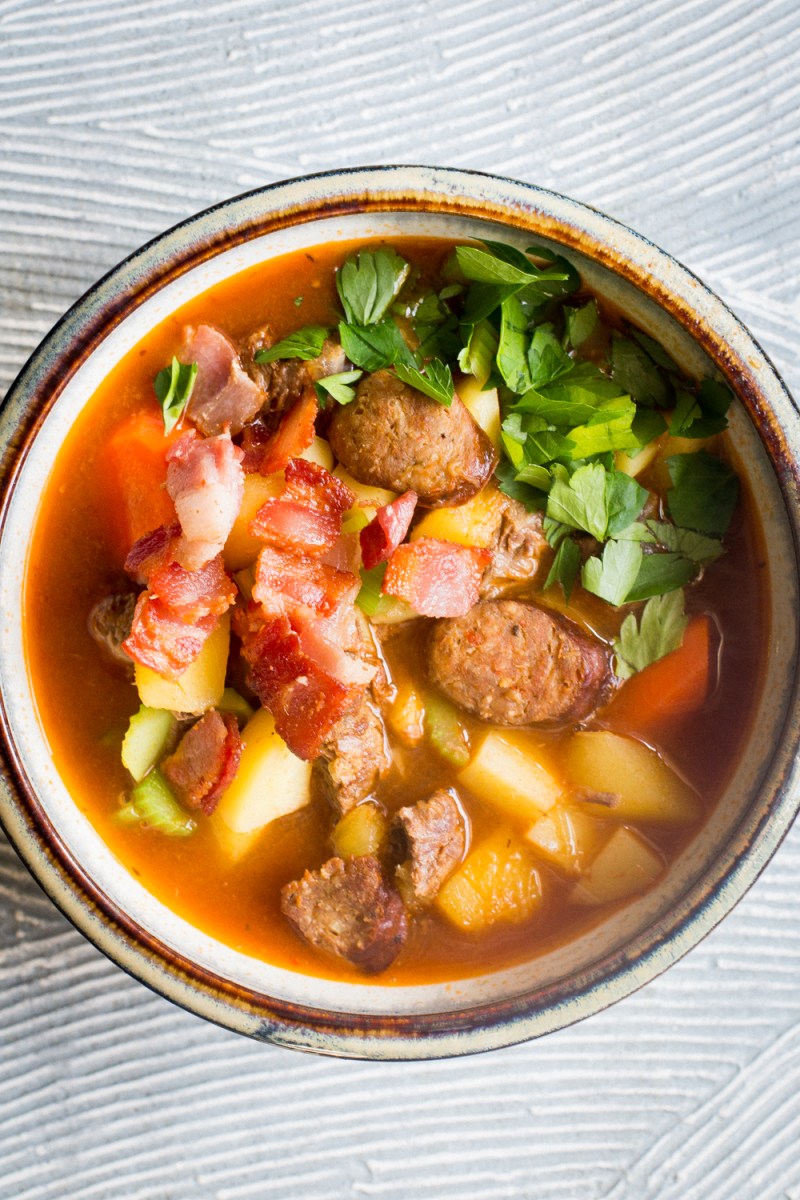
Puchero is a popular stew in many Spanish-speaking countries (the word puchero means “stewpot” in Spanish). There are many variations to this dish, but I was especially drawn to the version that comes from the Río de la Plata region, where Argentina and Uruguay share a border. One dish from this area in particular is called Puchero Criollo, indicating it is of Creole origin. That led me to read up a bit on Creole history, and that settled it – this was the dish I wanted to share with you folks.

The term “Creole” generally refers to cultures of mixed European and native heritage. The most popular use of the term in the US is Louisiana Creole, indicating those descended from French or Spanish colonists prior to the Louisiana purchase. In terms of this stew, Puchero Criollo refers to a dish that is inspired by its Spanish heritage but uses items native to the Río de la Plata region; in this case, beef (primarily osso buco) is the common protein used in this dish since cattle are plentiful in the region. To have a little fun with the dish, I added a few staples of Louisiana Creole cuisine to the stew, like Creole seasoning and some andouille sausage.

In keeping with the tradition I started a while back, I’ve included Instant Pot electric pressure cooker instructions for this dish, to cut down on the cooking time. stovetop instructions are also included.

Read Full Article

Mole is a term used for a number of sauces in Mexico. On its own, the word usually implies Mole Poblano, a dark red sauce made with poblano peppers. This sauce, Mole Verde, is a lighter, fresher version of the sauce, made with pepitas, blended herbs, and tomatillos.

A traditional herb used in this dish is epazote, which is a pungent, weed-like herb. It’s also commonly added while cooking black beans, because it reduces the gassiness that follows after eating those magical fruits. If you can’t find epazote where you live, never fear – flat-leaf parsley will work in a pinch.

Many variations of this dish call for stewing the chicken in the sauce. But I started thinking about the fact that this sauce can be put together in about 20 minutes, and it’s a tragedy that you’d have to delay the cooking time by so much in order to stew the chicken (and lose some of the sauce’s fresh taste along the way). Instead, I figure that there’s a better way to get dinner on your table; you can roast a chicken (or buy a rotisserie chicken) separately and combine it with the sauce to serve. I particularly like the contrasting flavors of the bold, refreshing sauce and the tender roast chicken. It’s making me hungry all over again just typing this. Enough talk; let’s get cooking.

Read Full Article