vegan

Yep, it’s getting to be about that time of the year again. You know, when it’s just too dang hot outside to fire up the oven or stovetop. A popular food blogger trend is to eventually post a Gazpacho recipe, so I figured it’s about time for me to share my own take on the dish. This is what I would consider a classic take on Gazpacho, although since I’m still coming down from my incredible visit to the Tabasco headquarters in April (see here), I couldn’t resist spicing this soup up with some of their original pepper sauce.

Gazpacho is an ancient cold soup first developed in Andalusia, the southern region of Spain. It is believed to have been introduced first by Arabic culture as a soup made from leftover bread, and possibly influenced by the Romans with the soup’s telltale inclusion of vinegar. Tomatoes, now an integral part of modern Gazpachos, came much later, once Columbus returned from the Americas bearing a weird, red ornamental fruit that was eventually used in culinary circles (after everyone got over their belief that tomatoes were poisonous).

In my opinion, the key to a good Gazpacho is to find a marriage of contrasting flavors, namely fresh cucumbers, tart tomatoes, sweet bell pepper, and biting onion. So that’s what we’re going to use as our base, and then complement the vegetables with garlic for immediacy, lime juice for brightness, olive oil for body, vinegar for tanginess, Tabasco for heat, and a pinch of basil for that last bit of spark to round things out.
Read Full Article

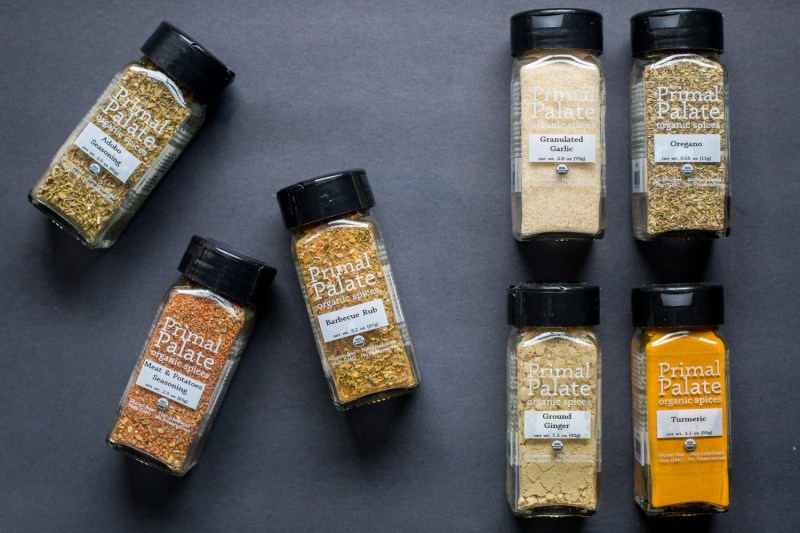
I have a long history with Bill and Hayley of Primal Palate. We first met online on, of all places, a Paleo diet forum in early 2011. I had recently changed my eating habits and was looking for a place to share my thoughts on the burgeoning movement; I remember that someone on the forum asked for a jerky recipe, and both Bill and I posted the recipes from our freshly-minted blogs, and the connection was made. If someone had told me that a few years later I’d be a guest at their wedding, I would have laughed them out of town. But I was! Over the years, we’ve both been at it nonstop – I’ve kept this little blog trucking (and wrote a cookbook or two along the way), while B&H wrote four cookbooks, created an iOS app, redeveloped and redesigned their blog multiple times, started their own frozen Paleo cookie dough, and have now begun a really neat project which I’m excited to share today: organic spices.

While their landing page will give you all the info you need to know on these newly-announced spices, I wanted to share a bit about them from my experience. I was lucky to be one of the first to taste-test the spices, and I was immediately impressed with their quality. The ginger, garlic, turmeric, and oregano are extremely potent and fresh – they put the spices in my spice rack to shame. The spice blends they developed (Adobo, Barbecue Rub, and Meat & Potatoes) are impeccably balanced, with distinct aromas and flavors that aren’t overbearing. I’ll admit it, I’m not the type of guy who gets excited about pre-made spice blends (I tend to make my own from scratch), so I think it means a lot when I say that I will likely be ordering replacements for my test bottles pretty soon.

If you’re interested in upgrading your spice cabinet, or if you are looking to stock up on some of the spices that are featured in Paleo Takeout, I encourage you to check out their selection.

Earlier this year I wrote a guest article for Paleo Magazine, emphasizing the importance of eating vegetables. Americans tend to give vegetables a lower priority than the rest of the world; when comparing the most economically developed areas of the United States (those with the most money to spend on food) to similarly developed regions in Europe and the Western Pacific, we only eat about 75% as many vegetables as the other regions. Comparing the lesser economically developed areas of the United States to their global counterparts is much worse: there, we eat only around 35% as many vegetables.

Vegetables are an important factor in overall health. While not as nutrient-heavy as organ meats, fish, seafood, and naturally raised ruminants, they are often superior to pork, poultry, and fruit in terms of nutrient density. Fermented vegetables, a food that has been consumed for thousands of winters, also provide unique and essential forms of probiotic bacteria and increase the bioavailability (ability for us to absorb their nutrients) of vegetables.

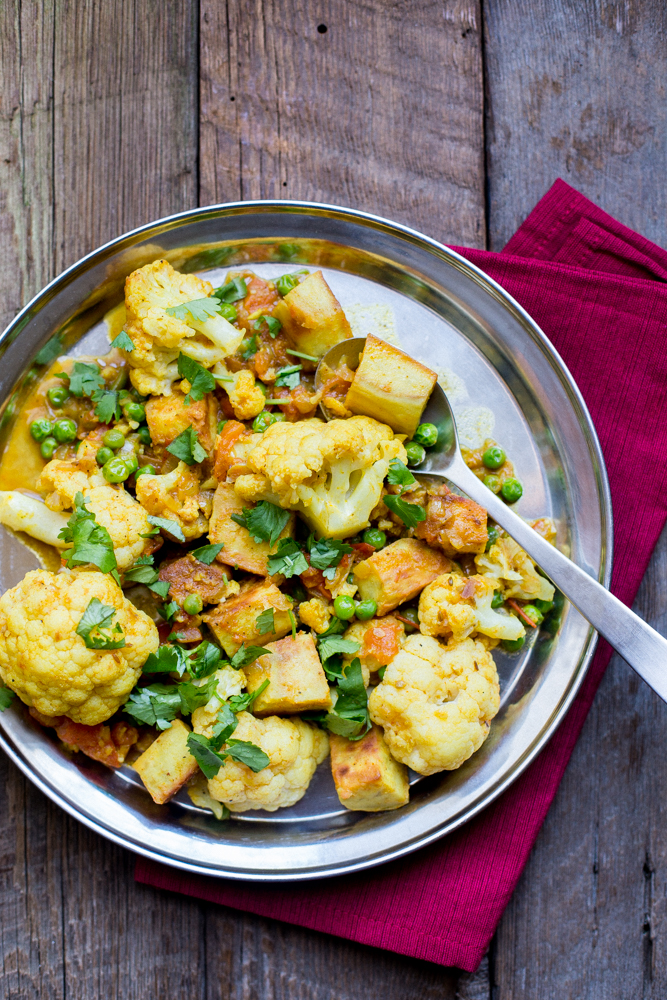
Aloo Gobi Matar is Punjabi dish, and an excellent example of the potential tastiness and diversity to be found in a vegetable dish. Using a small amount of many vegetables will give your dishes deeper flavors and will make you less likely to tire of certain foods. If I ate just tomatoes every day, I’d get sick of them; adding a tomato or two to several dishes in a row wouldn’t have the same effect.

Read Full Article

Ital stew is a Jamaican dish aligned with the Rastafarian movement. The word “ital” is derived from the word vital, and is similar to the concept of kosher. Specifically, ital food should be vegetarian, unprocessed, and from the earth. Some believe that even iodized salt should be avoided, and only pure sea salt is acceptable. Since meat is considered dead, it is not ital, although some Rastafari are known to eat small fish.

Like in my Callaloo recipe from earlier this year, there is a lot of variation to this dish. Typically, it’s made with several different kinds of starchy foods (I used squash, taro, potatoes, and plantain) in a coconut milk broth. You don’t never every single starch to make a flavorful stew – just use what you have available to you. It’s lightly spiced, with just thyme and pimento (allspice).

Funny enough, when doing my research I discovered this dish isn’t considered an exceptionally tasty stew, to the point that I was almost turned away from trying it. I have a suspicion that the reason it’s not well-received is because every recipe I found had you adding all of the vegetables at once, which likely resulted in a mushy, jumbled, and slightly confusing stew. I tried a different tactic, and added the dishes in increments so that they all were perfectly cooked at the end of the recipe. This extra care made a huge difference in the final product; in fact, we’re adding this dish to our regular rotation because it’s easy, quick, and hearty – a perfect summer soup when you’re not in the mood for a meat dish.

Read Full Article

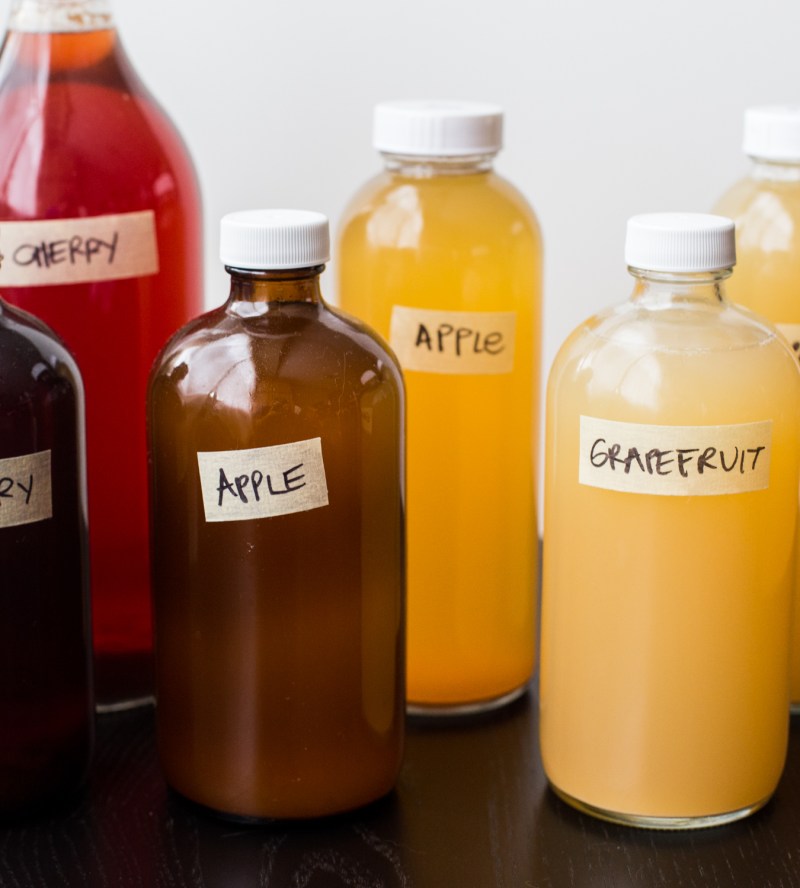
Kombucha is a bit of an enigma in the health world. It seems every health-minded group appreciates the benefits of this fermented, effervescent, and probiotic drink – from Vegans to Paleos alike. One unfortunate side effect of being a kombucha drinker is that if enjoyed regularly, you could basically end up completely broke; bottles range from $3 to $5 each at most grocery stores. Luckily, making it at home is fun, economical, and takes only a little foresight.

Kombucha is a fermented black tea drink, originating somewhere in Northern China or Central Asia at least 2,000 years ago. It reached Russia sometime in the 19th century, and quickly gained popularity as a health drink; at one point, most Soviet-era homes were growing their own kombucha culture. It spread to Europe and beyond through Russia. The Russians have several names for the drink, the most popular being чайный гриб (“tea mushroom”) and медуза (“medusa”, their word for jellyfish). The drink is made by fermenting a batch of sweet tea with a culture known as SCOBY (symbiotic colony of bacteria and yeast), which eats the caffeine and sugar, leaving you with a sour, slightly vinegary drink that’s not unlike apple cider vinegar.

The drink has some notable links to health, especially in regards to cancer. Author Alexander Soltzhenitsyn claims it cured his stomach cancer while imprisoned in a Soviet gulag. Ronald Reagan purportedly treated his colon cancer by drinking kombucha daily in the 1980s. While proven results have varied, it goes without saying that the fermented, probiotic profile of the drink carries benefits. In this age of antibiotics and antibacterial products, it’s good to see helpful bugs making a bit of a comeback.

Read Full Article

Salad dressings are an important part of many cuisines. Leafy greens were eaten in prehistory, and despite common misconceptions that early agriculture was entirely focused on grains, many of the first gardeners grew spring greens. The Ancient Greeks often mixed salads with oil, herbs, and seasonings (the word salad comes from the Latin salata, meaning “something salted”). Green salads were especially popular in Medieval Europe, and lettuce seeds were brought to the New World colonies, where salads were eventually redefined; the 20th century saw the advent of French, Russian, Thousand Island, Green Goddess, and even the mighty Ranch – all in the dressing-obsessed United States.

Today, the salad dressing aisle of every supermarket in America is downright embarrassing. Every dressing promises health, high quality and natural ingredients, and not a single one makes good on its promise. I dare you to try and find a dressing that is free of sugar, corn, soy, wheat, seed/grain oils, or chemically-extracted ingredients (hint: you won’t). It’s infuriating, especially coming from a product whose sole existence is to make salads more palatable and nutritious (adding oil increases the bioavailability of the fat-soluble Vitamins A, D, E, and K found in leafy greens). Salads have always been associated with health, but modern dressings have made it more difficult for us to make that connection. The salad dressing industry is so untrustworthy that after first switching my diet I resolved to just eat my salads with olive oil, sea salt, and black pepper.

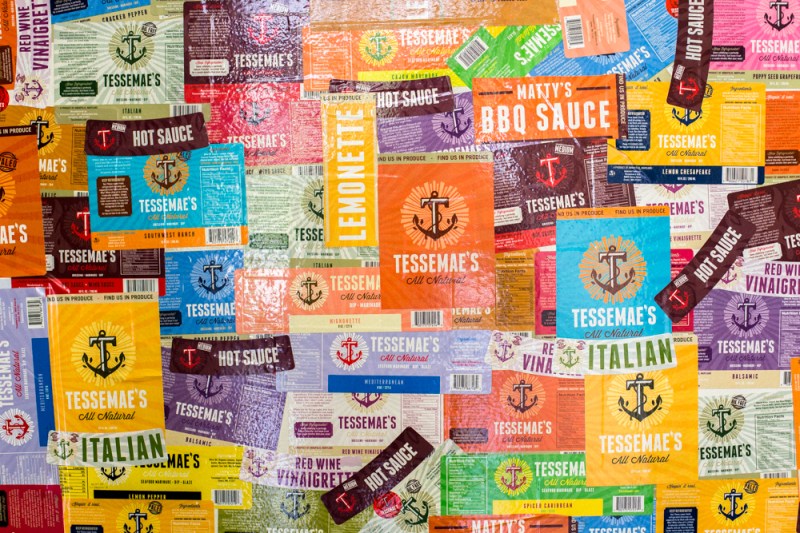
Enter Tessemae’s All Natural. Our family has been enjoying their salad dressings since 2011; their dressings were first sold in the Annapolis Whole Foods (one of our local markets), so we’ve been riding on the Tessemae’s bandwagon from nearly the start. In fact, last year I used their Lemonette dressing to help secure my win in a bacon competition.

It’s relatively easy, albeit unglamorous and time consuming, to develop your own salad dressings. But I’m a man of simple truths, and the simple truth is that Tessemae’s dressings are so tasty, and contain such high quality ingredients, that I haven’t felt a need to make my own. Essentially, this is the basic principle of supply and demand; thanks to their supply, we carry no demand. Honestly, as a consumer I’d much rather depend on the convenience and reliability of a quality product than figure my own out. There is honor in creating one product, and doing it well – very rarely today do we find true craftsmen and artisans. This is something that Tessemae’s does unequivocally with their dressings and sauces.

I had the pleasure of visiting their Baltimore-based headquarters (lovingly called “the Treefort”) twice over the past few weeks. Here is what I learned.

Read Full Article

Jerusalem artichokes have an interesting history. There is no connection between this tuber and the city that bears the same name; they were originally cultivated by Native Americans. The most common theory behind their current name stems from the fact that Italian immigrants named them girasole, which later became “girasole artichoke”, which then eventually developed into “Jerusalem artichoke”. Its other name, sunchoke, is a relatively new name for the tuber that stems from the fact that its flowers look a lot like sunflowers.

While only distantly related to artichokes, Jerusalem artichokes still carry a distinct (okey dokey) artichokey flavor when cooked. They have a similar texture to potatoes. They’re one of my favorite starches because of their versatility; they can be eaten raw or cooked, they don’t need to be peeled, and they taste good both gently cooked and fully roasted.

Read Full Article

It’s funny, but up until recently I assumed there was already a ketchup recipe on my blog. I didn’t discover its absence until I developed Thursday’s recipe (hint: it rhymes with “beet oaf”), when I couldn’t find my recipe online. At first I was confused, and thought the search function of my blog was definitely broken. So…sorry about that, and here you go.

The history of ketchup is pretty awesome. It all started with garum, an ancient fish sauce first used by the Ancient Greeks and later the Romans. It reached Asia some 2,000 years ago via trade routes, and became a staple in many Asian countries, particularly Vietnam (where they later perfected the sauce using anchovies). Vietnamese fish sauce as we know it today entered China about 500 years ago, and the Chinese (particularly those in the Southeast providence of Fujian) spread it around the rest of Asia. The Fujian word for fish sauce? You guessed it, ketchup. In fact, many Asian languages today still use a form of the word “ketchup” to refer to sauces; a common example is the Indonesian word kecap (pronounced “keh-chap”), a catch-all term for fermented sauces.

When Europeans arrived in Asia in the 1600s, they were enamored with fish sauce (they’d long forgotten about garum) and took it back to Europe. Many variations of ketchup existed in Europe for hundreds of years, the most popular being walnut ketchup and mushroom ketchup (the practice of using fish eventually died out). It wasn’t until the 1800s that people started adding tomatoes to the sauce, and H. J. Heinz took it to a new level in 1904 when his company figured out a way to bottle and preserve the sauce using natural ingredients (the mid 1800s were full of horror stories about deadly batches of ketchup made with stuff like boric acid and coal tar). Heinz was also one of the first to add copious amounts of sugar to the sauce.

My recipe still maintains the sweet and sour taste we’ve all come to expect from ketchup, but throws a historical twist in for good measure: a bit of fish sauce.

Read Full Article

Last weekend, I did a couple book signings with my friends Sarah Ballantyne (The Paleo Mom) and Stacy Toth (of Paleo Parents). It was a lot of fun. On Saturday night, Sarah and Stacy slept over at our house, so I offered to make dinner for them; Sarah and Stacy follow a modified version of the Autoimmune Protocol (a more restrictive version of the Paleo diet meant to reverse autoimmunity, see this post or Sarah’s book for more info), so I knew I had my work cut out for me. How do you treat your friends (and food bloggers at that) to a delicious meal with a limited cupboard to work with?

For the main course I made a modified version of my Beef Rendang recipe, where I subbed some butternut squash puree for the bell and chili peppers, and used mace instead of nutmeg. I think the squash added a good amount of body to the dish; it turned out well. I served it with cauliflower rice sautéed in coconut milk, turmeric, cinnamon, and raisins – also good.

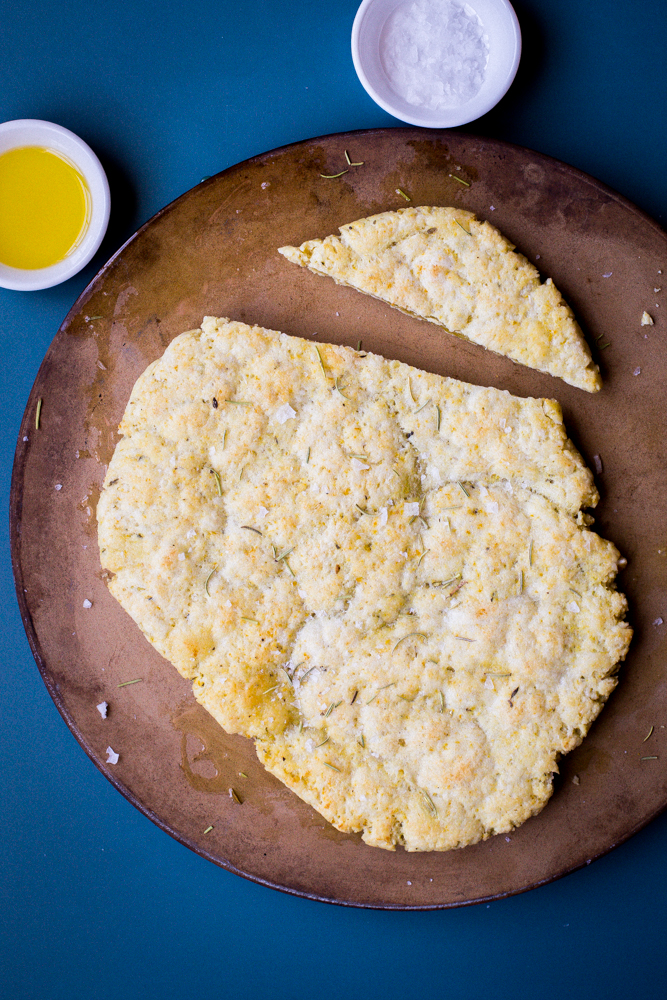
But I wanted to add another texture to the dish, so I tried out a more savory version of my pizza crust recipe, made AIP-friendly by eliminating the dairy and egg typically used in the recipe. I couldn’t have been happier with the results – the bread was nice and crisp, and adding nutritional yeast imparted a rich, buttery taste.

Read Full Article

Callaloo is a Caribbean dish that originated in Africa. It is typically made with amaranth leaves (aptly called callaloo in the West Indies), taro leaves (dasheen), or water spinach; since these plants are somewhat hard to find in the United States, spinach is a common replacement stateside. There are many variations of this dish, and my recipe follows the Trinidadian version, which includes coconut milk and okra. In the Caribbean, Callaloo is often served as a side dish, but when I make it, it almost always turns into a main course. I’m not the type of guy that craves vegetables often, or vegetable soups for that matter, and I crave this dish. A lot.

I think I could eat my weight in Callaloo. I don’t know what it is about this dish that makes me go crazy about it. For one thing, I feel like a superhero after I eat it – like I’ve consumed a week’s worth of vegetables in one sitting. It’s also ridiculously delicious, and carries a unique flavor despite using fairly common ingredients. The only ingredient in here we don’t eat regularly is okra, since my wife isn’t a fan of okra’s slimy texture; luckily, the texture is cleverly masked in this dish.

Read Full Article