
vegan

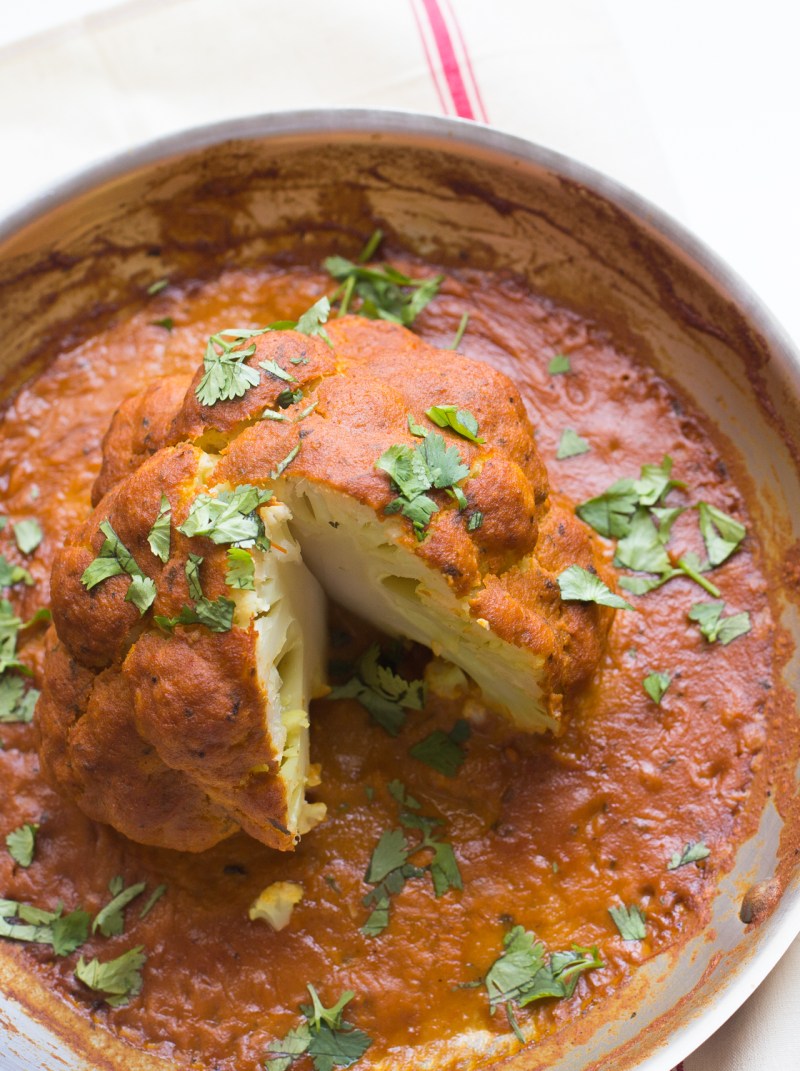
Gobhi Musallam is a roasted cauliflower dish from the Uttar Pradesh region of Northern India. While the origin of the dish itself is hard to trace, the origin of cauliflower isn’t. Cauliflower is a direct descendant of wild cabbage, and a close cousin to broccoli. Although it was known in Europe during the Middle Ages, it disappeared until sometime in the 17th Century, when Italy reintroduced it to the rest of Europe. Surprisingly, the Italians probably got cauliflower from the Middle East and Asia, who had likely acquired it from Europe during the Middle Ages. I think it’s pretty cool that cauliflower disappeared from its place of origin, only to be re-introduced by another culture.

We love this dish for several reasons. First of all, it’s an easy dish to put together: parboil the cauliflower, whip up a sauce, combine the two and roast in the oven. It’s a very impressive dish to serve to guests, and slicing/serving the cauliflower is a memorable experience. Lastly, and maybe most importantly, Gobhi Musallam is absolutely delicious and an interesting way to enjoy cauliflower.
Read Full Article

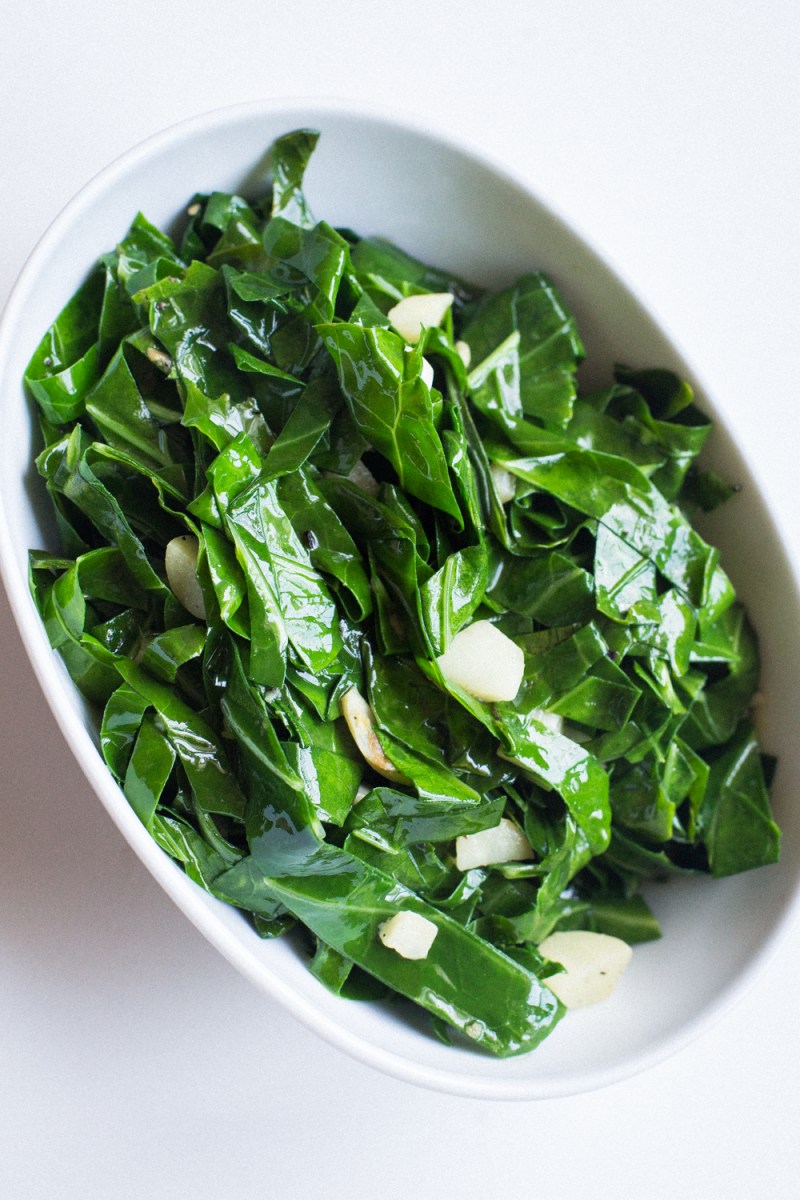
Although the common consensus is that collard greens originated in the Mediterranean, they gained their most widespread popularity in Africa (see my Sukuma Wiki recipe). It is assumed that collards made it to most of the Americas via African slaves. In Brazil, it’s a different story, as collard greens were likely introduced via Portugal, where it has been a staple veggie for hundreds of years (as evidenced by my Caldo Verde recipe). Today, collards are served often in Brazil, usually as an accompaniment to fish or beef.

Today’s recipe is a collaboration with my friend Alex Boake, who stayed at our house for a few days before heading off to Ancestral Health Symposium with us. She’s going to post an illustrated version of this recipe on her blog later this week, so bookmark her site! We’ll be knocking out a couple other illustrated recipes in the near future as well, so this is just the tip of the illustrated Paleo recipe iceberg. Update: Here is Alex’s post!

Read Full Article

NOTE: An updated version of this recipe appears in my cookbook, The Ancestral Table.

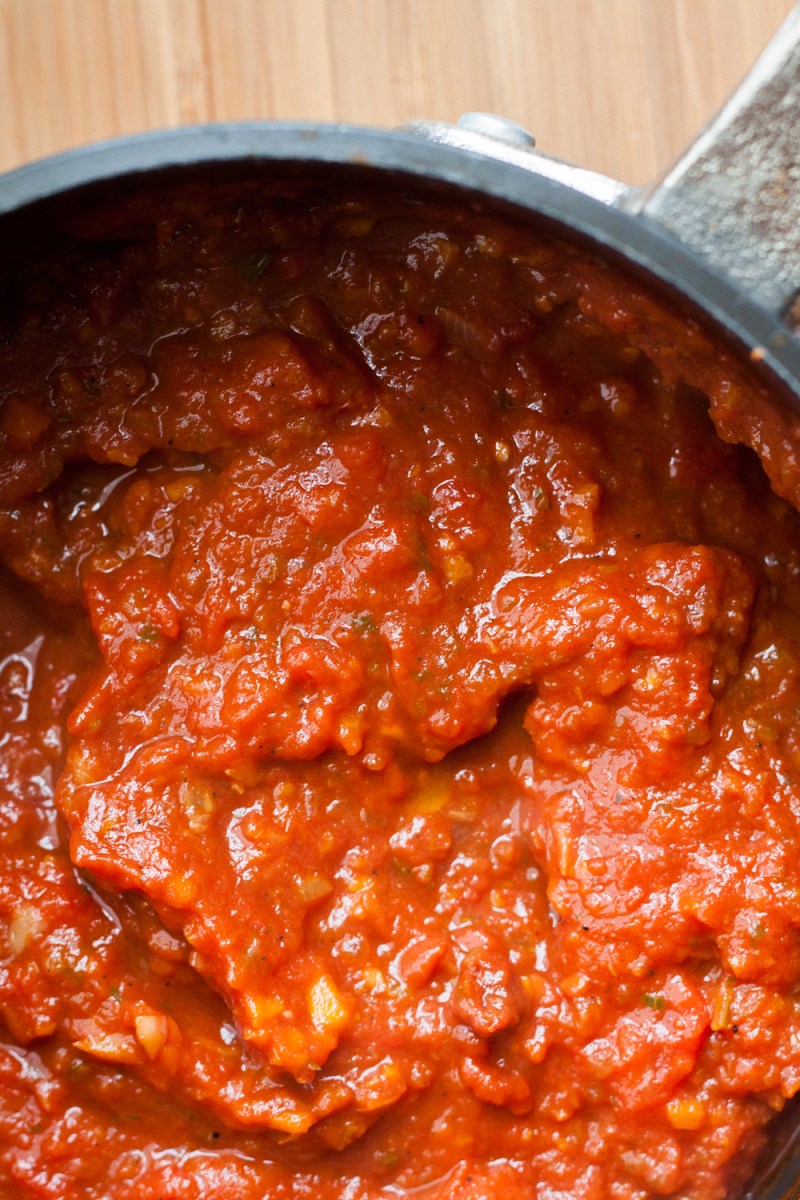
Have you looked at the ingredients of canned tomato/spaghetti sauces lately? You’d think they would be very simple, but surprisingly they have some hidden and unnecessary ingredients. Even Trader Joe’s organic marinara sauce has soybean oil in it, as well as parmesan cheese; I don’t find the cheese offensive per se, but does it have to be in there? So, I decided it was time to share an easy, tasty sauce of my own, which you can use as the foundation to any tomato-based sauce.

Although tomatoes arrived in Europe from the New World in the 16th century, tomato-based sauces didn’t start appearing on record until the 1790s. There is a staggering amount of variation to this seemingly simple sauce, with names to boot: In the US, marinara can mean just a tomato-based sauce, but in Italy it often refers to a seafood dish. The term tomato sauce also refers to any tomato-based sauce, except in the UK, Australia, New Zealand, and South Africa, where it refers to ketchup (pasta sauce is the proper term there). Neapolitan is a meatless tomato sauce, linked to southern Italy. A ragù is a tomato sauce with meat (often referred to as bolognese sauce outside of Italy). Finally, call me old-fashioned, but I just like to call it spaghetti sauce.

Read Full Article

Yuca (cassava) is a starchy, tuberous root that originated in South America, most likely Brazil, and has probably been cultivated for 12,000 years. Today, Africa consumes the most yuca, with Nigeria being the world’s largest producer of the root. When dried, it becomes tapioca. Quite a handy root, eh?

The easiest (and possibly tastiest) way to prepare a yuca root is dead simple: all it takes is a quick boil and a little time with some quality coconut oil.

Read Full Article

It might sound crazy, but you can totally make lettuce chips. Google it. It’s a thing!

Lettuce chips have a distinct taste to them – they retain a hint of bitterness, and just about melt in your mouth. They’re impossibly delicate so you’ll probably end up eating them all in one sitting instead of trying to store them without crushing everything. My technique for cooking them involved a quick bake in the oven, but I bet you could get the same effect with a food dehydrator for a longer period of time.

Read Full Article