vegetables

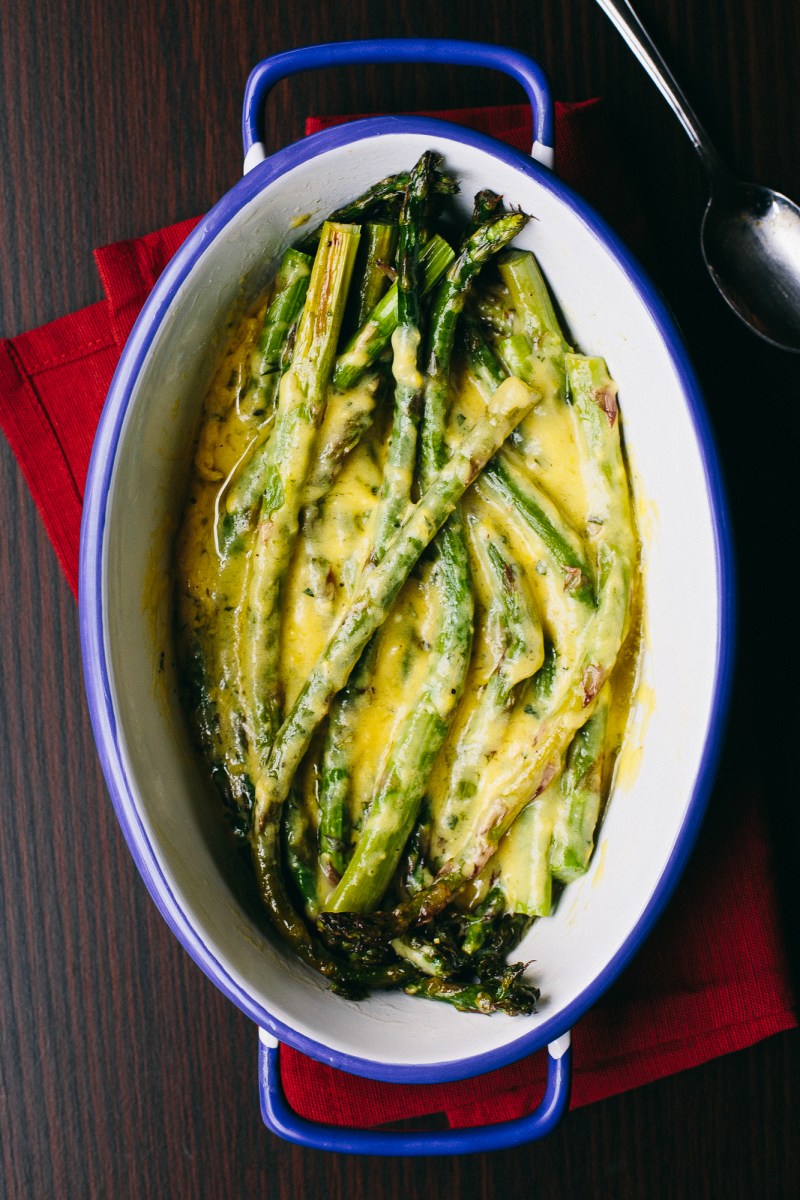
Roasted asparagus is no big deal, right? To roast asparagus, you basically just roast asparagus – not really worthy of a dedicated blog post. But pair this under-appreciated vegetable with a traditional Béarnaise sauce and you’ve got something spectacular. It’s funny what a few egg yolks and some butter can do.

Asparagus is an ancient vegetable, found in records dating back 5,000 years. In fact, an asparagus recipe appears in the oldest surviving cookbook (Apicuius, 4th century AD). While widely used by the Greeks and Romans, it nearly disappeared after the fall of the Roman Empire, only to be reintroduced in the late Middle Ages by the French.

Béarnaise sauce is relatively modern, first developed in the 19th century. It is often associated with Hollandaise sauce, as it employs a similar technique of emulsifying fat (butter) in egg yolks and acid. While Hollandaise is made with lemon juice, a Béarnaise is made with an herb-infused vinegar reduction. The sauce has nothing to do with bears, or the capital of Switzerland (Bern), but rather is named after Béarn, a former province in southwest France. Fun fact: d’Artagnan (one of the main characters in The Three Musketeers) was from Béarn.

My friends at Pacific Merchants donated this Enamour dish for my recipe, which was pretty cool of them. Enamel-coated stoneware is very sturdy and versatile, and this dish is a thing of beauty. It can be used for baking and broiling, but in this case I used it as a serving dish. They are also offering 25% off purchases on their site for my readers, valid March 4-12, 2014! Use code DomesticMan at checkout.

Read Full Article

Callaloo is a Caribbean dish that originated in Africa. It is typically made with amaranth leaves (aptly called callaloo in the West Indies), taro leaves (dasheen), or water spinach; since these plants are somewhat hard to find in the United States, spinach is a common replacement stateside. There are many variations of this dish, and my recipe follows the Trinidadian version, which includes coconut milk and okra. In the Caribbean, Callaloo is often served as a side dish, but when I make it, it almost always turns into a main course. I’m not the type of guy that craves vegetables often, or vegetable soups for that matter, and I crave this dish. A lot.

I think I could eat my weight in Callaloo. I don’t know what it is about this dish that makes me go crazy about it. For one thing, I feel like a superhero after I eat it – like I’ve consumed a week’s worth of vegetables in one sitting. It’s also ridiculously delicious, and carries a unique flavor despite using fairly common ingredients. The only ingredient in here we don’t eat regularly is okra, since my wife isn’t a fan of okra’s slimy texture; luckily, the texture is cleverly masked in this dish.

Read Full Article

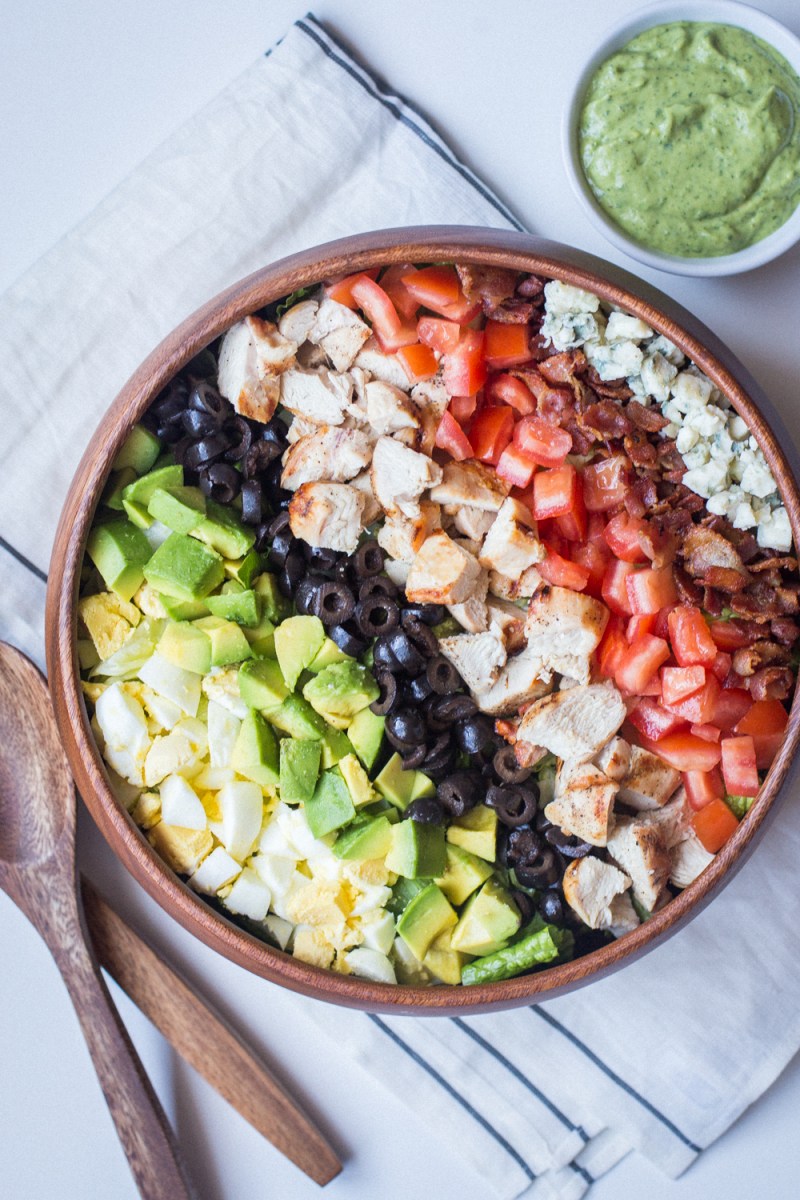
To tell the truth, it’s not often that I get a hankering for a meal-sized salad. There’s a lot of chewing involved. But if I am going to sit down and enjoy a full salad, I prefer to eat something made with a wide variety of hearty ingredients. In that regard, Cobb Salad takes the cake: it’s basically lettuce and a bunch of solid, pleasurable mix-ins. No dainty ingredients like sprouts, no sir! Okay, sometimes Cobb recipes call for chives, but you get my point.

Both the salad and dressing used in today’s recipe come from California in the early 20th century. Bob Cobb, owner of the Brown Derby Restaurant in Hollywood during the 1930s, whipped up a quick salad for a friend with a toothache using leftovers found in his kitchen. He cut the ingredients up into small pieces so as not to exacerbate his friend’s condition. (Personally, I would have whipped up a pureed soup if my friend had a toothache.) Other stories contend that there was no toothache involved. Either way, the salad was such a hit that Cobb added it to his menu, and it took off from there. Green Goddess Dressing was made by a San Francisco chef in the 1920s, after a popular stage play of the same name. While the salad and dressing don’t traditionally go together (Cobb salad is usually served with red wine vinaigrette), I really like the pairing of the two. Plus, they each call for 1/2 an avocado, so in that sense, they fit together perfectly.

Special thanks to my friends at Pacific Merchants who donated the hand-carved acacia wood salad bowl for the picture you see above. Their 12″ bowl is both beautiful and sturdy; it’s a perfect size for a whopping salad like this one.

Read Full Article

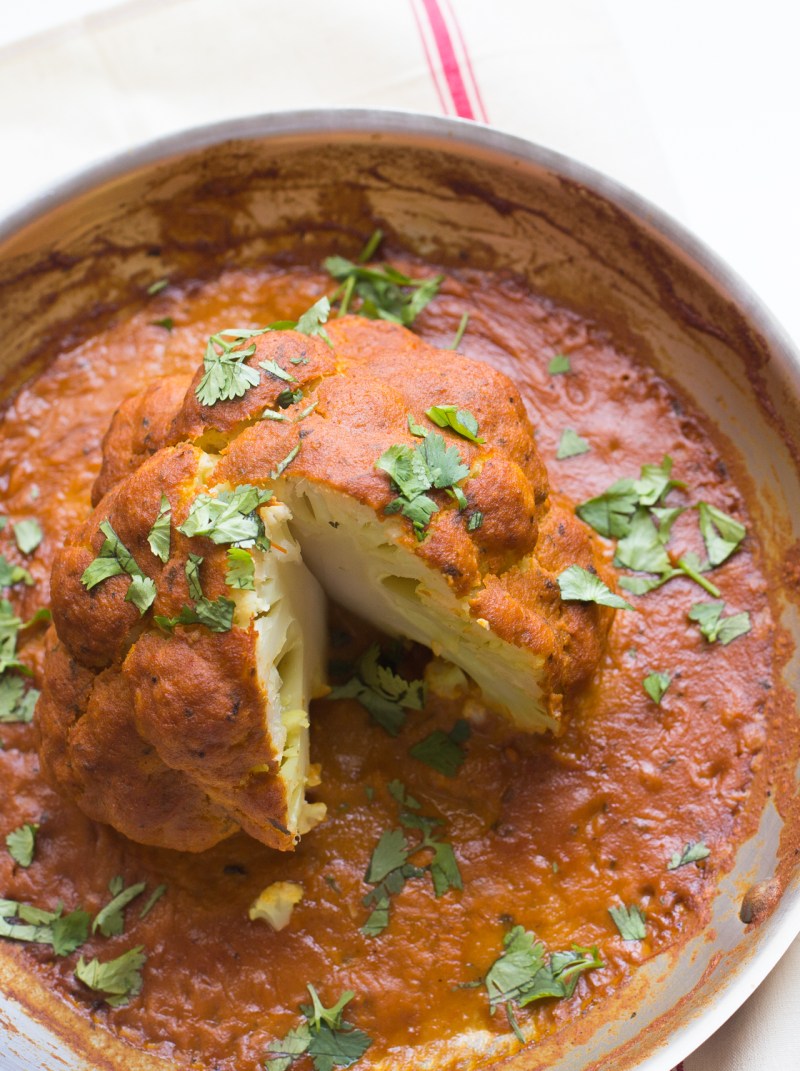
Gobhi Musallam is a roasted cauliflower dish from the Uttar Pradesh region of Northern India. While the origin of the dish itself is hard to trace, the origin of cauliflower isn’t. Cauliflower is a direct descendant of wild cabbage, and a close cousin to broccoli. Although it was known in Europe during the Middle Ages, it disappeared until sometime in the 17th Century, when Italy reintroduced it to the rest of Europe. Surprisingly, the Italians probably got cauliflower from the Middle East and Asia, who had likely acquired it from Europe during the Middle Ages. I think it’s pretty cool that cauliflower disappeared from its place of origin, only to be re-introduced by another culture.

We love this dish for several reasons. First of all, it’s an easy dish to put together: parboil the cauliflower, whip up a sauce, combine the two and roast in the oven. It’s a very impressive dish to serve to guests, and slicing/serving the cauliflower is a memorable experience. Lastly, and maybe most importantly, Gobhi Musallam is absolutely delicious and an interesting way to enjoy cauliflower.

Read Full Article

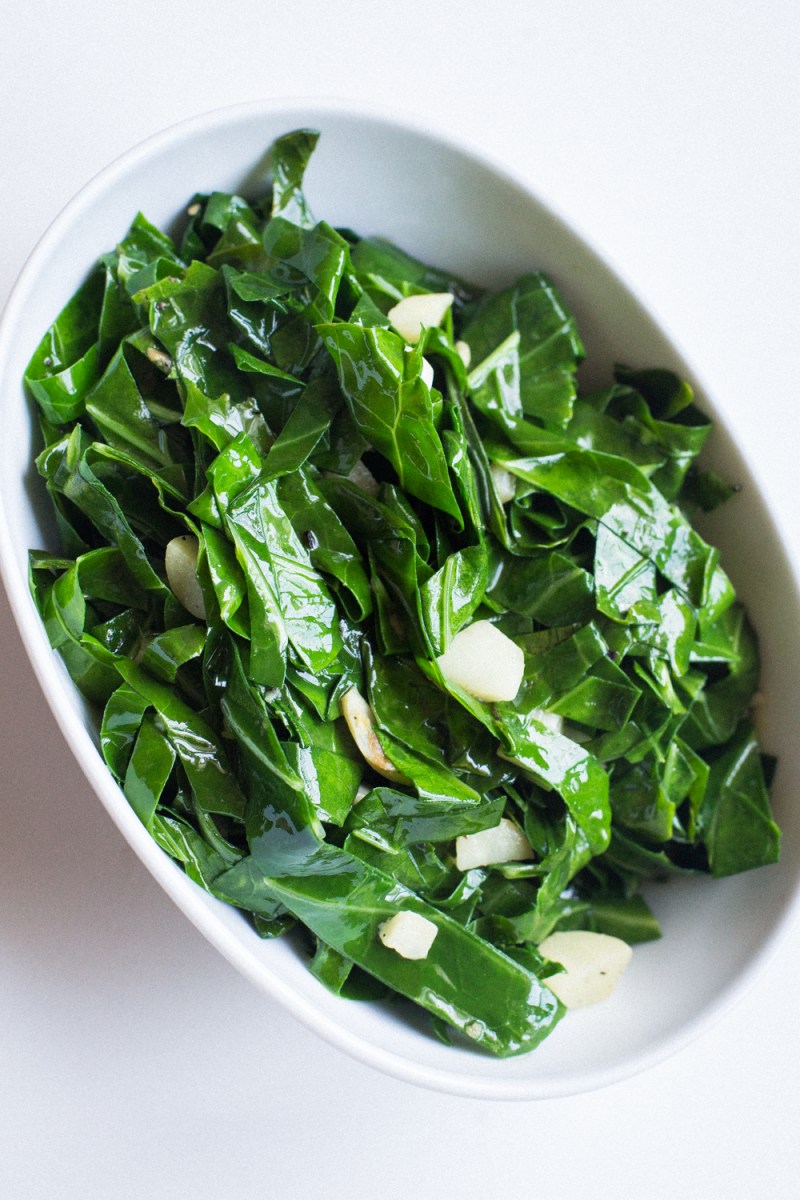
Although the common consensus is that collard greens originated in the Mediterranean, they gained their most widespread popularity in Africa (see my Sukuma Wiki recipe). It is assumed that collards made it to most of the Americas via African slaves. In Brazil, it’s a different story, as collard greens were likely introduced via Portugal, where it has been a staple veggie for hundreds of years (as evidenced by my Caldo Verde recipe). Today, collards are served often in Brazil, usually as an accompaniment to fish or beef.

Today’s recipe is a collaboration with my friend Alex Boake, who stayed at our house for a few days before heading off to Ancestral Health Symposium with us. She’s going to post an illustrated version of this recipe on her blog later this week, so bookmark her site! We’ll be knocking out a couple other illustrated recipes in the near future as well, so this is just the tip of the illustrated Paleo recipe iceberg. Update: Here is Alex’s post!

Read Full Article

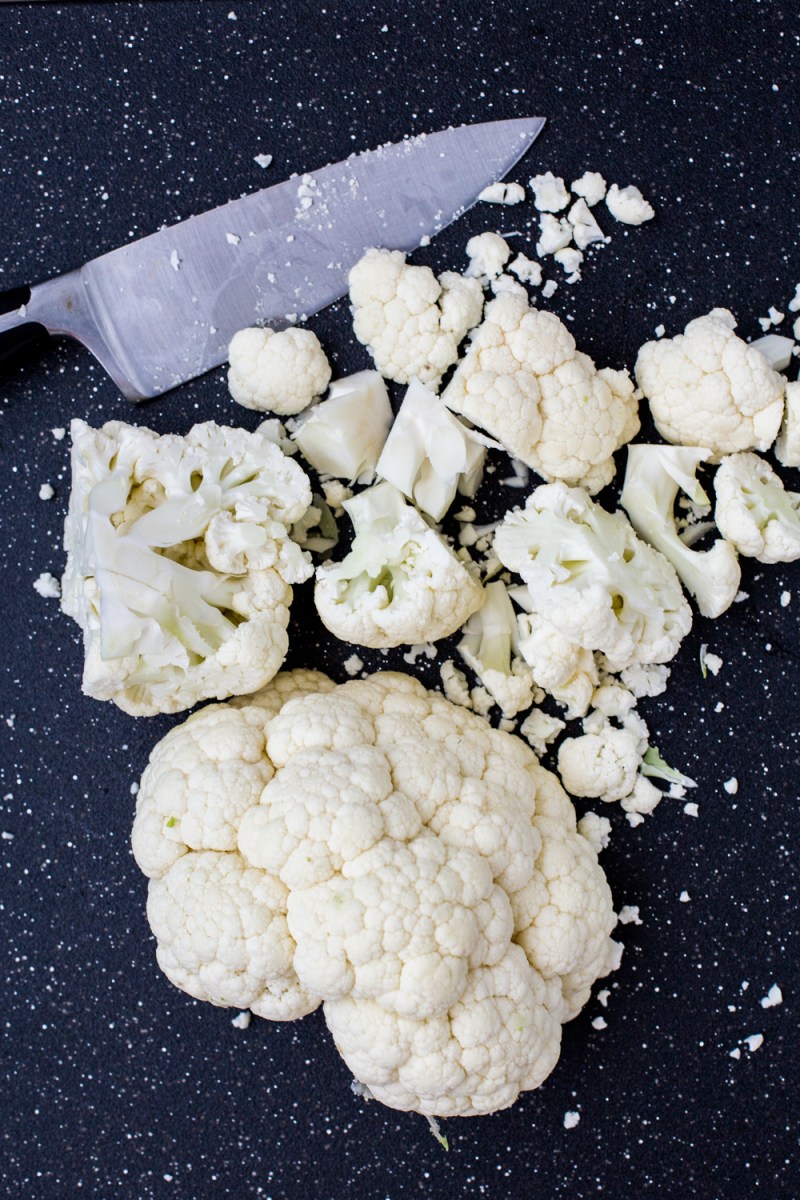
I must be reverting to some sort of baby food phase, because lately I’ve been really into puréed veggies. I think it’s the idea of eating familiar foods in unfamiliar ways. Either way you look at it, this cauliflower purée recipe isn’t the most innovative recipe I’ve created, but it serves an excellent purpose as an easy and mild-tasting accompaniment to robust dishes (which you’ll see in a couple upcoming recipes!).

It’s unsurprising that cauliflower is a close relative to broccoli, but until recently I wasn’t aware that it is from the same family (Brassica oleracea) as cabbage, brussels sprouts, kale, and collard greens. It was first brought to mainstream attention by some French cookbooks in the 17th century, although the plant itself originally came from Genoa, Italy.

Read Full Article

NOTE: An updated version of this recipe appears in my cookbook, The Ancestral Table.

Poi is a Polynesian staple food, typically made with mashed taro root. However, it’s a little-known fact that the Hawaiian people also made poi from sweet potato and breadfruit. Given the fact that taro root is relatively hard to come by here in Maryland, we regularly make sweet potato poi to stave off our Hawaiian-food cravings. To bring in a little extra island flavor, I add a little coconut milk to the poi, which gives it a taste similar to haupia (a Hawaiian coconut dessert). Its creamy texture and sweet taste are perfect accompaniments to my kalua pig recipe.

Read Full Article

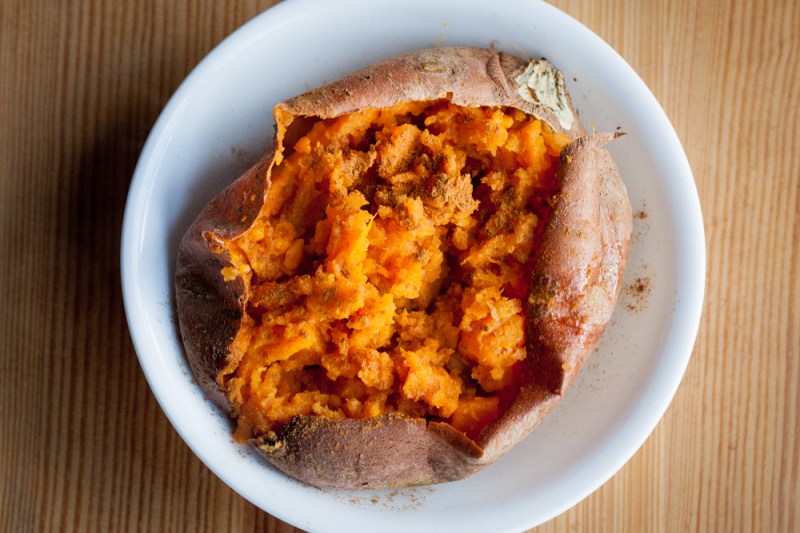
This may fall under the no-brainer category, but I thought I would explain how we bake our sweet potatoes here at the house. It’s one of our simplest recipes, and the only thing it needs is about 45 minutes of cooking time to ensure you get that perfect potato. Additionally, we like to take five seconds out of our busy day and add a little cinnamon to our potatoes, which gives just a twinge of complexity to the taste.

Here’s a couple neat facts about sweet potatoes. Sweet potatoes originated in Central/South America. Papua New Guinea eats the most sweet potatoes per capita, with 500kg per person annually. North Carolina supplies most of the sweet potatoes we find in US markets. They’re only distant cousins to the white potato, despite sharing the same name. They’re also pretty distantly related to yams (which originated in Africa), even though here in the US we often (incorrectly) label our sweet potatoes as “yams”.

Read Full Article


image courtesy of Warner Bros.

Note: this was written in January 2012. Check out my three-year recap post here.

Last month was the one-year anniversary of my switch to a modified Paleo diet (which = Paleo + white rice and some dairy). At the six-month mark I made this post with some lessons I’d learned; while many of these tips still ring true (although we haven’t had ice cream for some time now), I thought I’d add a few more.

Read Full Article

I’m starting to find that bringing constant, new content to this site during the summer months is going to be difficult. Not only is my family much busier, but I find myself falling back on the same, tried-and-true meals as the summer heat kicks in – and they almost all include grilling. Since many of the dishes I love to grill are already on the site, I’m caught in a bit of a predicament.

Luckily, we signed up for a vegetable CSA share through a local farm which means that we’ve been getting all sorts of unexpected and new veggies every week. This basically requires me to find out more about each vegetable we get, and to research recipes to boot. This is one such recipe, although the same method can be applied to traditional greens (collard, mustard, turnip, etc).

Read Full Article