vegetarian

The other weekend, I was killing it in the kitchen. I had just finished off development and photos for a couple new recipes (my recent Curried Beef Stew and Garlic Smashed Potatoes dishes), and I was digging into two new creations: this week’s Skillet-Roasted Winter Vegetables, and next week’s Center-Cut Pork Rib Roast. Everything was going well, and my timing was just right – the dishes were going to finish just as the afternoon sun would be in the perfect position for photos.

But as anyone who’s visited Florida can attest, the weather can change in a blink of an eye. Case in point was this day, because in the course of a few minutes, my early afternoon sunshine transformed into a late evening sky, just as a tornado watch warning chimed on my phone. Clouds rushed in, winds gusted; the ambient light near the window I use for photography disappeared. So, picture this: in the middle of a storm, I rushed outside to our screened-in porch, laid down my photography surfaces, and desperately snapped some photos in near-dark conditions. Sure, I probably could have just waited for a different day, but I also enjoyed the challenge that mother nature threw my way.

The point of this story is to say that sure, my picture came out a bit blurry, but I will likely have fond memories associated with this photography session for years to come. I think it’s moments like those that I appreciate having a food blog in the first place; while cookbooks are often very particular – run through a team of editors and designers – blogging can be as fluid as the author defines. And really, the photo looks much better than some of the photos from this site’s early days, anyway!

This week’s recipe isn’t glamorous, and one we make often. Since the vegetables have varying cooking times, the best approach is to par-boil the hardier vegetables – carrots and parsnips, in this case – and then finish them all off together in the oven. Feel free to swap out the carrots and parsnips with other vegetables, like turnips or beets.

Read Full Article

While we typically eat Basic Mashed Potatoes with our daily meals, you can’t deny the fun that is Smashed Potatoes. In few other recipes can you treat a food so poorly–smashing it with the heel of your palm!–and still come away with something that’s both perfectly crispy and secretly fluffy.

This recipe takes a bit longer than a typical mashed or roasted potato, mostly because you’ll need to cool the potatoes for about 10 minutes, but the extra effort is an excellent way to periodically spice up your relationship with America’s favorite tuber.

Read Full Article

Tortilla Española, sometimes called Tortilla de Patatas, is a Spanish omelette unrelated to the corn and wheat tortillas found in Mexico and neighboring countries (in Spanish, the word tortilla means “small torte/cake”). It is often served cold as a tapa, or warm as part of a meal.

References to the Spanish tortilla didn’t surface until the early 19th century, as a quick meal (for soldiers, as legend has it) using readily-available ingredients of eggs and potatoes, and sometimes onion. Common add-ins for Spanish tortillas include chorizo sausage, mushrooms, bell peppers, peas, and eggplant; the name of the dish will often change depending on which ingredients are added to the mix.

Read Full Article

I recently completed some housekeeping on the blog, long overdue; I redeveloped the categories on my sidebar navigation, to include specific ingredients (like shrimp and other sub-categories instead of just seafood), as well as certain types of dishes (like soups & stews) or preparations (pressure cooker recipes). I hope this makes this website a little more user-friendly, and please be sure to share any feedback in the comments below.

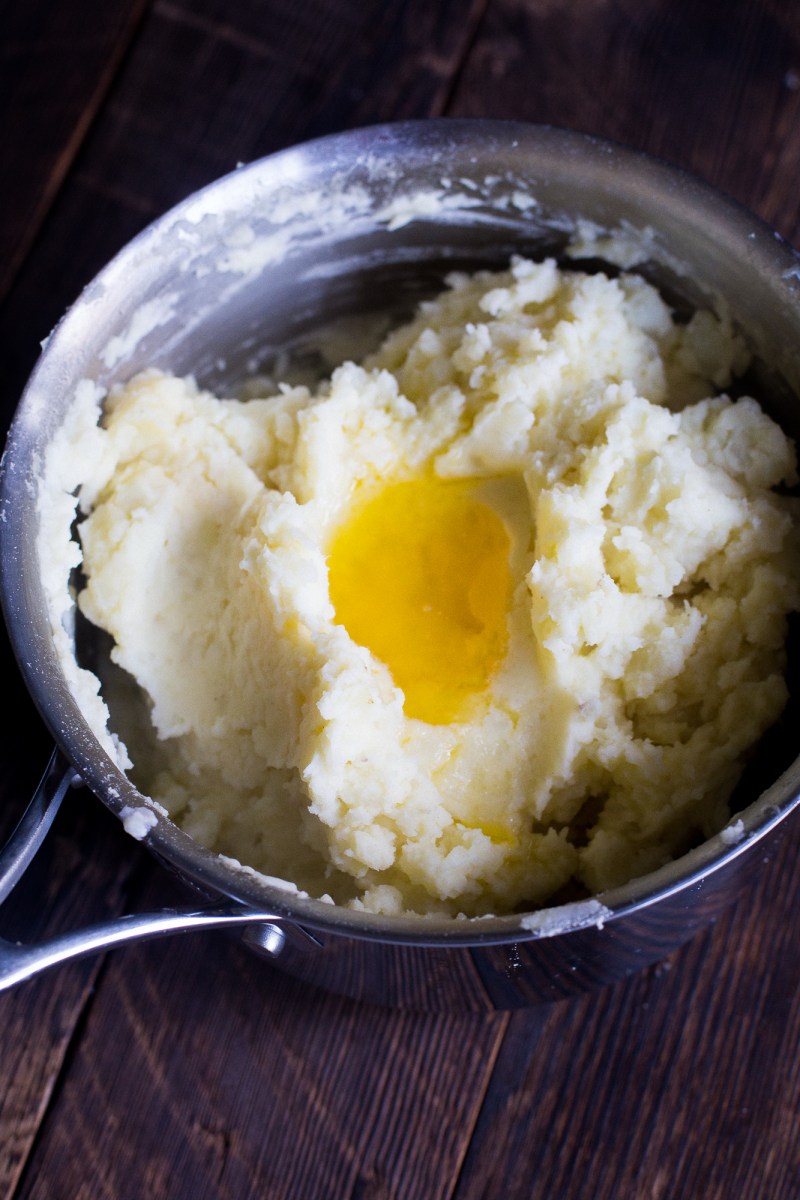
In the spirit of housekeeping, I recently realized that there are some very basic recipes missing from the pages of this blog. Some are obvious; I don’t expect to ever provide a tutorial on how to fry bacon, or how to slice an onion, as there are many excellent blogs dedicated to kitchen basics. But others are such a fundamental part of my everyday cooking that their absences were missed. One such recipe is today’s post, for basic mashed potatoes.

I grew up with mashed potatoes as a staple starch. Today’s recipe is very similar to my mom’s basic technique: boil some potatoes, then drain and mash them up with a bunch of butter and cream. Although to be honest, I’m a product of the 1980s (knee-deep in the low-fat craze), so our potatoes were likely made with (yikes!) margarine and (ick!) 2% milk. I’m happy to report that after spending time with my parents the other week, they’re back on real butter and cream.

Today’s recipe comes from the pages of Deep Dish: Season One, the project I released with my friend Tony Federico this past May. In it, we explore a classic American meal – Meatloaf – and build a history lesson, radio show, and comprehensive recipe eBook to explore the ins and outs of one celebrated dinner.

One last bit of housekeeping – I’m disappointed to report that the company behind my iOS/Android app will be shuttering their services, and my app will no longer work after the New Year. After spending some weeks researching alternatives, I have not been able to find a solution that fits my budget. One of my goals is to learn programming code well enough to develop my own app, but that’ll be some time from now – I still need to finish writing cookbook #3! So for now, please accept my apologies, and I hope you’ve enjoyed your time with my app.

Read Full Article

Quick language lesson: jeon means “pancake” in Korean. This term is associated with a variety of pancakes, from kimchi to kale pancakes. Today’s recipe, Pajeon, stands as the basis for many further layers of the Korean pancake underground; its most popular descendent is Haemul Pajeon, or seafood scallion pancake, which is featured in Paleo Takeout. While the seafood variation is a family favorite, I also appreciate the simplicity and ease of this simple Pajeon.

Speaking of simple and easy, did you guys hear that Melissa Joulwan is releasing a third cookbook, Well Fed Weeknights, on November 1st? She just announced it yesterday, and I’m super excited about it – 128 complete meals (proteins, veggies, fats, and garnishes) ready in 45 minutes. I sent out an email to my newsletter list yesterday morning with more details, which you can read here (it includes a recipe from the book, plus a link to Mel’s free 70-page PDF sampler of the book!).

Read Full Article

September is here, Labor Day has come and passed; it’s time to get autumnal.

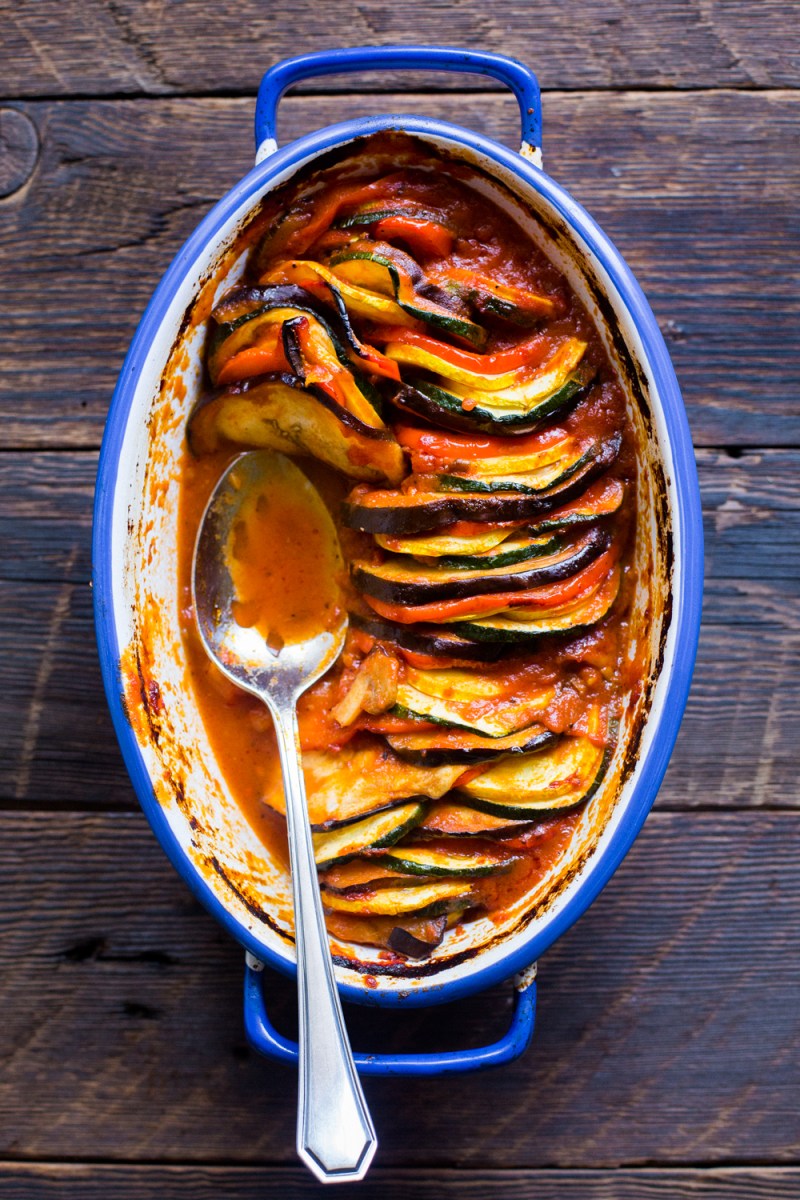
Ratatouille is a Provençal vegetable stew, first originating in the city of Nice (near the Southeast tip of France). Its base ingredients, namely tomatoes and eggplant, are indicative of its Mediterranean influence; there are similar dishes in other countries that border the Mediterranean, like Pisto (Spain), Camponata (Sicily), and Briám (Greece).

But who am I fooling – you are probably already aware of this dish. If you’re like me, you were pretty inspired by the 2007 film; to me, it captured the beauty of cooking in a way that few films have. Truth be told, few animated films have stuck with me as long as Ratatouille (but I think Pinocchio will always be my all-time favorite).

For today’s preparation, I kept things simple. Just the right ingredients, done in an hour, and mostly hands off – it’s the perfect accompaniment to a more labor-intensive main dish. In fact, it’d be the perfect time to try out that Chicken in Champagne Sauce recipe you’ve been eyeing for the past few months!

Read Full Article

I’ll admit it – sometimes it’s hard to get excited about cabbage. I think this recipe will change your mind a little bit. Roasting the cabbage provides for a subtly sweet flavor, and slicing it into thick steaks gives them an unexpected heft.

That’s not to say that cabbage is without merit. For starters, it’s very affordable, and mildly-flavored. Next, it’s easy to prepare: this dish literally takes seconds to prepare, and then you toss it in the oven until it’s ready to be devoured.

Cabbage has a long history in Europe, traced back at least 3,000 years as a cultivated vegetable. Its English name is derived from the Latin word caput (“head”); ironically, the actual Latin word for cabbage is brassica, derived from the Celtic word bresic. Quite a journey for one word to make!

Read Full Article

Bubble and Squeak is a traditional English dish, served as a hash of leftover roasted vegetables. It can be made from a variety of vegetables, but potatoes and cabbage are almost always included; it can be served at any meal, and is a common accompaniment to a full English breakfast. This dish was first mentioned in the 1800s, but really fell into its own as a way of elongating meals during World War II, when food rationing was common.

The name “bubble and squeak” refers to the name that the vegetables make as they fry in the pan. There are some similarly fun names for other dishes that share the same technique, like Panackelty (NE England) and Rumbledethumps (Scotland).

Prepared traditionally, Bubble and Squeak is kind of tragic, because that means you could only enjoy it on those rare occasions when you have leftover roasted vegetables in the fridge. As a solution, the recipe below is written using fresh vegetables – you roast the vegetables while you boil the potatoes, then toss them all together for the final, beautiful creation. Of course, if you have leftover vegetables, this recipe will work, too; just skip directly to step #3.

Read Full Article

When one blogs about their food experiences, some patterns start to show. For example, over the past 5+ years writing for this blog, I’ve only posted four salad recipes. That’s not because I think salads aren’t worth making, but rather, it’s an indication of how I view salads: as something you throw together using the vegetables available in your crisper, or on your counter.

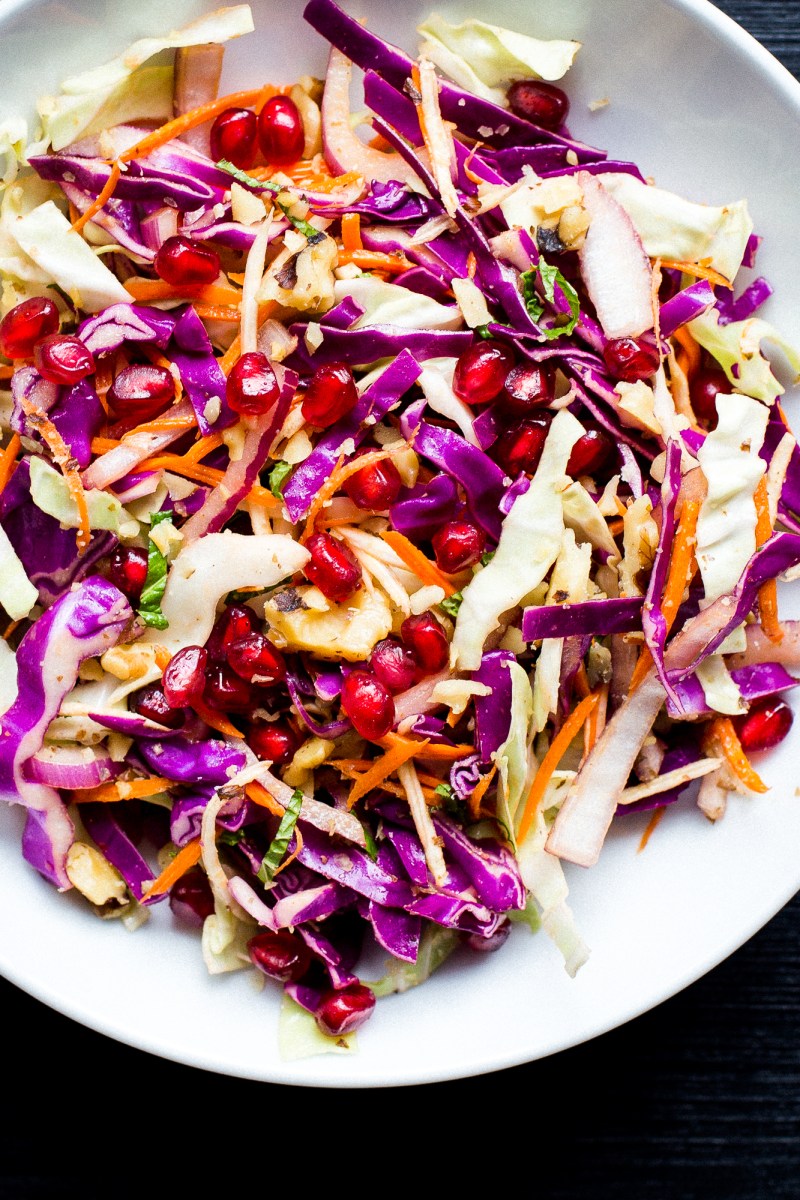
In truth, there is still some merit to writing salad recipes. Sometimes, it’s good to have a solid blueprint for future cooking endeavors. Case in point is this Winter Slaw, modeled after European-style cabbage salads.

Out of the countries who count their cabbage intake, Russians consume the most – about 40 pounds per person, compared to 9 pounds per person in the United States. Cabbage often carries a bad reputation, since some folks experience a negative response after eating it; this is due to the trisaccharide raffinose, which is found in cabbage, beans, broccoli, and asparagus. That gassiness is caused by the trisaccharide fermenting in your lower intestine.

Read Full Article

Yep, it’s getting to be about that time of the year again. You know, when it’s just too dang hot outside to fire up the oven or stovetop. A popular food blogger trend is to eventually post a Gazpacho recipe, so I figured it’s about time for me to share my own take on the dish. This is what I would consider a classic take on Gazpacho, although since I’m still coming down from my incredible visit to the Tabasco headquarters in April (see here), I couldn’t resist spicing this soup up with some of their original pepper sauce.

Gazpacho is an ancient cold soup first developed in Andalusia, the southern region of Spain. It is believed to have been introduced first by Arabic culture as a soup made from leftover bread, and possibly influenced by the Romans with the soup’s telltale inclusion of vinegar. Tomatoes, now an integral part of modern Gazpachos, came much later, once Columbus returned from the Americas bearing a weird, red ornamental fruit that was eventually used in culinary circles (after everyone got over their belief that tomatoes were poisonous).

In my opinion, the key to a good Gazpacho is to find a marriage of contrasting flavors, namely fresh cucumbers, tart tomatoes, sweet bell pepper, and biting onion. So that’s what we’re going to use as our base, and then complement the vegetables with garlic for immediacy, lime juice for brightness, olive oil for body, vinegar for tanginess, Tabasco for heat, and a pinch of basil for that last bit of spark to round things out.

Read Full Article