vegetarian

Earlier this year I wrote a guest article for Paleo Magazine, emphasizing the importance of eating vegetables. Americans tend to give vegetables a lower priority than the rest of the world; when comparing the most economically developed areas of the United States (those with the most money to spend on food) to similarly developed regions in Europe and the Western Pacific, we only eat about 75% as many vegetables as the other regions. Comparing the lesser economically developed areas of the United States to their global counterparts is much worse: there, we eat only around 35% as many vegetables.

Vegetables are an important factor in overall health. While not as nutrient-heavy as organ meats, fish, seafood, and naturally raised ruminants, they are often superior to pork, poultry, and fruit in terms of nutrient density. Fermented vegetables, a food that has been consumed for thousands of winters, also provide unique and essential forms of probiotic bacteria and increase the bioavailability (ability for us to absorb their nutrients) of vegetables.

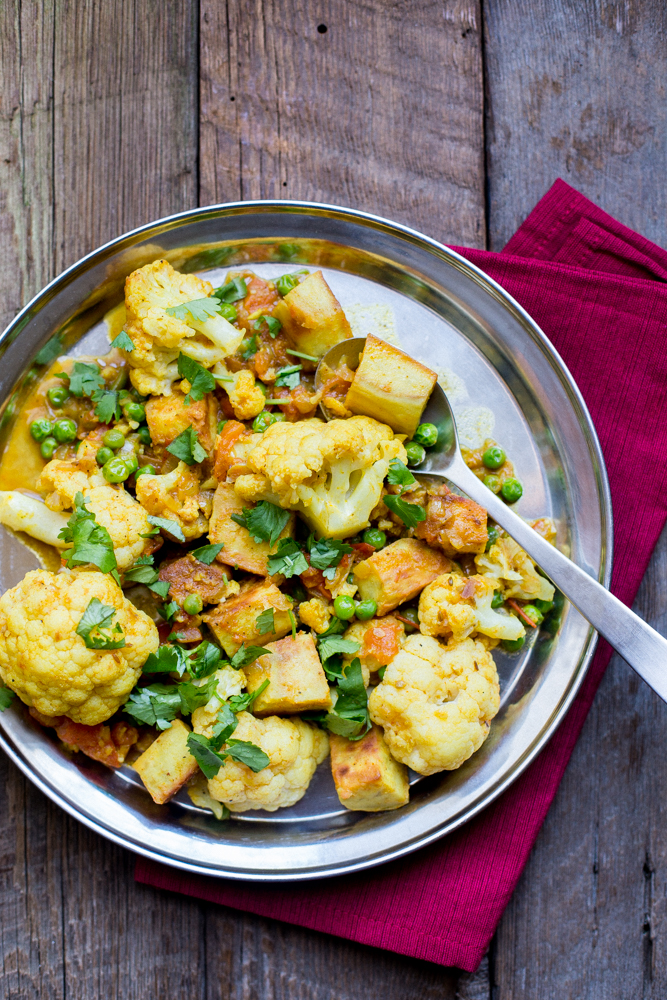
Aloo Gobi Matar is Punjabi dish, and an excellent example of the potential tastiness and diversity to be found in a vegetable dish. Using a small amount of many vegetables will give your dishes deeper flavors and will make you less likely to tire of certain foods. If I ate just tomatoes every day, I’d get sick of them; adding a tomato or two to several dishes in a row wouldn’t have the same effect.


Read Full Article

Ital stew is a Jamaican dish aligned with the Rastafarian movement. The word “ital” is derived from the word vital, and is similar to the concept of kosher. Specifically, ital food should be vegetarian, unprocessed, and from the earth. Some believe that even iodized salt should be avoided, and only pure sea salt is acceptable. Since meat is considered dead, it is not ital, although some Rastafari are known to eat small fish.

Like in my Callaloo recipe from earlier this year, there is a lot of variation to this dish. Typically, it’s made with several different kinds of starchy foods (I used squash, taro, potatoes, and plantain) in a coconut milk broth. You don’t never every single starch to make a flavorful stew – just use what you have available to you. It’s lightly spiced, with just thyme and pimento (allspice).

Funny enough, when doing my research I discovered this dish isn’t considered an exceptionally tasty stew, to the point that I was almost turned away from trying it. I have a suspicion that the reason it’s not well-received is because every recipe I found had you adding all of the vegetables at once, which likely resulted in a mushy, jumbled, and slightly confusing stew. I tried a different tactic, and added the dishes in increments so that they all were perfectly cooked at the end of the recipe. This extra care made a huge difference in the final product; in fact, we’re adding this dish to our regular rotation because it’s easy, quick, and hearty – a perfect summer soup when you’re not in the mood for a meat dish.

Read Full Article

Kombucha is a bit of an enigma in the health world. It seems every health-minded group appreciates the benefits of this fermented, effervescent, and probiotic drink – from Vegans to Paleos alike. One unfortunate side effect of being a kombucha drinker is that if enjoyed regularly, you could basically end up completely broke; bottles range from $3 to $5 each at most grocery stores. Luckily, making it at home is fun, economical, and takes only a little foresight.

Kombucha is a fermented black tea drink, originating somewhere in Northern China or Central Asia at least 2,000 years ago. It reached Russia sometime in the 19th century, and quickly gained popularity as a health drink; at one point, most Soviet-era homes were growing their own kombucha culture. It spread to Europe and beyond through Russia. The Russians have several names for the drink, the most popular being чайный гриб (“tea mushroom”) and медуза (“medusa”, their word for jellyfish). The drink is made by fermenting a batch of sweet tea with a culture known as SCOBY (symbiotic colony of bacteria and yeast), which eats the caffeine and sugar, leaving you with a sour, slightly vinegary drink that’s not unlike apple cider vinegar.

The drink has some notable links to health, especially in regards to cancer. Author Alexander Soltzhenitsyn claims it cured his stomach cancer while imprisoned in a Soviet gulag. Ronald Reagan purportedly treated his colon cancer by drinking kombucha daily in the 1980s. While proven results have varied, it goes without saying that the fermented, probiotic profile of the drink carries benefits. In this age of antibiotics and antibacterial products, it’s good to see helpful bugs making a bit of a comeback.

Read Full Article

Jerusalem artichokes have an interesting history. There is no connection between this tuber and the city that bears the same name; they were originally cultivated by Native Americans. The most common theory behind their current name stems from the fact that Italian immigrants named them girasole, which later became “girasole artichoke”, which then eventually developed into “Jerusalem artichoke”. Its other name, sunchoke, is a relatively new name for the tuber that stems from the fact that its flowers look a lot like sunflowers.

While only distantly related to artichokes, Jerusalem artichokes still carry a distinct (okey dokey) artichokey flavor when cooked. They have a similar texture to potatoes. They’re one of my favorite starches because of their versatility; they can be eaten raw or cooked, they don’t need to be peeled, and they taste good both gently cooked and fully roasted.

Read Full Article

It’s funny, but up until recently I assumed there was already a ketchup recipe on my blog. I didn’t discover its absence until I developed Thursday’s recipe (hint: it rhymes with “beet oaf”), when I couldn’t find my recipe online. At first I was confused, and thought the search function of my blog was definitely broken. So…sorry about that, and here you go.

The history of ketchup is pretty awesome. It all started with garum, an ancient fish sauce first used by the Ancient Greeks and later the Romans. It reached Asia some 2,000 years ago via trade routes, and became a staple in many Asian countries, particularly Vietnam (where they later perfected the sauce using anchovies). Vietnamese fish sauce as we know it today entered China about 500 years ago, and the Chinese (particularly those in the Southeast providence of Fujian) spread it around the rest of Asia. The Fujian word for fish sauce? You guessed it, ketchup. In fact, many Asian languages today still use a form of the word “ketchup” to refer to sauces; a common example is the Indonesian word kecap (pronounced “keh-chap”), a catch-all term for fermented sauces.

When Europeans arrived in Asia in the 1600s, they were enamored with fish sauce (they’d long forgotten about garum) and took it back to Europe. Many variations of ketchup existed in Europe for hundreds of years, the most popular being walnut ketchup and mushroom ketchup (the practice of using fish eventually died out). It wasn’t until the 1800s that people started adding tomatoes to the sauce, and H. J. Heinz took it to a new level in 1904 when his company figured out a way to bottle and preserve the sauce using natural ingredients (the mid 1800s were full of horror stories about deadly batches of ketchup made with stuff like boric acid and coal tar). Heinz was also one of the first to add copious amounts of sugar to the sauce.

My recipe still maintains the sweet and sour taste we’ve all come to expect from ketchup, but throws a historical twist in for good measure: a bit of fish sauce.

Read Full Article

Callaloo is a Caribbean dish that originated in Africa. It is typically made with amaranth leaves (aptly called callaloo in the West Indies), taro leaves (dasheen), or water spinach; since these plants are somewhat hard to find in the United States, spinach is a common replacement stateside. There are many variations of this dish, and my recipe follows the Trinidadian version, which includes coconut milk and okra. In the Caribbean, Callaloo is often served as a side dish, but when I make it, it almost always turns into a main course. I’m not the type of guy that craves vegetables often, or vegetable soups for that matter, and I crave this dish. A lot.

I think I could eat my weight in Callaloo. I don’t know what it is about this dish that makes me go crazy about it. For one thing, I feel like a superhero after I eat it – like I’ve consumed a week’s worth of vegetables in one sitting. It’s also ridiculously delicious, and carries a unique flavor despite using fairly common ingredients. The only ingredient in here we don’t eat regularly is okra, since my wife isn’t a fan of okra’s slimy texture; luckily, the texture is cleverly masked in this dish.

Read Full Article

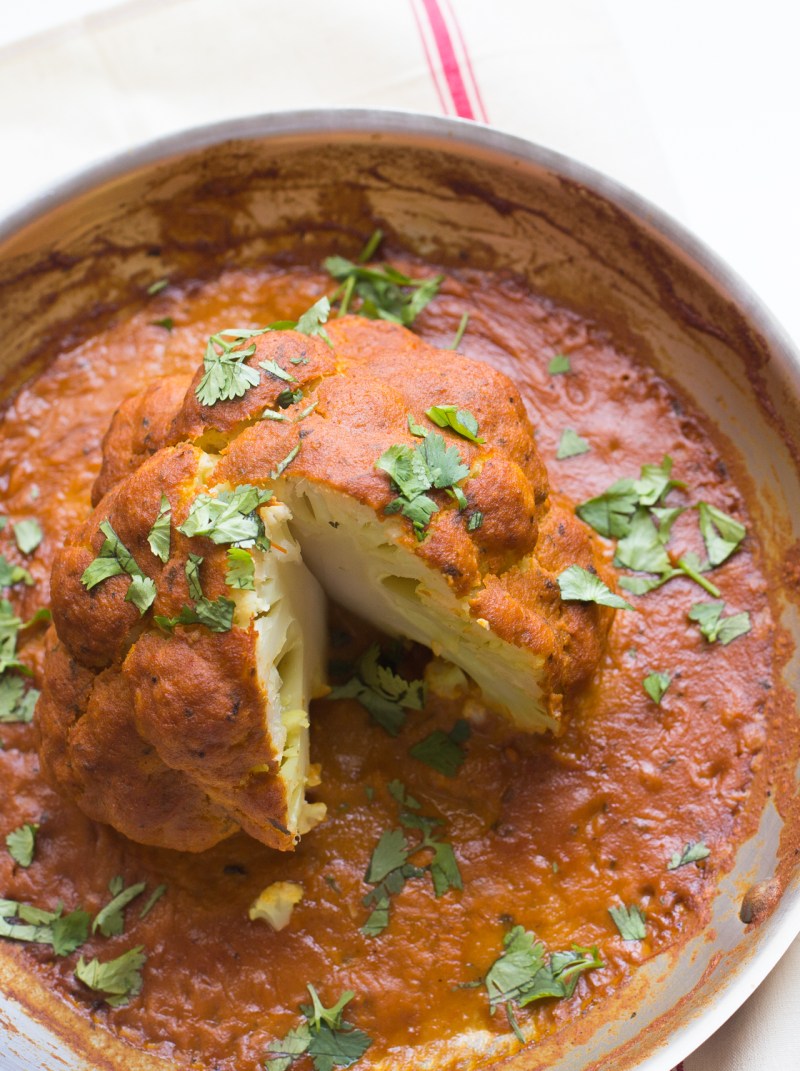
Gobhi Musallam is a roasted cauliflower dish from the Uttar Pradesh region of Northern India. While the origin of the dish itself is hard to trace, the origin of cauliflower isn’t. Cauliflower is a direct descendant of wild cabbage, and a close cousin to broccoli. Although it was known in Europe during the Middle Ages, it disappeared until sometime in the 17th Century, when Italy reintroduced it to the rest of Europe. Surprisingly, the Italians probably got cauliflower from the Middle East and Asia, who had likely acquired it from Europe during the Middle Ages. I think it’s pretty cool that cauliflower disappeared from its place of origin, only to be re-introduced by another culture.

We love this dish for several reasons. First of all, it’s an easy dish to put together: parboil the cauliflower, whip up a sauce, combine the two and roast in the oven. It’s a very impressive dish to serve to guests, and slicing/serving the cauliflower is a memorable experience. Lastly, and maybe most importantly, Gobhi Musallam is absolutely delicious and an interesting way to enjoy cauliflower.

Read Full Article

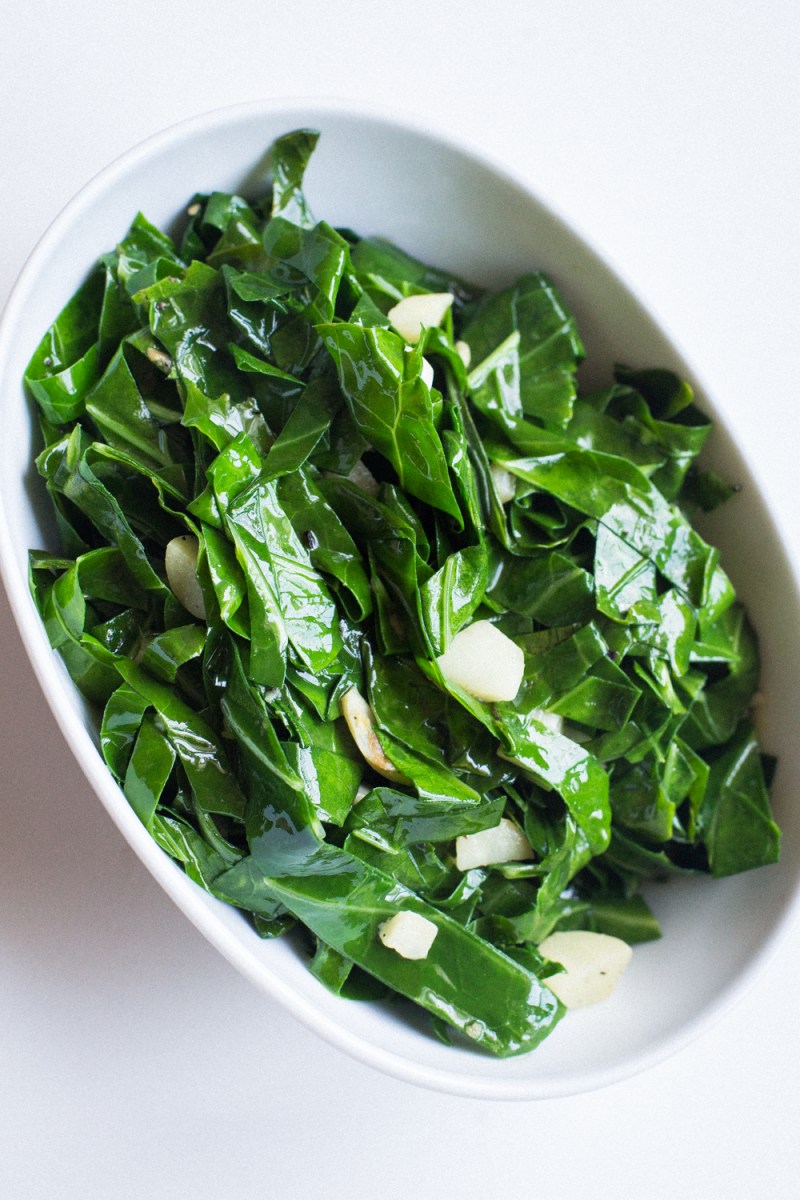
Although the common consensus is that collard greens originated in the Mediterranean, they gained their most widespread popularity in Africa (see my Sukuma Wiki recipe). It is assumed that collards made it to most of the Americas via African slaves. In Brazil, it’s a different story, as collard greens were likely introduced via Portugal, where it has been a staple veggie for hundreds of years (as evidenced by my Caldo Verde recipe). Today, collards are served often in Brazil, usually as an accompaniment to fish or beef.

Today’s recipe is a collaboration with my friend Alex Boake, who stayed at our house for a few days before heading off to Ancestral Health Symposium with us. She’s going to post an illustrated version of this recipe on her blog later this week, so bookmark her site! We’ll be knocking out a couple other illustrated recipes in the near future as well, so this is just the tip of the illustrated Paleo recipe iceberg. Update: Here is Alex’s post!

Read Full Article

NOTE: An updated version of this recipe appears in my cookbook, The Ancestral Table.

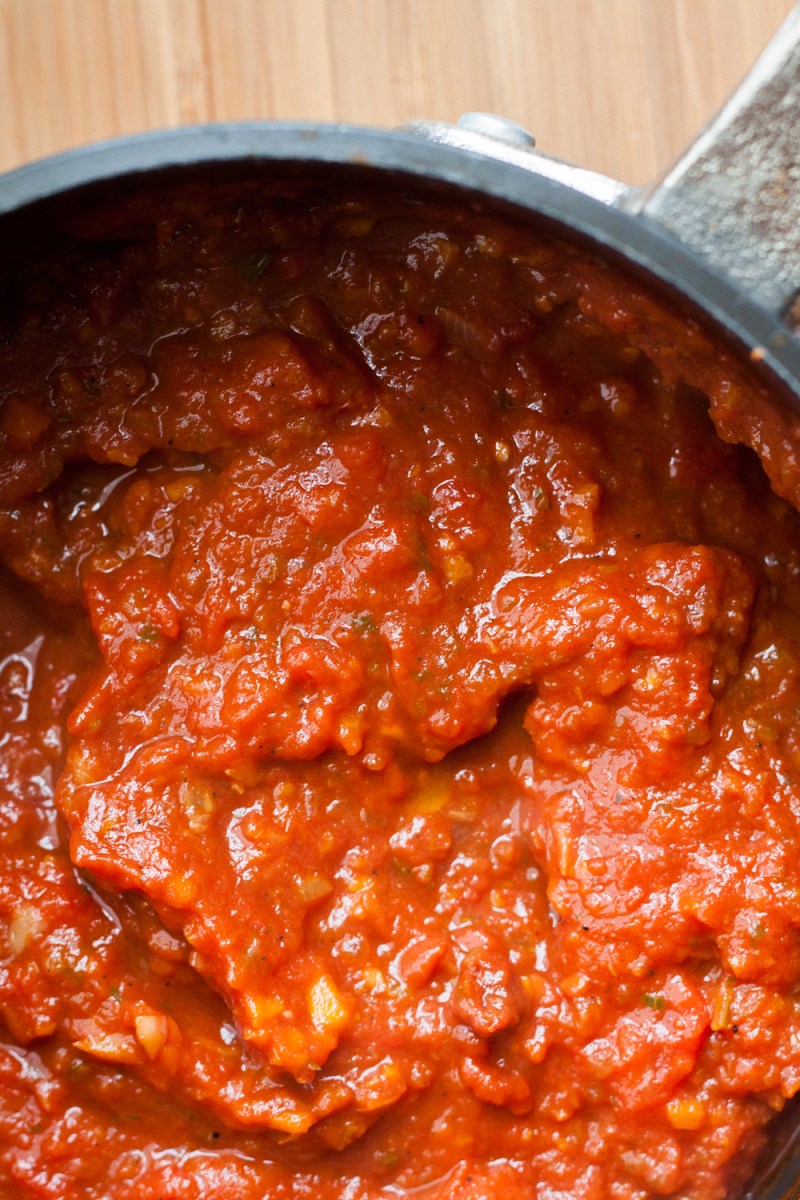
Have you looked at the ingredients of canned tomato/spaghetti sauces lately? You’d think they would be very simple, but surprisingly they have some hidden and unnecessary ingredients. Even Trader Joe’s organic marinara sauce has soybean oil in it, as well as parmesan cheese; I don’t find the cheese offensive per se, but does it have to be in there? So, I decided it was time to share an easy, tasty sauce of my own, which you can use as the foundation to any tomato-based sauce.

Although tomatoes arrived in Europe from the New World in the 16th century, tomato-based sauces didn’t start appearing on record until the 1790s. There is a staggering amount of variation to this seemingly simple sauce, with names to boot: In the US, marinara can mean just a tomato-based sauce, but in Italy it often refers to a seafood dish. The term tomato sauce also refers to any tomato-based sauce, except in the UK, Australia, New Zealand, and South Africa, where it refers to ketchup (pasta sauce is the proper term there). Neapolitan is a meatless tomato sauce, linked to southern Italy. A ragù is a tomato sauce with meat (often referred to as bolognese sauce outside of Italy). Finally, call me old-fashioned, but I just like to call it spaghetti sauce.

Read Full Article

Yuca (cassava) is a starchy, tuberous root that originated in South America, most likely Brazil, and has probably been cultivated for 12,000 years. Today, Africa consumes the most yuca, with Nigeria being the world’s largest producer of the root. When dried, it becomes tapioca. Quite a handy root, eh?

The easiest (and possibly tastiest) way to prepare a yuca root is dead simple: all it takes is a quick boil and a little time with some quality coconut oil.

Read Full Article