2 – Soups & Stews

It’s a New Year, which means many folks are just starting (or restarting) a new healthy eating adventure. One of the more popular eating challenges is the Whole30 (heck, it’s the #6 book on Amazon as of this morning). It’s been a few years since I’ve done a Whole30, which is a 30-day program with explicit guidelines. It doesn’t stray far from the way I eat anyway, other than the fact that it’s more stringent on honey, alcohol, dairy, and rice than my typical diet.

One thing I remember from my last Whole30 (in 2012, if memory serves me) was that I had a hard time keeping up my carb intake – at the time, the only carb-heavy foods allowed were sweet potatoes, beets, and plantains, which grew tiresome after a month of eating them. Luckily, the folks behind Whole30 remedied that in 2014, when they added white potatoes to their list of allowed foods. Hopefully this recipe – which includes two starchy vegetables – will make this month’s Whole30 a bit easier for everyone (also, don’t forget about this guide which transforms 94% of the 250+ recipes in Paleo Takeout to be Whole3o-compliant).

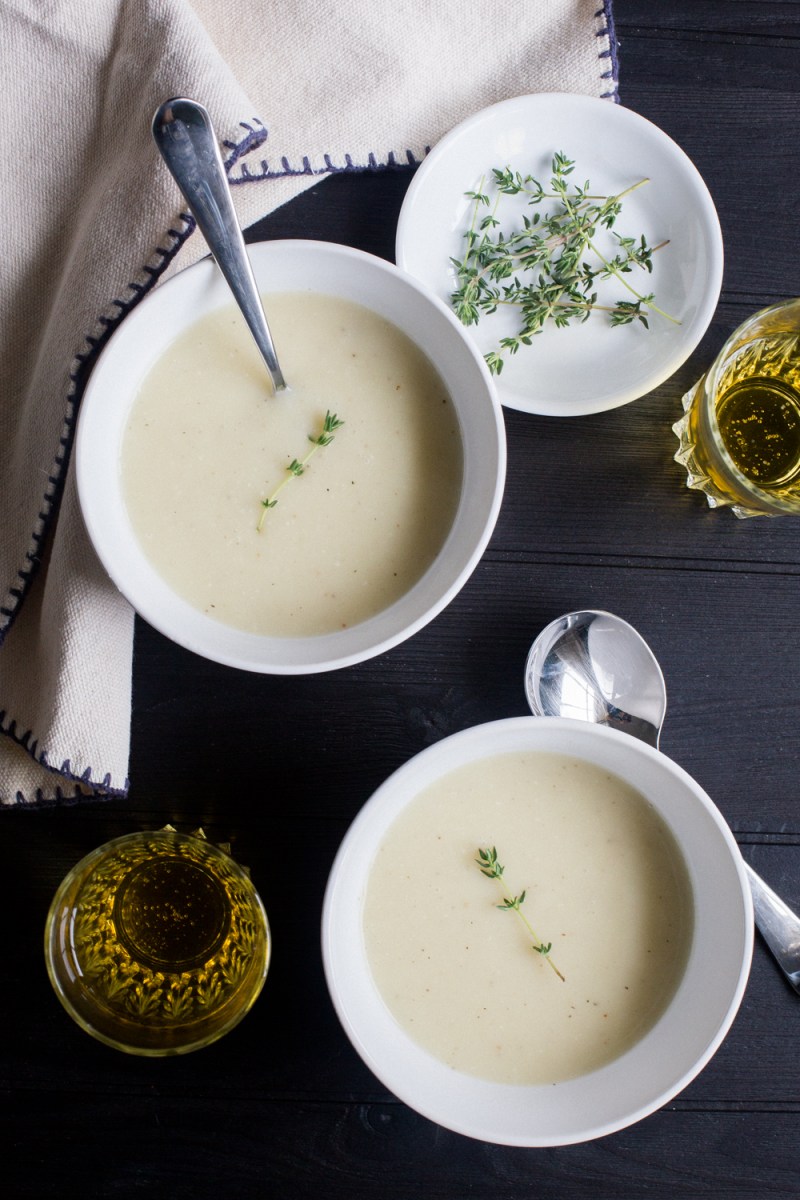
The turnip is one of the first cultivated vegetables, with some records dating back 17,000 years. Turnip roots aren’t as popular in the US as their greens, which are similar to mustard greens in taste. This soup is one of my favorite ways to prepare turnips, as it accentuates the natural creaminess of the root; serve this to your guests, and they won’t believe you that it’s dairy-free. Adding potatoes to the soup adds more body and heft to the dish, warming the belly on these cold winter evenings.

Fun fact: the rutabaga, another common root vegetable, was originally a cross-cultivation of the turnip and cabbage. It is also referred to as “neep” in some countries, likely a carryover from the Old English word næp (and before that, the Latin word napus), which meant “turnip”. Rutabagas and turnips are often confused for one another, with a common misconception that rutabagas are just large turnips.
Read Full Article

Local friends: I’ll be having a talk, cooking demo, and book signing in a couple weeks – for more info, see the bottom of this post.

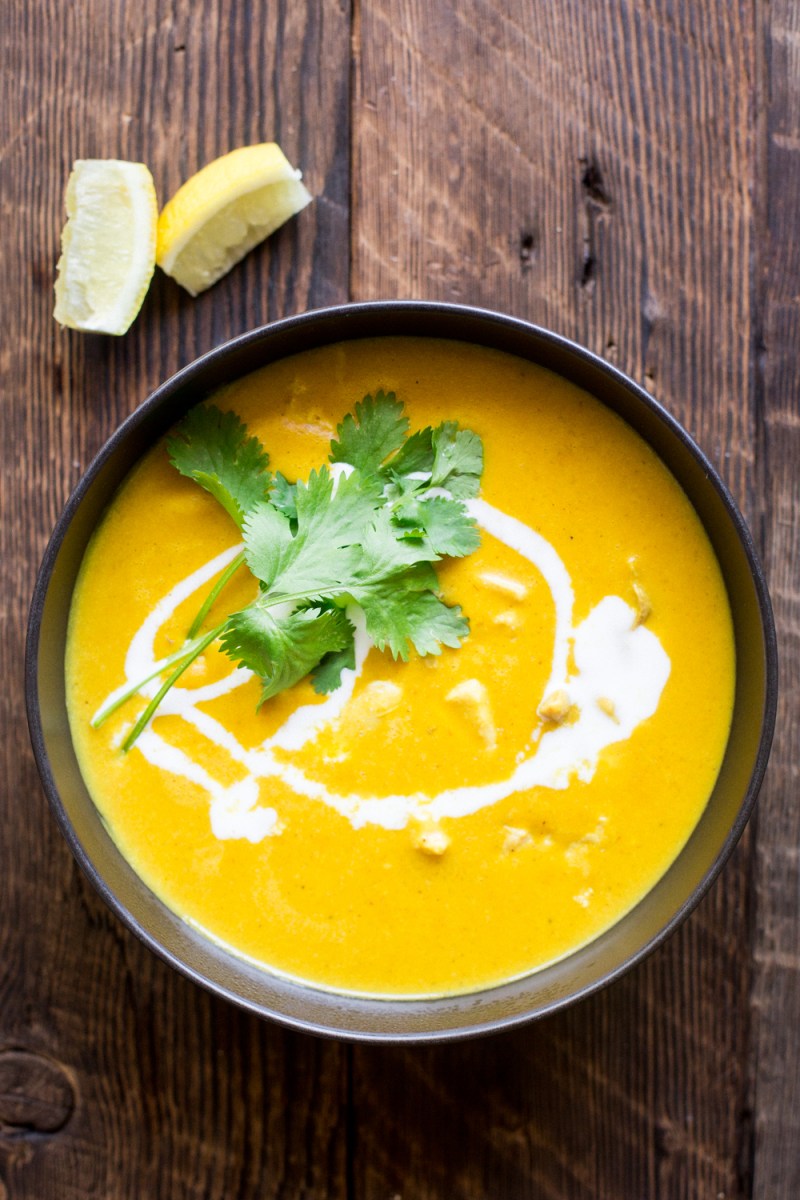
This little soup has made quite a journey over its lifetime. It was traditionally a sauce served over rice in its native India, but British colonials returning to England from travels abroad in the 19th century sought to recreate the dish at home. It eventually evolved into a mildly-flavored soup and spread as far as Australia, and there are now hundreds of variations of the dish.

While coconut milk was likely the original ingredient used to add richness to the soup, cream eventually took over in the UK. Personally, I like the exotic notes that coconut milk provides, so I reverted this dish back to its roots. This soup is typically thickened by adding rice and blending it with the other ingredients, but if you’re rice-free, don’t worry about it, the soup will still have a fairly hearty thickness to it thanks to the soup’s blended sweet potato.

One of my favorite aspects of this dish is that it imparts a slightly exotic flavor while using common ingredients (much like another favorite, Sukuma Wiki). Lastly, one fun fact: the name mulligatawny is derived from the Tamil (Southern Indian) words மிளகு தண்ணீர் (mullaga and thanni), which translate to “pepper water”.

Read Full Article

A favorite dish from Paleo Takeout is my Ramen recipe (page 112), which contains eight different types of Ramen and a variety of add-ins. It’s an excellent way to enjoy different takes on the same soup, while sneaking in a good amount of broth at the same time.

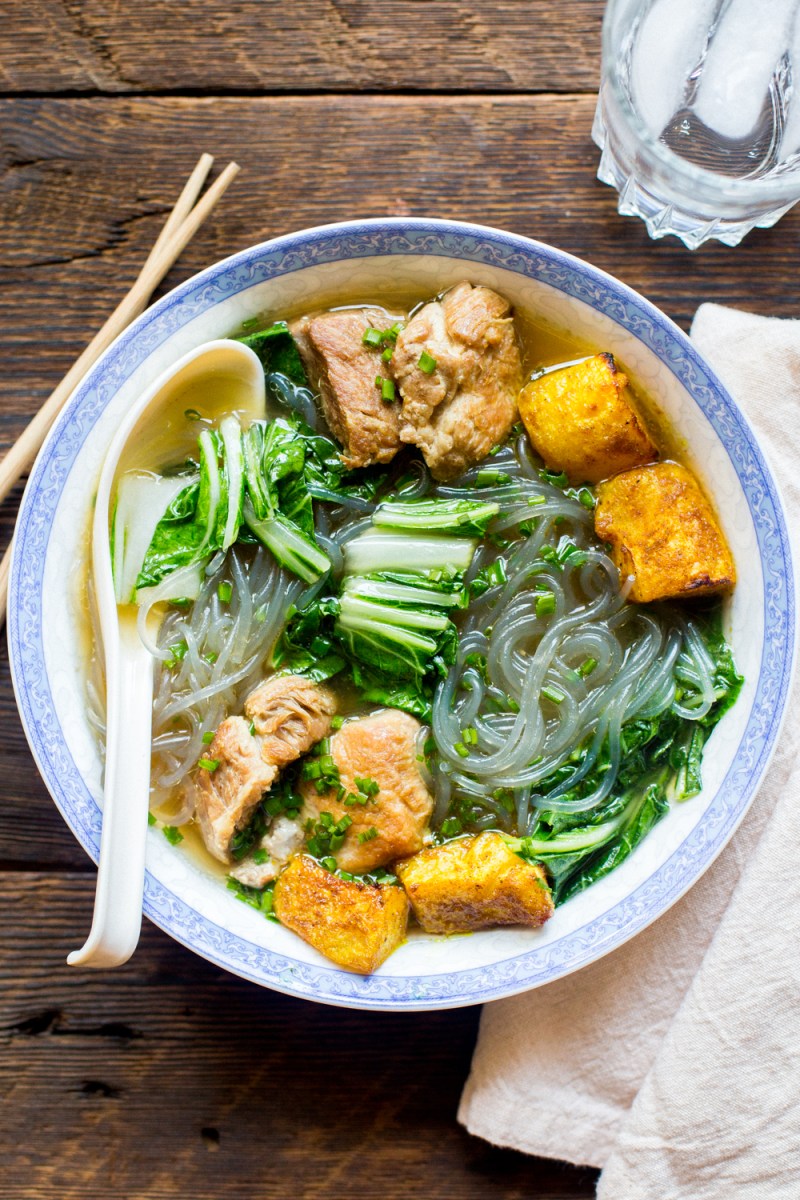
Like a lot of North America, we’re receiving a ton of rain right now, which always puts me in the mood for soup (admittedly, it doesn’t take much for me to get in a soup-eating mood). I figure some of you might be interested in soup right about now too, so here is my take on a simple pork-based Ramen, with some added curried winter squash to celebrate the coming winter season. Both pressure cooker and stovetop instructions are provided.

Ramen is a Japanese noodle dish inspired by Chinese cuisine (the word Ramen itself is borrowed from Lāmiàn, a type of Chinese noodle). Ramen is a relatively new phenomenon; it first started appearing in Japan during the early 20th century, but quickly gained ground after World War II, when soldiers returning from war in China had developed an affinity for Chinese-inspired cuisine (namely noodle soups). At the same time, Japan started importing American-grown wheat flour, which spurred the Japanese noodle-making industry. Ramen’s popularity was secured in 1958 when instant ramen noodles were invented, and later exported starting in 1971.

The impressive reach of Japanese Ramen can be neatly summarized by one fact: it has become very popular in China, where it is called Rìshì Lāmiàn (“Japan-style Lāmiàn”). That the soup can originate in one country, gain prominence in another, only to return to the original country with a new identity is both a testament to how delicious this soup is, as well as the ingenuity and adaptability of the human spirit.

Read Full Article

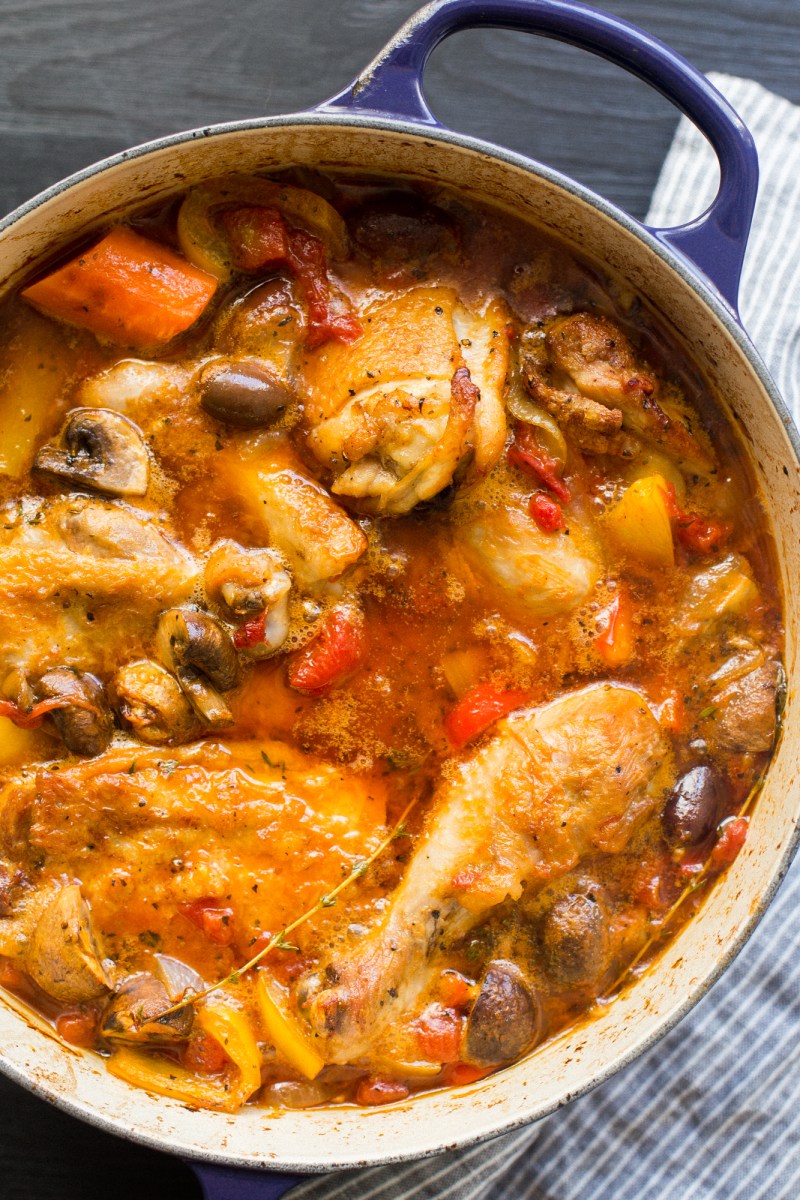
Chicken Cacciatore (Pollo alla Cacciatora) is a traditional Italian dish. The word “Cacciatora” translates to “Hunter” in English, as this dish was originally used to prepare rabbit and gamefowl. Today, variations that feature rabbit meat still abound.

The story goes that this “hunter’s stew” consisted of ingredients you could find in the forest or open fields. Many American versions of this dish have been altered considerably from their source material; breaded, fried chicken cutlets are often smothered in a marinara sauce (not unlike Chicken Parmesan, really). Italian versions often feature tomatoes but not overwhelmingly so; instead they’re a complement to other vegetables like onion, mushrooms, carrot, and bell pepper. Northern Italian variations of this dish use white wine, while Southern Italians use red wine.

Typically, this dish is prepared with a broken-down whole chicken. I’m down for that, but at the same time, I’m always concerned about the different cooking times for dark meat and finicky chicken breasts; instead, I prepared this recipe to feature thighs and drumsticks, so that everything comes together naturally.

Read Full Article

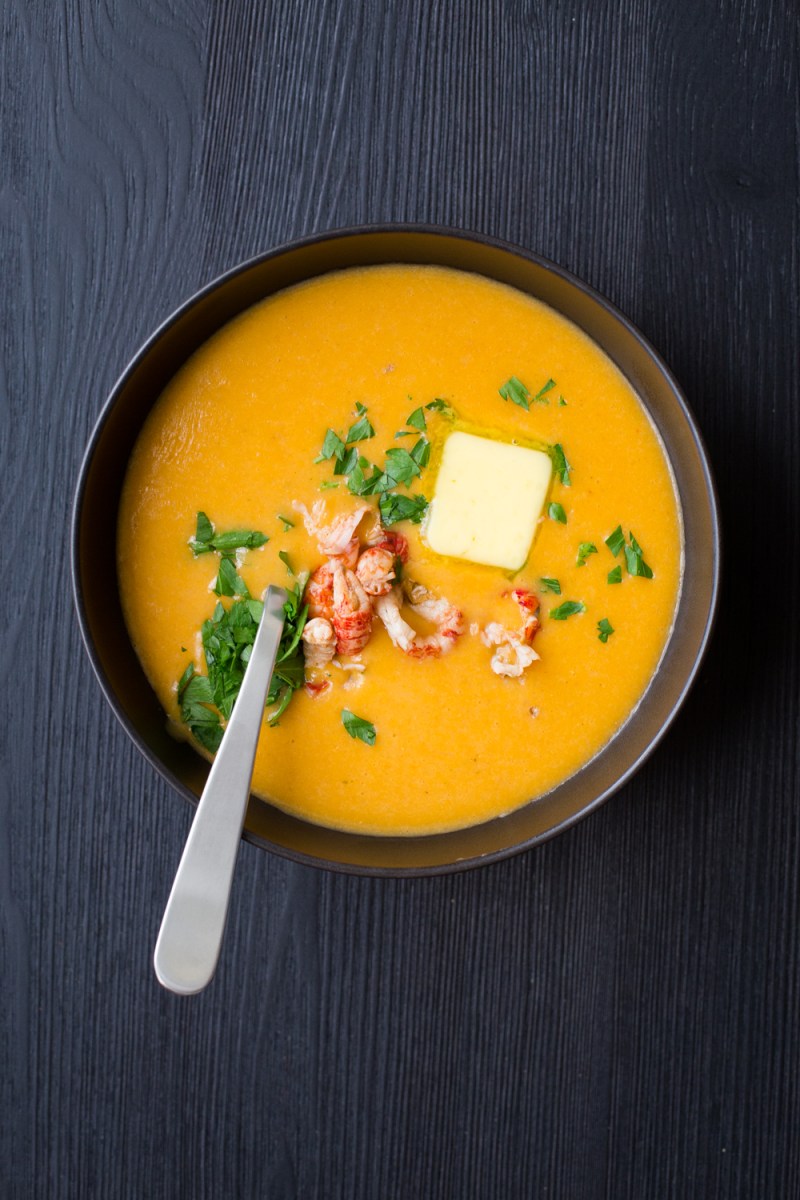
About this time last year, I posted a Blue Crab and Chipotle Tabasco Bisque that quickly because one of my most-cooked soups (and this is coming from a guy who cooks a lot of soup). I’ve been playing around with the formula a bit, to the point where I felt it was appropriate to post another one using shellfish (and that Shellfish Stock recipe from last week).

Quick reminder – I am giving away eight $25 Costco gift cards, and the giveaway ends on Thursday, so jump on it if you haven’t already.

And now for the big news: I found out that my cookbook, Paleo Takeout, made it onto the New York Times best seller list for July! How cool is that? Now I need to go through all of my social media profiles and add my new title to everything. I’m super excited and tremendously thankful for the support I’ve received in getting this book off the ground and into people’s hands. And to think, less than six months ago I planned on releasing it as an eBook because I didn’t think it would have a large audience – thank you for your readership and enthusiasm, which convinced me to release it as a hard copy book! Okay, enough gushing, let’s make some food.

Read Full Article

I can’t believe that in five years of blogging, this recipe hasn’t been posted on The Domestic Man. There’s no excuse, it was very shellfish of me (sorry, I had to). To be fair, I did post a lobster stock recipe last year, so there’s that.

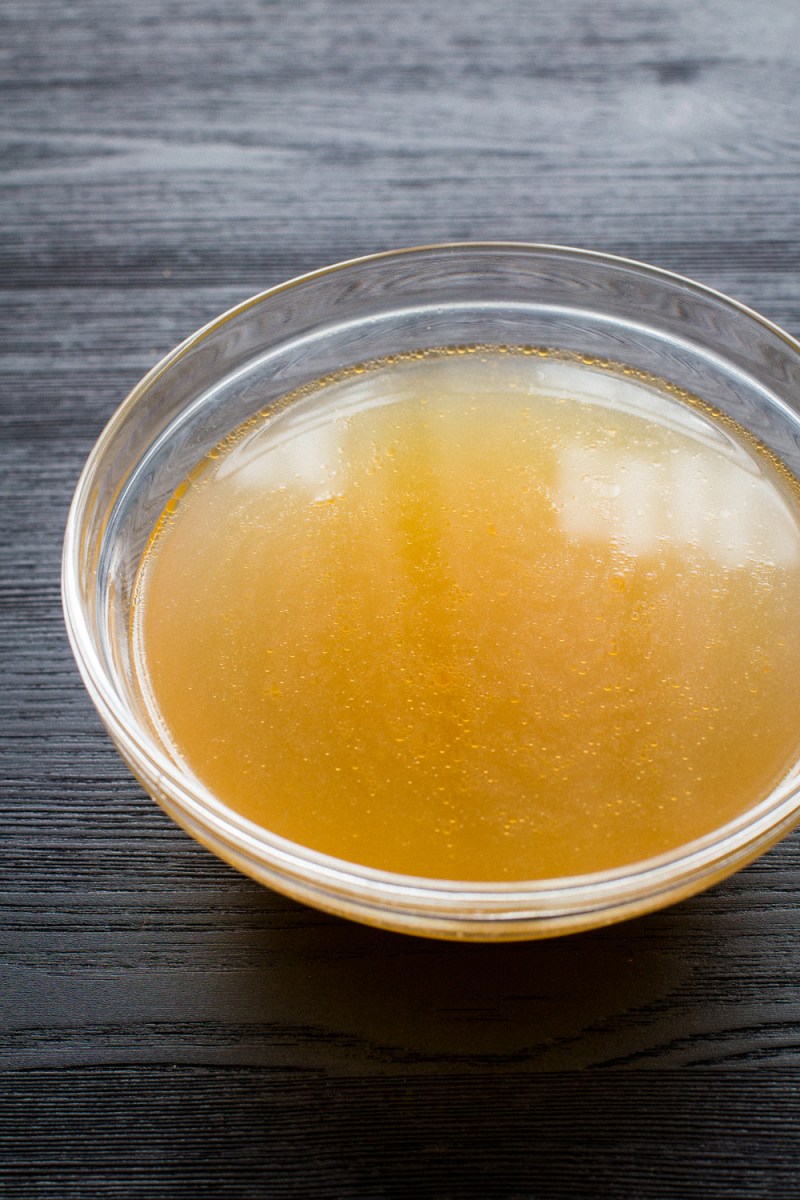
The idea for writing a shellfish stock recipe came from the fact that over the last couple months I’ve basically eaten my weight in crawfish; since we now live so close to Louisiana, it’s really cheap when in season, and super fresh. Heck, there was even a crawfish festival in the town we live in a while back. But I was always bothered by the fact that everyone throws their crawfish shells away afterwards, so I started bringing them home to make stock. Instructions on how to make stock with other shellfish, like crab and shrimp, are also provided below.

One of my favorite aspects of making shellfish stock, or any stock in general, is that it presents an opportunity to cook with some items that often end up in the garbage (or compost bin). For example, I prefer using parsley stems in my stocks because it frees up the leaves for other recipes, and it’s one of the better ways to use up celery “hearts” (the center part), since they’re mostly leaves.

Read Full Article

Yep, it’s getting to be about that time of the year again. You know, when it’s just too dang hot outside to fire up the oven or stovetop. A popular food blogger trend is to eventually post a Gazpacho recipe, so I figured it’s about time for me to share my own take on the dish. This is what I would consider a classic take on Gazpacho, although since I’m still coming down from my incredible visit to the Tabasco headquarters in April (see here), I couldn’t resist spicing this soup up with some of their original pepper sauce.

Gazpacho is an ancient cold soup first developed in Andalusia, the southern region of Spain. It is believed to have been introduced first by Arabic culture as a soup made from leftover bread, and possibly influenced by the Romans with the soup’s telltale inclusion of vinegar. Tomatoes, now an integral part of modern Gazpachos, came much later, once Columbus returned from the Americas bearing a weird, red ornamental fruit that was eventually used in culinary circles (after everyone got over their belief that tomatoes were poisonous).

In my opinion, the key to a good Gazpacho is to find a marriage of contrasting flavors, namely fresh cucumbers, tart tomatoes, sweet bell pepper, and biting onion. So that’s what we’re going to use as our base, and then complement the vegetables with garlic for immediacy, lime juice for brightness, olive oil for body, vinegar for tanginess, Tabasco for heat, and a pinch of basil for that last bit of spark to round things out.

Read Full Article

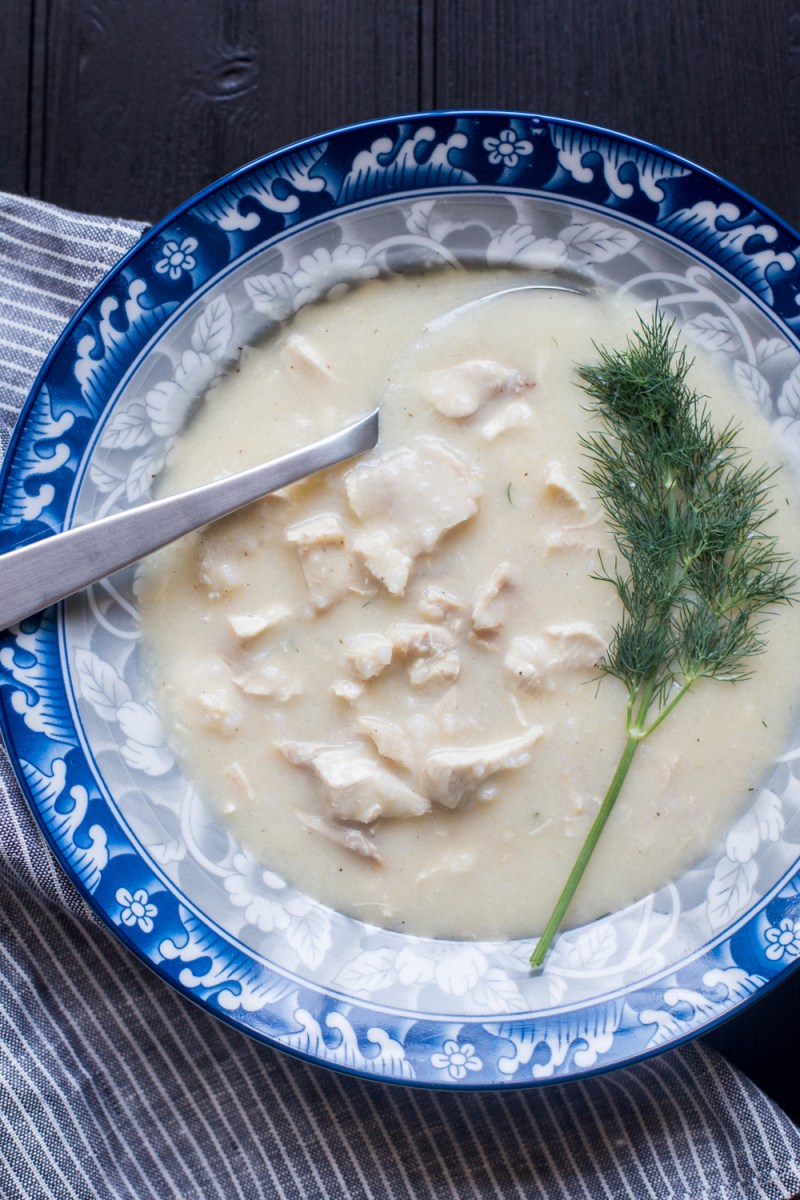
Avgolemeno is a Mediterranean sauce and soup, most commonly associated with Greece. As a sauce, it’s often served with Dolma or used as a vegetable dip. But if you ask me, it really shines the most as a mild and comforting soup, and that’s why I’m sharing this recipe with you today. It features egg yolks and lemon juice which enrich and enliven the soup, and some fresh dill brings it all together to give it a distinct and just slightly exotic flavor.

I’m a big fan of taking my time when making recipes. After all, cooking is one of my main sources of relaxation (second only to reading cheesy sci-fi). But I realize that’s not always the case for folks, so I’m trying something new today; below you’ll find a “short version” of the recipe that can be made in 20 minutes, as well as the traditional 2-hour version. Let me know what you think. If you like it, I’ll try to incorporate more variety into my recipe posts (kind of like how I’ve been adding pressure-cooker versions to some recipes).

Read Full Article

Phew! Okay, since last checking in, I’ve completed all of my photos for my upcoming book, Paleo Take Out, and the manuscript is with the editor. I’m happy to announce that the book will feature over 150 recipes! That’s a far cry from the 45-60 recipes I started with last year, and I’m really excited to get this book in your hands. Paleo Take Out will be out in all bookstores starting in June, and I’ll be sure to share more info as I put the finishing touches on it.

Starting today, I’m bundling a preview copy of Paleo Take Out with every purchase of The Safe Starch Cookbook. The preview book features 10 recipes from Paleo Take Out plus three that didn’t make the cut (initially I planned on having 5-10 not make the cut, but I found a way to squeeze them into the book!). One of those recipes also happens to be today’s recipe, which I think you’ll enjoy – Korean Oyster Soup.

Gulguk (굴국) is a quick and tasty soup, often considered a cure for hangovers. It’s sometimes served with cooked white rice dropped in at the end, at which point it’s called Gulgukbap (굴국밥). But if you’re not a rice eater, don’t worry – it’s just as tasty without the rice, or with some spiraled vegetable or kelp noodles thrown in at the end.

One last note – that Virtual Ultimate Health Summit I mentioned last week is now live through March 13th. I recorded my segment last week and had a lot of fun with it; we discussed food, history, and culture, and I think you folks will really enjoy my talk. Plus there are 17 other panelists involved, too! Okay, soup time.

Read Full Article

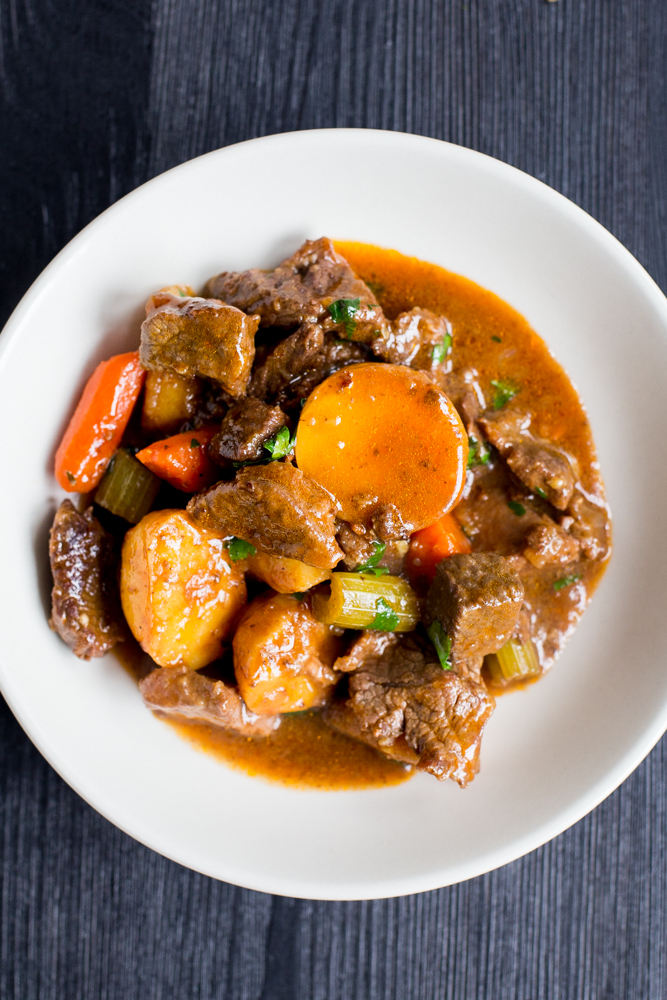
First of all, sorry about that title. Just like the elusive free lunch, there is no such thing as an “Instant Stew”. You see, I recently asked my Facebook followers what dish they’d like to see me develop, and I received several requests for pressure cooker and stew recipes. We use (and love) an electric pressure cooker called an Instant Pot, so that’s what I used for this recipe (and hence the name).

At its heart, this dish is similar to many of my other stew recipes, but with a new approach. When it comes to simple weeknight recipes, many folks like the idea of crockpot stews (wherein you leave the ingredients to slow-cook while away at work). But I’ve found that more often than not, the vegetables become too mushy and tired after a long simmer. This is where a pressure cooker really shines, as it shaves a multi-hour recipe into just over an hour, making it a potential weeknight option with superior texture.

If you want to make this dish without any fancy (awesome) gadgetry, I’ve also included stovetop instructions below.

Read Full Article