Beef

Meatloaf is a dish that changes with age: it is often reviled by children and treasured by parents. It makes sense, actually. Kids like to know what’s in their food, and meatloaf is the antithesis of this idea; it’s just a brown hunk of mystery, coupled with a nagging feeling that there are vegetables inside. Adults like meatloaf because it’s a way to eat many ingredients at once, with minimal effort. Personally, I think that a perfectly-cooked meatloaf is appealing to both sides of the coin: easy to make but tasty enough for everyone to enjoy. To ensure a perfectly-roasted loaf, I developed a recipe that uses a water bath to keep the oven moist and cook everything evenly.

Meatloaf has origins in many countries, spread throughout the world. It’s universally considered a comfort food. Some of my favorite variations include Jewish Klops (made with boiled eggs inside), Czech Sekaná (with pickles and sausage inside), and Austrian Faschierter Braten (wrapped in ham or bacon before baking). The American variation rose to popularity during the Great Depression, when families tried to stretch food out to last longer. Americans typically added breadcrumbs to help bind and add volume to the dish, and the tradition persists today. The truth is that a well-cooked meatloaf doesn’t really need a breadcrumb binder – mushrooms work just fine, and add some great flavor as well.

Read Full Article


Left: Chili Con Carne from The Ancestral Table. Right: Texas Chili from The Slim Palate Paleo Cookbook

I don’t know about you guys, but my teenage years were not very productive. I played and sang in punk rock bands, and we churned out a cassette tape release every six months or so. That was about it. At the time I felt like a pretty prolific chap, but it pales in comparison to the milestones that teen blogger Joshua Weissman (the writer behind the website Slim Palate and the newly-released cookbook, The Slim Palate Paleo Cookbook) has reached in the past couple of years.

Writing a cookbook is not easy. Surviving your teenage years is not easy. Somehow, Joshua managed both, and while I can’t speak for how easily his adolescence is going, this book is a significant accomplishment in and of itself. But this book is even more impressive; it is the tale of one young man’s journey from obesity to health (he lost 100 pounds along the way). Ultimately, this project is more than a cookbook – it’s an early chronicle of someone destined for great(er) things.

Read Full Article

This week I’m traveling to NYC for a cooking demo, and Providence and Boston for book signings. More info here – please be sure to come visit since I’m not sure when I’ll be heading north again for a while. See you there!

I have a love/hate relationship with braised beef. While I love the tenderness that comes from slow-roasting meat in liquid, I sometimes become bored with the tired texture of braised dishes. So in writing this recipe, I decided to make a classic braised short ribs recipe, but alter its final texture by roasting it at a high heat before returning it to the braising liquid. This technique allows me to add some crispness to the beef and also presents an opportunity to reduce and flavor the braising liquid while the beef finishes.

Short ribs are one of my favorite cuts of beef, as they are extremely rich, relatively inexpensive, and very versatile. They are best known as a low-and-slow cut, but they fare just as well with high heat grilling, such as in my Wang Kalbi recipe.

The short ribs for this recipe were graciously donated by my friends at Arrowhead Beef, a grass-fed farm located in Chipley, Florida. Along with their online store, they sell their products all over Florida, at farmer’s markets and retail locations. Their short ribs were delicious – meaty and full of tasty connective tissue. They worked perfectly with this braise.

Better yet! They’re offering a 10% off total purchase for The Domestic Man readers. Use code domesticman when checking out. Offer expires March 31st, 2014 and excludes Bulk Beef options; limited 1 per customer.

Read Full Article

A couple weeks ago I did a guest post on RobbWolf.com, which was pretty exciting for me. I first heard of the Paleo diet through his book, The Paleo Solution, and considering how profound of an impact it made on my health, it was just surreal to join forces with him.

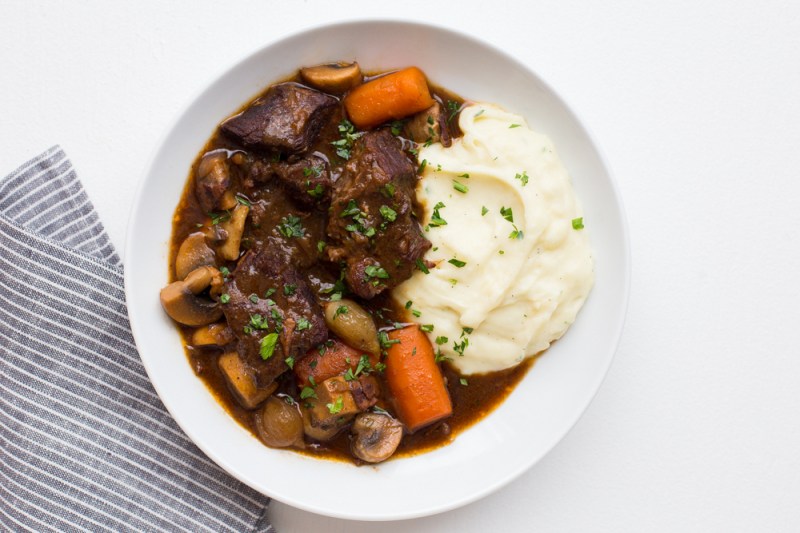
For my guest post, I deconstructed the entire history of one of my favorite dishes – Beef Bourguignon – including the individual histories of every ingredient used in the dish and the people who made it. It took a fair bit of research to put it all together, and I think it’s a very interesting read, though a little longer than my typical blog posts. For posterity’s sake, I decided to move the article to this blog in case you wanted to check it out. Enjoy! The link to my recipe is at the bottom of the post.

Read Full Article

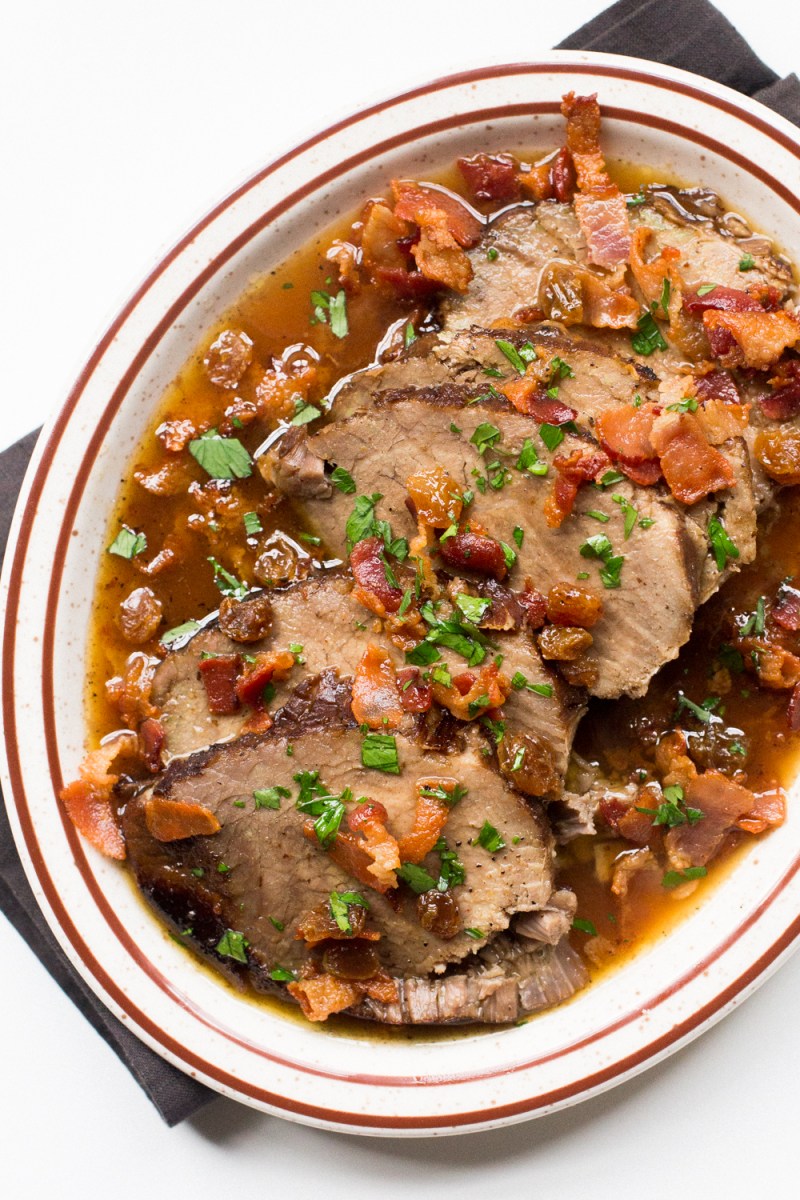
Sauerbraten (“Sour Roast”) is a German pickled roast. Traditionally made with lean horse meat, this dish works well with any lean roast. For my recipe in particular I used eye of round roast. This dish is unique in that the meat is tenderized in a wine or vinegar marinade for several days, probably a carryover from ancient preservation methods.

To counter the sour taste of the meat, Germans today commonly add gingersnap cookies to the roast’s gravy; personally, I used a bit of honey and golden raisins to cut its sourness, a custom found in Rheinischer Sauerbraten (Sauerbraten from the Rhine region in West Germany).

The eye of round roast for this recipe was graciously donated by Friends & Farms, a Maryland-based community that provides high-quality food baskets from local farms and artisans. They build the baskets with certain recipes in mind, and provide the recipes each week; each basket is designed to complement your eating habits, and is enough food for about three meals per week. You can also customize your baskets for a more Paleo-minded lifestyle, which is really cool.

Better yet, they are giving away a free weekly food basket to one of my readers – if you’re in the greater Baltimore area, click here to enter the giveaway via Rafflecopter. The giveaway ends ends midnight (EST) Saturday, Feb 22nd, 2014 and is limited to Maryland-area residents; you’ll need to be able to pick up your winnings at one of their many pickup locations. Good luck!

Read Full Article

Today is kind of a big deal for our family. After nearly two years of work, The Ancestral Table is finally in stores today! To celebrate, I thought it would be fitting to post my cookbook recipe for Japchae, which is a common party dish in Korea today.

Japchae has its origins in the 17th century; fittingly, it was first served at a party for the reigning king. Originally made with just vegetables and mushrooms, sweet potato noodles (dangmyeon, also called glass noodles) were introduced in the 20th century and are now an integral part of the dish.

Read Full Article

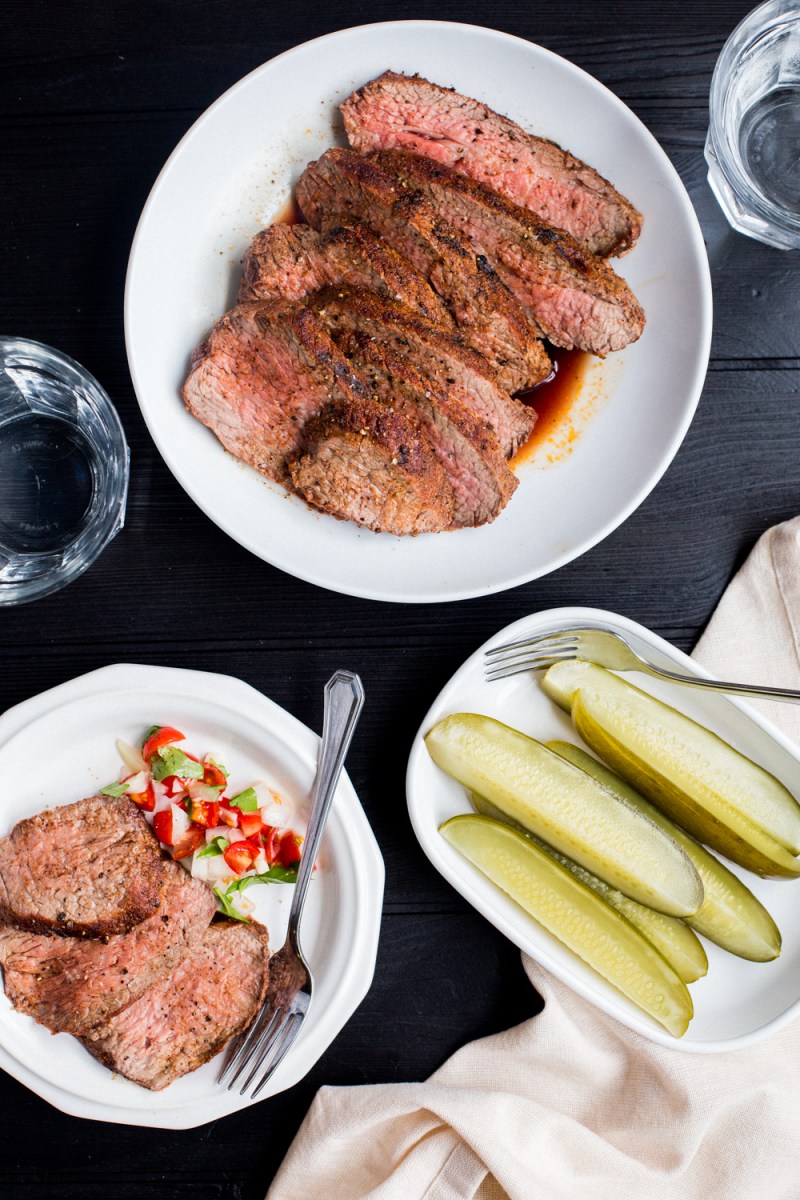
Santa Maria Tri-Tip Steak is a specialty of Santa Maria, California, which lies about 100 miles northwest of Los Angeles. Tri-tip is taken from the bottom sirloin of the cow, and is often cut into steaks and sold as “sirloin steak” (a tougher version of the prized “top sirloin steak”). When sold whole, as is used in this recipe, it can weigh up to 4 pounds. This lean, moderately tough, and economical cut of meat fares best when cooked only to medium-rare or medium.

The key to making a good Santa Maria Tri-Tip is cooking it so that it has a crusty outside and tender, juicy inside. There are different ways to achieve this result; in Santa Maria, chefs often use a grill that can be adjusted up and down, so as to develop a crust and then pull it away from the fire to prevent burning.

My method is similar. We’re going to only heat one side of the grill, indirectly roast it until it reaches a certain temperature, then place it directly over the fire to create a tasty crust at the end. The end result is a dead simple recipe that always makes for a tasty experience.

Read Full Article

I love finding new ways to transform cheap cuts of meat into something spectacular. I think most people feel the same way, as my Eye of Round Roast recipe remains the most popular recipe on my blog. So when I read my friend Peter’s Tjälknöl recipe from earlier this year, I knew that I needed to try it. The method intrigued me: take a frozen chunk of lean beef and slow cook it until it reaches a certain temperature, then remove it and let it sit in a brine for a few hours. The Tjälknöl came out utterly delicious and not unlike roast beef, perfect for thinly slicing and enjoying cold.

I love the story behind the dish, which I pulled straight from Peter’s excellent blog, Striclty Paleo…ish:

“Ragnhild Nilsson, the wife of moose hunter Eskil Nilsson, asked her husband one evening to thaw a frozen moose steak in the oven on low temperature. He did…and forgot about it, and Ragnhild found it still laying in the oven the next day. She understood it would be rather tasteless eating it like that, so in an attempt to save it she placed it in a brine for a few hours. When they later ate it, they both found it to be not only delicious, but also extremely juicy and tender. A year or so later, she submitted the recipe for a national contest to find new regional signature dishes, and won! Tjälknöl was declared the new signature dish of Medelpad (a region of northern Sweden), and it spread nationwide.”

I took a few liberties with the original recipe as I converted it to US measurements, mostly because I’m constantly tweaking things in the kitchen.

Read Full Article

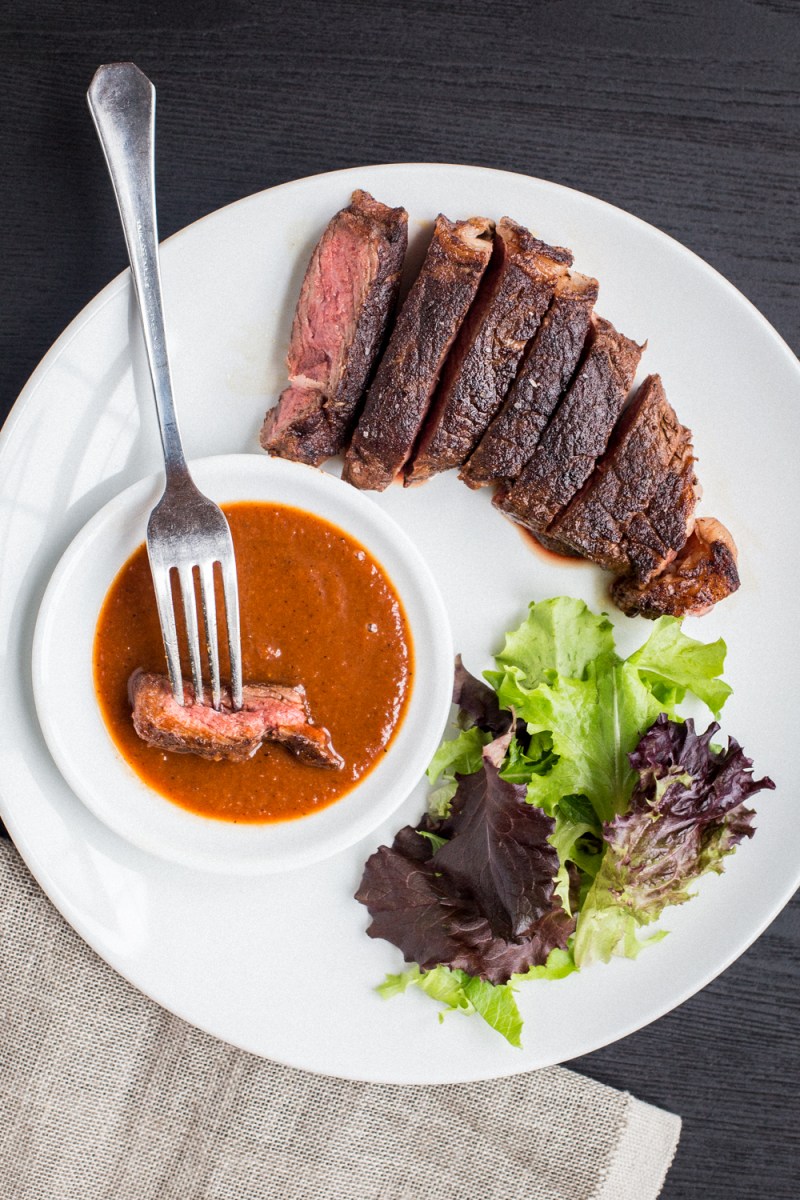
As the temperatures fall this month, I expect many people to be hesitant about going outside to grill food. Personally, we keep the grill outside and ready all year long, but I realize that not everyone feels that way (especially my Midwestern readers, whose winters are a little more significant than ours). So I thought it would be a good time to work on a solid, foolproof pan-seared steak recipe.

To be honest, we as a family don’t eat steak much, due to its high price point. But it’s an excellent celebratory meal, or for when you’re looking for a simple, developed taste without having to spend much time preparing your meal. Generally, steaks are made from the most tender cuts of the animal and cooked quickly; their tenderness comes from a lack of tough fibers and connective tissue found in the muscles that are more worked. Applying a light spice rub on a steak is ideal, and right before cooking, so that you have contrasting tastes of the crust and delicate interior. The combination of cacao, peppers, and salt go especially well with steak.

Read Full Article

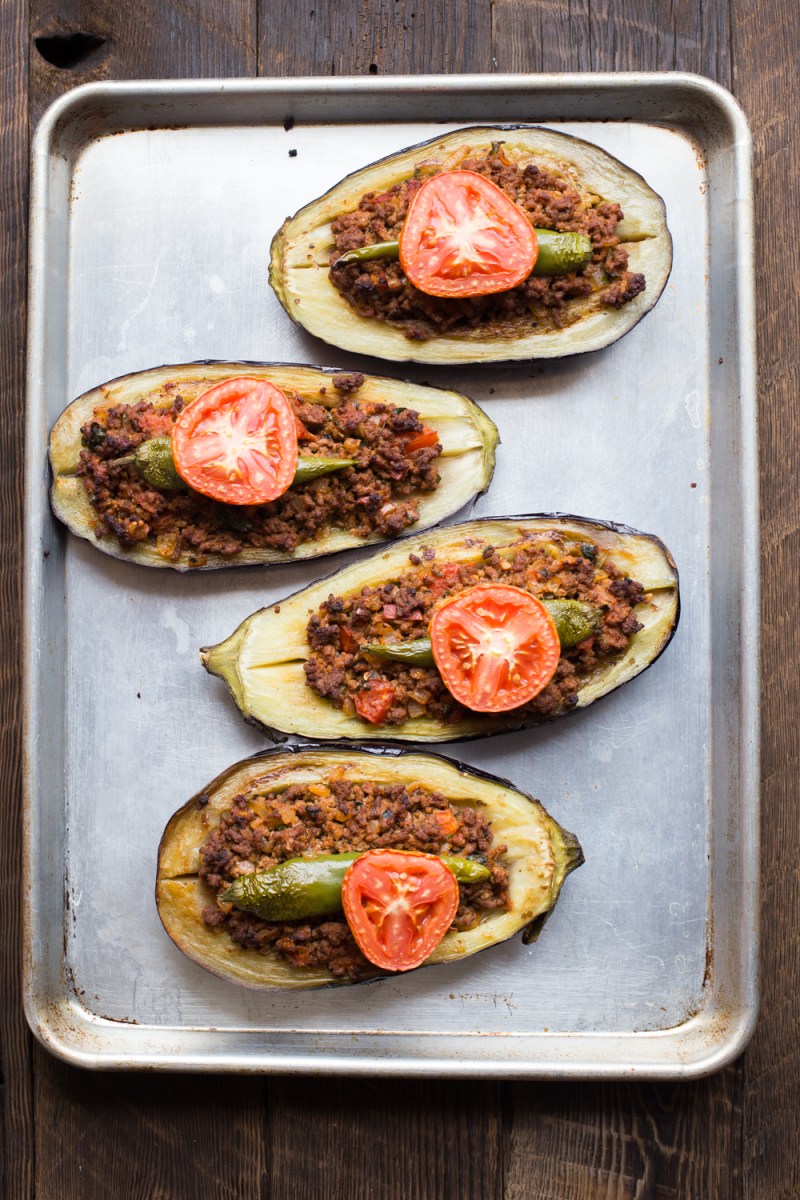
Our local market had some really nice-looking eggplants the other day, so I decided to pick up a couple and whip something up. When coming up with an idea for the dish, I decided to refer to some of the eggplant experts: the countries that live along the Mediterranean coast. Italy seemed too easy, so I went with Turkey instead, who have several classic eggplant dishes. Karniyarik is a stuffed eggplant dish from Turkey, similar to another popular Turkish dish, Imam Bayildi, which is similar but made without ground meat.

Eggplants got their name from their egg-like shape, although they are referred to as aubergines nearly everywhere outside of the United States. Eggplants were probably first cultivated in India about 2,000 years ago, before making their way to the Middle East and Europe. It was one of the first foods brought to the Americas by Spanish and Portuguese explorers in the 16th century.

Read Full Article