6 – Pork

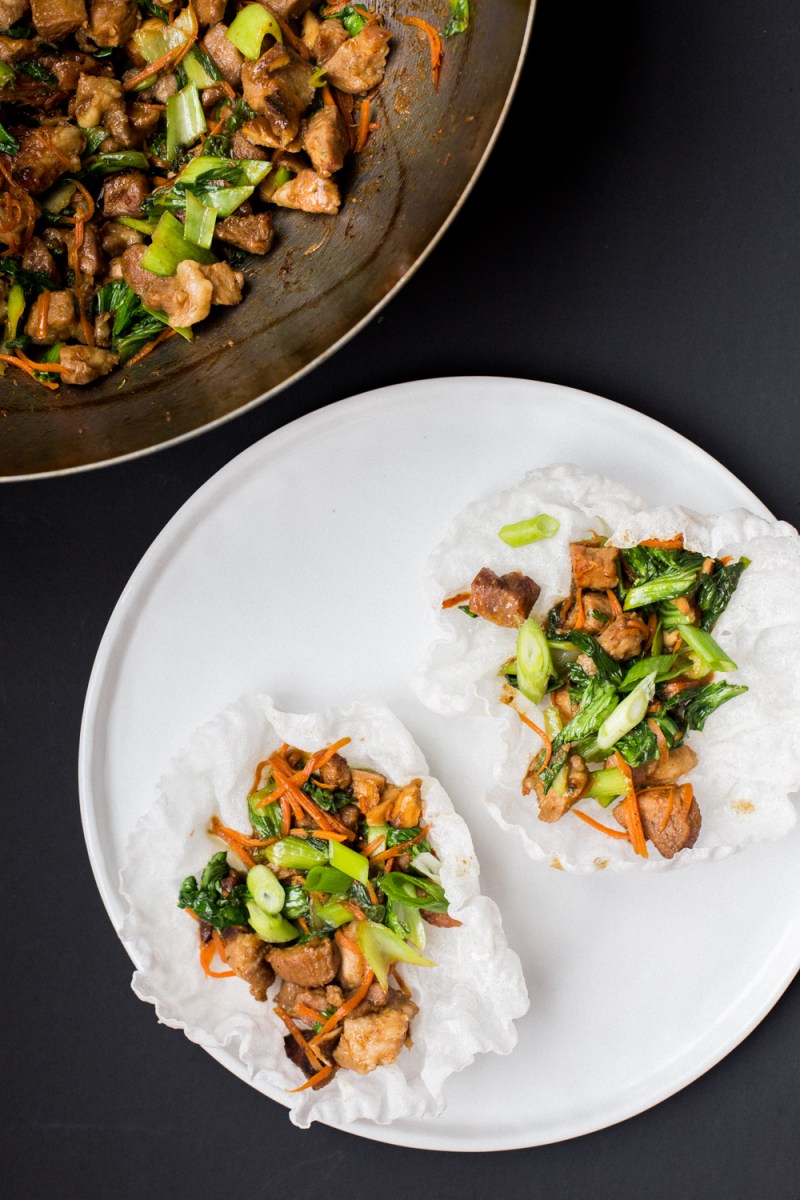
A reader recently tipped me off about the idea of pan-frying rice papers (bánh tráng) to make a quick snack. Not only was it a great idea, it served as a unique way of making a quick serving “dish”; in fact, they acted not unlike tostadas in that sense. So to keep with the theme of rice papers, I decided to make some deconstructed spring roll “tostadas” as a quick and easy meal.

Read Full Article

This past weekend I competed in a bacon cook-off fundraiser, entitled Baconpalooza, which was hosted by the Farm-to-Consumer Legal Defense Fund. The contest was part of an entire weekend of events, which included a tour of Joel Salatin’s Polyface Farm and nutrition talks and cooking demos by Robb Wolf and Jenny McGruther. My competition was very stiff during the cook-off, with many imaginative and delicious entries trying to woo the sold-out crowd of 250 voters.

I’m happy to say that I was the winner of the cook-off! I thought it would be neat to share the recipe of my winning dish so you can recreate it at home.

Read Full Article

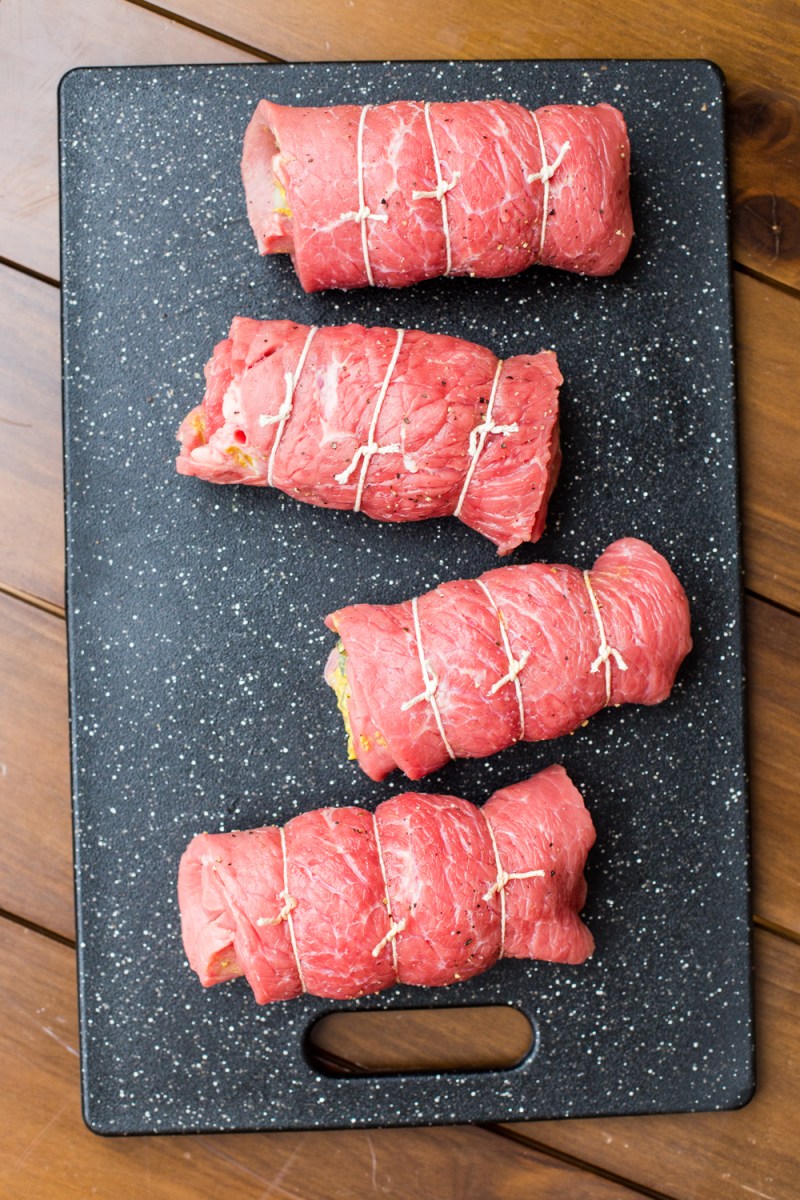
Rouladen is the German version of the French roulade, which is a roll made with thinly-sliced meat. The German version is interesting in that it probably came from Germans using items they had on hand most of the time – mustard, pickles, onion, and pork – to make something that’s unique in its own right. What’s even better is that these characteristics also make it easy to throw together this delicious meal with items you probably already have in your kitchen.

There’s no denying the French influence on this dish, with its use of a wine and broth braise (although Germans sometimes use beer instead) and mirepoix vegetables to add flavor. It’s commonly thought that Rouladen was originally made with strips of pork, although beef has become the most popular meat for this dish over the past century.

Read Full Article

Alright, people. You must have known this recipe was coming sooner or later. For the past year or so I have been playing around with nourishing soups (recent examples are here and here), so I thought it was time to tackle the mother of them all: Menudo. This tripe soup is often considered the ultimate hangover cure, similar to many bone broth soups found worldwide.

In Northern Mexico, Menudo is cooked with hominy, which is a form of corn that has been soaked in an alkaline solution. This process (called nixtamalization) removes the hull and germ from the kernel, effectively removing most of corn’s toxic anti-nutrients and making it more digestible. This process has been around since at least 1500 BCE, when people in present-day Mexico and Guatemala would soak their corn in water mixed with wood ash. If you do decide to use hominy in your recipe, be sure to get the organic stuff to ensure it isn’t made with GMO corn. But definitely feel free to omit the hominy and still consider the recipe authentic: it is also called Pancita in some regions, and from what I can tell Pancita also doesn’t usually include hominy.

Read Full Article

Greater Baltimore area residents: I’m speaking about food and nutrition at CrossFit Glen Burnie on Saturday, July 13th. More info is here.

Like most red-blooded American men, I have a special place in my heart for barbecue ribs. That’s probably pretty obvious, since I have no less than TEN ribs recipes on my site (my favorites are here and here) – that’s nearly 5% of all my recipes!

My taste in ribs has changed over the years, as well as my cooking method; originally I braised my ribs in apple juice and onions for a couple hours, then crisped them over a grill. While I still like ribs that way from time to time, I’ve come to better appreciate smoked ribs – those cooked over low temperatures for extended periods, gently nudged to perfection by wafting curls of smoking cinders.

The trouble is, despite all of my outdoor cooking adventures, I keep pushing off the idea of buying a charcoal grill or a smoker, the usual staples of tasty smoked ribs – my backyard patio only has so much real estate, and I don’t think Mrs. Domestic Man would appreciate more contraptions back there. So I’ve been diligently plugging away at making an easy, foolproof method for smoking ribs on a gas grill, and I’m ready to share the meats of my labor.

To demonstrate, I decided to use spare ribs, which is a cheaper cut of ribs, but they taste just fine to me when cooked properly. I also used a drip pan full of hard cider to flavor and moisten the ribs as they smoked (regular apple cider or water would do fine as well).

Read Full Article

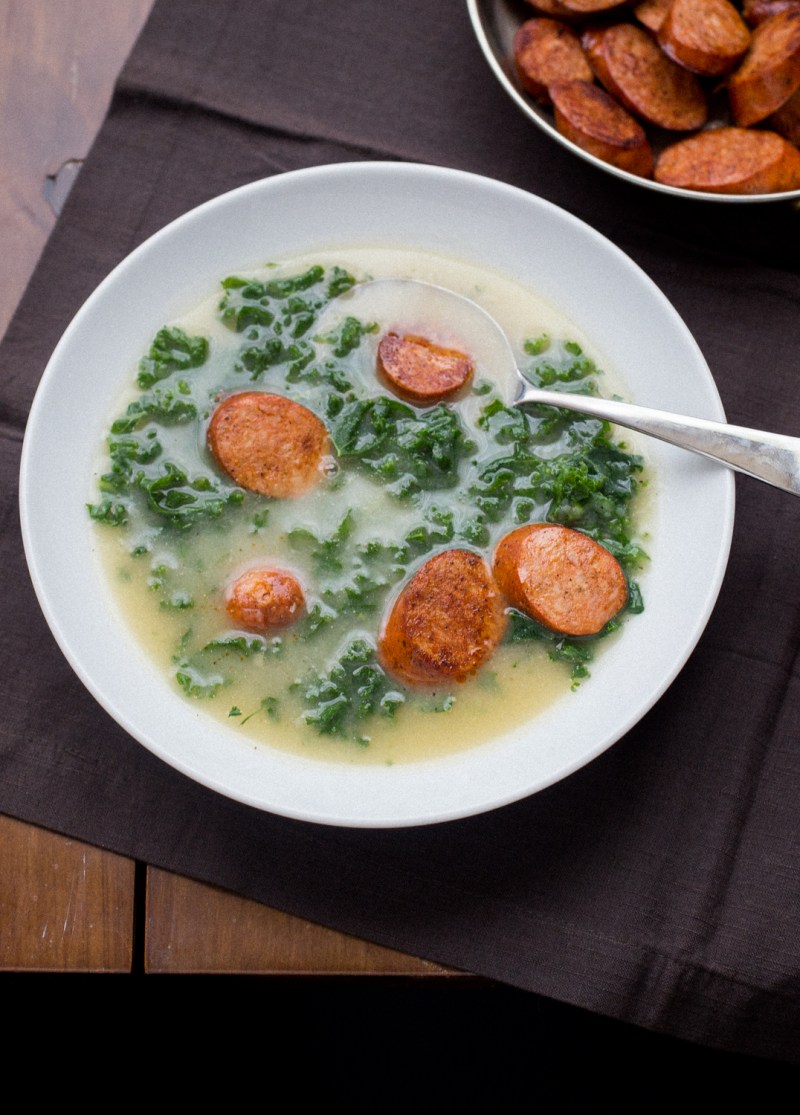
A few weeks ago, a reader suggested I try my hand at Caldo Verde (“green broth”), a traditional Portuguese soup that is often considered their national dish. It was the perfect recommendation – the soup’s use of simple, satisfying ingredients, plus the addition of slightly-spicy sausage, make it an ideal late spring / early summer meal.

Initially, the soup’s use of kale might seem out of place for a country that is geographically closer to Africa than the rest of Europe. But when you take into context the fact that the soup originates from Portugal’s northern Minho region, which was once under Roman and Celtic occupation and still retains some of that influence today, the culinary presence of a hearty cabbage like collard greens (or kale like in this recipe) makes sense. One of my favorite aspects of this dish is that it’s a perfect pauper’s meal: combine some very basic and always-available ingredients (water, onion, potatoes, cabbage) and add other items if and when they are available (broth, sausage).

Read Full Article

With our extended winter this year (spring is finally springing in our neck of the woods this week!), I found myself craving comfort foods to help me get over the cold-weather blues. And for that very same reason, I decided to focus on an American classic for this week’s recipe – one that some might consider a quintessential comfort food. Believe it or not, it’s very hard to find any sort of origin or history around the combination of sausage, peppers and onion. It’s a staple food of Fenway Park, so it must be a Boston thing, right? But others associate it with NYC, and still more with Chicago. All I can say with certainty is that it’s of Italian-American descent, with fairly deep roots, and an easy way to make a quick delicious meal.

The word “sausage” originally comes from the Latin word salsus, which means “salted.” There is evidence of it being enjoyed in Italy as much as 2,000 years ago. That it has a long culinary existence isn’t so surprising; sausage is a perfect way of making sure every bit of the animal is used, and deliciously so. Here in the US, the words “Italian sausage” imply a seasoning based on fennel seeds and anise, and can be sold as either mild or spicy.

Read Full Article

Ah, bratwurst. The German sausage has been around for a long time – the oldest recorded recipe is from the 15th Century, but it is mentioned in earlier texts. Germany (and Eastern Europe) in particular happened to be the perfect place to develop the sausages over time, because the cold winters and Northern winds were perfect conditions for testing out this cured meat. Historically, it’s also an excellent way to get nutrients into your system, as the sausages were full of parts that would have otherwise gone to waste (including some organ meats!).

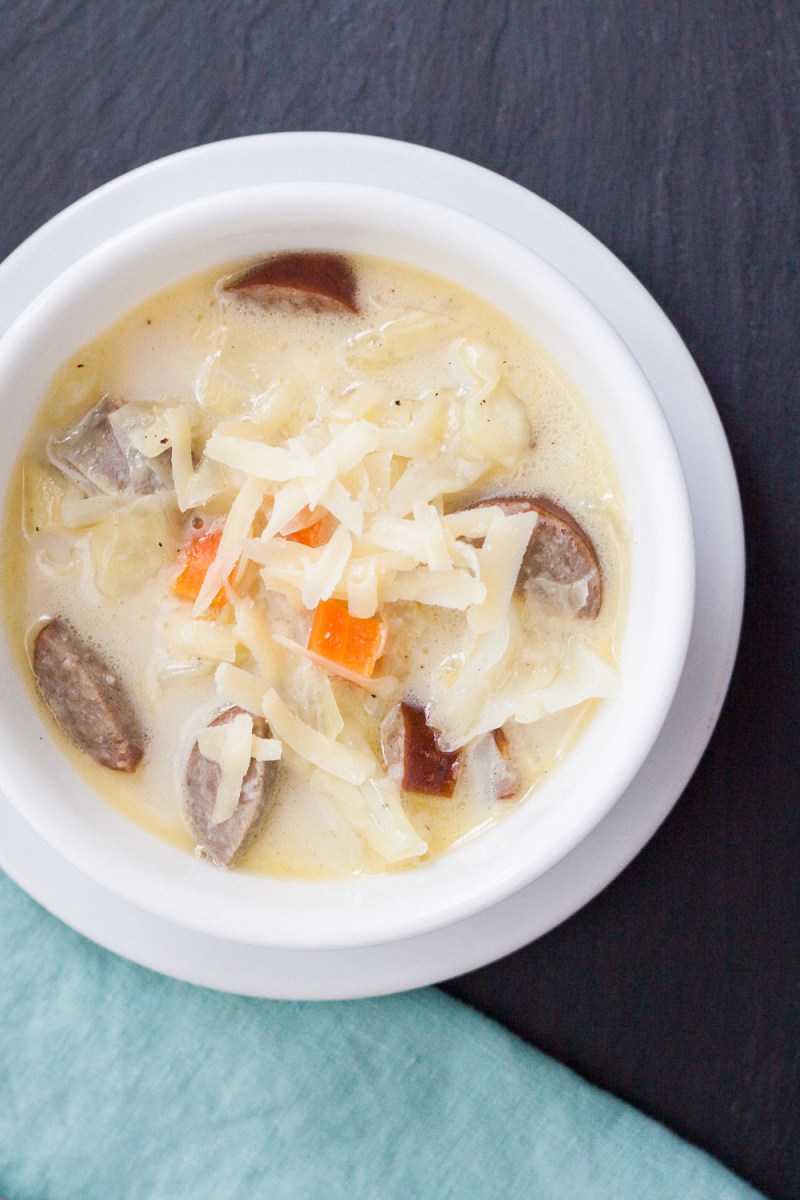
Chowders made with bratwurst are popular in the United States, particularly in the Upper Midwest, but they are often full of beer and cheddar. Those aren’t bad things, mind you! But still, I wanted to make a recipe that captured the spirit and richness of those delicious chowders, but with some cleaner ingredients. Turns out a combination of chicken broth, cream, and a little aged cheddar did the trick nicely. I love this chowder in particular because it doesn’t take long to cook – about 45 minutes from start to finish – another benefit of cooking with sausage!

Read Full Article

Shirred eggs, more commonly known as baked eggs, are eggs that are baked in a flat-bottom dish. Although they are traditionally prepared with minimal ingredients, my variation is a little different in that I like to use cupcake pans and layer a host of ingredients into a cup lined with ham or other form of cured meat. I like the idea of building your whole breakfast at once.

These baked eggs are a great way to treat guests that come over for brunch, or everybody’s favorite meal, “breakfast for dinner.”

Read Full Article

To start off the New Year, I’ll be posting only Whole30-compliant recipes this month. What is the Whole30 Program? It’s very similar to what I eat already, but with a few more restrictions: no dairy (except ghee), no white potatoes, no rice, no alcohol, no sugars or sweeteners of any kind. It’s a great way to jump headfirst into an ancestral diet (although easing into a Paleo diet is just fine, too) and see some dramatic changes in your health.

For my first January recipe I wanted to share one of my go-to comfort foods: sausage and sauerkraut. It can be whipped up in less than 30 minutes and always hits the spot! Sauerkraut is a superfood thanks to its healthy bacteria; Genghis Kahn took it with him as he conquered Eurasia, and Germans brought it with them on ships as they traveled to America, in order to fight off disease. Admittedly, many of its healthy bacteria are destroyed in the cooking process of this dish, but don’t let it deter you from chowing down on this tasty recipe! When shopping for sauerkraut, be sure to buy some that only has water, salt and cabbage as its ingredients. You can always make it yourself, too; it’s one of the easiest pickling endeavors you could undertake.

Read Full Article